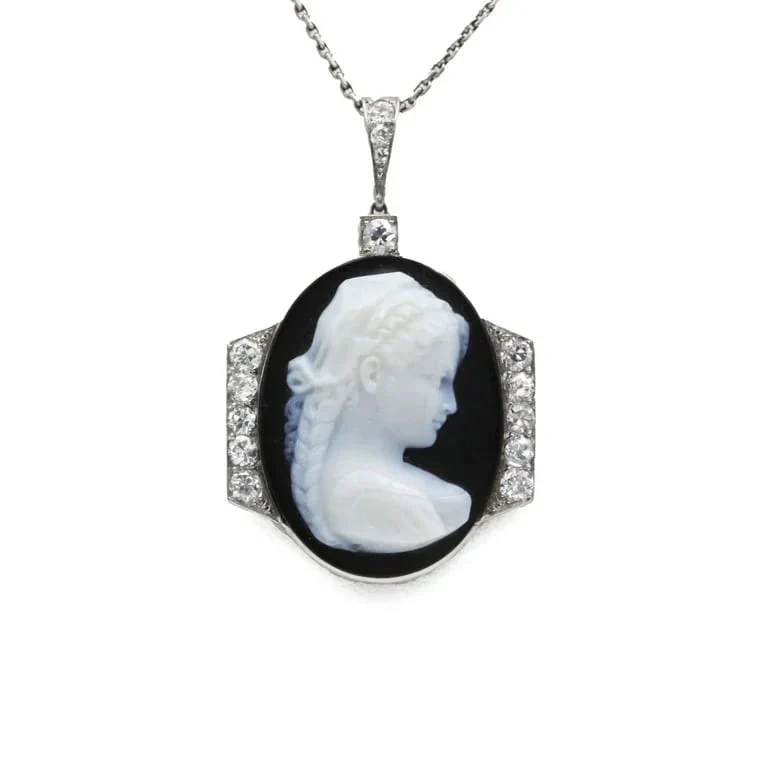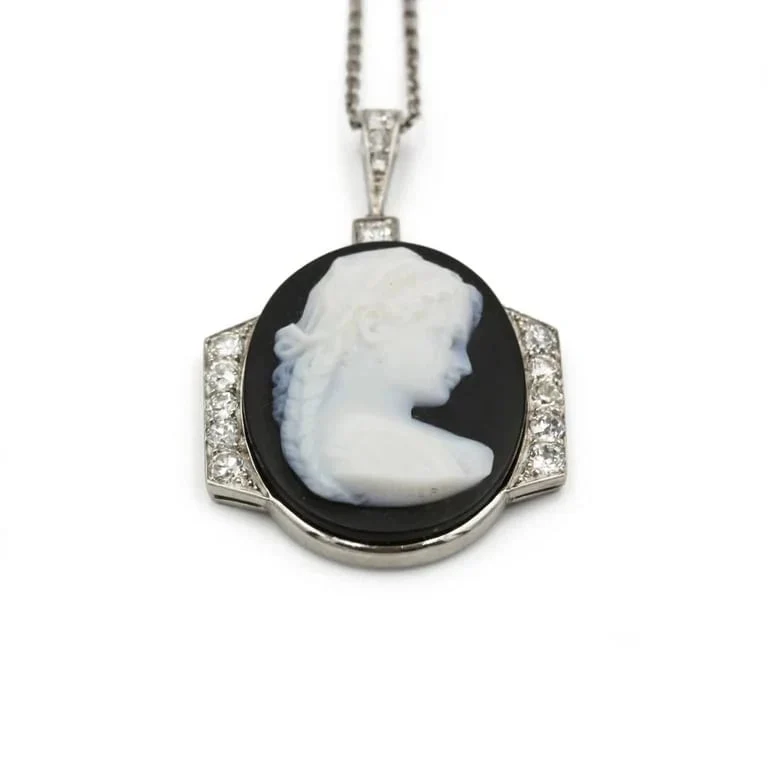
Timeless twenties: a sparkling Art Deco brooch in platinum
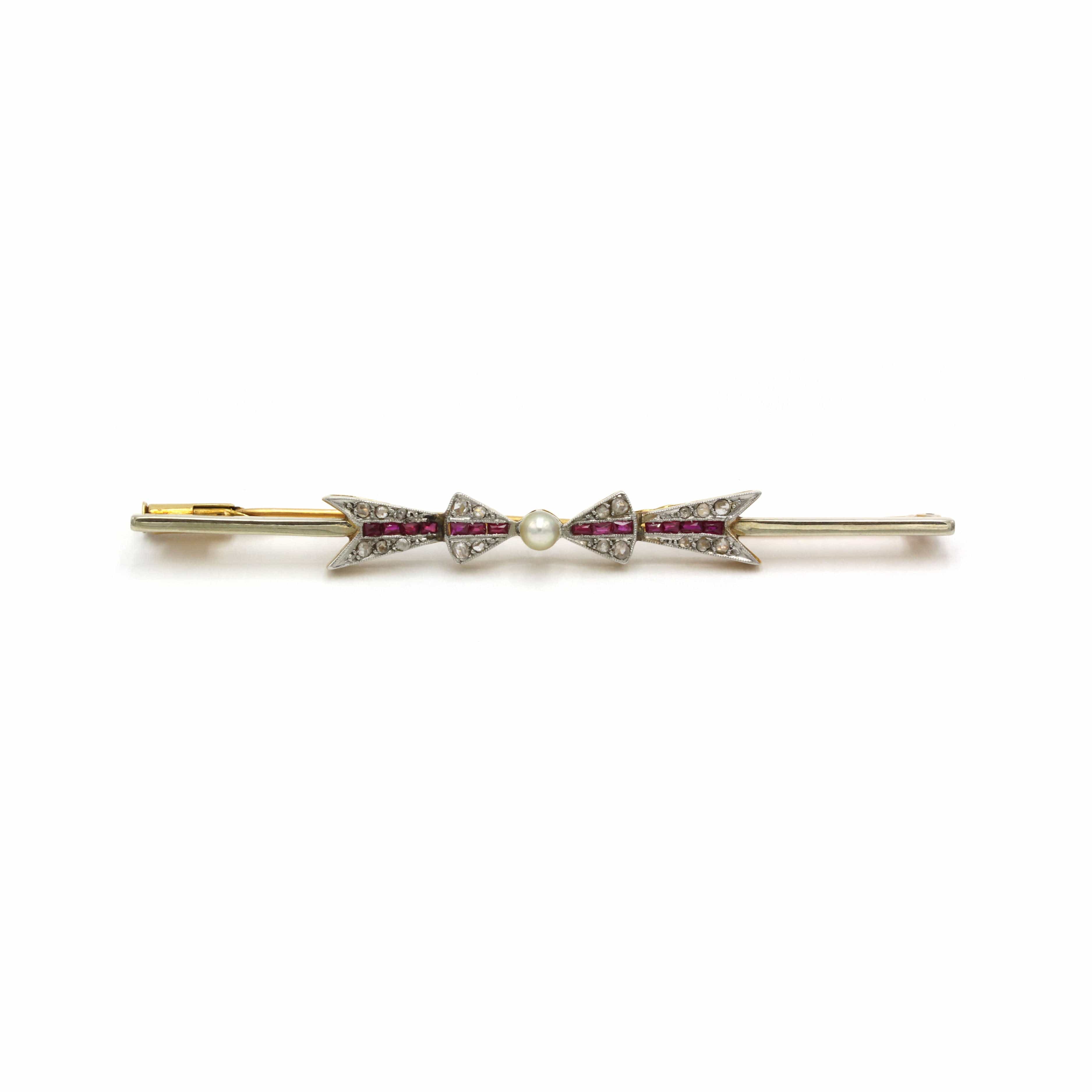
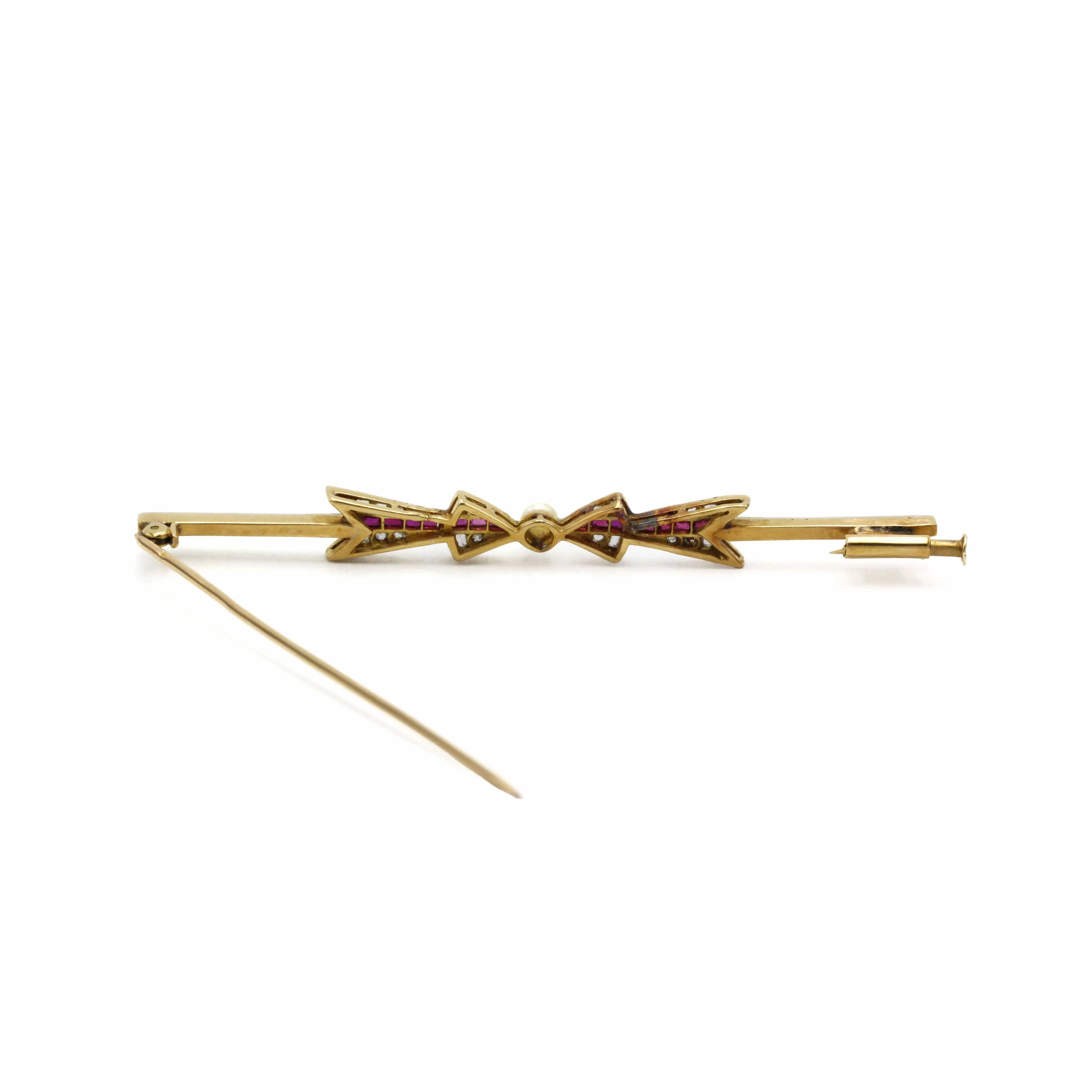
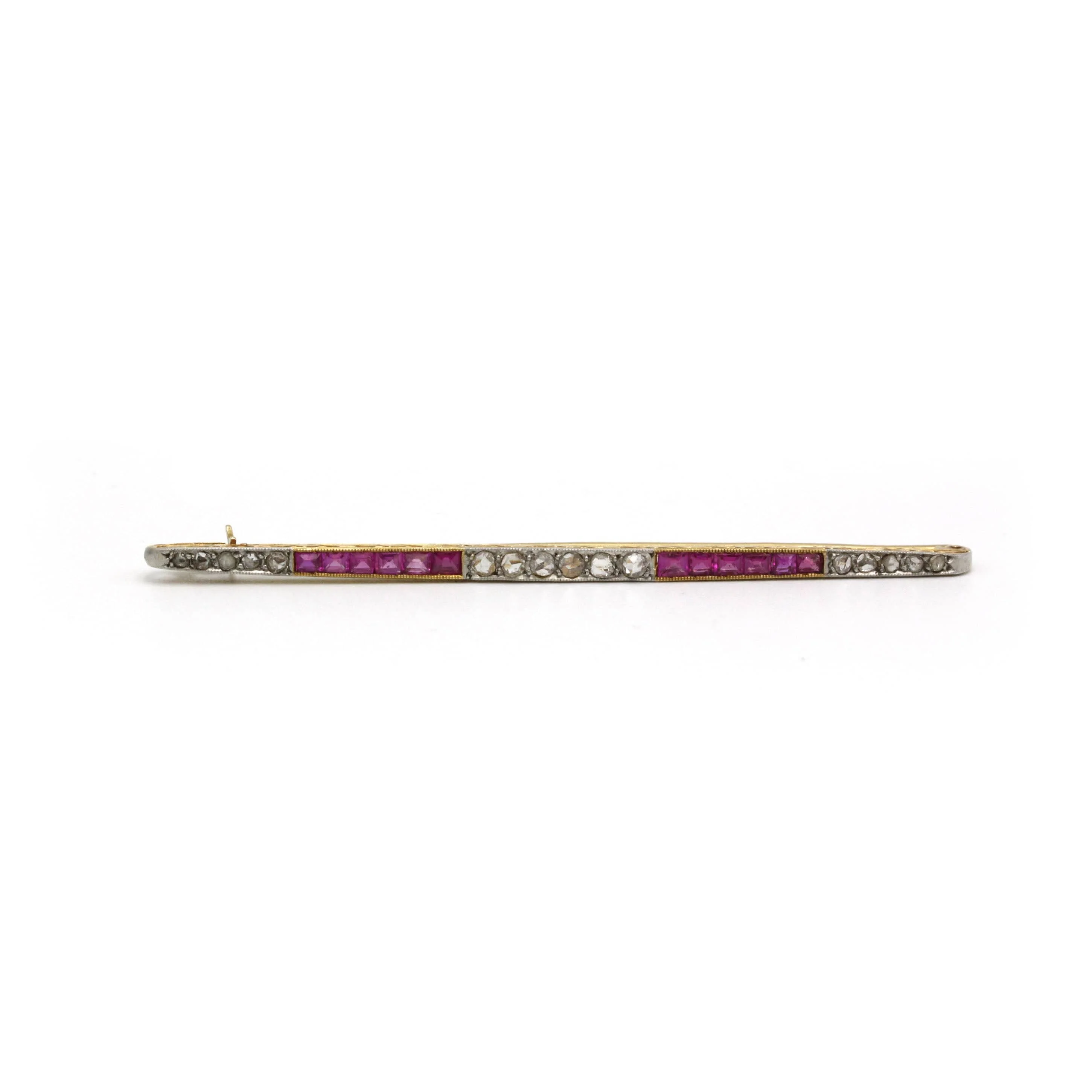
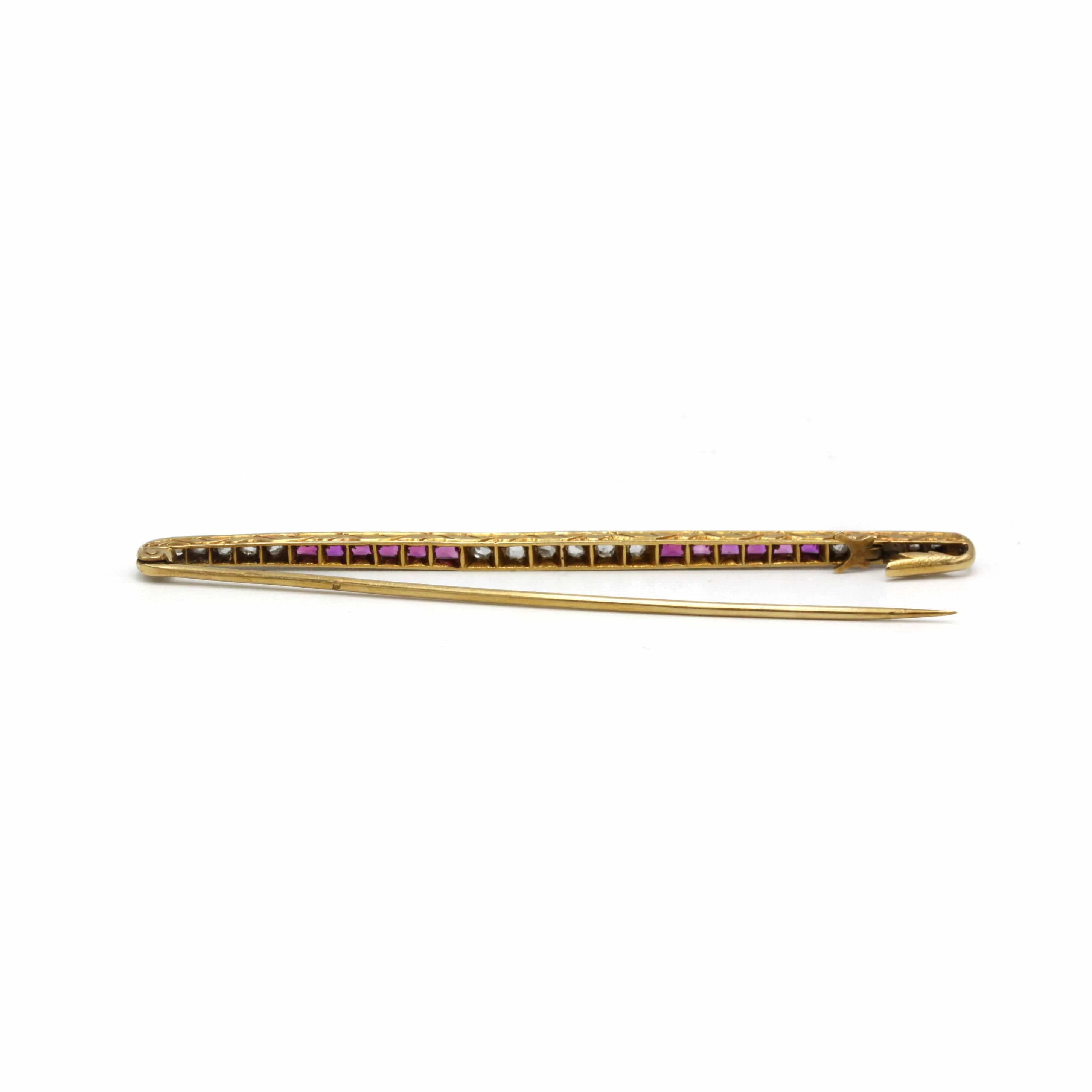
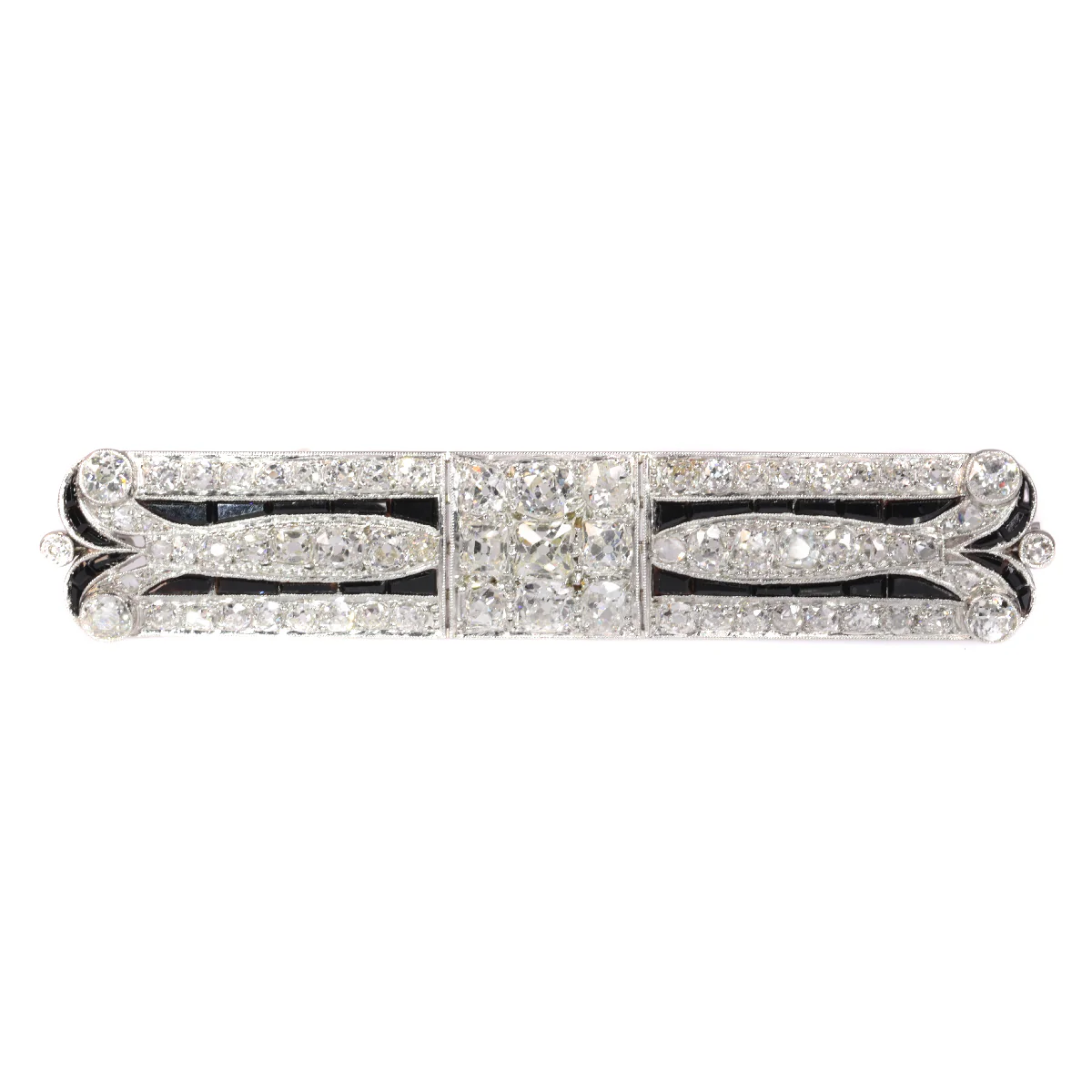
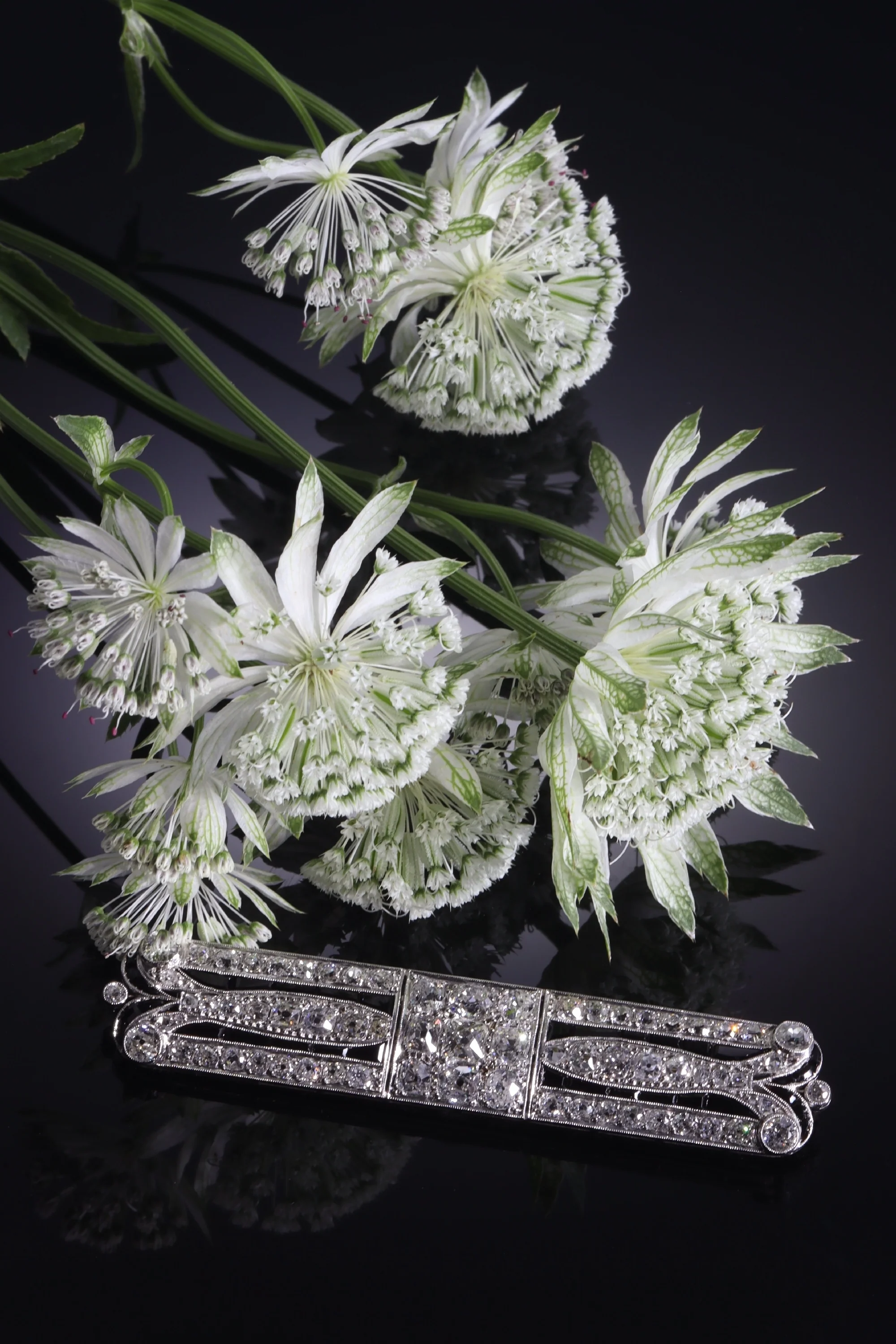
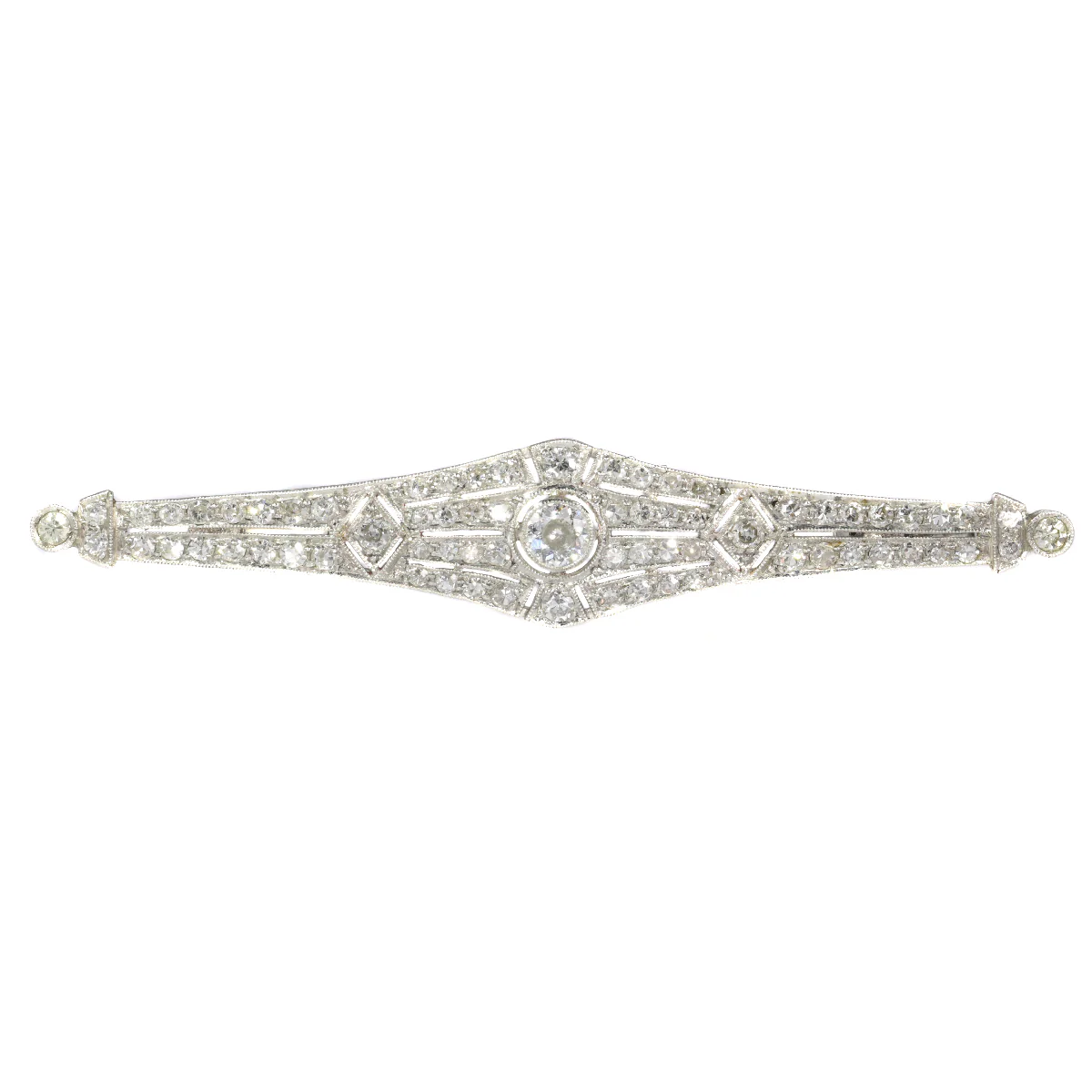
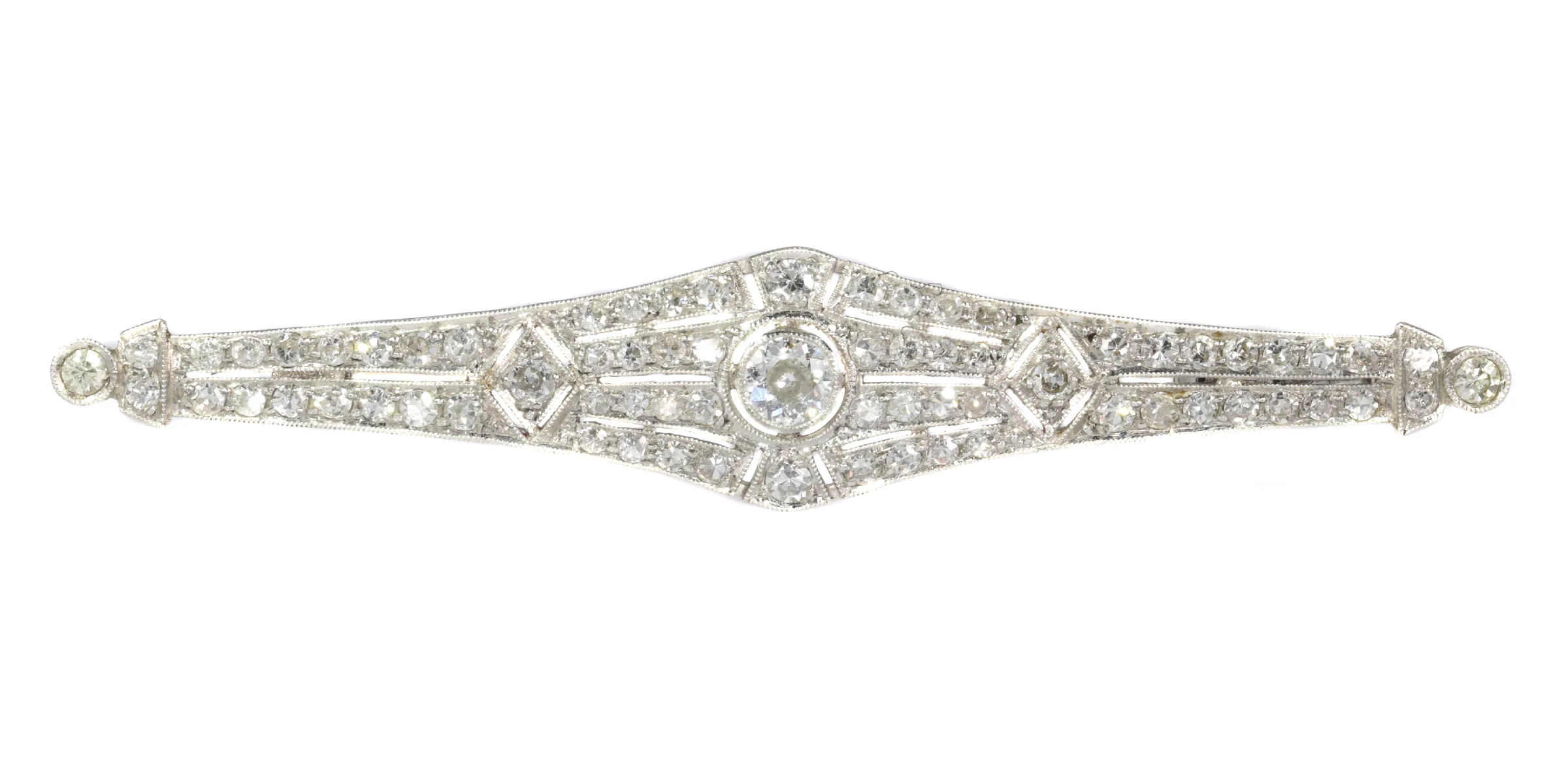
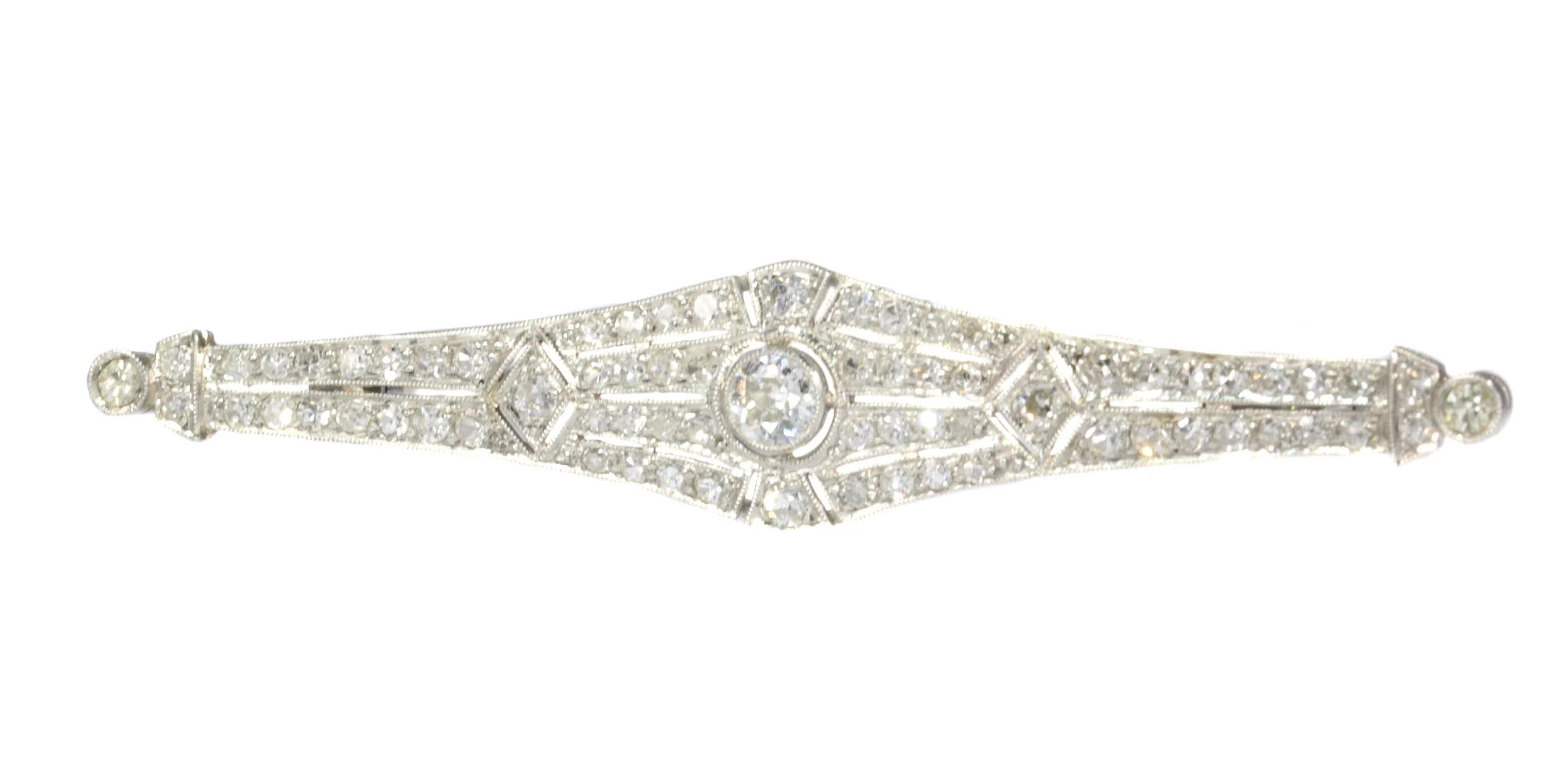
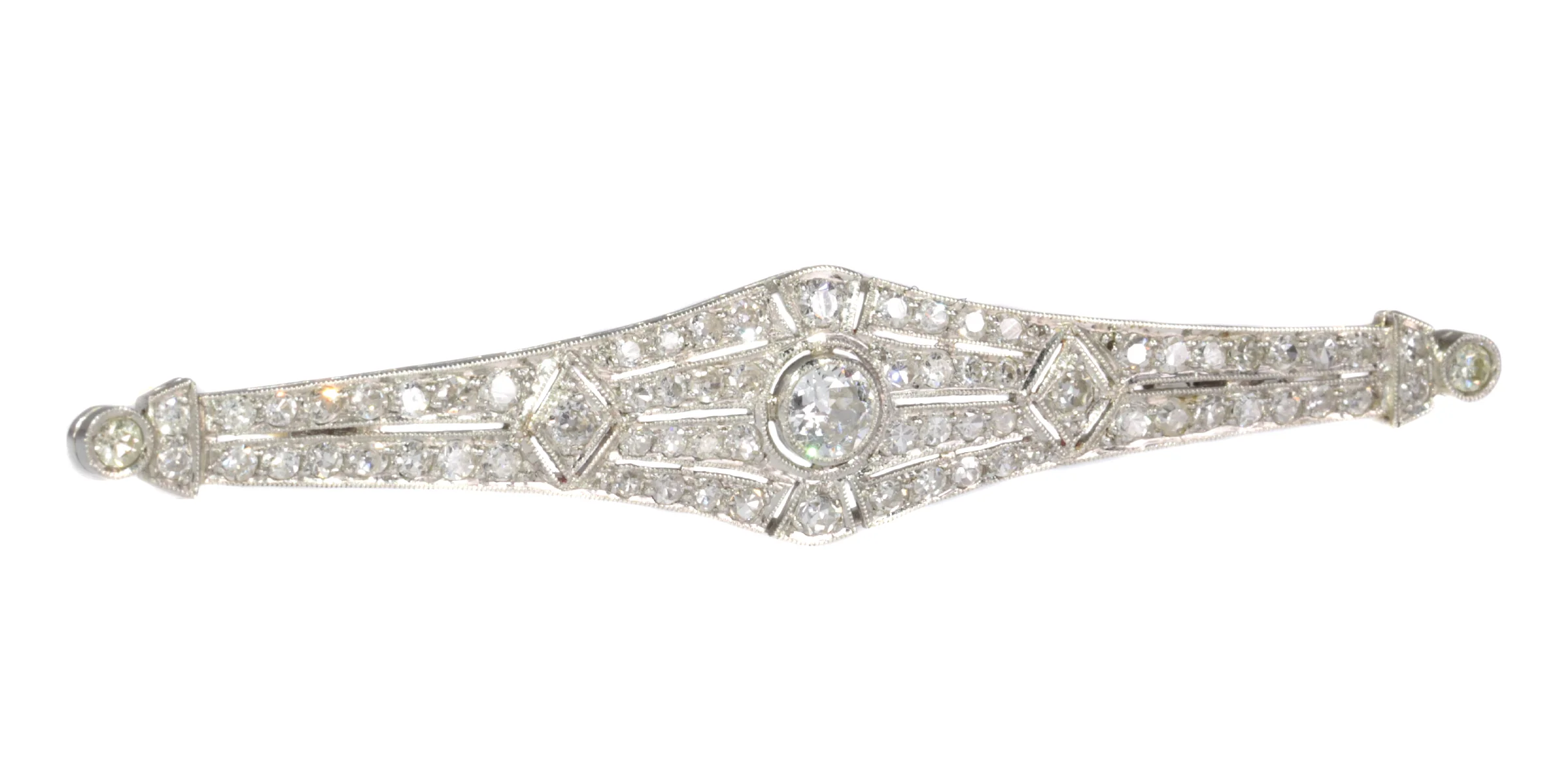
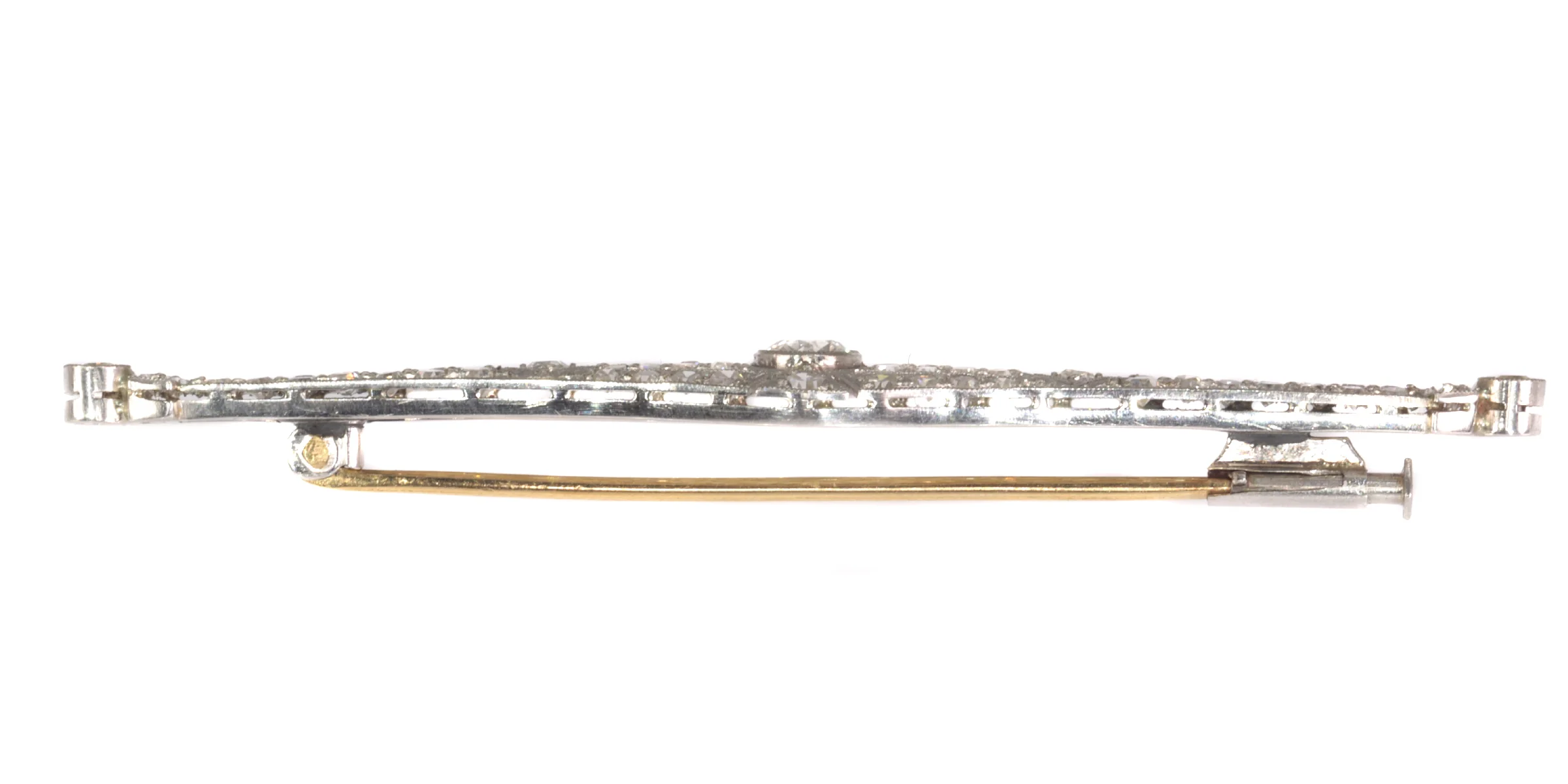
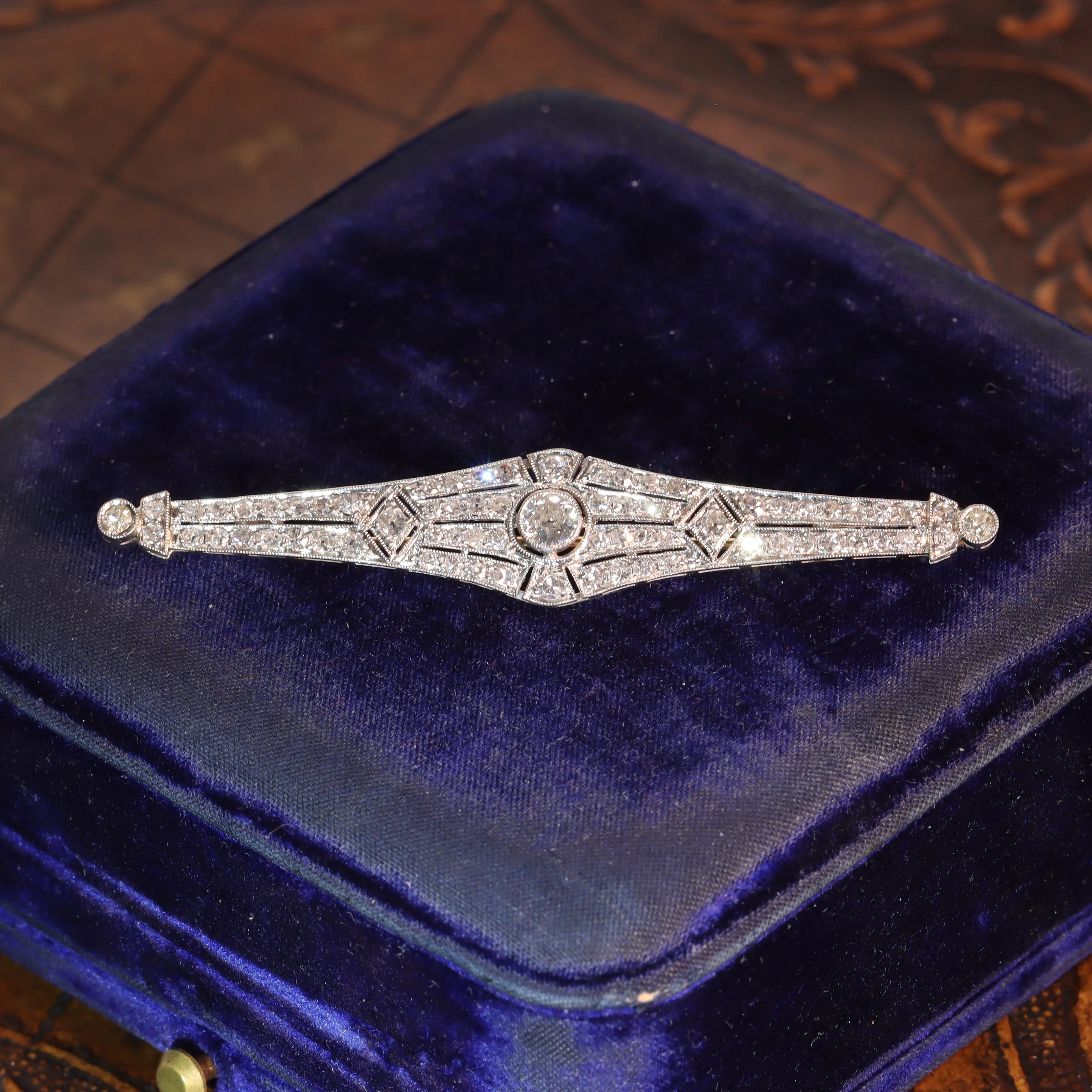
This vintage barrette brooch Art Deco in platinum, a dazzling testament to the 1930s, is a masterpiece of design and elegance. Composed of 71 diamonds, its composition reflects the era's fascination with abstract motifs and geometric shapes. Originating from the Art Deco movement, it illustrates the transition from organic to architectural, symbolizing the blend of glamour and functionality that characterized this period. More than just a brooch, this piece is a brilliant tribute to a transformative era of art and design, embodying the spirit of the Roaring Twenties through its exceptional craftsmanship.
Antique jewelry group:
barrette brooch
Condition:
very good condition
- (more info on our condition scale)
Country of origin:
unknown
Style:
Art Deco - The Art Deco is an eclectic artistic and design style that originated in Paris in the early decades of the 20th century. Emerging in the 1920s, this style persisted until after World War II. The term "Art Deco" was widely used for the first time after an exhibition in 1966, in reference to the 1925 International Exhibition of Modern Decorative and Industrial Arts, which marked the peak of high-end modern style in Paris. Championed by the best designers in the decorative arts, such as fashion and interior decoration, Art Deco influenced all areas of design throughout the 1920s and 1930s, notably architecture and industrial design, as well as visual arts such as painting, graphic arts, and cinema. At the time, this style was perceived as elegant, glamorous, functional, and modern.
- See also: Art Deco or more info on styles
Stylistic features:
Abstract motifs and geometric shapes are typical of the Art Deco period. Art Deco moves away from the soft pastels and organic forms of its predecessor, Art Nouveau, and draws inspiration from many styles and movements of the early 20th century, including Neoclassicism, Constructivism, Cubism, Modernism, and Futurism. Its popularity peaked in Europe during the Roaring Twenties and continued in the United States into the 1930s. Although many design movements have political or philosophical roots or intentions, Art Deco is purely decorative.
Period:
circa 1930
- (events and facts from this era, poetry from this era, fashion from this era)
Material:
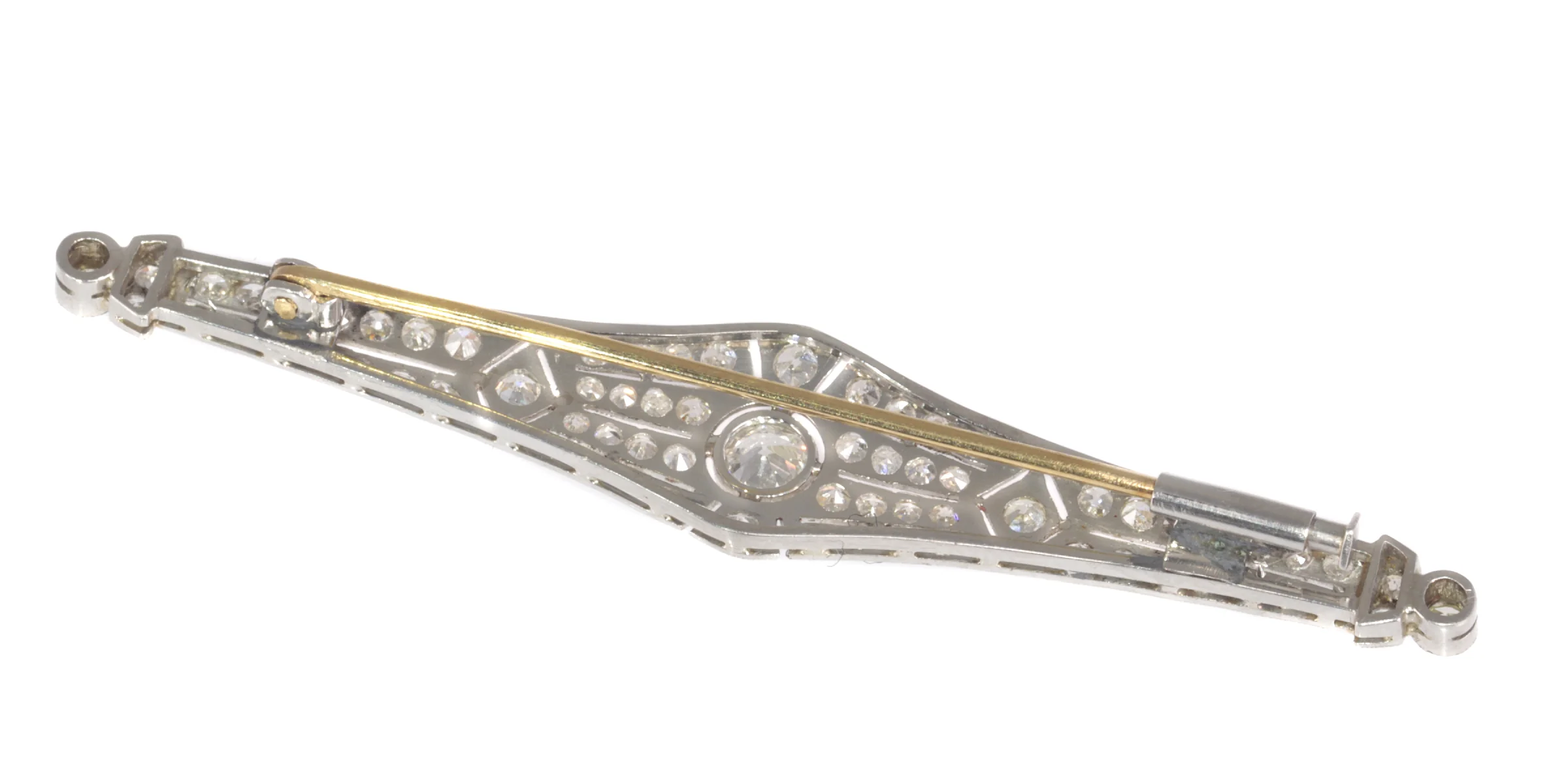
platinum (tested with touchstone)
- (more info on precious metals)
Diamond(s):
One old European cut diamond with an estimated weight of ± 0.27 ct.
70 brilliant cut diamonds (also called 8/8) with an estimated weight of ± 1.60 ct.
Total number of diamonds:
71 pieces.
Total diamond weight:
approximately 1.87 ct. with average color and clarity: H/J, vs/si.
- All weights, color shades, and diamond clarities are approximate, as the stones are not removed from their settings to preserve the integrity of the mounting. In addition, all diamonds are checked by the IJGC laboratory (www.ijgc-worldwide.com) to determine whether they are natural or synthetic, and all diamonds in this jewel are guaranteed 100% natural!
Birthstones:
Diamond is the birthstone (or stone of the month) for April.
- (more info about birthstones)
Hallmarks:
No trace.
- (more info about hallmarks)
Dimensions:
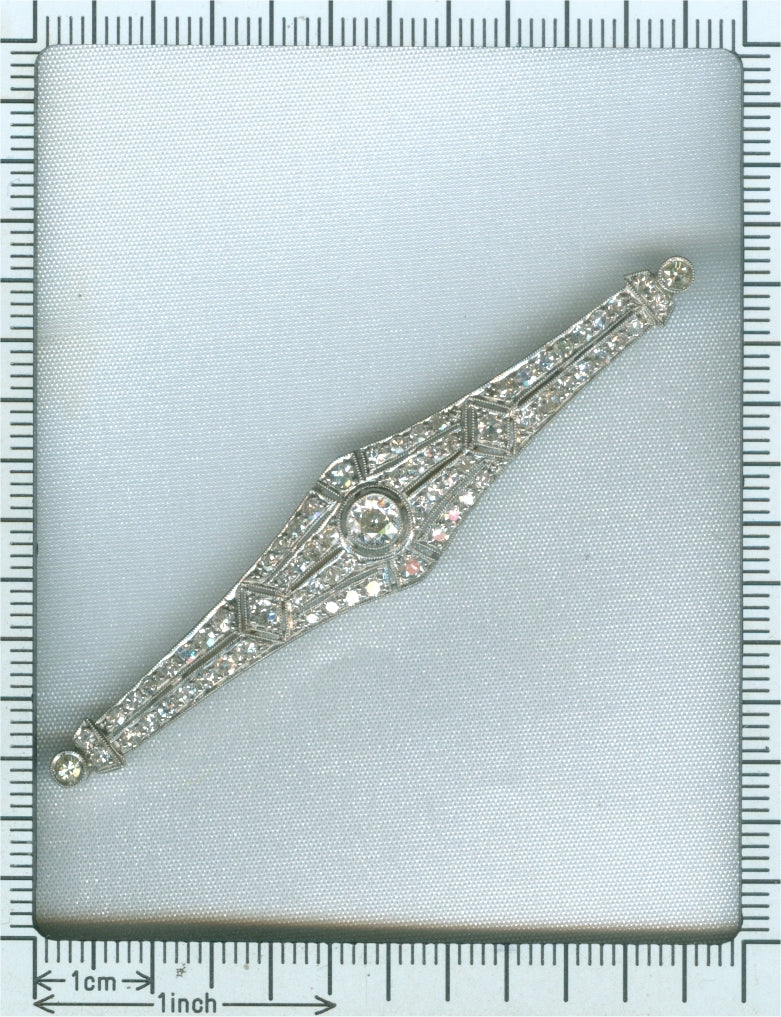
width 6.00 cm (2.36 inches) - See photo with a ruler in cm and inches
Weight:
6.80 grams (4.37 dwt)
Adin
More Images
Timeless twenties: a sparkling Art Deco brooch in platinum
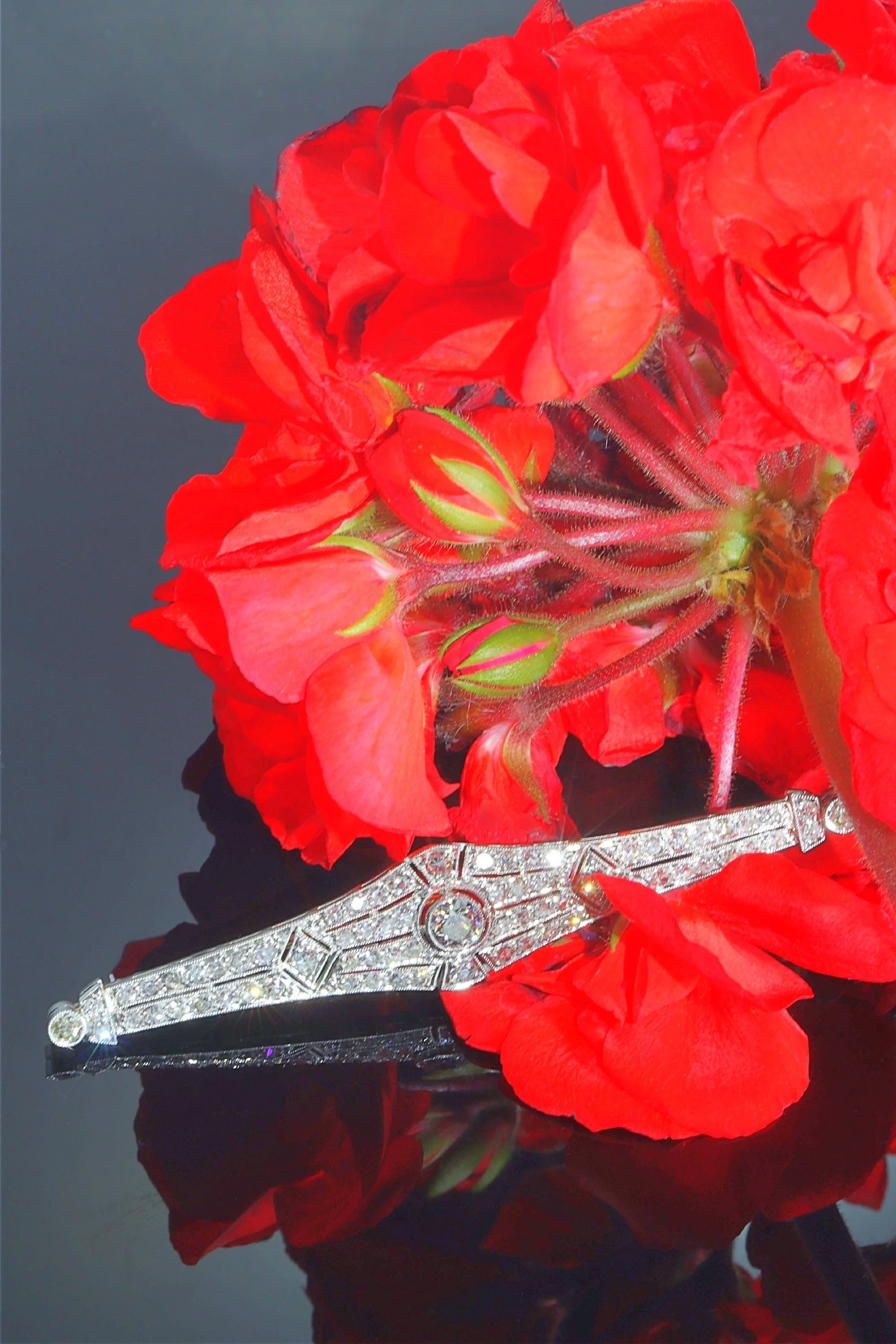
This vintage barrette brooch Art Deco in platinum, a dazzling testament to the 1930s, is a masterpiece of design and elegance. Composed of 71 diamonds, its composition reflects the era's fascination with abstract motifs and geometric shapes. Originating from the Art Deco movement, it illustrates the transition from organic to architectural, symbolizing the blend of glamour and functionality that characterized this period. More than just a brooch, this piece is a brilliant tribute to a transformative era of art and design, embodying the spirit of the Roaring Twenties through its exceptional craftsmanship.
Antique jewelry group:
barrette brooch
Condition:
very good condition
- (more info on our condition scale)
Country of origin:
unknown
Style:
Art Deco - The Art Deco is an eclectic artistic and design style that originated in Paris in the early decades of the 20th century. Emerging in the 1920s, this style persisted until after World War II. The term "Art Deco" was widely used for the first time after an exhibition in 1966, in reference to the 1925 International Exhibition of Modern Decorative and Industrial Arts, which marked the peak of high-end modern style in Paris. Championed by the best designers in the decorative arts, such as fashion and interior decoration, Art Deco influenced all areas of design throughout the 1920s and 1930s, notably architecture and industrial design, as well as visual arts such as painting, graphic arts, and cinema. At the time, this style was perceived as elegant, glamorous, functional, and modern.
- See also: Art Deco or more info on styles
Stylistic features:
Abstract motifs and geometric shapes are typical of the Art Deco period. Art Deco moves away from the soft pastels and organic forms of its predecessor, Art Nouveau, and draws inspiration from many styles and movements of the early 20th century, including Neoclassicism, Constructivism, Cubism, Modernism, and Futurism. Its popularity peaked in Europe during the Roaring Twenties and continued in the United States into the 1930s. Although many design movements have political or philosophical roots or intentions, Art Deco is purely decorative.
Period:
circa 1930
- (events and facts from this era, poetry from this era, fashion from this era)
Material:
platinum (tested with touchstone)
- (more info on precious metals)
Diamond(s):
One old European cut diamond with an estimated weight of ± 0.27 ct.
70 brilliant cut diamonds (also called 8/8) with an estimated weight of ± 1.60 ct.
Total number of diamonds:
71 pieces.
Total diamond weight:
approximately 1.87 ct. with average color and clarity: H/J, vs/si.
- All weights, color shades, and diamond clarities are approximate, as the stones are not removed from their settings to preserve the integrity of the mounting. In addition, all diamonds are checked by the IJGC laboratory (www.ijgc-worldwide.com) to determine whether they are natural or synthetic, and all diamonds in this jewel are guaranteed 100% natural!
Birthstones:
Diamond is the birthstone (or stone of the month) for April.
- (more info about birthstones)
Hallmarks:
No trace.
- (more info about hallmarks)
Dimensions:
width 6.00 cm (2.36 inches) - See photo with a ruler in cm and inches
Weight:
6.80 grams (4.37 dwt)
Adin
Product Information
Product Information
Shipping & Returns
Shipping & Returns
Description
This vintage barrette brooch Art Deco in platinum, a dazzling testament to the 1930s, is a masterpiece of design and elegance. Composed of 71 diamonds, its composition reflects the era's fascination with abstract motifs and geometric shapes. Originating from the Art Deco movement, it illustrates the transition from organic to architectural, symbolizing the blend of glamour and functionality that characterized this period. More than just a brooch, this piece is a brilliant tribute to a transformative era of art and design, embodying the spirit of the Roaring Twenties through its exceptional craftsmanship.
Antique jewelry group:
barrette brooch
Condition:
very good condition
- (more info on our condition scale)
Country of origin:
unknown
Style:
Art Deco - The Art Deco is an eclectic artistic and design style that originated in Paris in the early decades of the 20th century. Emerging in the 1920s, this style persisted until after World War II. The term "Art Deco" was widely used for the first time after an exhibition in 1966, in reference to the 1925 International Exhibition of Modern Decorative and Industrial Arts, which marked the peak of high-end modern style in Paris. Championed by the best designers in the decorative arts, such as fashion and interior decoration, Art Deco influenced all areas of design throughout the 1920s and 1930s, notably architecture and industrial design, as well as visual arts such as painting, graphic arts, and cinema. At the time, this style was perceived as elegant, glamorous, functional, and modern.
- See also: Art Deco or more info on styles
Stylistic features:
Abstract motifs and geometric shapes are typical of the Art Deco period. Art Deco moves away from the soft pastels and organic forms of its predecessor, Art Nouveau, and draws inspiration from many styles and movements of the early 20th century, including Neoclassicism, Constructivism, Cubism, Modernism, and Futurism. Its popularity peaked in Europe during the Roaring Twenties and continued in the United States into the 1930s. Although many design movements have political or philosophical roots or intentions, Art Deco is purely decorative.
Period:
circa 1930
- (events and facts from this era, poetry from this era, fashion from this era)
Material:
platinum (tested with touchstone)
- (more info on precious metals)
Diamond(s):
One old European cut diamond with an estimated weight of ± 0.27 ct.
70 brilliant cut diamonds (also called 8/8) with an estimated weight of ± 1.60 ct.
Total number of diamonds:
71 pieces.
Total diamond weight:
approximately 1.87 ct. with average color and clarity: H/J, vs/si.
- All weights, color shades, and diamond clarities are approximate, as the stones are not removed from their settings to preserve the integrity of the mounting. In addition, all diamonds are checked by the IJGC laboratory (www.ijgc-worldwide.com) to determine whether they are natural or synthetic, and all diamonds in this jewel are guaranteed 100% natural!
Birthstones:
Diamond is the birthstone (or stone of the month) for April.
- (more info about birthstones)
Hallmarks:
No trace.
- (more info about hallmarks)
Dimensions:
width 6.00 cm (2.36 inches) - See photo with a ruler in cm and inches
Weight:
6.80 grams (4.37 dwt)
Adin