Vintage jade with 18-carat gold fittings: the silent chronicles of a Victorian bracelet
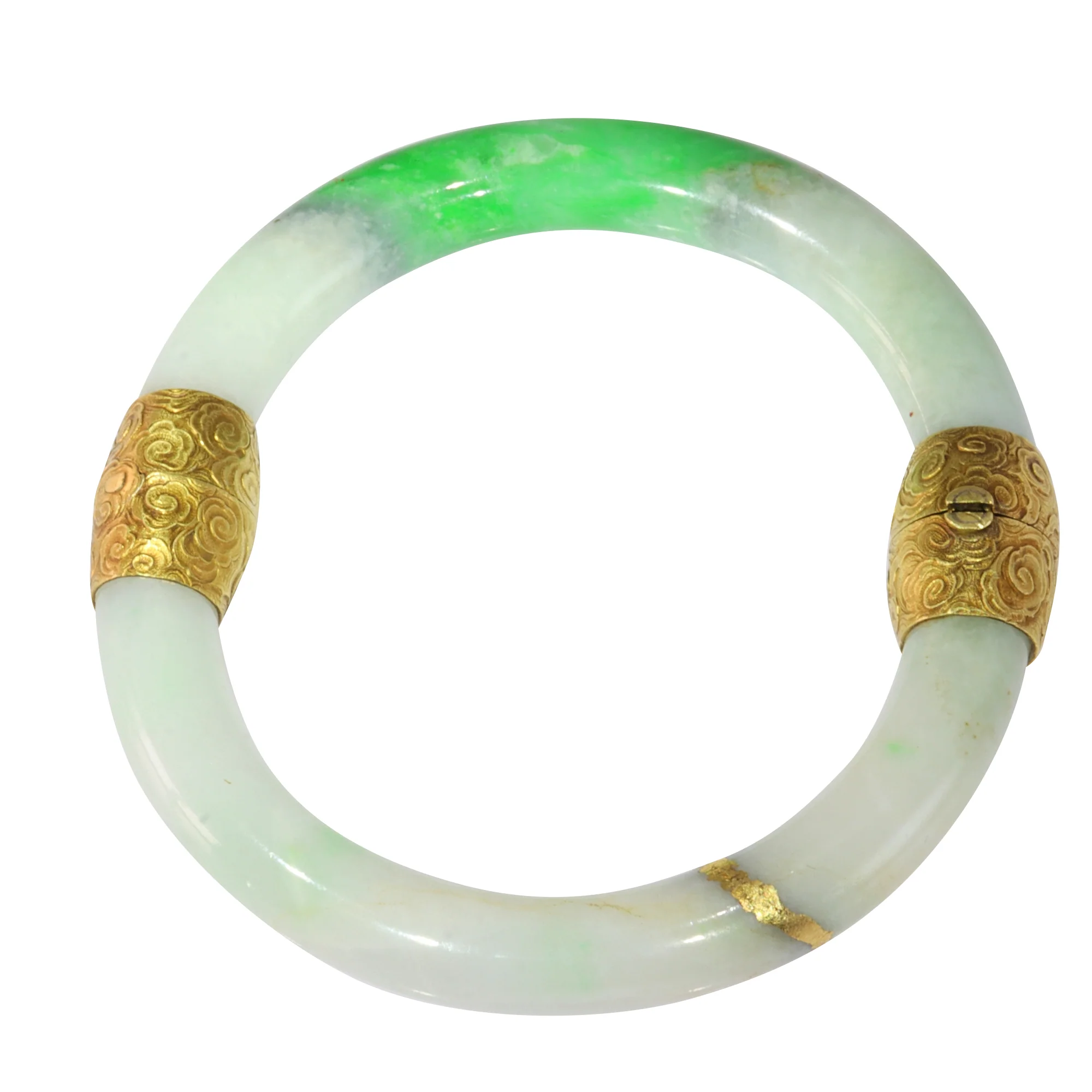
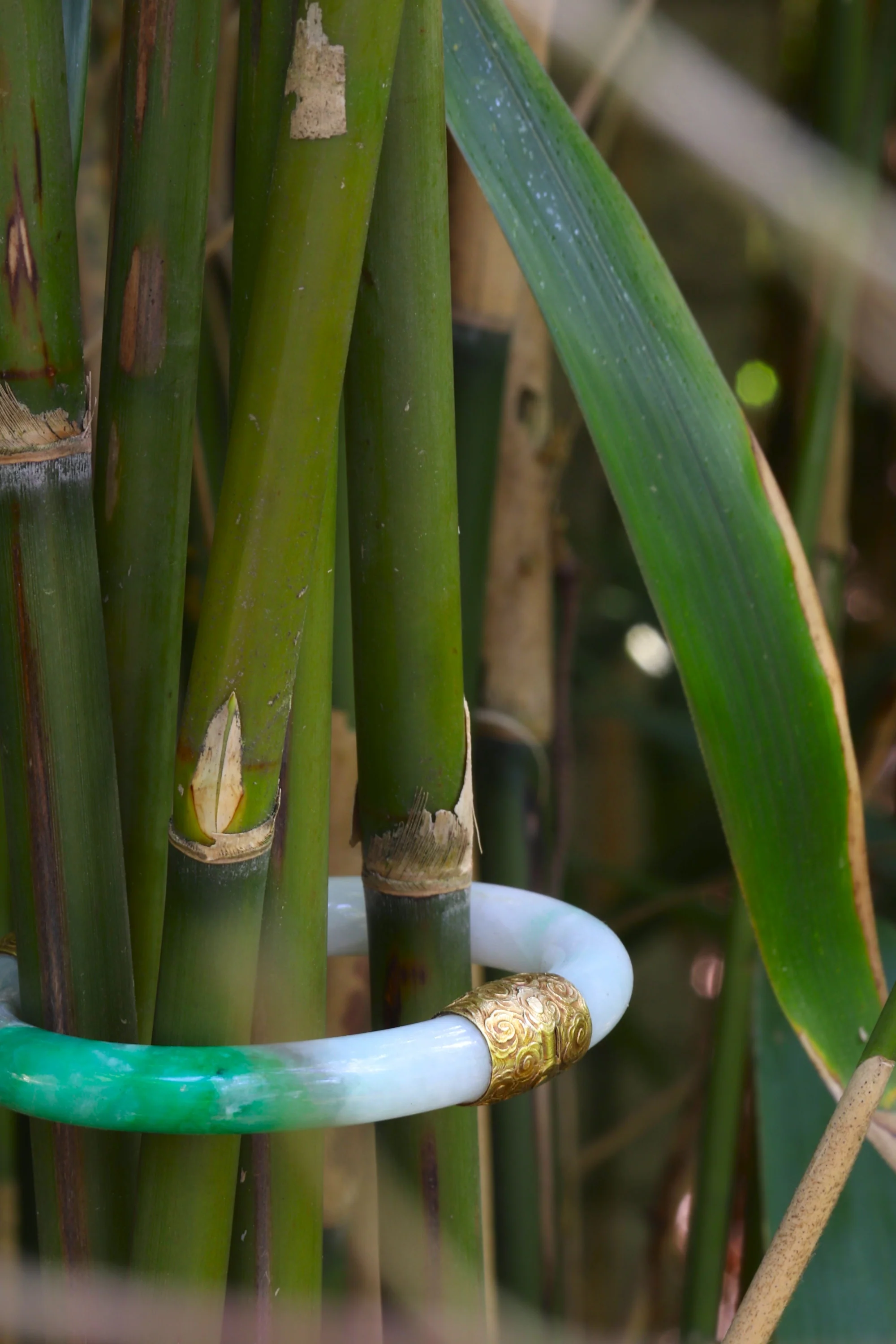
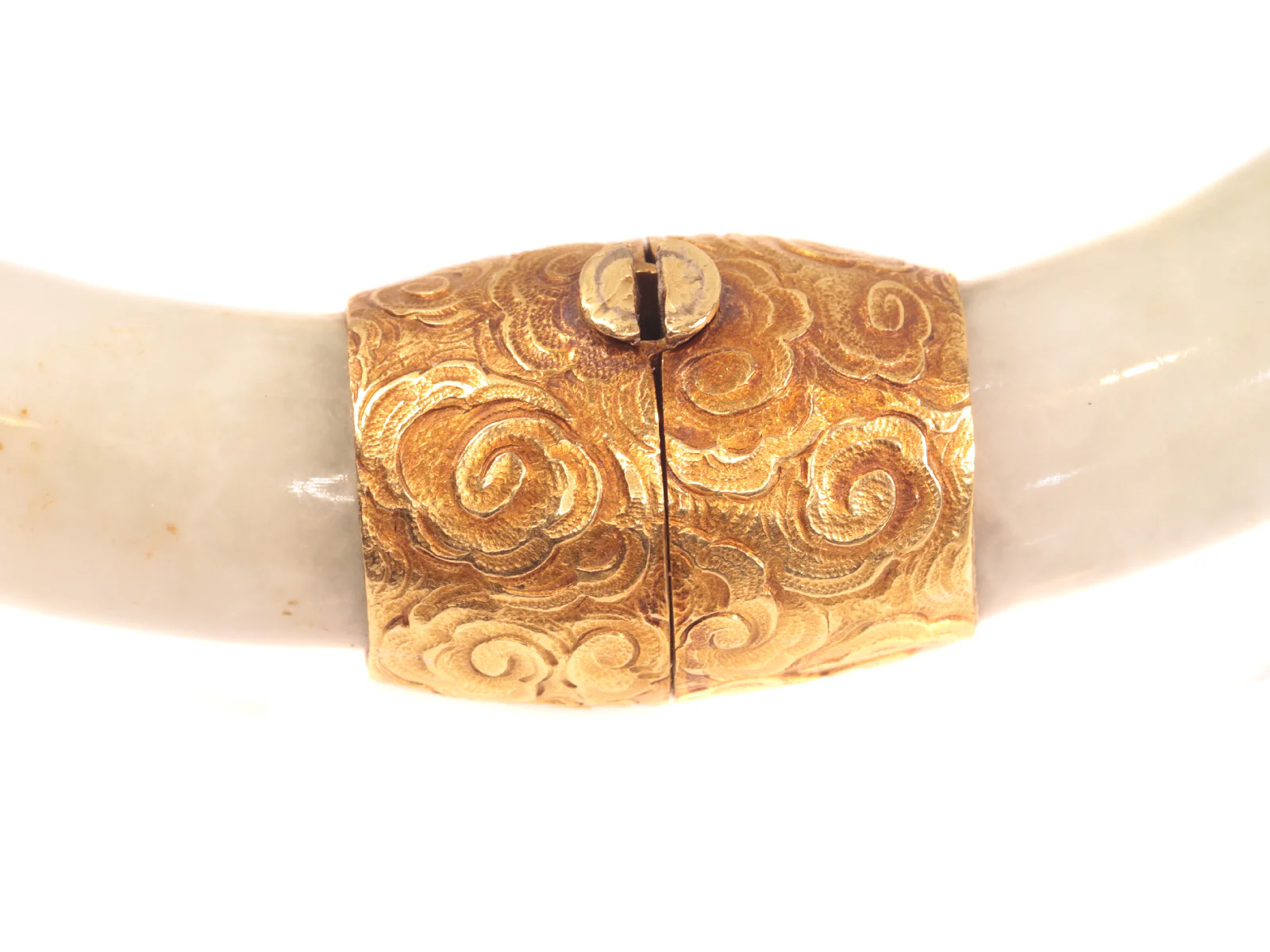
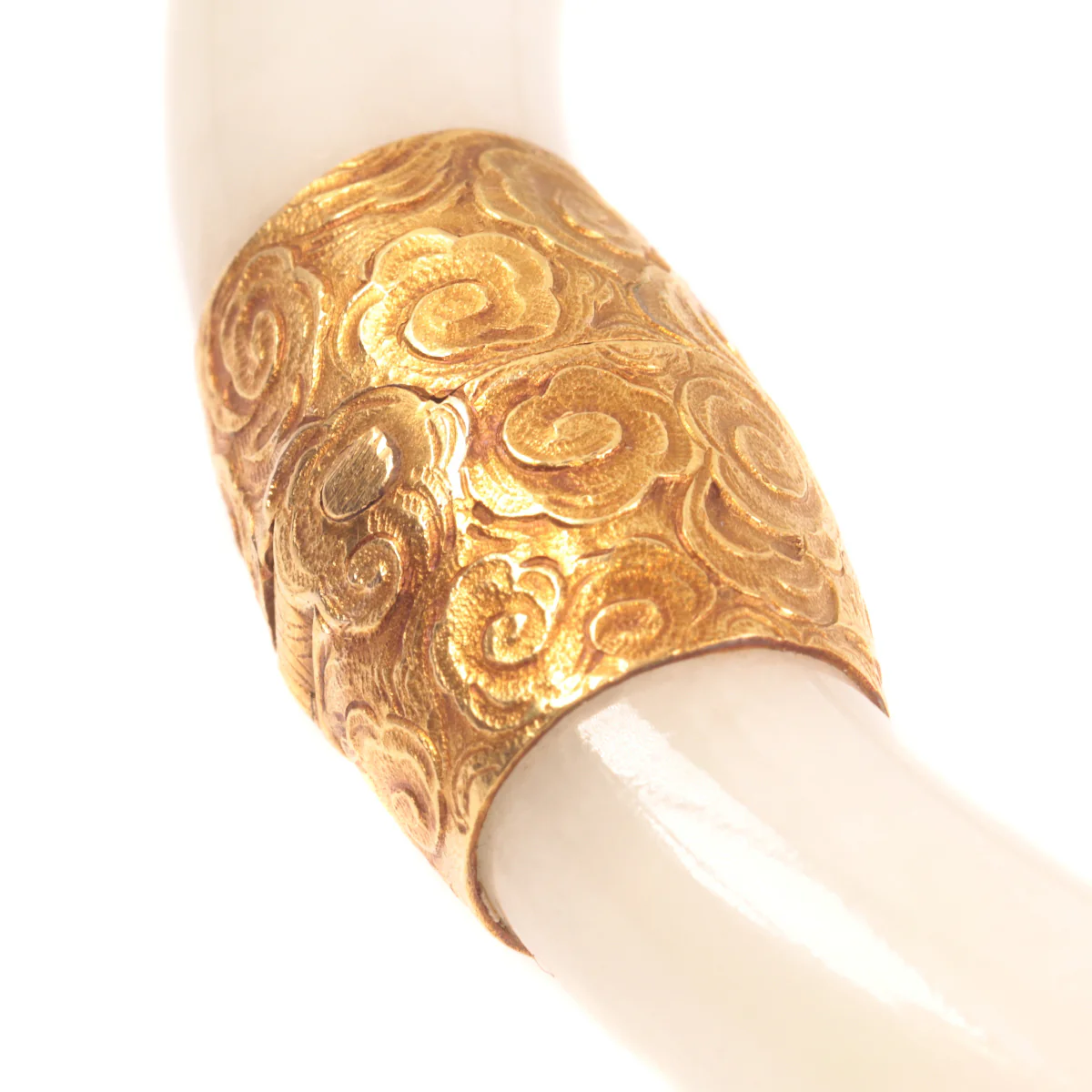
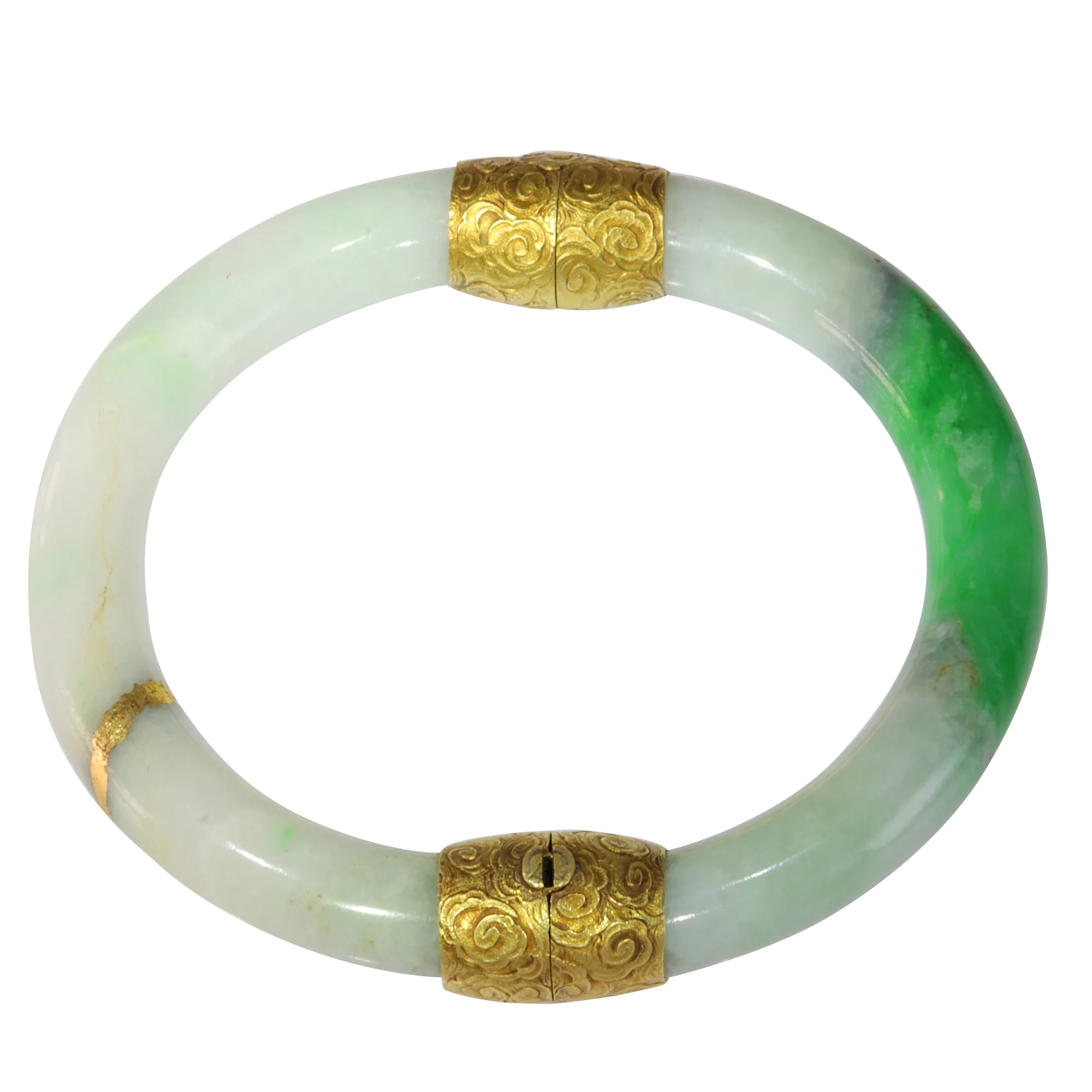
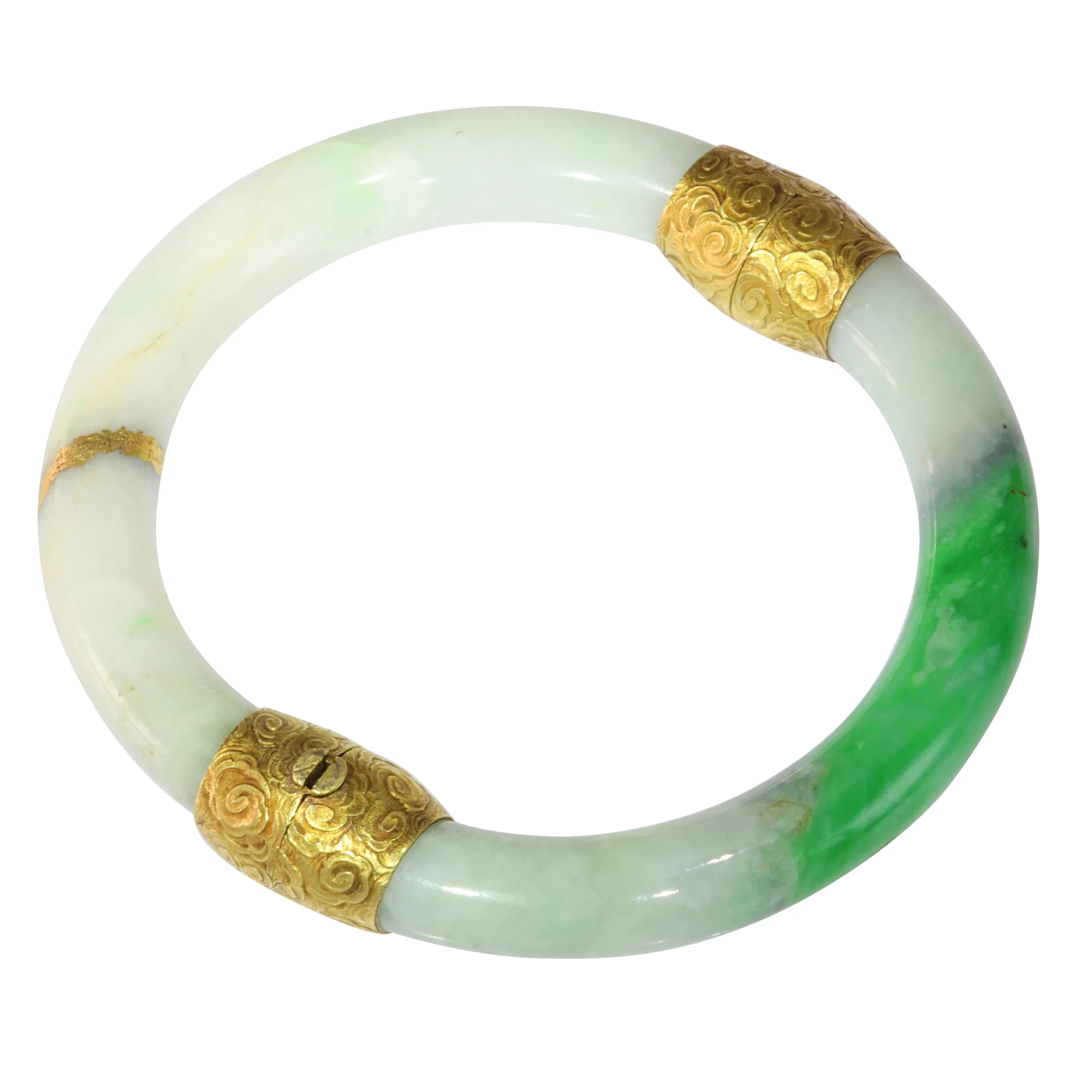
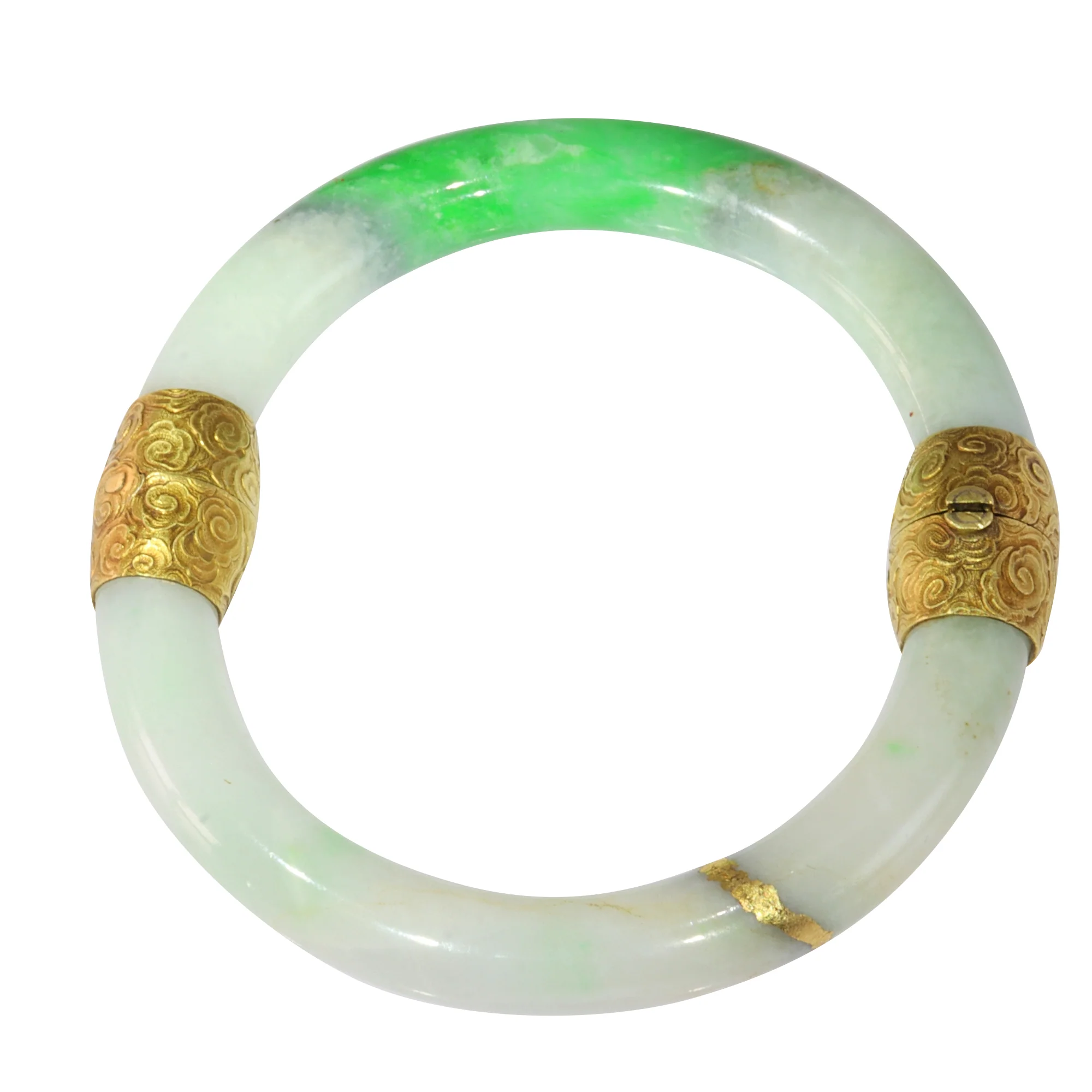
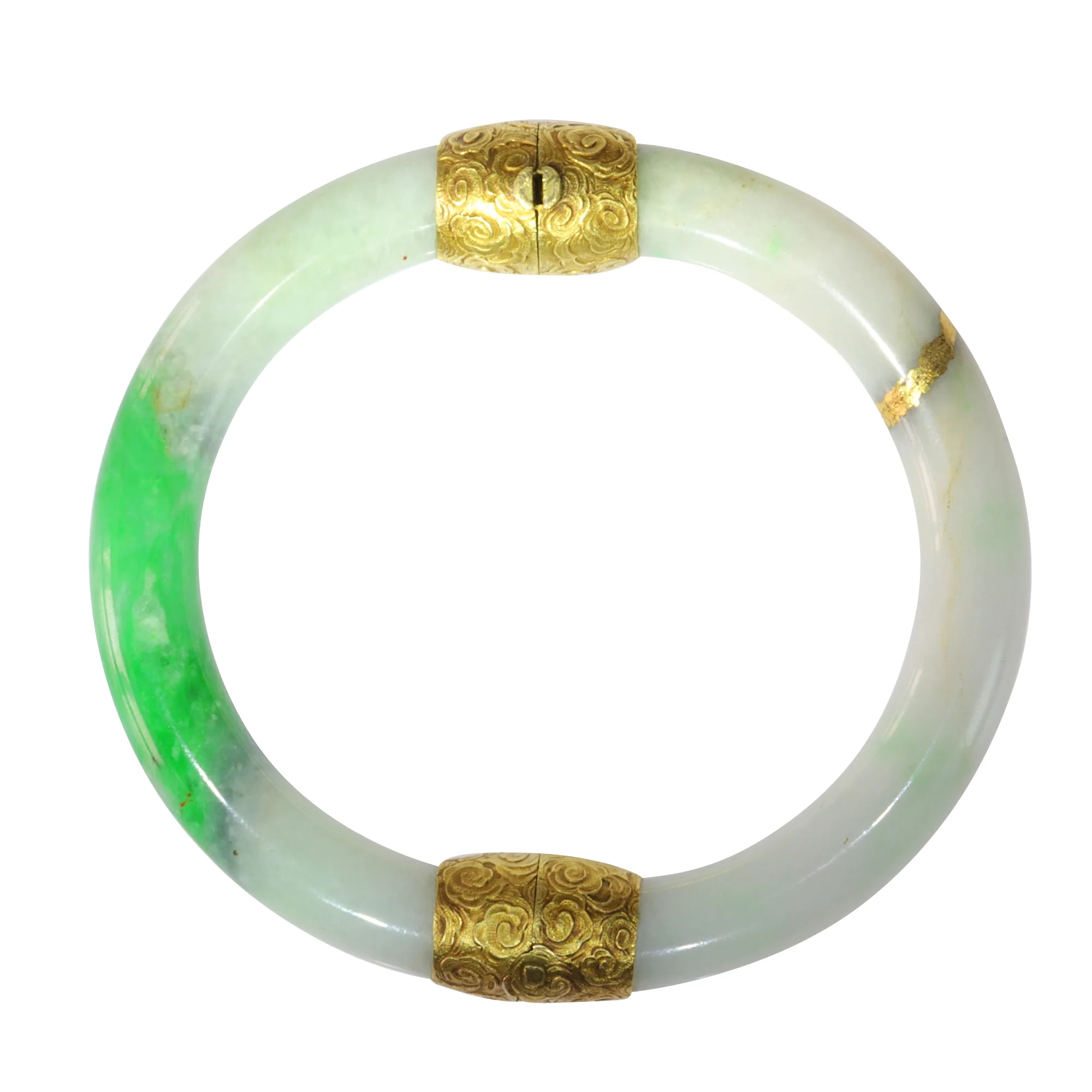
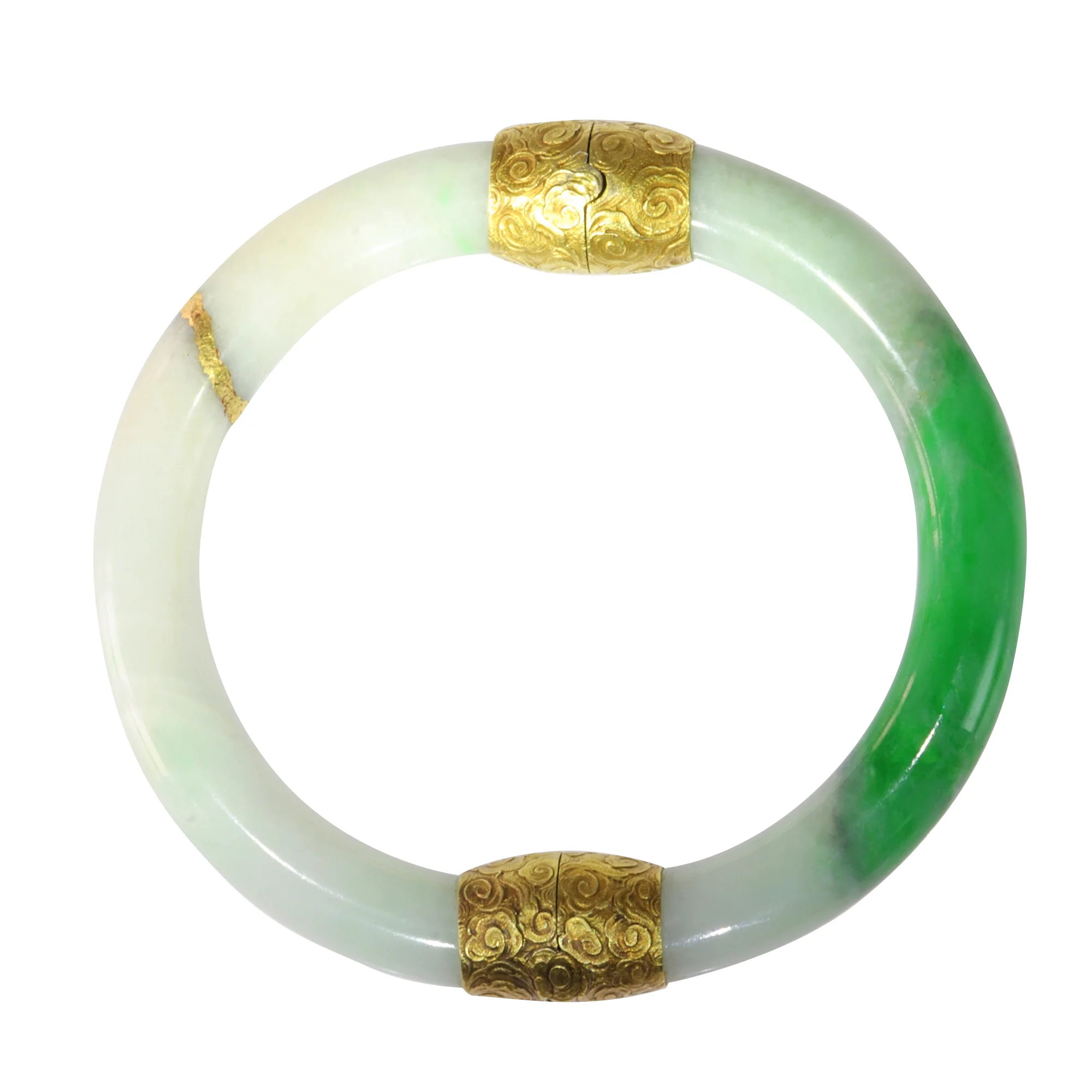
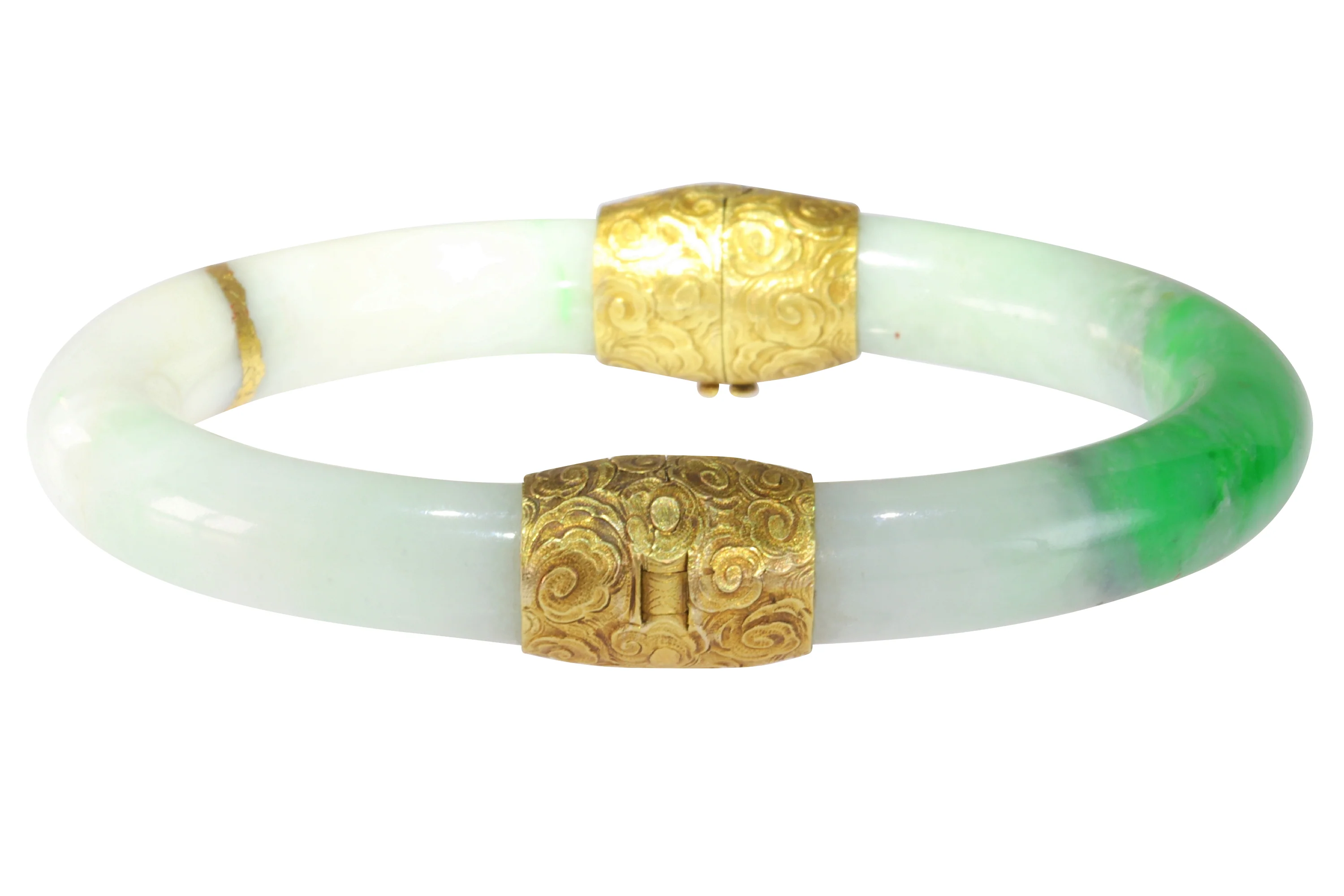
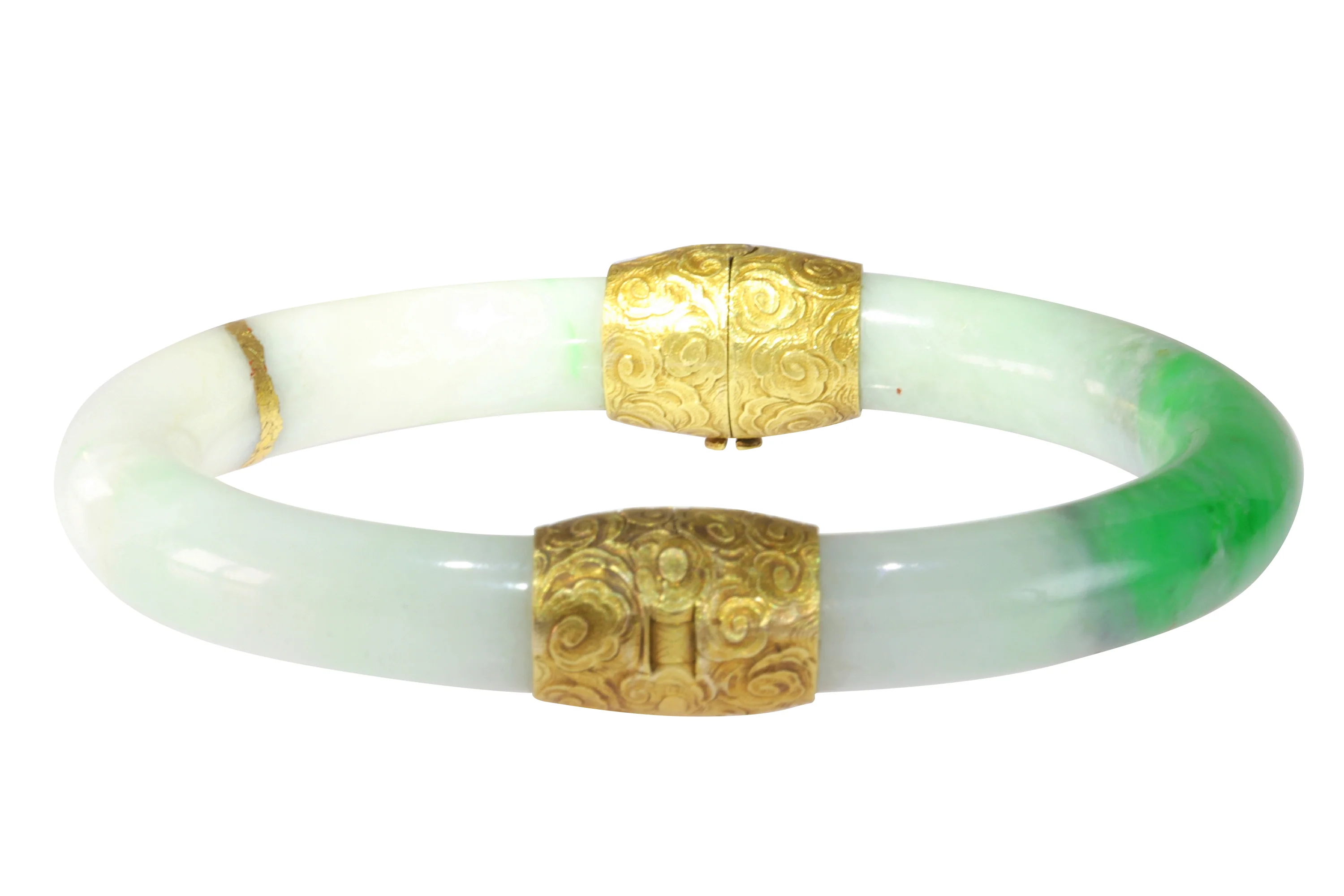
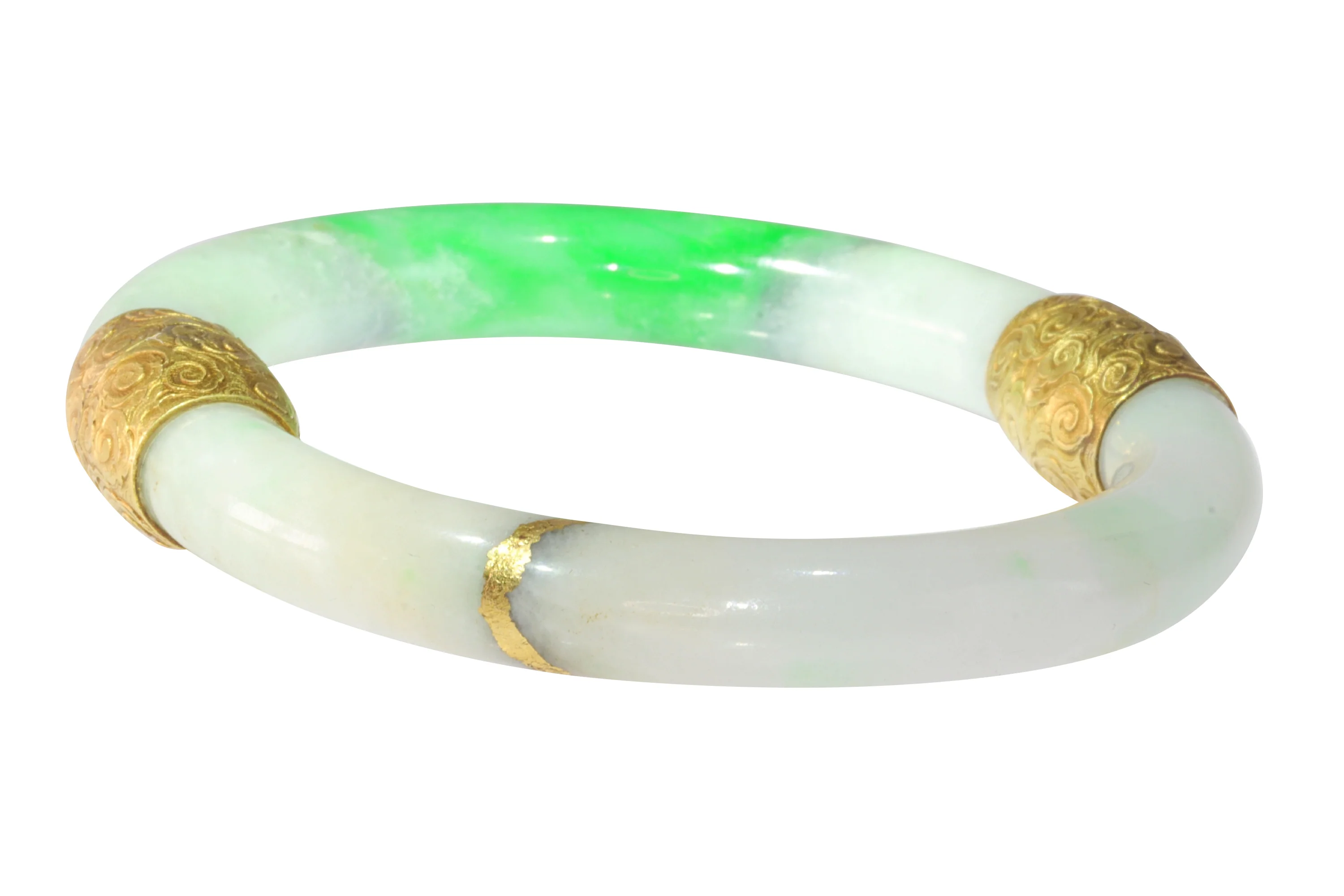
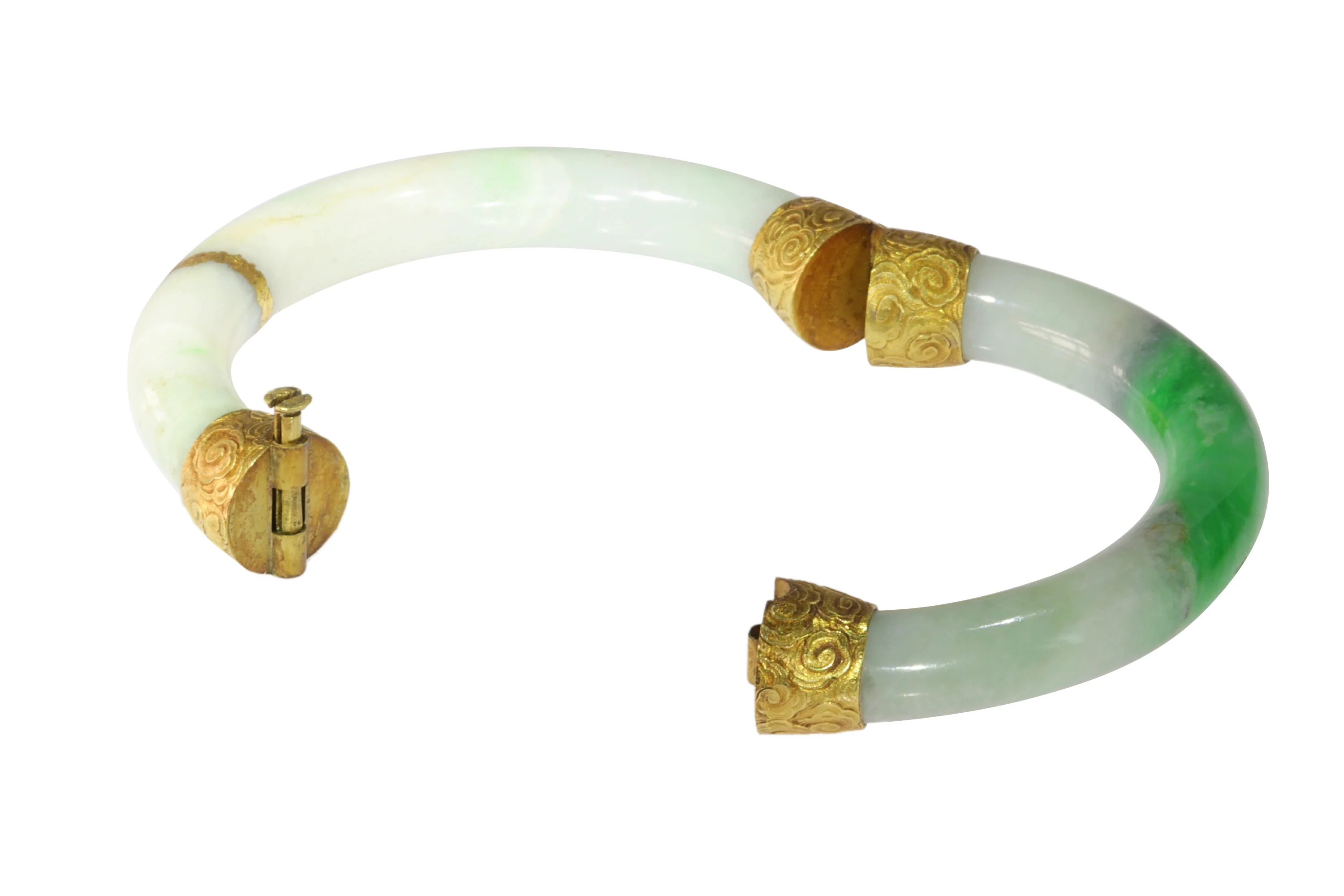
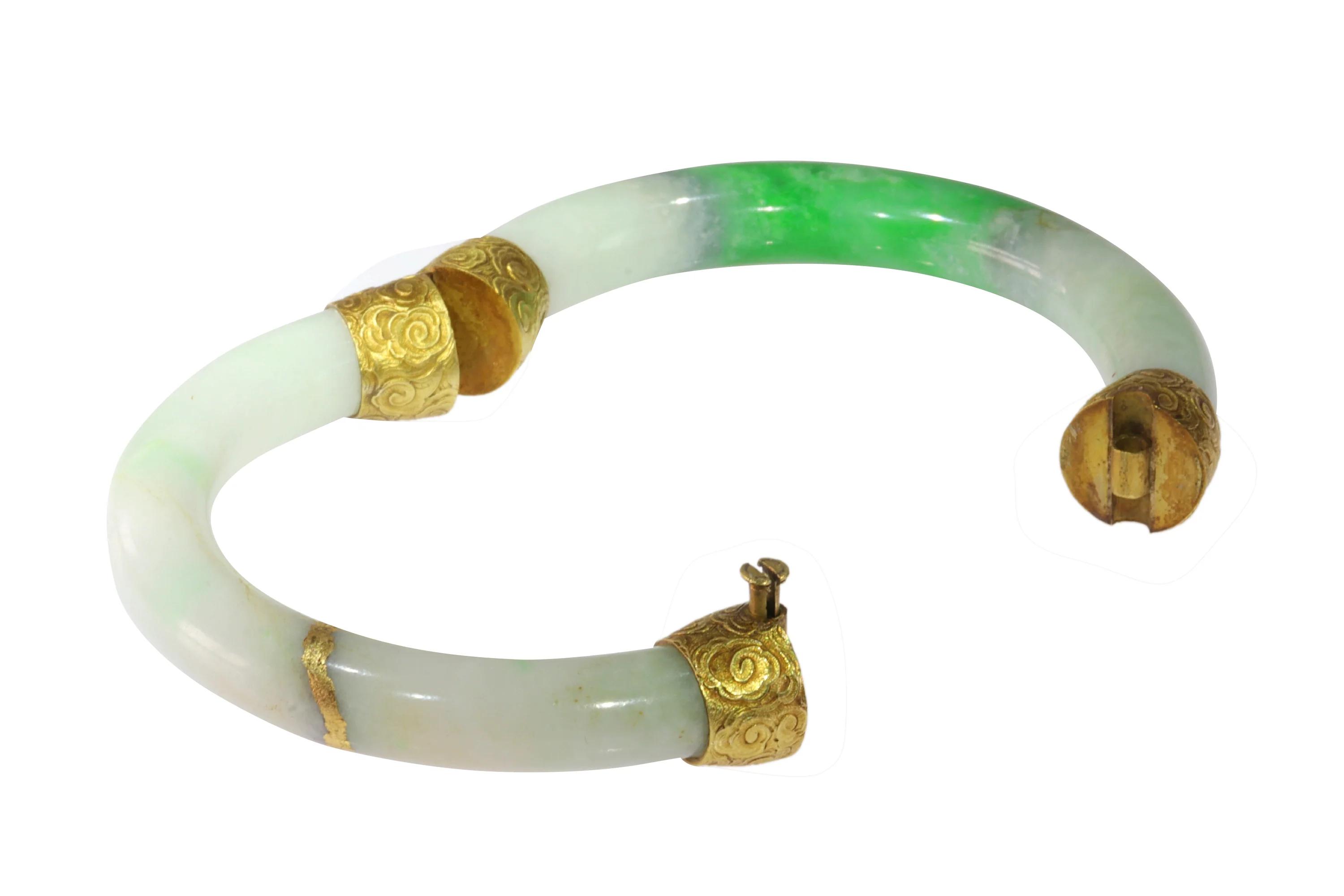
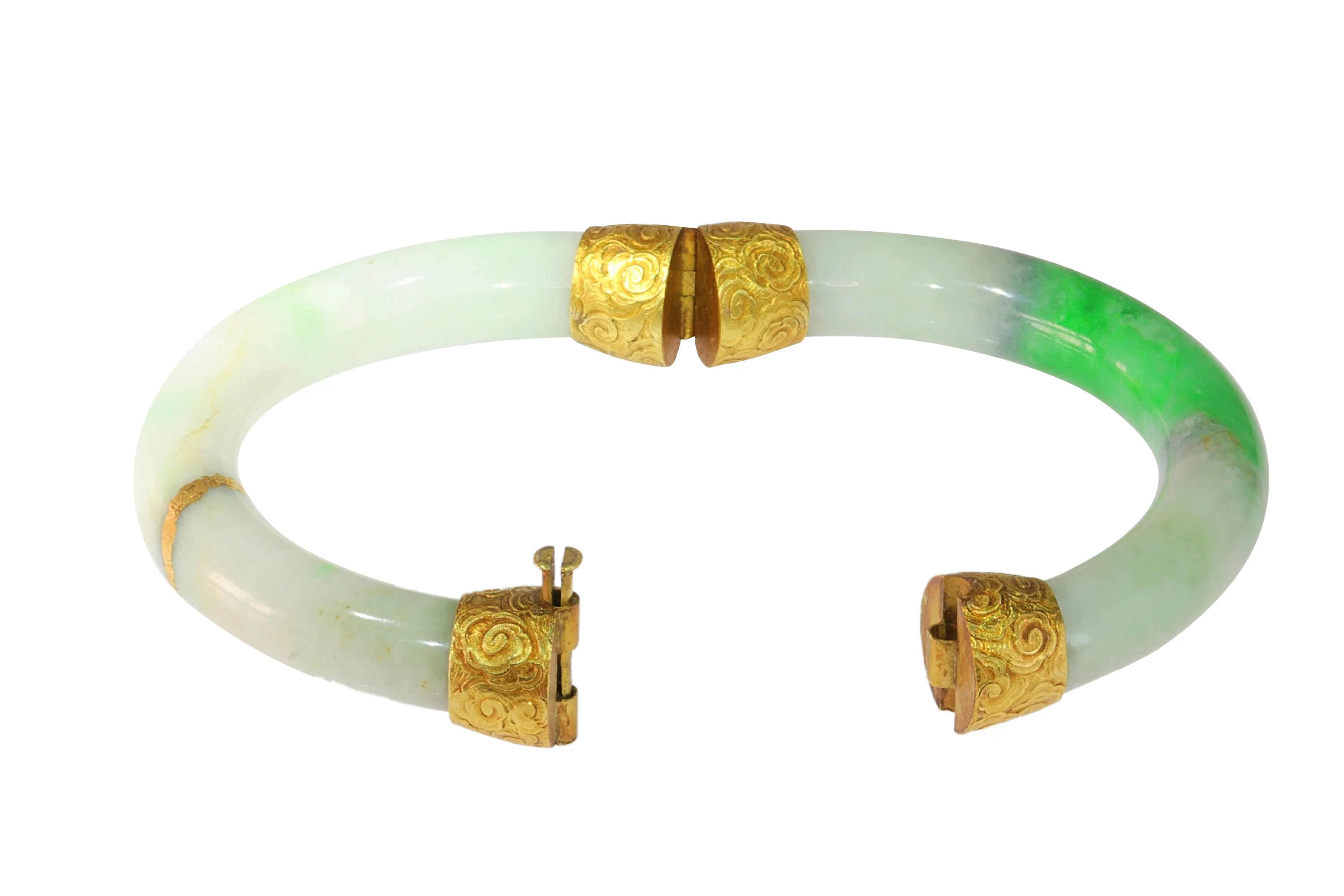
Echoing the resilience, respect, and transformation inherent in its history, this Victorian bangle bracelet, dating from around 1880, is more than an antique; it is a symbol of the eternal beauty of life. The kintsugi technique used to repair its crack profoundly attests to resilience, highlighting the strength found in overcoming and embracing life’s imperfections. Every hand-engraved detail on the clasp and the 18k gold hinge evokes a deep respect for its journey, an acknowledgment that every scar is a chapter in its story. This bracelet has been transformed, thanks to kintsugi, into a unique work of art, embodying the belief that there is profound beauty in evolution and change. It presents itself as a romantic tale, not only of its own story, but also of the beauty of life’s ongoing transformation.
antique jewelry :
Vintage jade with 18k gold fittings: Silent chronicles of a Victorian bracelet
Condition:
Very good, with a respectful nod to its journey. This bangle bracelet is adorned with a delicate kintsugi repair, a traditional Japanese art that enhances its charm. This technique, far from concealing, celebrates the piece’s history, making the repair an integral part of its beauty. The visible golden seam of the kintsugi gives it a unique character, symbolizing resilience and the art of accepting imperfections as an essential element of life.
- (more info on our condition scale)
Country of origin:
unknown, China?
Style:
Victorian - Victorian decorative arts refer to the style of decorative arts from the Victorian era. This era is known for its eclectic revival and interpretation of historical styles, as well as the introduction of intercultural influences from the Middle East and Asia into furniture, accessories, and interior decoration. Victorian design is widely perceived as having shown a regrettable excess of ornamentation. The Arts and Crafts movement, the Aesthetic movement, the Anglo-Japanese style, and Art Nouveau all have their origins at the end of the Victorian era.
- See also: Victorian or more information about styles
Style specifics:
The Romantic Victorian period - Experts divide the reign of Queen Victoria, also called the Victorian era (1837 - 1901), into three periods of about twenty years each: the Romantic Victorian period (1837 - 1860), the High Victorian period (1860 - 1880), and the Late or Aesthetic Victorian period (1880 - 1901).
We consider this period as belonging to the Romantic Victorian period. This period covers the coronation of Victoria as Queen of Great Britain and Ireland, her marriage to King Albert, their love and devotion to their marriage and their country, which were sources of inspiration. The jewelry of this period is made with intricate carvings, special techniques where enamel is subtly worked. These techniques allowed the jewelry to have a certain opulence with less precious metal. At that time, precious metals were very rare. The most prized (semi-)precious stones of the time were amethyst, coral, garnet, cultured pearls, and turquoise. The connotation is obviously sentimental, symbolic, and romantic, with motifs reminiscent of the Gothic and/or Renaissance style, and abundant use of motifs such as anchors, birds, branches, crosses, hearts, and snakes.
Period:
around 1880
- (events and facts of the time, poetry of the time, fashion of the time)
Material:
18-carat yellow gold (tested with a touchstone)
- (more info about precious metals)
Additional information:
Jade – Jade is an ornamental mineral, mainly known for its green varieties. It can refer to two different minerals: nephrite, a calcium and magnesium silicate, or jadeite, a sodium and aluminum silicate.
Jade occupies an important place in ancient Asian art, but it also holds a significant place in many other cultures.
In the art history of the Chinese empire, jade held particular importance, comparable to that of gold and diamonds in the West. It was used for making the finest objects and most beautiful cult figures, as well as for the funerary furnishings of high-ranking members of the imperial family. Thanks to this importance and the rise of the Chinese middle class, in 2010, the finest jade, found in the form of "mutton fat" jade nuggets—so named because of their marbled white consistency—could sell for $3,000 an ounce, ten times more than ten years earlier.
Jade can be enhanced (sometimes called "stabilized"). Some dealers talk about grades, but the degree of enhancement differs from the quality of color and texture. In other words, type A jadeite is not enhanced, but may display poor color and texture. There are three main enhancement methods, sometimes called the ABC treatment system:
Type A jadeite has undergone no treatment, except for surface waxing.
Type B treatment consists of exposing a promising but stained piece of jadeite to bleaching agents and/or acids, then impregnating it with a clear polymer resin. This results in a significant improvement in the material's transparency and color. Currently, infrared spectroscopy is the most accurate test for detecting the presence of polymers in jadeite.
Type C jade has been dyed or artificially colored. The effects are somewhat uncontrollable and can result in a dull brown. In all cases, translucency is generally lost.
B+C jade is a combination of B and C: it has been both impregnated and artificially colored.
Type D jade refers to a composite stone such as a doublet comprising a jade upper part with a plastic backing.
(From: Wikipedia)
Gemstones:
Two pieces of A-quality jade (see photos for certificate)
Engraving:
the hinge and the clasp are skillfully hand-engraved
Hallmarks:
No trace.
- (more information about hallmarks)
Dimensions:
inner circumference 20.80 cm (8.19 inches) - See photo with a ruler in cm and inches
Weight:
85.00 grams (54.66 dwt)
More Images
Vintage jade with 18-carat gold fittings: the silent chronicles of a Victorian bracelet
Echoing the resilience, respect, and transformation inherent in its history, this Victorian bangle bracelet, dating from around 1880, is more than an antique; it is a symbol of the eternal beauty of life. The kintsugi technique used to repair its crack profoundly attests to resilience, highlighting the strength found in overcoming and embracing life’s imperfections. Every hand-engraved detail on the clasp and the 18k gold hinge evokes a deep respect for its journey, an acknowledgment that every scar is a chapter in its story. This bracelet has been transformed, thanks to kintsugi, into a unique work of art, embodying the belief that there is profound beauty in evolution and change. It presents itself as a romantic tale, not only of its own story, but also of the beauty of life’s ongoing transformation.
antique jewelry :
Vintage jade with 18k gold fittings: Silent chronicles of a Victorian bracelet
Condition:
Very good, with a respectful nod to its journey. This bangle bracelet is adorned with a delicate kintsugi repair, a traditional Japanese art that enhances its charm. This technique, far from concealing, celebrates the piece’s history, making the repair an integral part of its beauty. The visible golden seam of the kintsugi gives it a unique character, symbolizing resilience and the art of accepting imperfections as an essential element of life.
- (more info on our condition scale)
Country of origin:
unknown, China?
Style:
Victorian - Victorian decorative arts refer to the style of decorative arts from the Victorian era. This era is known for its eclectic revival and interpretation of historical styles, as well as the introduction of intercultural influences from the Middle East and Asia into furniture, accessories, and interior decoration. Victorian design is widely perceived as having shown a regrettable excess of ornamentation. The Arts and Crafts movement, the Aesthetic movement, the Anglo-Japanese style, and Art Nouveau all have their origins at the end of the Victorian era.
- See also: Victorian or more information about styles
Style specifics:
The Romantic Victorian period - Experts divide the reign of Queen Victoria, also called the Victorian era (1837 - 1901), into three periods of about twenty years each: the Romantic Victorian period (1837 - 1860), the High Victorian period (1860 - 1880), and the Late or Aesthetic Victorian period (1880 - 1901).
We consider this period as belonging to the Romantic Victorian period. This period covers the coronation of Victoria as Queen of Great Britain and Ireland, her marriage to King Albert, their love and devotion to their marriage and their country, which were sources of inspiration. The jewelry of this period is made with intricate carvings, special techniques where enamel is subtly worked. These techniques allowed the jewelry to have a certain opulence with less precious metal. At that time, precious metals were very rare. The most prized (semi-)precious stones of the time were amethyst, coral, garnet, cultured pearls, and turquoise. The connotation is obviously sentimental, symbolic, and romantic, with motifs reminiscent of the Gothic and/or Renaissance style, and abundant use of motifs such as anchors, birds, branches, crosses, hearts, and snakes.
Period:
around 1880
- (events and facts of the time, poetry of the time, fashion of the time)
Material:
18-carat yellow gold (tested with a touchstone)
- (more info about precious metals)
Additional information:
Jade – Jade is an ornamental mineral, mainly known for its green varieties. It can refer to two different minerals: nephrite, a calcium and magnesium silicate, or jadeite, a sodium and aluminum silicate.
Jade occupies an important place in ancient Asian art, but it also holds a significant place in many other cultures.
In the art history of the Chinese empire, jade held particular importance, comparable to that of gold and diamonds in the West. It was used for making the finest objects and most beautiful cult figures, as well as for the funerary furnishings of high-ranking members of the imperial family. Thanks to this importance and the rise of the Chinese middle class, in 2010, the finest jade, found in the form of "mutton fat" jade nuggets—so named because of their marbled white consistency—could sell for $3,000 an ounce, ten times more than ten years earlier.
Jade can be enhanced (sometimes called "stabilized"). Some dealers talk about grades, but the degree of enhancement differs from the quality of color and texture. In other words, type A jadeite is not enhanced, but may display poor color and texture. There are three main enhancement methods, sometimes called the ABC treatment system:
Type A jadeite has undergone no treatment, except for surface waxing.
Type B treatment consists of exposing a promising but stained piece of jadeite to bleaching agents and/or acids, then impregnating it with a clear polymer resin. This results in a significant improvement in the material's transparency and color. Currently, infrared spectroscopy is the most accurate test for detecting the presence of polymers in jadeite.
Type C jade has been dyed or artificially colored. The effects are somewhat uncontrollable and can result in a dull brown. In all cases, translucency is generally lost.
B+C jade is a combination of B and C: it has been both impregnated and artificially colored.
Type D jade refers to a composite stone such as a doublet comprising a jade upper part with a plastic backing.
(From: Wikipedia)
Gemstones:
Two pieces of A-quality jade (see photos for certificate)
Engraving:
the hinge and the clasp are skillfully hand-engraved
Hallmarks:
No trace.
- (more information about hallmarks)
Dimensions:
inner circumference 20.80 cm (8.19 inches) - See photo with a ruler in cm and inches
Weight:
85.00 grams (54.66 dwt)
Product Information
Product Information
Shipping & Returns
Shipping & Returns
Description
Echoing the resilience, respect, and transformation inherent in its history, this Victorian bangle bracelet, dating from around 1880, is more than an antique; it is a symbol of the eternal beauty of life. The kintsugi technique used to repair its crack profoundly attests to resilience, highlighting the strength found in overcoming and embracing life’s imperfections. Every hand-engraved detail on the clasp and the 18k gold hinge evokes a deep respect for its journey, an acknowledgment that every scar is a chapter in its story. This bracelet has been transformed, thanks to kintsugi, into a unique work of art, embodying the belief that there is profound beauty in evolution and change. It presents itself as a romantic tale, not only of its own story, but also of the beauty of life’s ongoing transformation.
antique jewelry :
Vintage jade with 18k gold fittings: Silent chronicles of a Victorian bracelet
Condition:
Very good, with a respectful nod to its journey. This bangle bracelet is adorned with a delicate kintsugi repair, a traditional Japanese art that enhances its charm. This technique, far from concealing, celebrates the piece’s history, making the repair an integral part of its beauty. The visible golden seam of the kintsugi gives it a unique character, symbolizing resilience and the art of accepting imperfections as an essential element of life.
- (more info on our condition scale)
Country of origin:
unknown, China?
Style:
Victorian - Victorian decorative arts refer to the style of decorative arts from the Victorian era. This era is known for its eclectic revival and interpretation of historical styles, as well as the introduction of intercultural influences from the Middle East and Asia into furniture, accessories, and interior decoration. Victorian design is widely perceived as having shown a regrettable excess of ornamentation. The Arts and Crafts movement, the Aesthetic movement, the Anglo-Japanese style, and Art Nouveau all have their origins at the end of the Victorian era.
- See also: Victorian or more information about styles
Style specifics:
The Romantic Victorian period - Experts divide the reign of Queen Victoria, also called the Victorian era (1837 - 1901), into three periods of about twenty years each: the Romantic Victorian period (1837 - 1860), the High Victorian period (1860 - 1880), and the Late or Aesthetic Victorian period (1880 - 1901).
We consider this period as belonging to the Romantic Victorian period. This period covers the coronation of Victoria as Queen of Great Britain and Ireland, her marriage to King Albert, their love and devotion to their marriage and their country, which were sources of inspiration. The jewelry of this period is made with intricate carvings, special techniques where enamel is subtly worked. These techniques allowed the jewelry to have a certain opulence with less precious metal. At that time, precious metals were very rare. The most prized (semi-)precious stones of the time were amethyst, coral, garnet, cultured pearls, and turquoise. The connotation is obviously sentimental, symbolic, and romantic, with motifs reminiscent of the Gothic and/or Renaissance style, and abundant use of motifs such as anchors, birds, branches, crosses, hearts, and snakes.
Period:
around 1880
- (events and facts of the time, poetry of the time, fashion of the time)
Material:
18-carat yellow gold (tested with a touchstone)
- (more info about precious metals)
Additional information:
Jade – Jade is an ornamental mineral, mainly known for its green varieties. It can refer to two different minerals: nephrite, a calcium and magnesium silicate, or jadeite, a sodium and aluminum silicate.
Jade occupies an important place in ancient Asian art, but it also holds a significant place in many other cultures.
In the art history of the Chinese empire, jade held particular importance, comparable to that of gold and diamonds in the West. It was used for making the finest objects and most beautiful cult figures, as well as for the funerary furnishings of high-ranking members of the imperial family. Thanks to this importance and the rise of the Chinese middle class, in 2010, the finest jade, found in the form of "mutton fat" jade nuggets—so named because of their marbled white consistency—could sell for $3,000 an ounce, ten times more than ten years earlier.
Jade can be enhanced (sometimes called "stabilized"). Some dealers talk about grades, but the degree of enhancement differs from the quality of color and texture. In other words, type A jadeite is not enhanced, but may display poor color and texture. There are three main enhancement methods, sometimes called the ABC treatment system:
Type A jadeite has undergone no treatment, except for surface waxing.
Type B treatment consists of exposing a promising but stained piece of jadeite to bleaching agents and/or acids, then impregnating it with a clear polymer resin. This results in a significant improvement in the material's transparency and color. Currently, infrared spectroscopy is the most accurate test for detecting the presence of polymers in jadeite.
Type C jade has been dyed or artificially colored. The effects are somewhat uncontrollable and can result in a dull brown. In all cases, translucency is generally lost.
B+C jade is a combination of B and C: it has been both impregnated and artificially colored.
Type D jade refers to a composite stone such as a doublet comprising a jade upper part with a plastic backing.
(From: Wikipedia)
Gemstones:
Two pieces of A-quality jade (see photos for certificate)
Engraving:
the hinge and the clasp are skillfully hand-engraved
Hallmarks:
No trace.
- (more information about hallmarks)
Dimensions:
inner circumference 20.80 cm (8.19 inches) - See photo with a ruler in cm and inches
Weight:
85.00 grams (54.66 dwt)