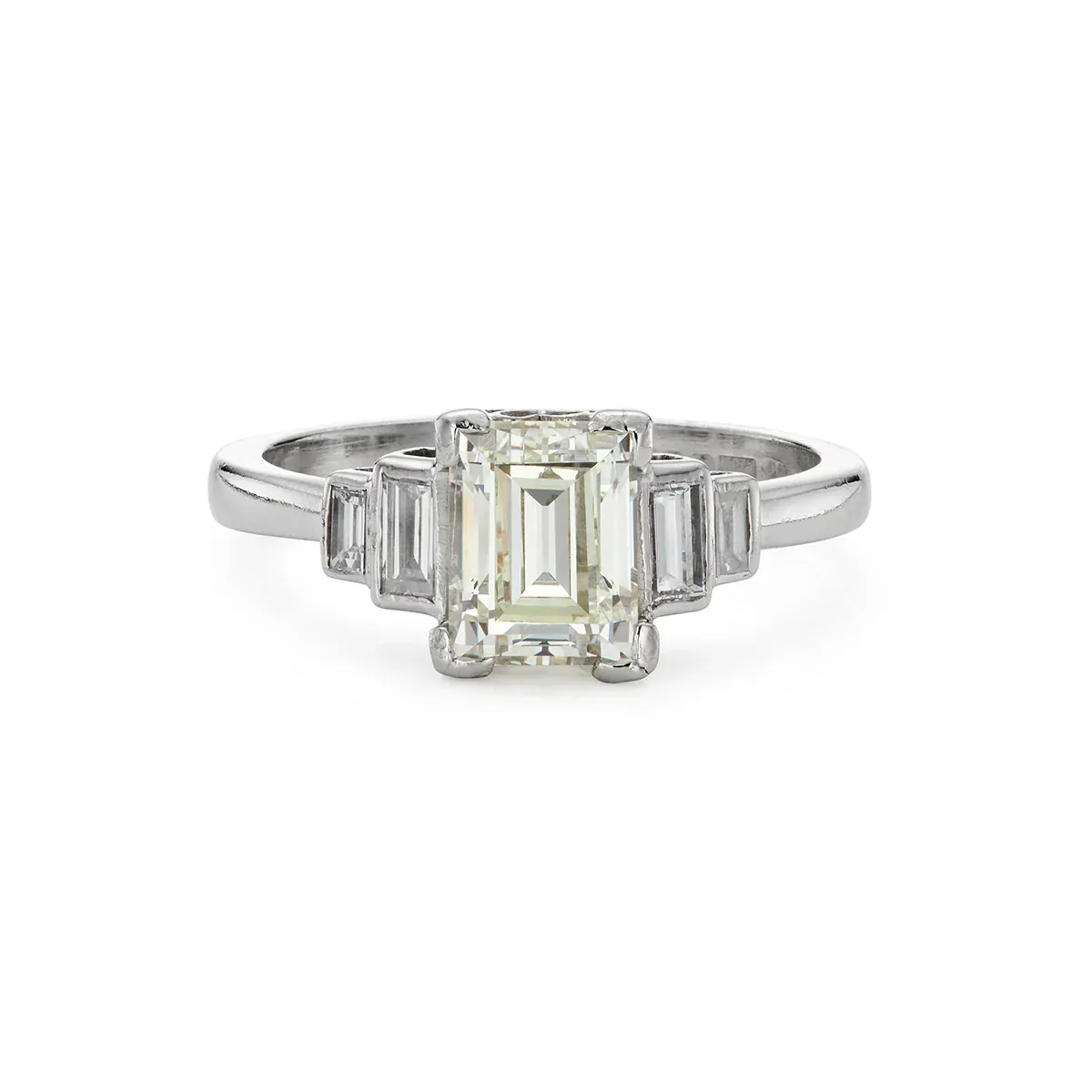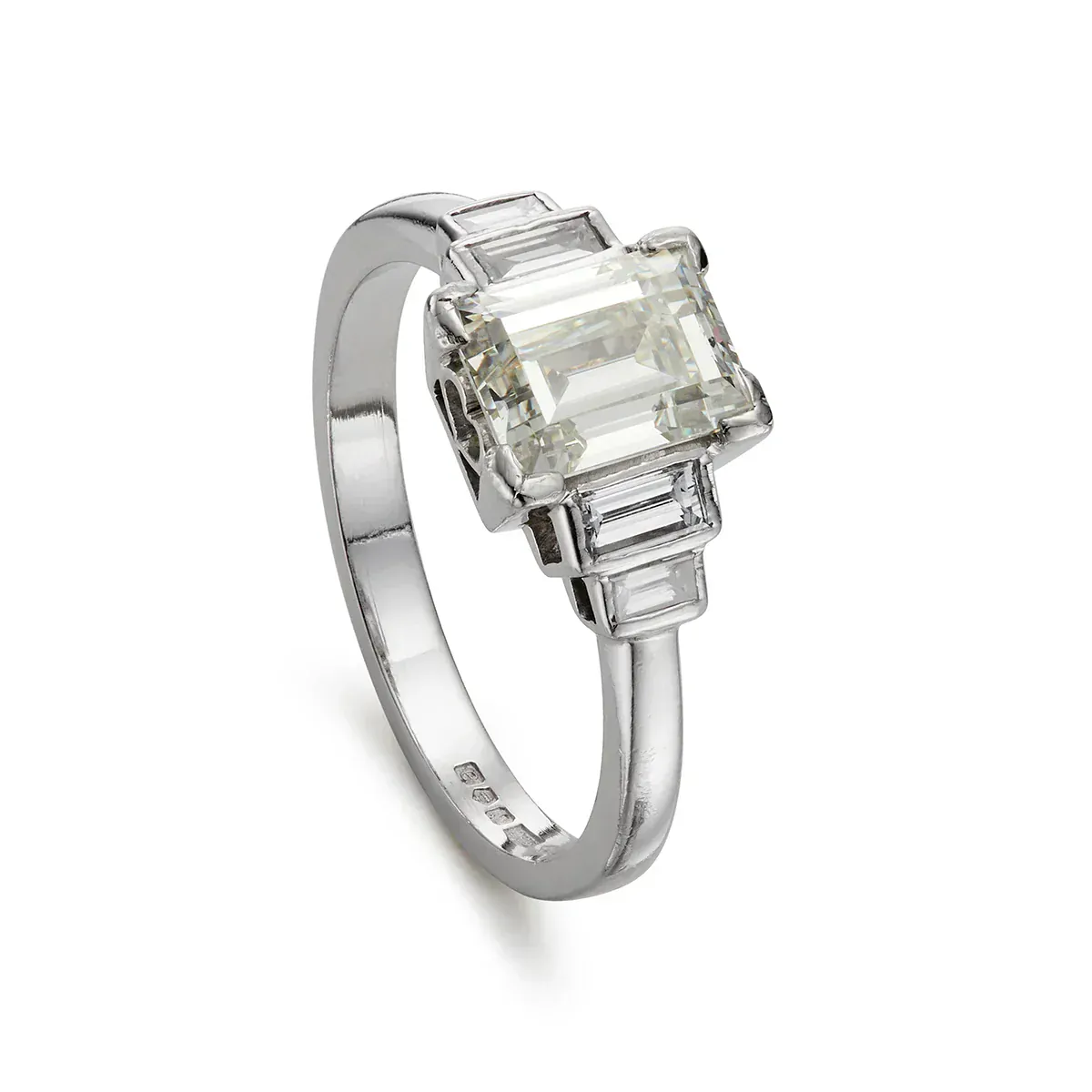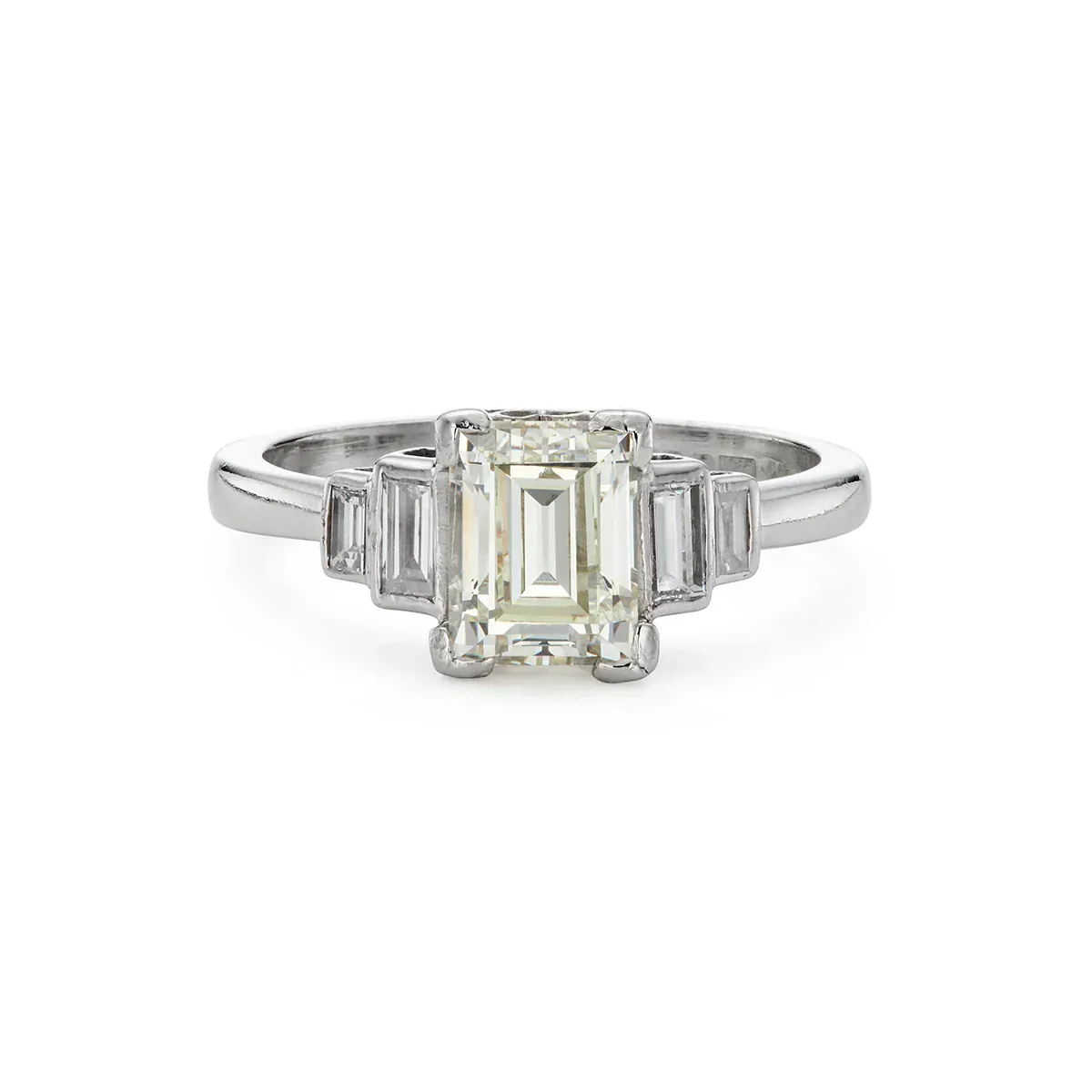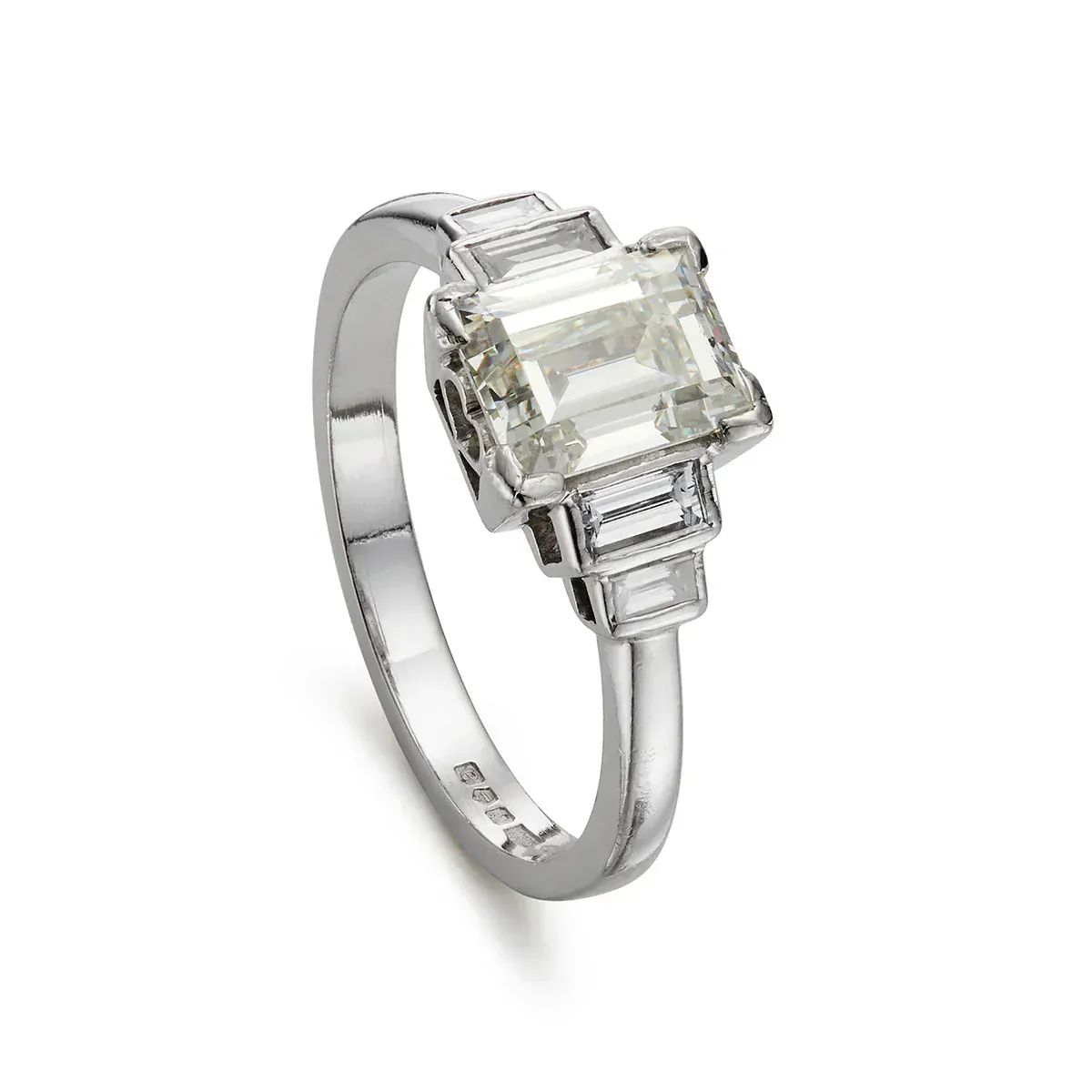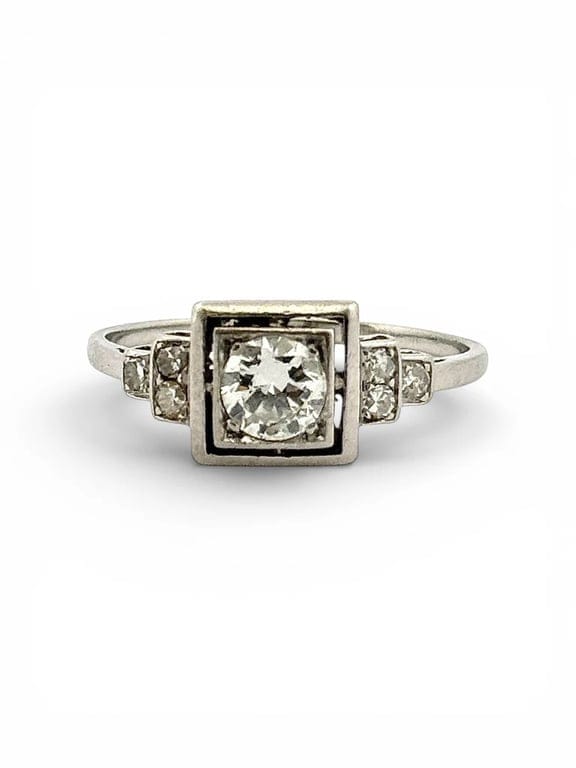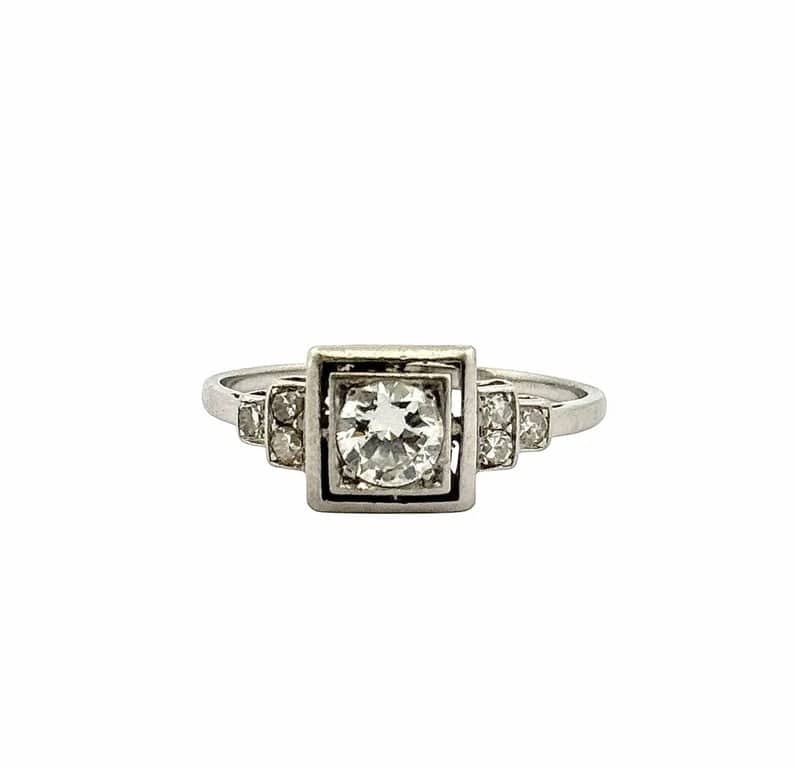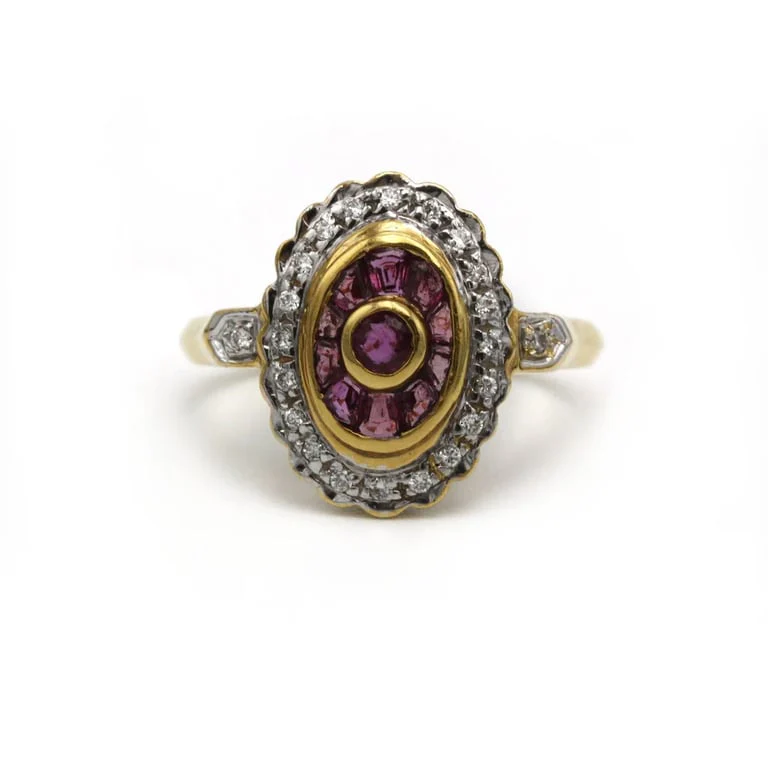
Vintage ruby delight: ring Art Deco with untreated 13.5 ct ruby
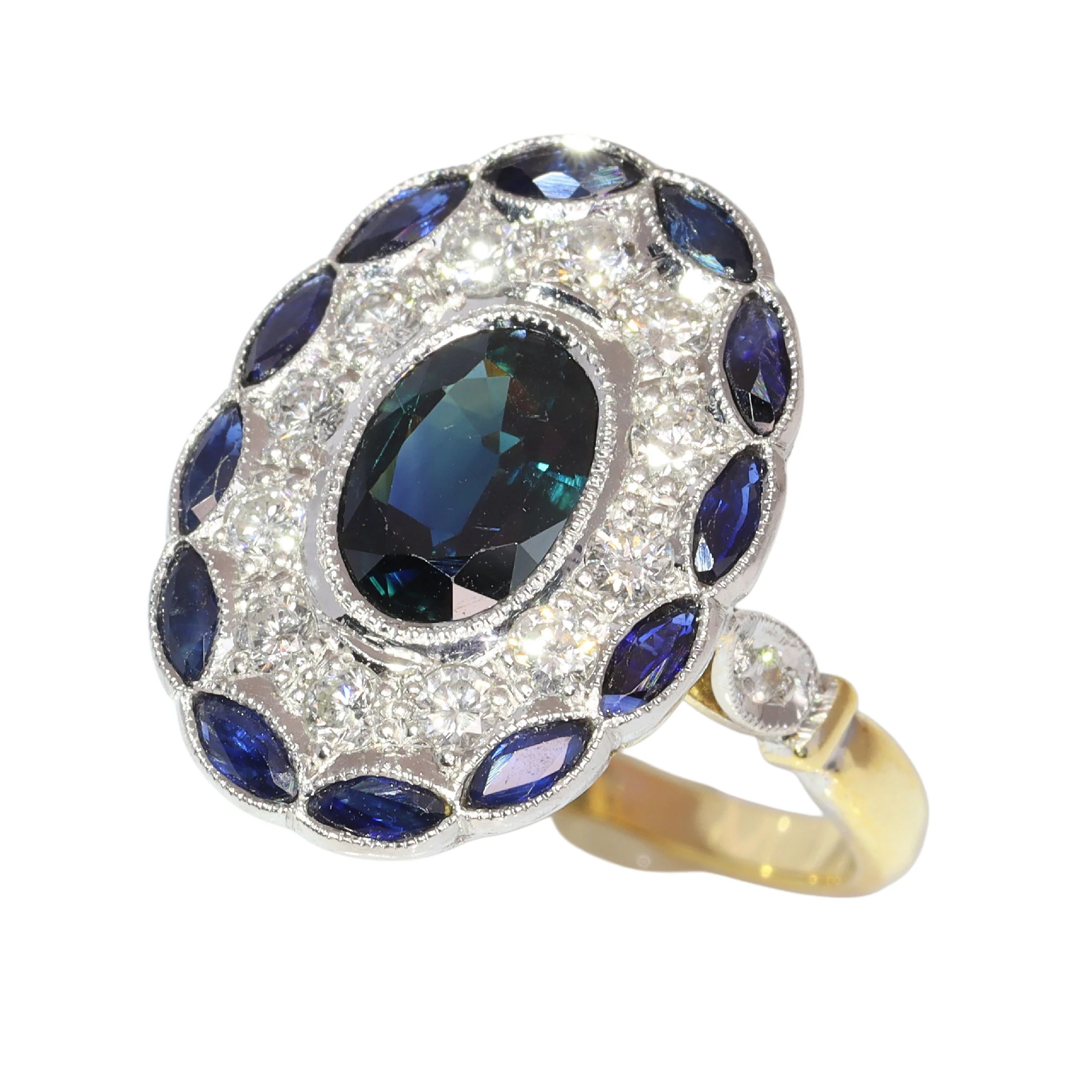
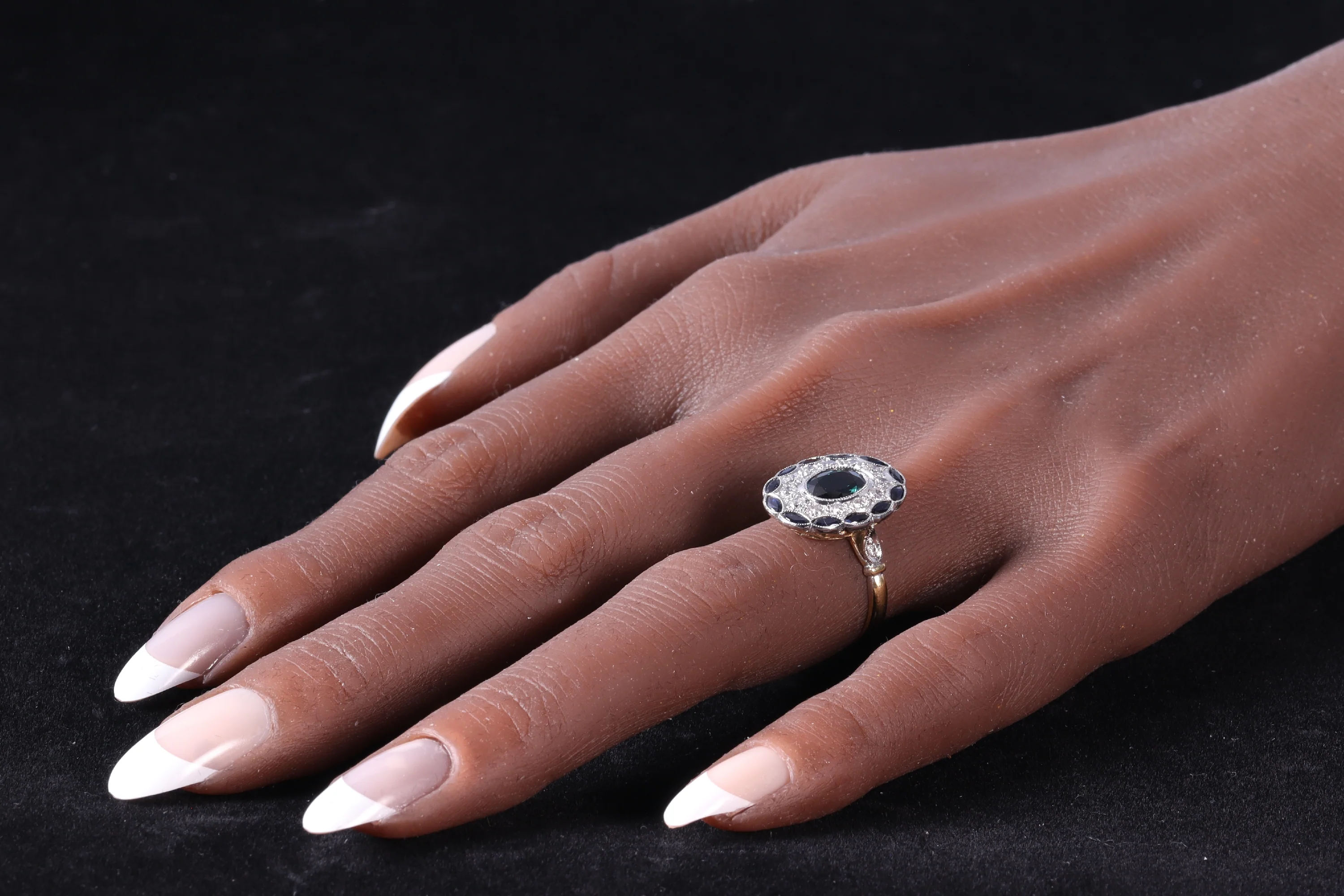
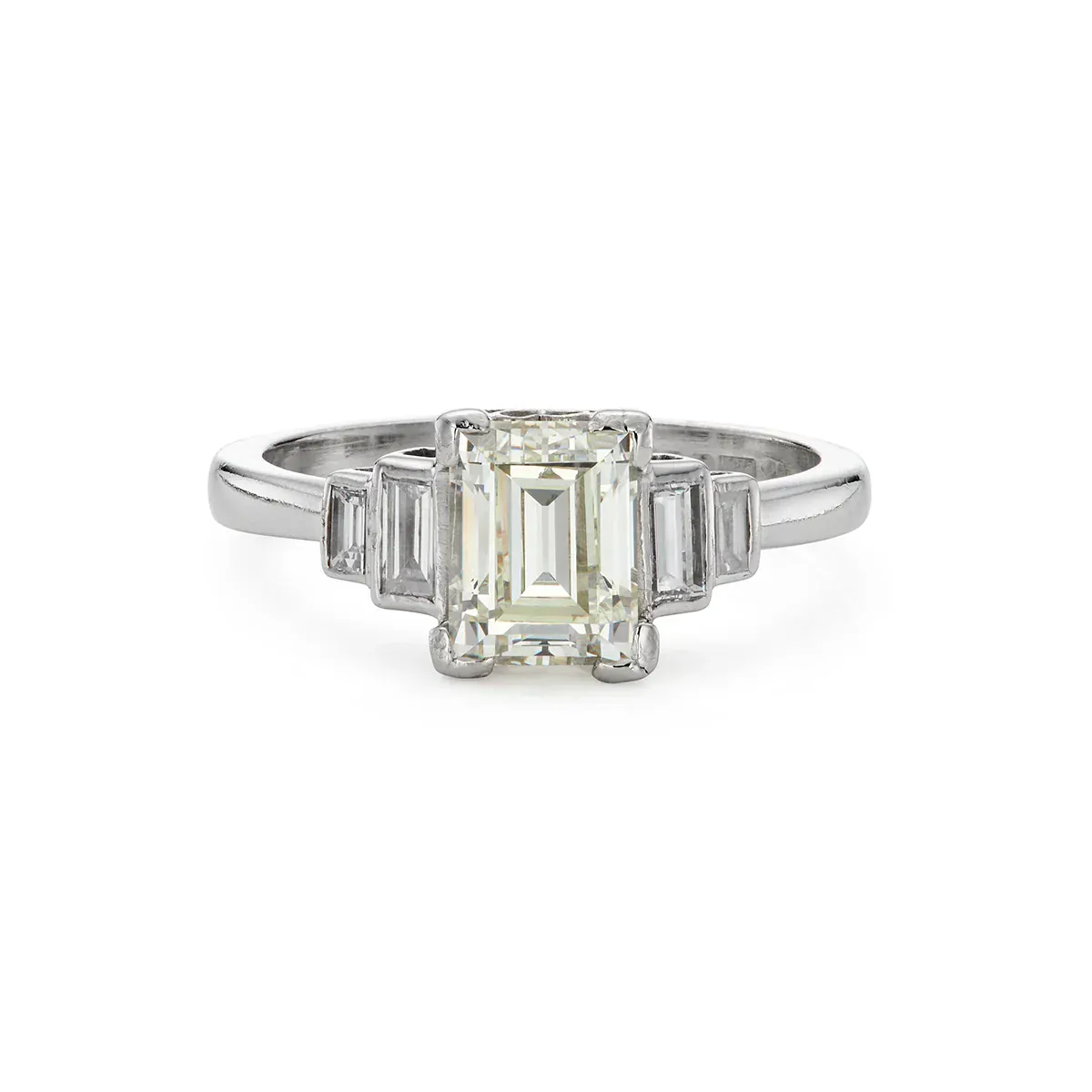
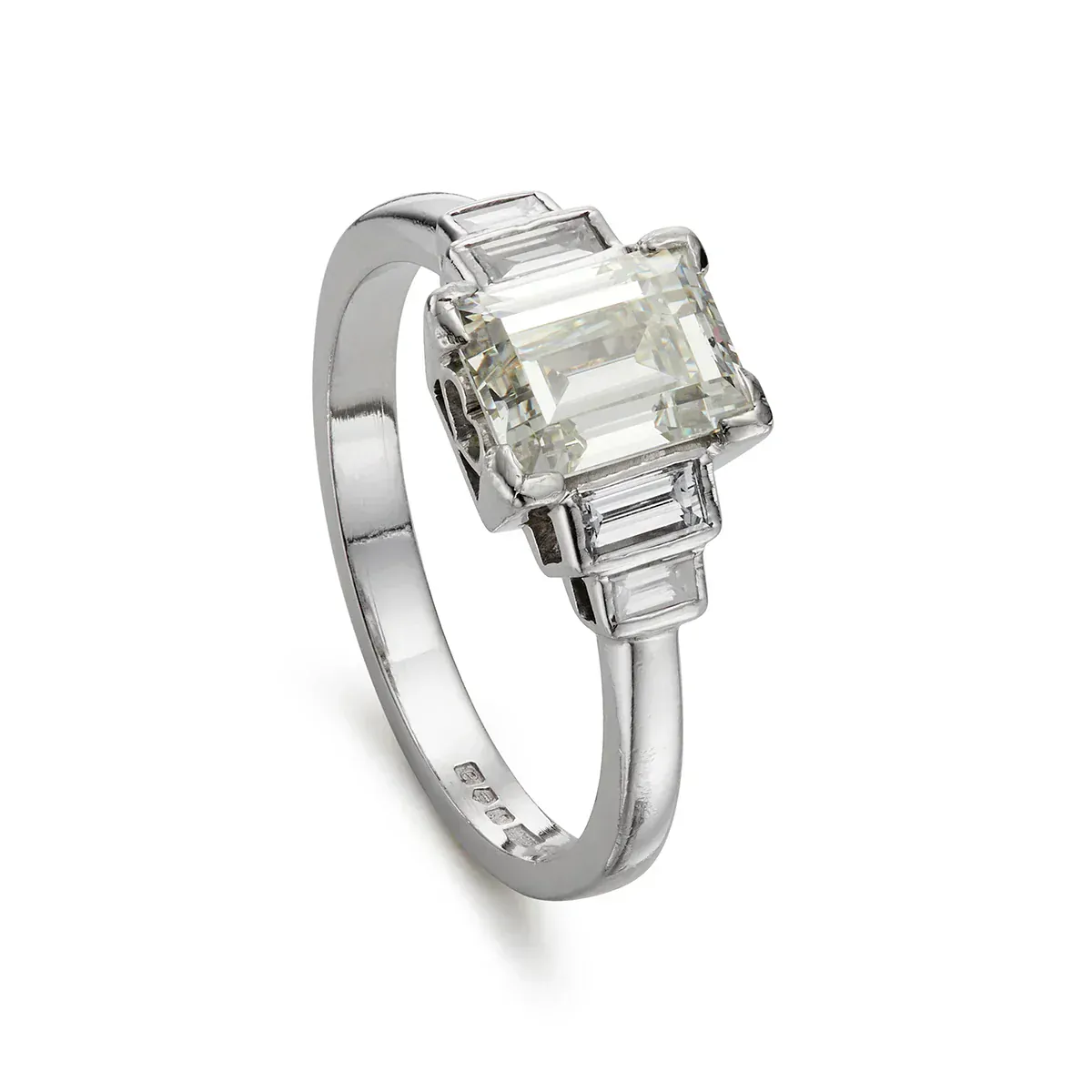
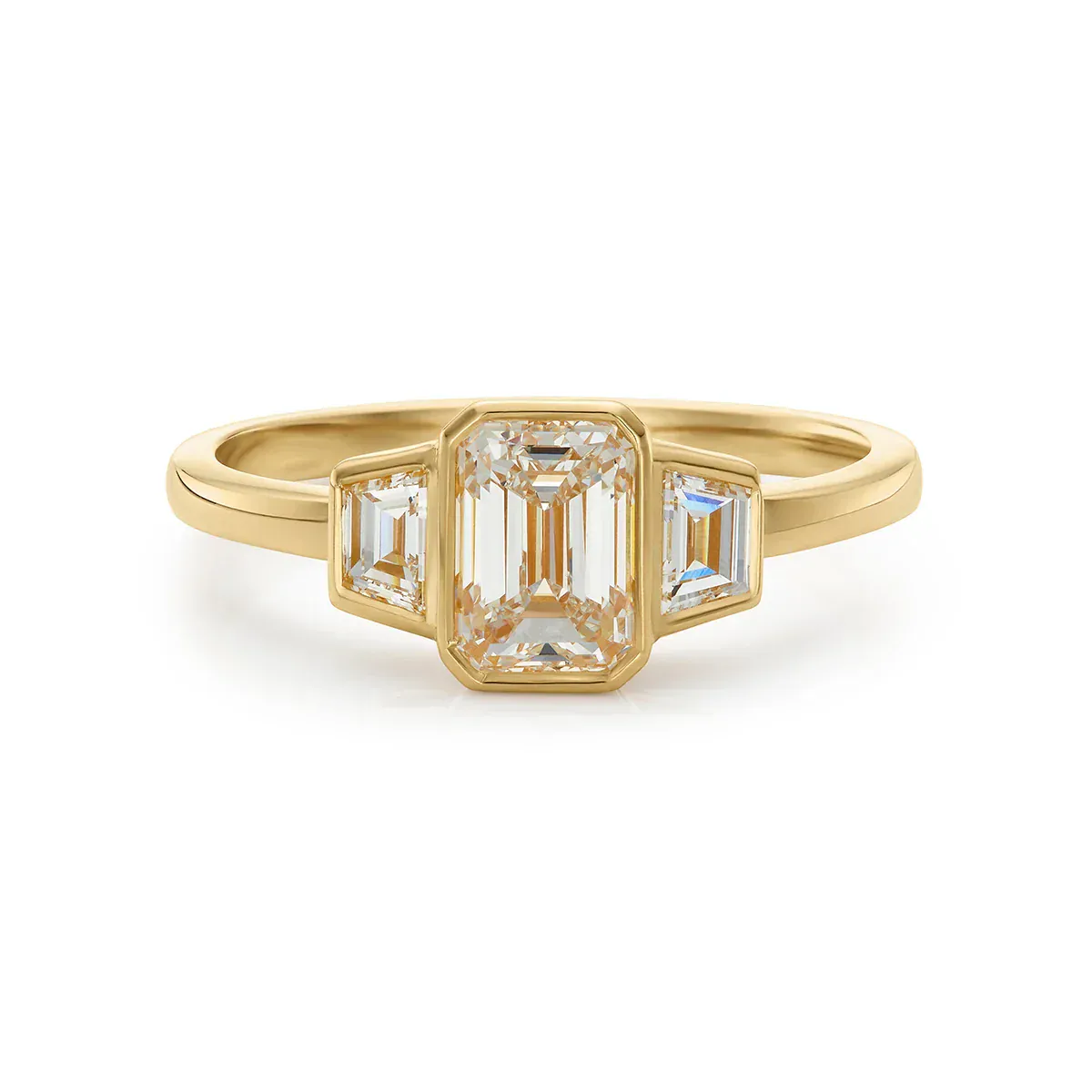
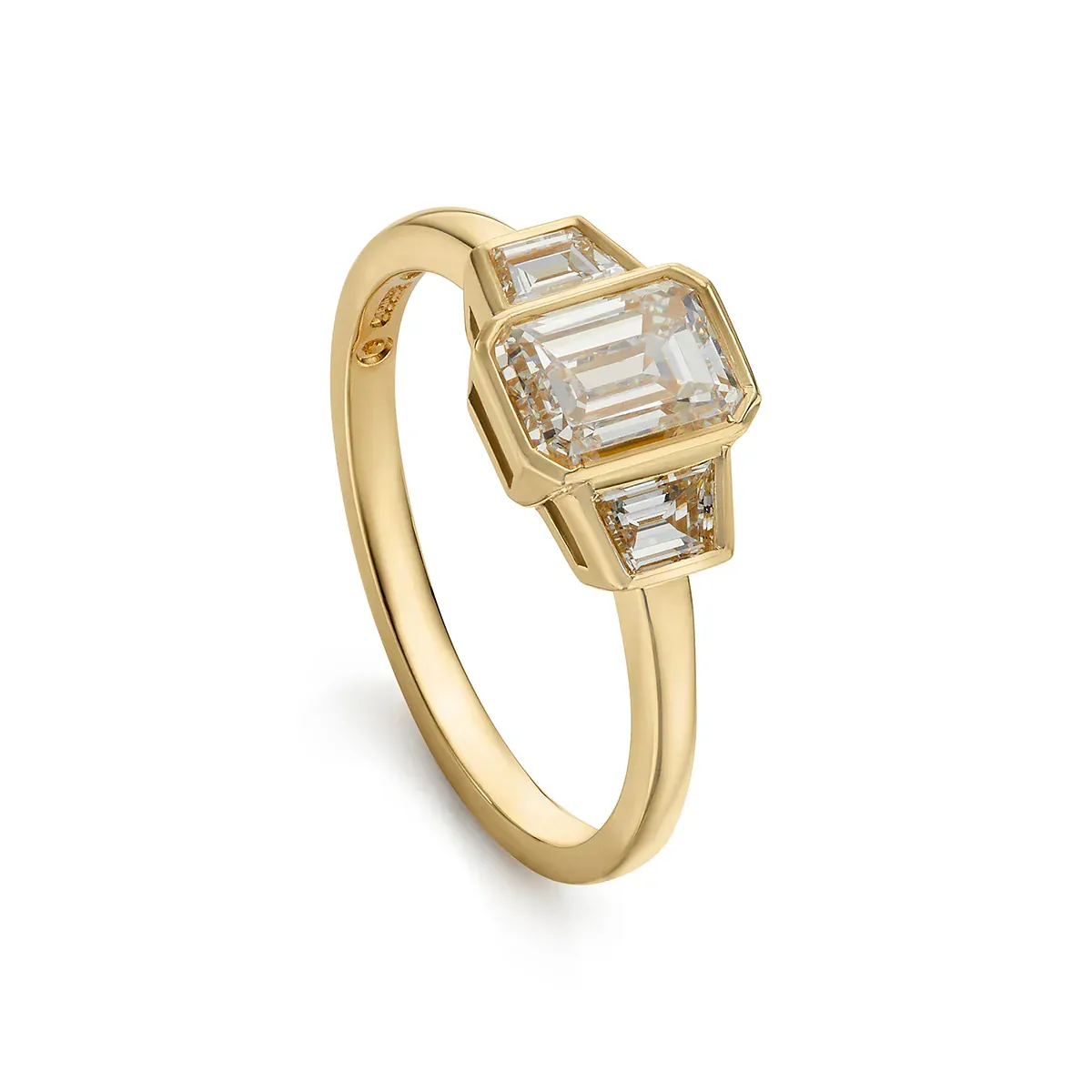
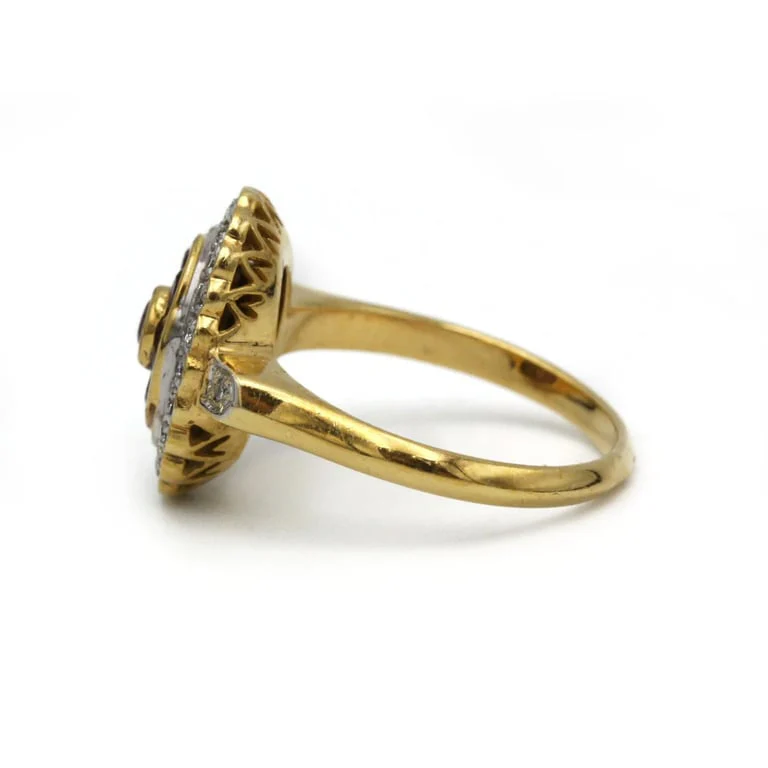
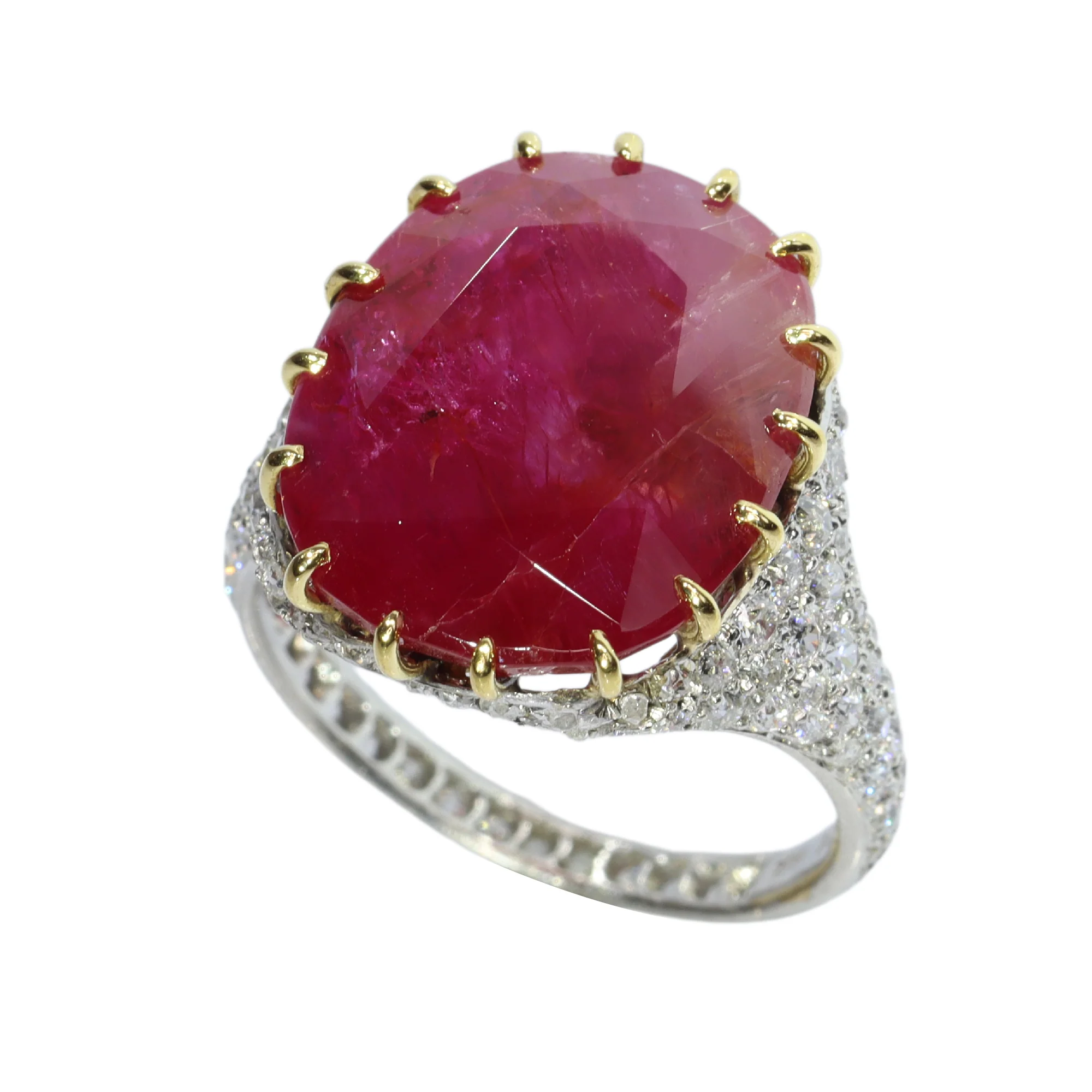
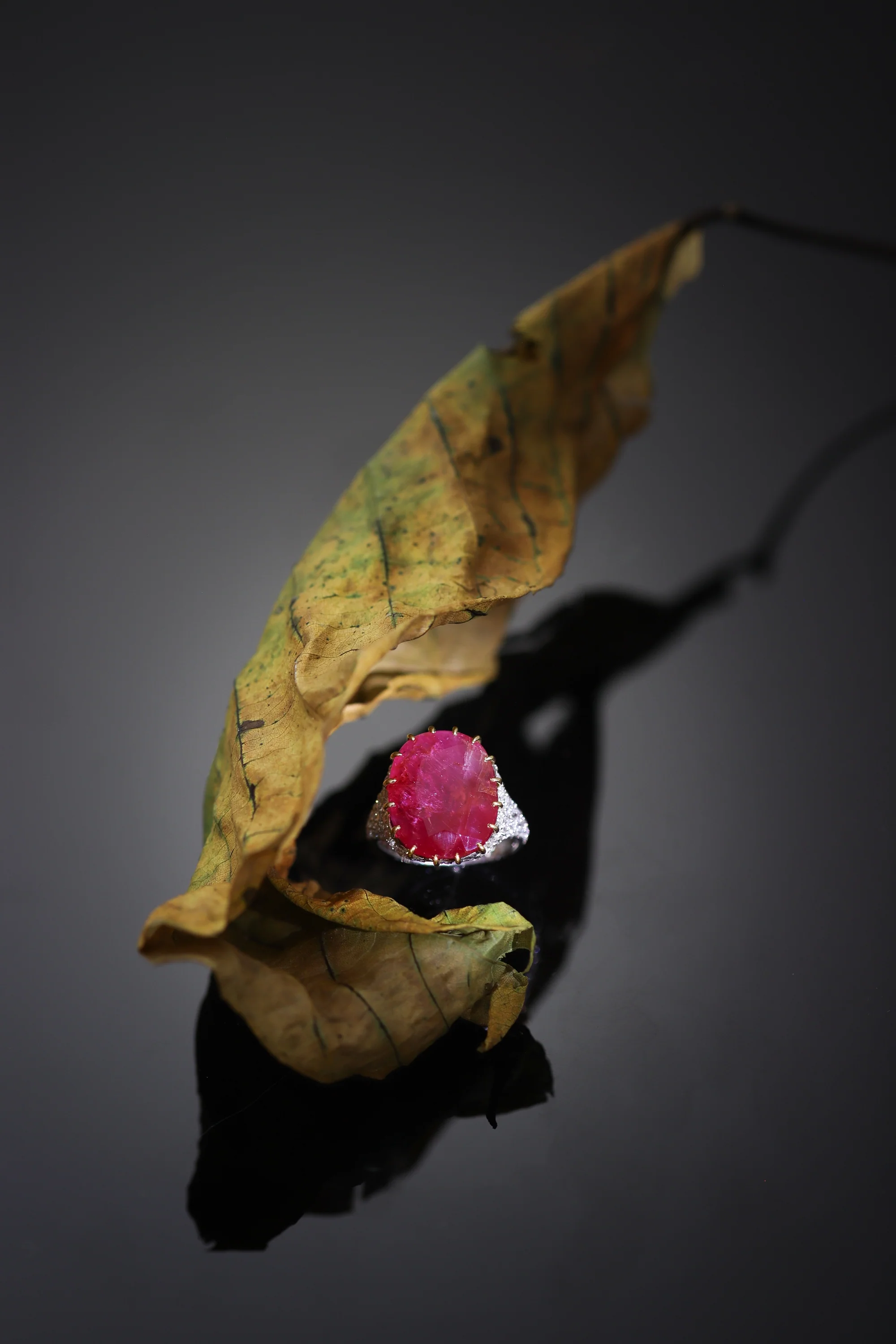
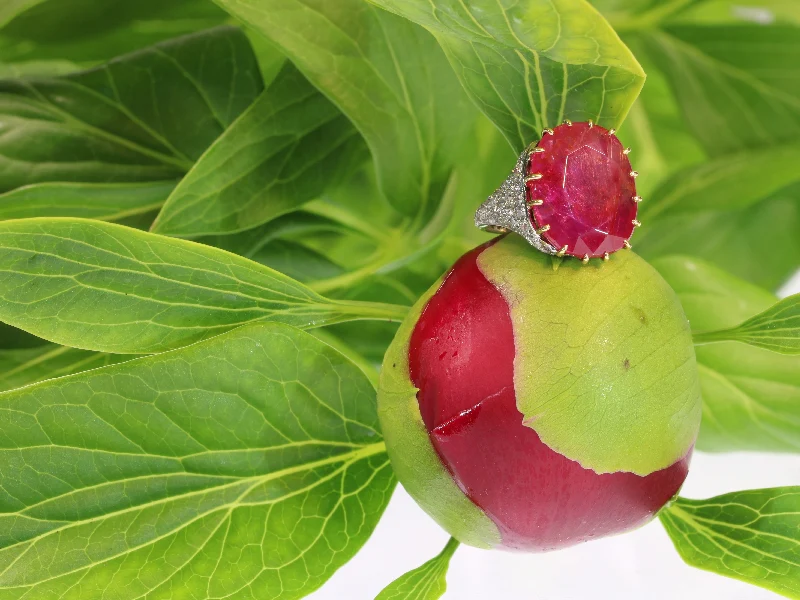
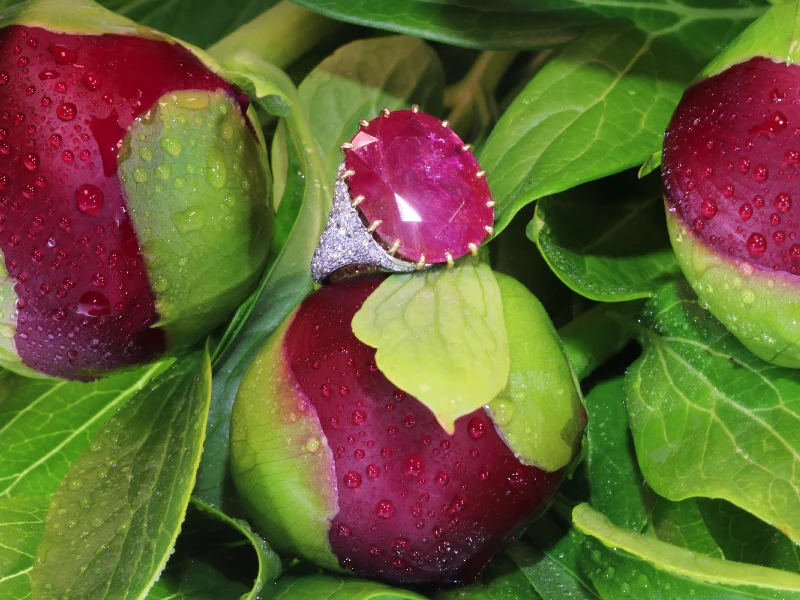
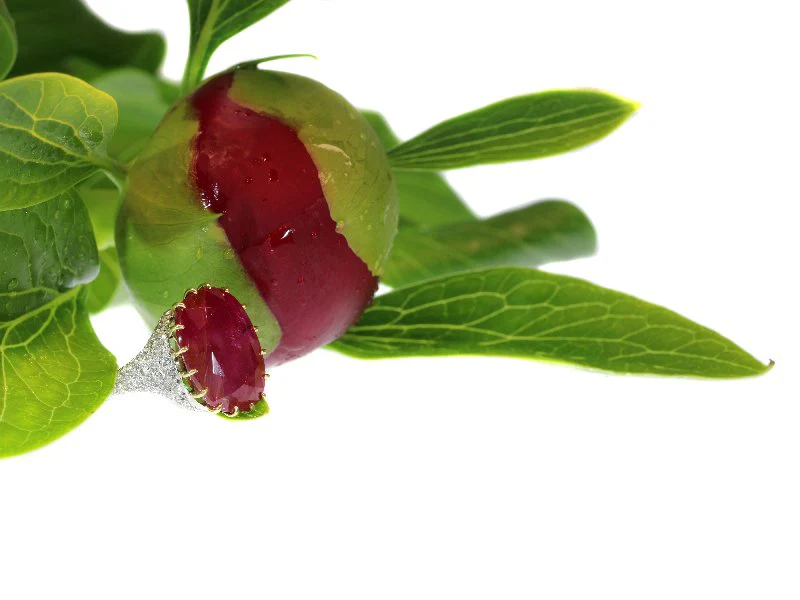
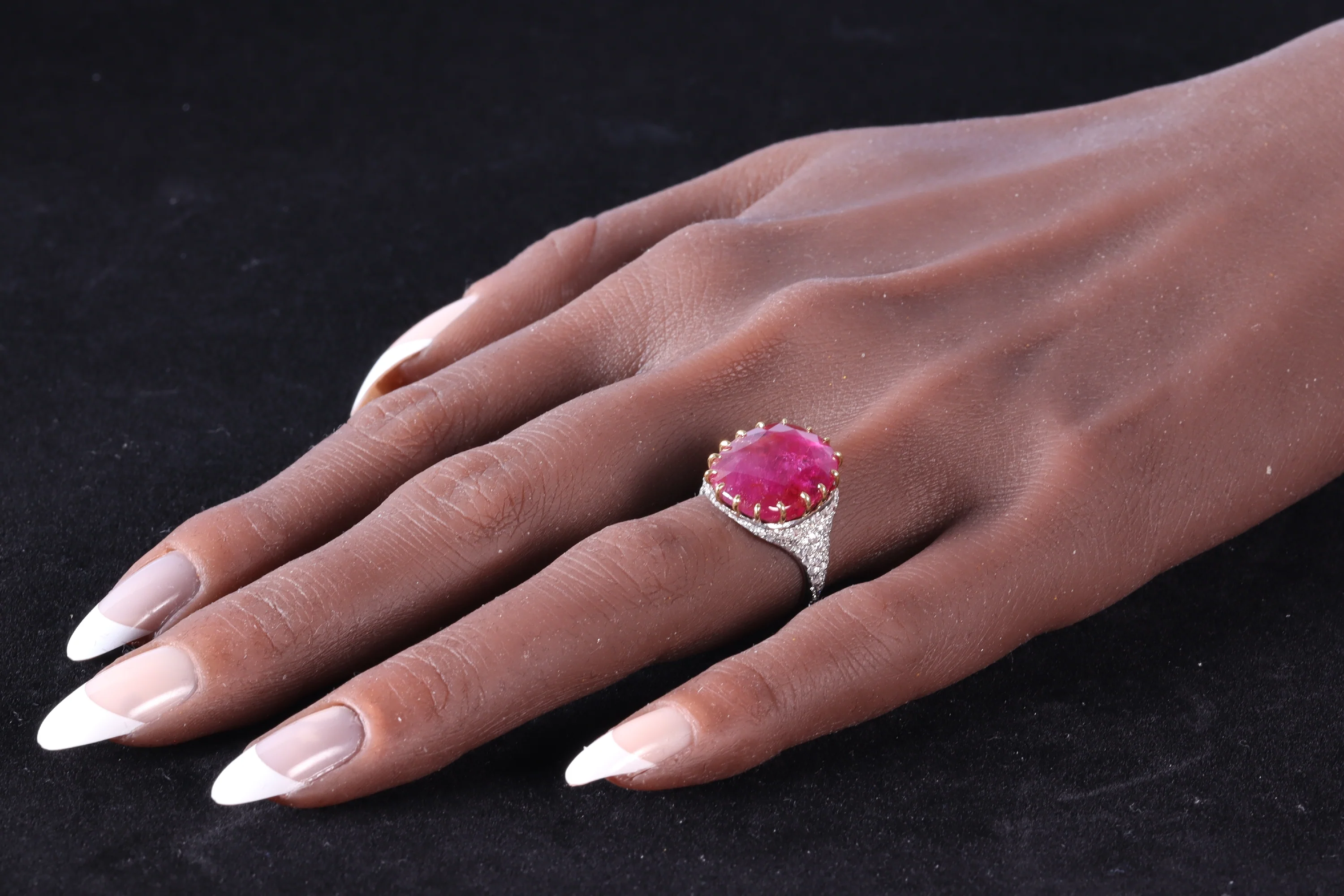
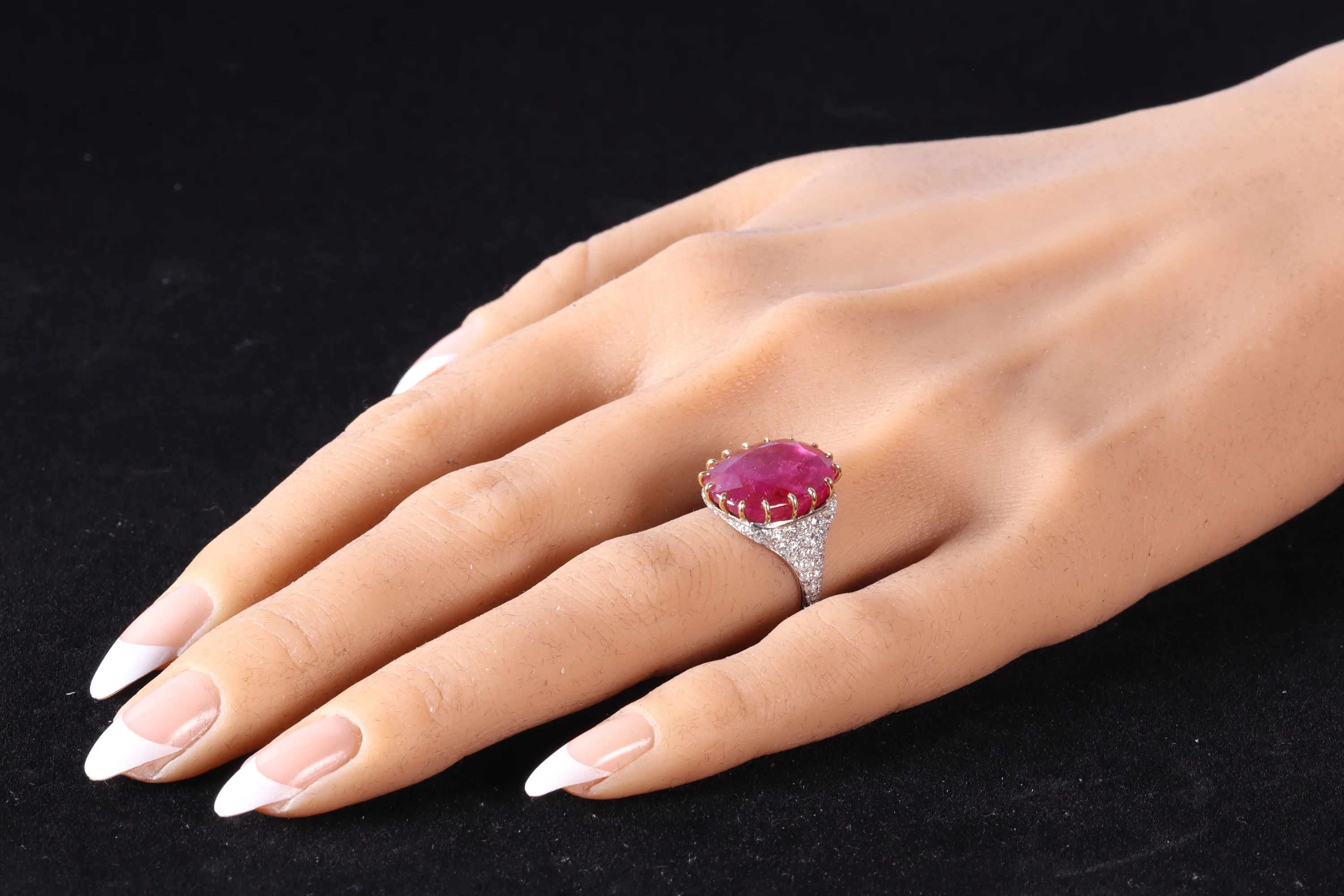
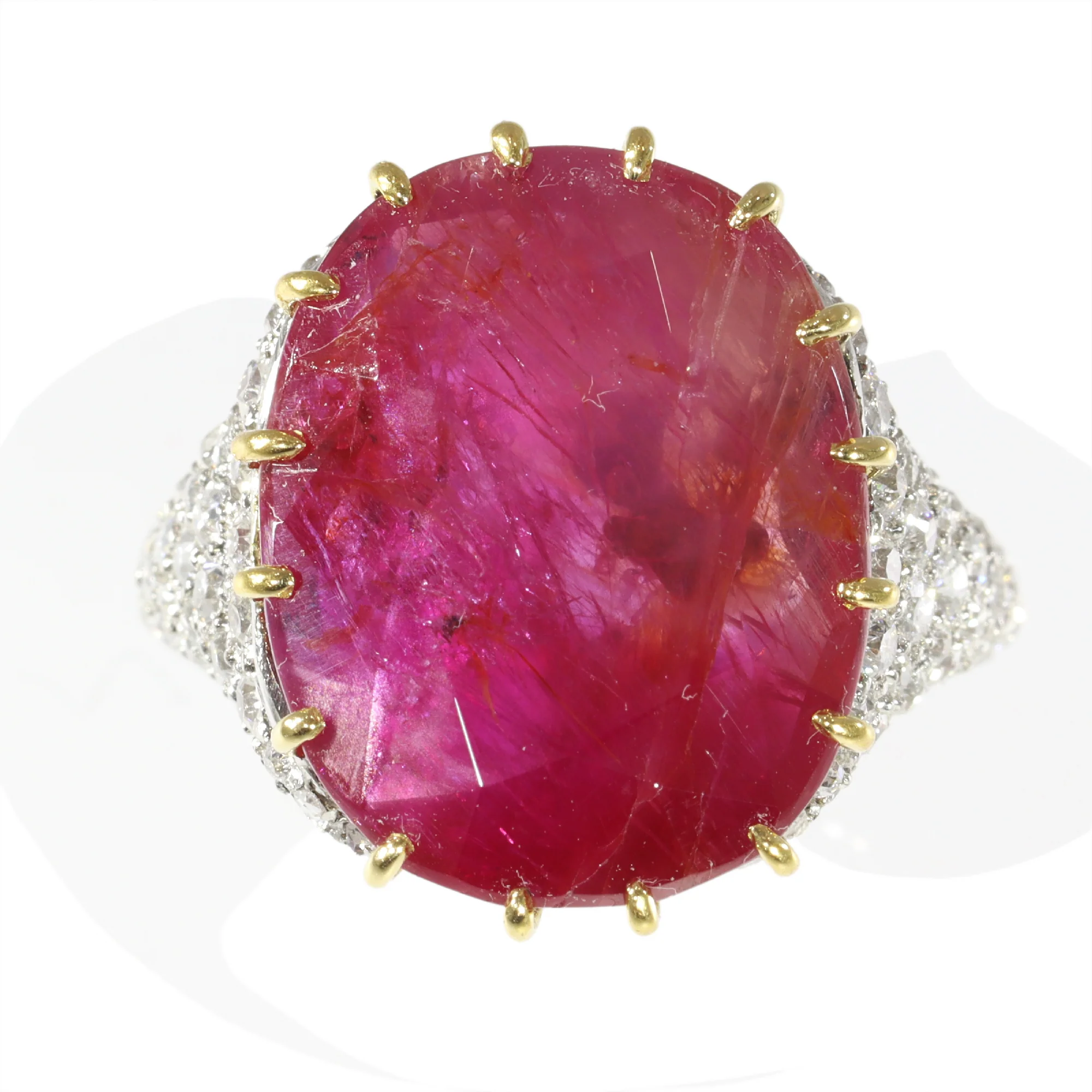
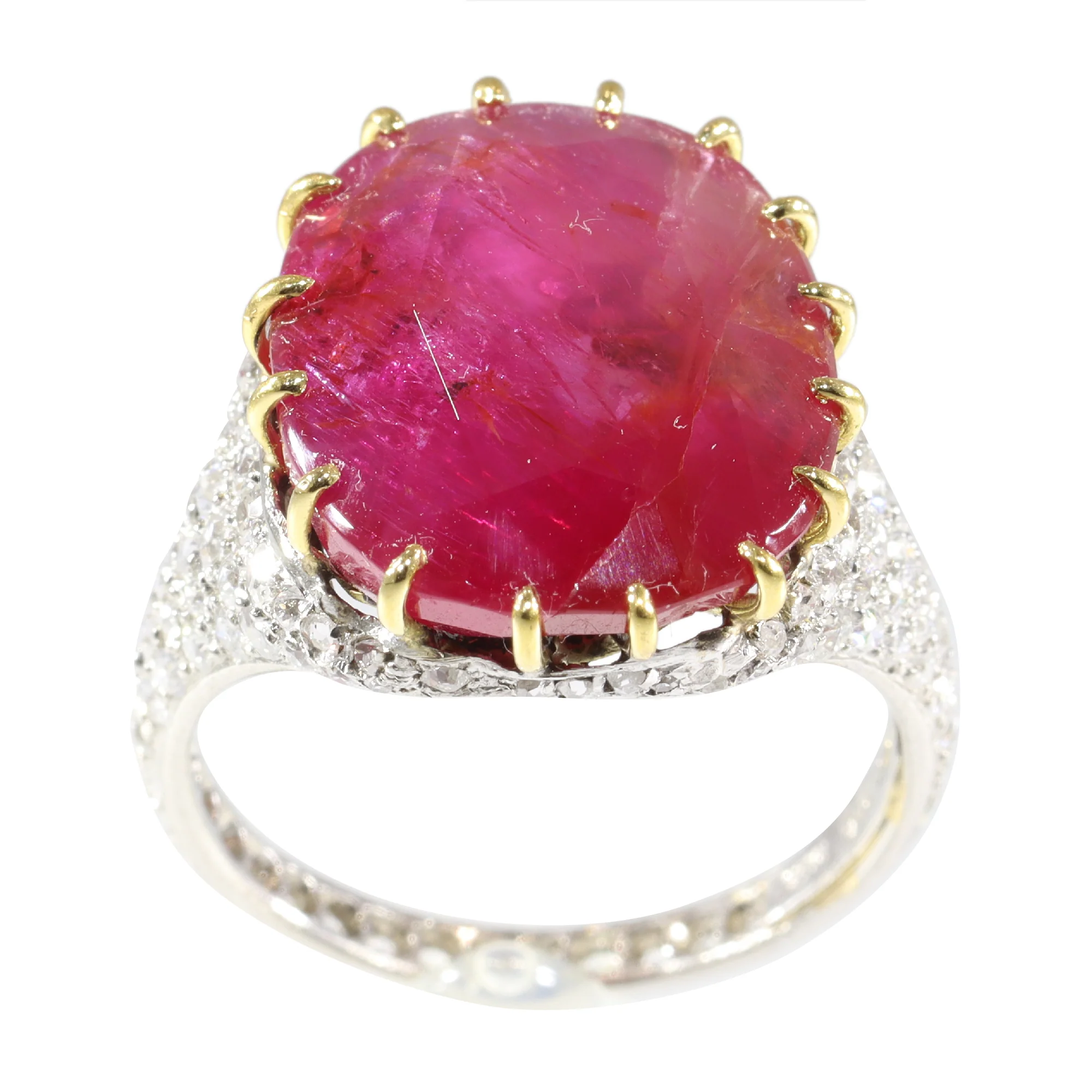
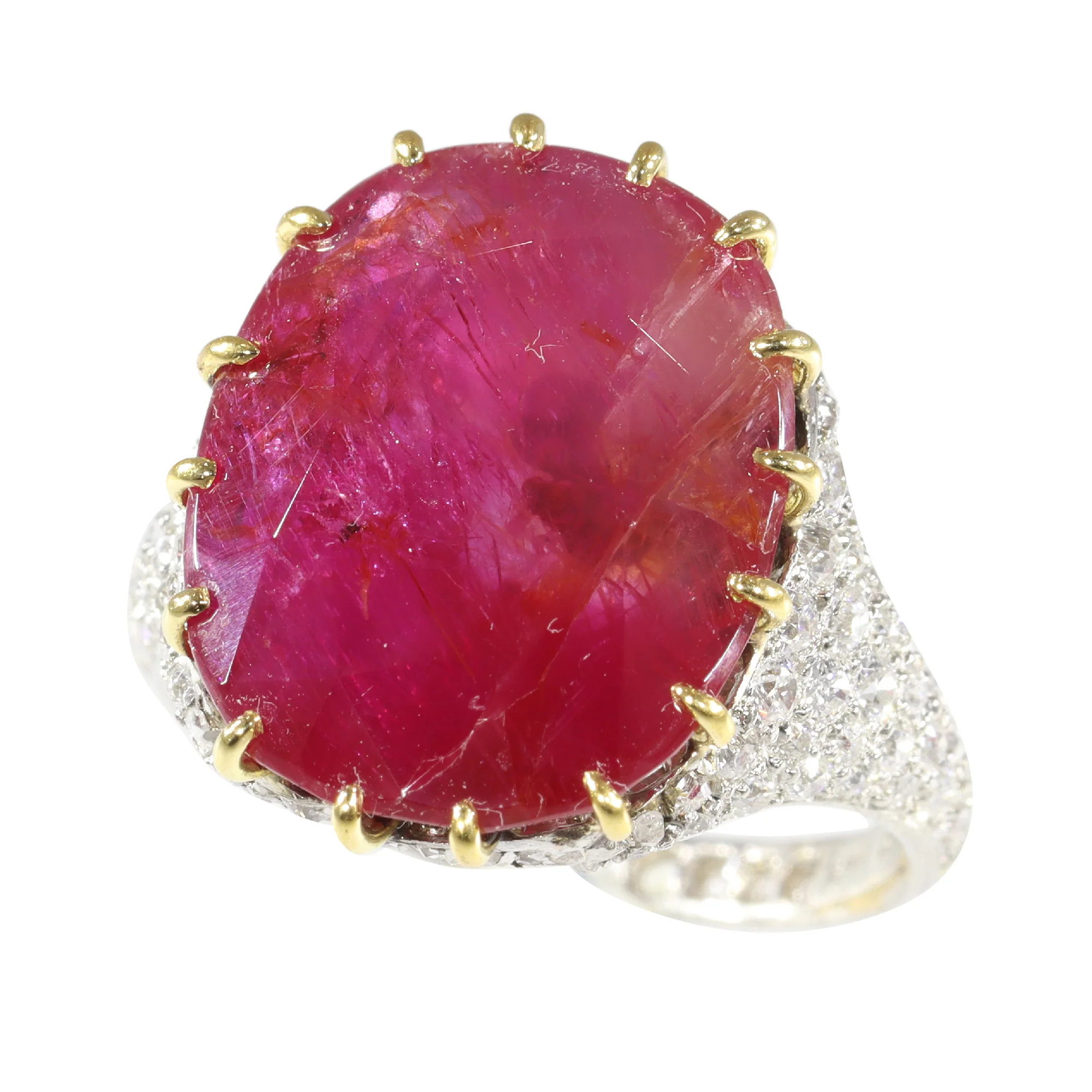
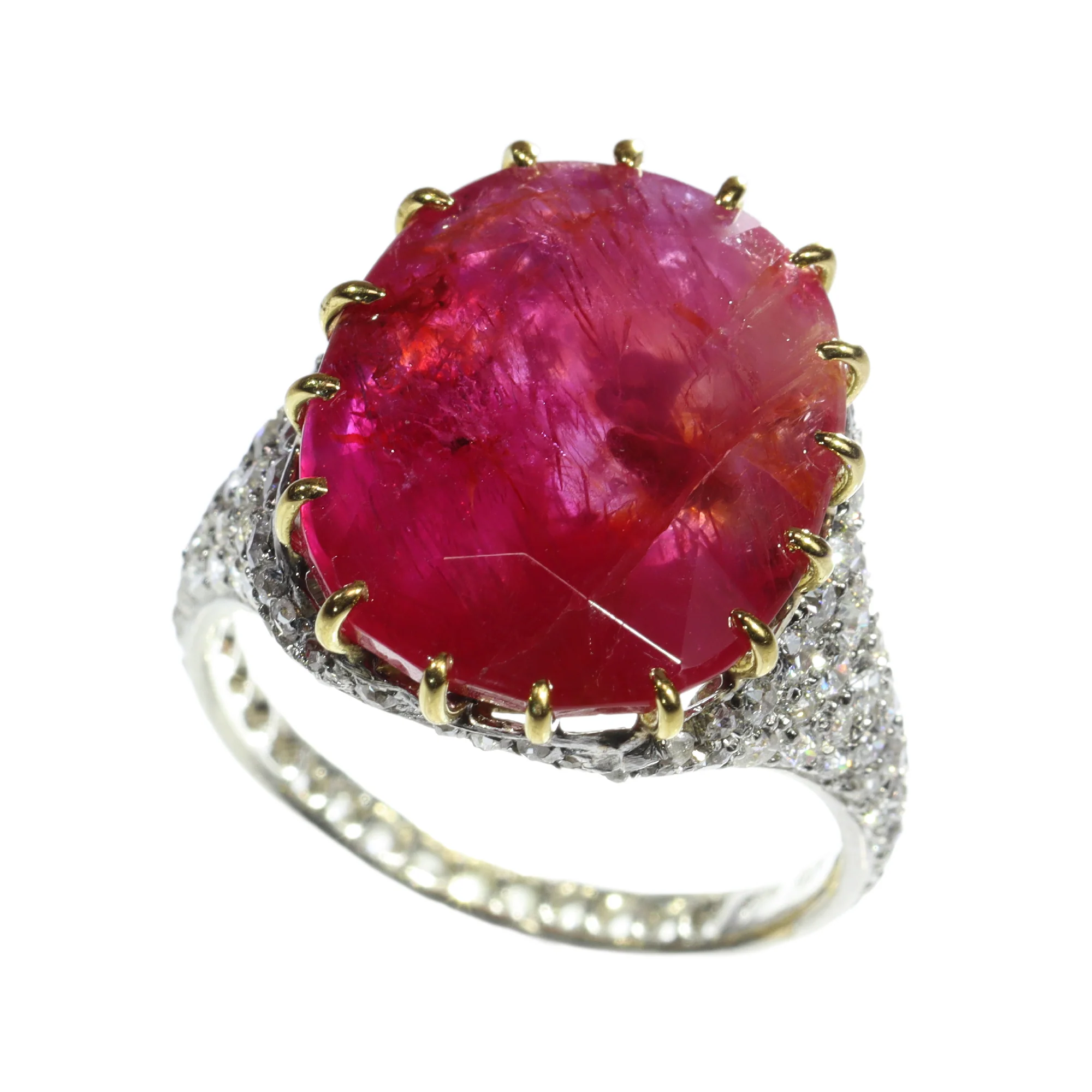
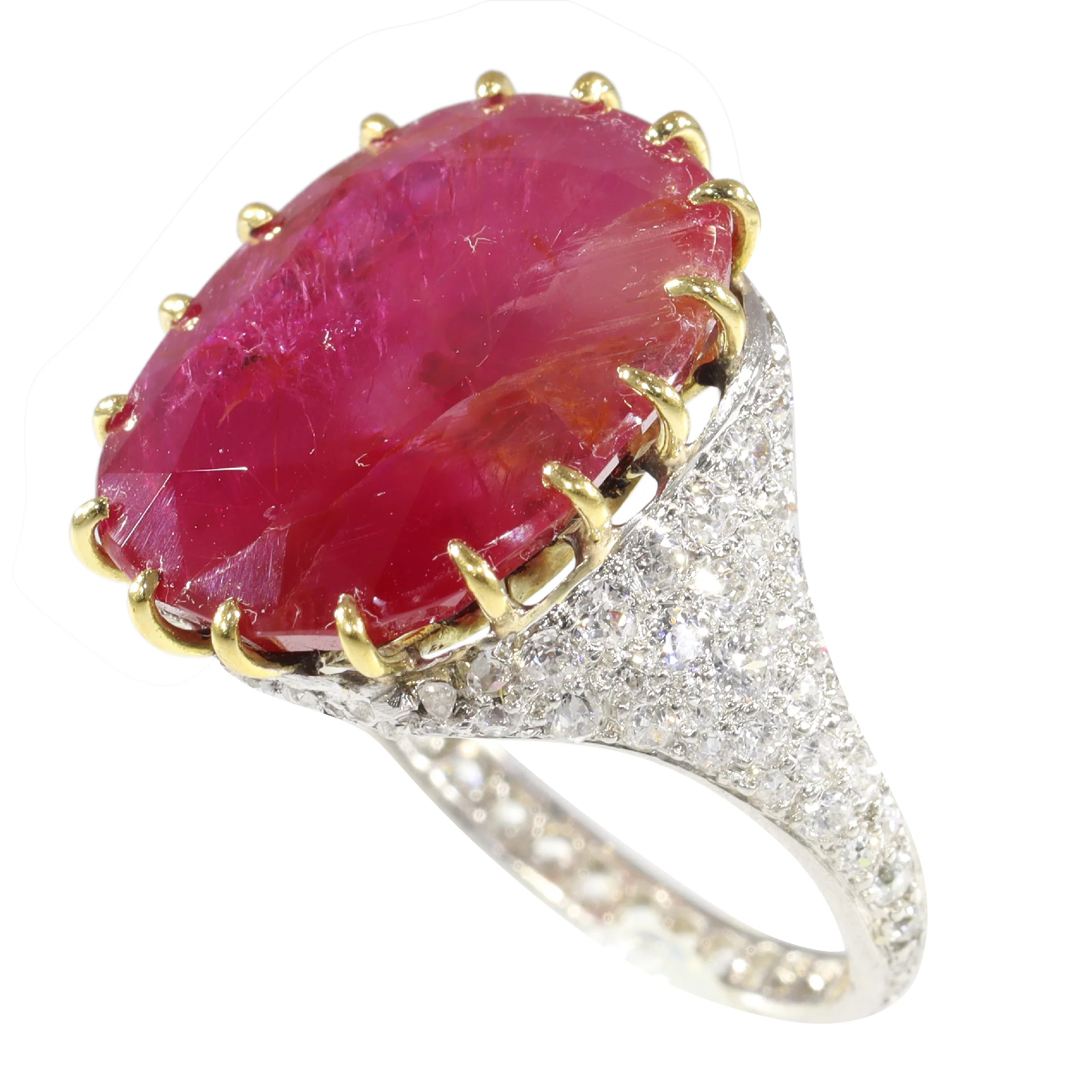
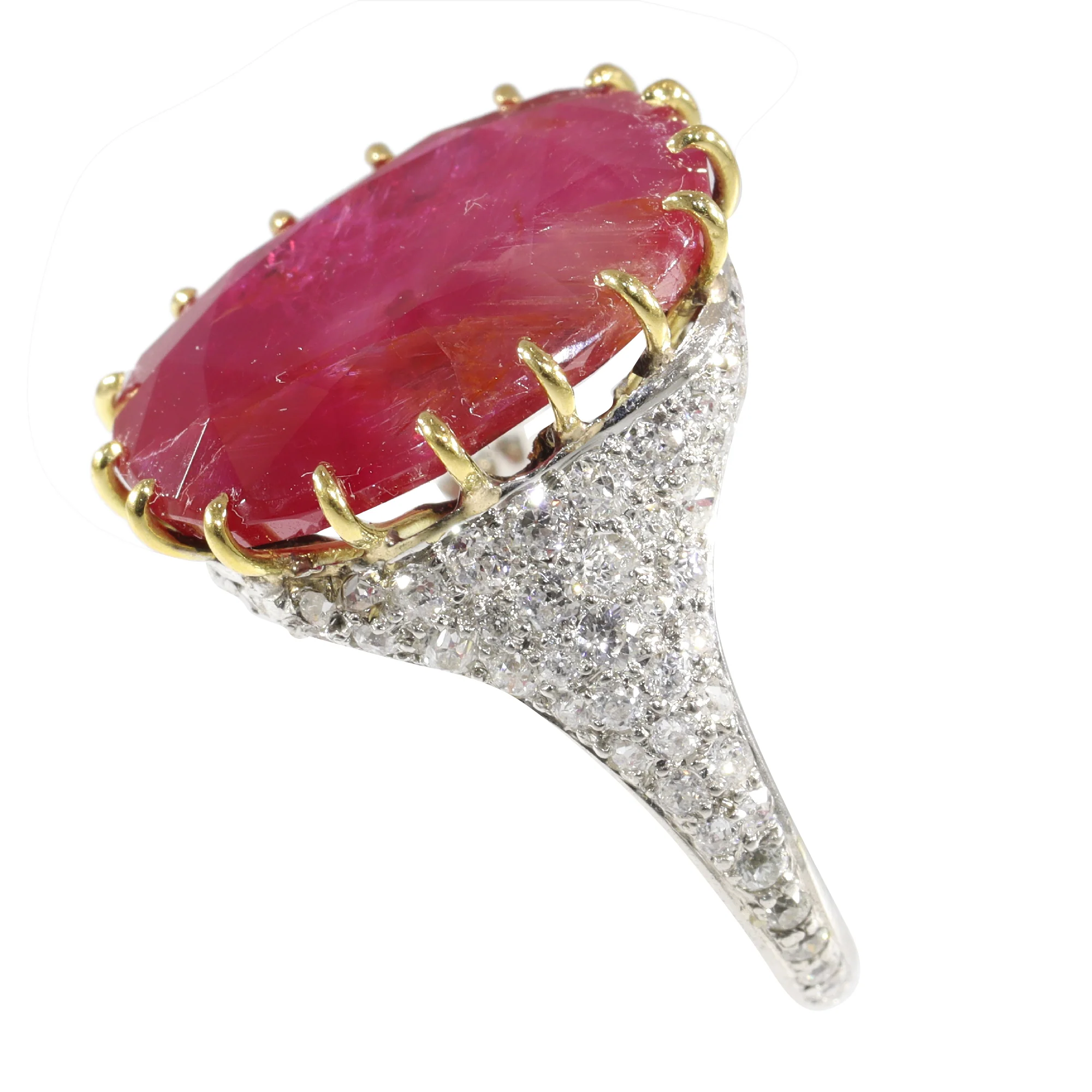
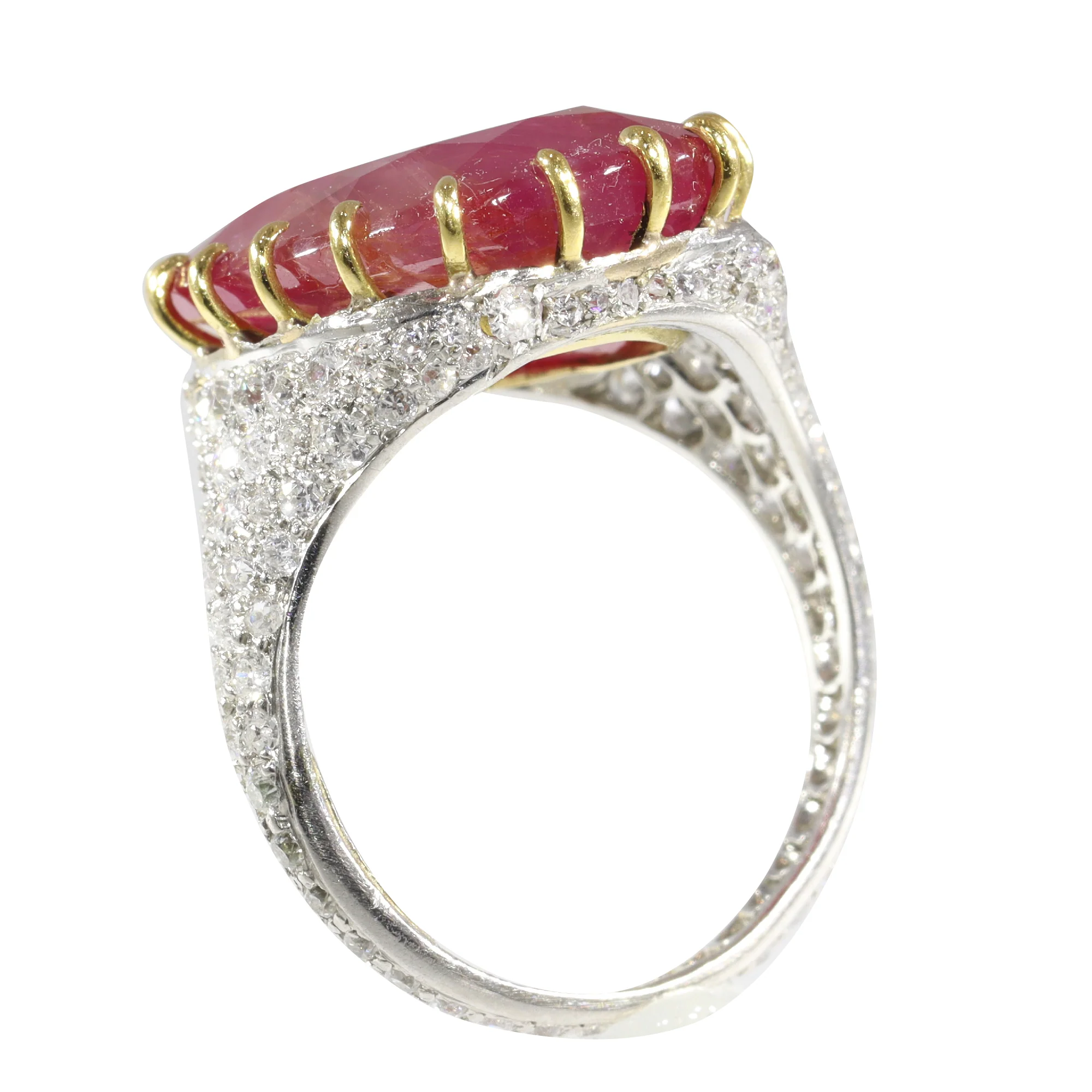
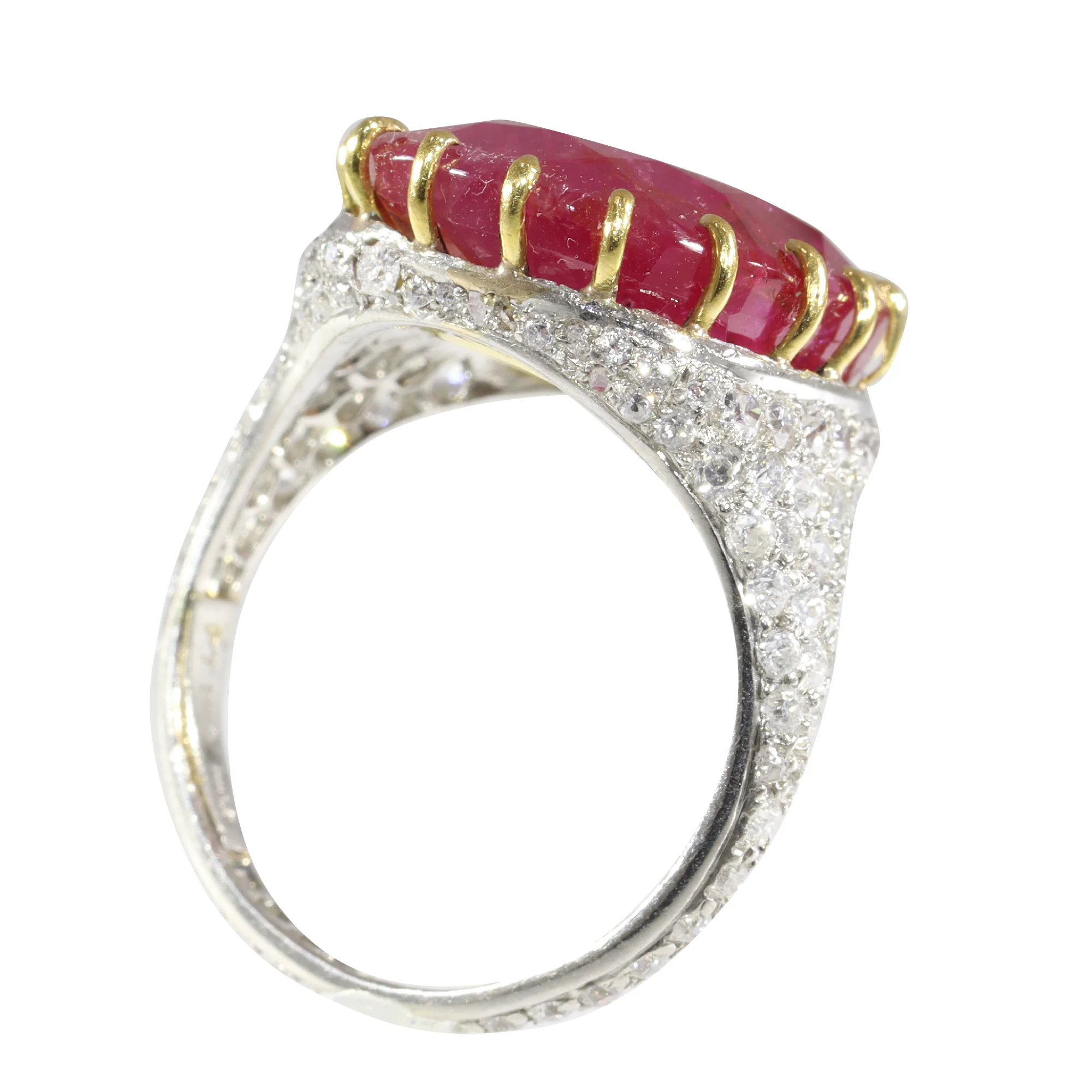
If rough rubies over 10 carats are rare, just imagine what this 13.5-carat rough ruby must be like! Thirteen carats, fifty-two, that's huge! Set in a specially designed ring, adorned with brilliant-cut diamonds on all exterior surfaces, it will bring you the greatest pleasure. Comfortable to wear, it fits the shape of the hand perfectly. If you search for "pretty jewelry" on Google, Google should show you this ring first. Otherwise, it's a blatant error in Google's algorithm.
Antique jewelry group:
engagement ring (or anniversary ring)
Condition:
good condition
- (more info on our condition scale)
Country of origin:
unknown
Style:
Art Deco - The Art Deco is an eclectic artistic and design style that originated in Paris in the early decades of the 20th century. Emerging in the 1920s, this style persisted until after World War II. The term "Art Deco" was widely used for the first time after an exhibition in 1966, in reference to the 1925 International Exhibition of Modern Decorative and Industrial Arts, which marked the peak of the high-end modern style in Paris. Championed by the best decorative arts designers, such as those in fashion and interior decoration, the Art Deco influenced all areas of design throughout the 1920s and 1930s, notably architecture and industrial design, as well as visual arts like painting, graphic arts, and cinema. At the time, this style was seen as elegant, glamorous, functional, and modern.
- See also: Art Deco or more info on styles
Stylistic features:
Abstract patterns and geometric shapes are typical of the Art Deco period. The Art Deco moves away from the soft pastels and organic forms of its predecessor, Art Nouveau, and draws inspiration from many styles and movements of the early 20th century, notably Neoclassicism, Constructivism, Cubism, Modernism, and Futurism. Its popularity peaked in Europe during the Roaring Twenties and continued in the United States until the 1930s. While many design movements have political or philosophical roots or intentions, the Art Deco is purely decorative.
Period:
circa 1920
- (events and facts of that time, poetry of that era, fashion of that era)
Material:
platinum and 18-carat red gold
- (more info on precious metals)
Additional information:
Engagement rings were used in Roman times, but their return to the West did not occur until the 13th century. The first documented use of a diamond ring to symbolize an engagement was that of Archduke Maximilian of Austria at the imperial court in Vienna in 1477, upon his engagement to Mary of Burgundy.
Before the 20th century, other types of engagement gifts were common. Before the end of the 19th century, the bride-to-be often received a thimble rather than an engagement ring. This practice was particularly widespread among religious groups who rejected jewelry. Engagement rings only became the norm in the West at the end of the 19th century, and diamond rings only became widespread in the 1930s. Today, 80% of women are offered a diamond ring for their engagement. (Source: Wikipedia)
Diamond(s):
± 100 old mine brilliant-cut diamonds with an estimated weight of ± 1.50 ct. (color and clarity: G/I, vs/si).
- All diamond weights, color shades, and clarity are approximate as the stones have not been removed from their settings in order to preserve the integrity of the mounting.
Gemstones:
An untreated natural ruby (!) weighing 13.52 ct.
color etc.: pattern of natural inclusions, no indication of treatment was found (see photos to view the IGI certificate)
Treatment: untreated!
Birthstones:
Ruby is the birthstone (or month stone) for July and diamond for April.
- (more info on birthstones)
Hallmarks:
"PT 950" and "Hast", "Mast" or "Rast" (the first letter is hard to read) indicating that the ring is made of platinum and that the manufacturer is this "*ast".
- (more info on hallmarks)
Dimensions:
top of the ring 1.78 cm (0.70 inch) x 1.45 cm (0.57 inch)
Weight:
7.10 grams (4.57 dwt)
Continental ring size:
52 and 16½,
US size
6,
UK size:
L
Resizing:
free resizing (only for an extreme resizing do we have to charge).
- (more information about ring sizes)
More Images
Vintage ruby delight: ring Art Deco with untreated 13.5 ct ruby
If rough rubies over 10 carats are rare, just imagine what this 13.5-carat rough ruby must be like! Thirteen carats, fifty-two, that's huge! Set in a specially designed ring, adorned with brilliant-cut diamonds on all exterior surfaces, it will bring you the greatest pleasure. Comfortable to wear, it fits the shape of the hand perfectly. If you search for "pretty jewelry" on Google, Google should show you this ring first. Otherwise, it's a blatant error in Google's algorithm.
Antique jewelry group:
engagement ring (or anniversary ring)
Condition:
good condition
- (more info on our condition scale)
Country of origin:
unknown
Style:
Art Deco - The Art Deco is an eclectic artistic and design style that originated in Paris in the early decades of the 20th century. Emerging in the 1920s, this style persisted until after World War II. The term "Art Deco" was widely used for the first time after an exhibition in 1966, in reference to the 1925 International Exhibition of Modern Decorative and Industrial Arts, which marked the peak of the high-end modern style in Paris. Championed by the best decorative arts designers, such as those in fashion and interior decoration, the Art Deco influenced all areas of design throughout the 1920s and 1930s, notably architecture and industrial design, as well as visual arts like painting, graphic arts, and cinema. At the time, this style was seen as elegant, glamorous, functional, and modern.
- See also: Art Deco or more info on styles
Stylistic features:
Abstract patterns and geometric shapes are typical of the Art Deco period. The Art Deco moves away from the soft pastels and organic forms of its predecessor, Art Nouveau, and draws inspiration from many styles and movements of the early 20th century, notably Neoclassicism, Constructivism, Cubism, Modernism, and Futurism. Its popularity peaked in Europe during the Roaring Twenties and continued in the United States until the 1930s. While many design movements have political or philosophical roots or intentions, the Art Deco is purely decorative.
Period:
circa 1920
- (events and facts of that time, poetry of that era, fashion of that era)
Material:
platinum and 18-carat red gold
- (more info on precious metals)
Additional information:
Engagement rings were used in Roman times, but their return to the West did not occur until the 13th century. The first documented use of a diamond ring to symbolize an engagement was that of Archduke Maximilian of Austria at the imperial court in Vienna in 1477, upon his engagement to Mary of Burgundy.
Before the 20th century, other types of engagement gifts were common. Before the end of the 19th century, the bride-to-be often received a thimble rather than an engagement ring. This practice was particularly widespread among religious groups who rejected jewelry. Engagement rings only became the norm in the West at the end of the 19th century, and diamond rings only became widespread in the 1930s. Today, 80% of women are offered a diamond ring for their engagement. (Source: Wikipedia)
Diamond(s):
± 100 old mine brilliant-cut diamonds with an estimated weight of ± 1.50 ct. (color and clarity: G/I, vs/si).
- All diamond weights, color shades, and clarity are approximate as the stones have not been removed from their settings in order to preserve the integrity of the mounting.
Gemstones:
An untreated natural ruby (!) weighing 13.52 ct.
color etc.: pattern of natural inclusions, no indication of treatment was found (see photos to view the IGI certificate)
Treatment: untreated!
Birthstones:
Ruby is the birthstone (or month stone) for July and diamond for April.
- (more info on birthstones)
Hallmarks:
"PT 950" and "Hast", "Mast" or "Rast" (the first letter is hard to read) indicating that the ring is made of platinum and that the manufacturer is this "*ast".
- (more info on hallmarks)
Dimensions:
top of the ring 1.78 cm (0.70 inch) x 1.45 cm (0.57 inch)
Weight:
7.10 grams (4.57 dwt)
Continental ring size:
52 and 16½,
US size
6,
UK size:
L
Resizing:
free resizing (only for an extreme resizing do we have to charge).
- (more information about ring sizes)
Product Information
Product Information
Shipping & Returns
Shipping & Returns
Description
If rough rubies over 10 carats are rare, just imagine what this 13.5-carat rough ruby must be like! Thirteen carats, fifty-two, that's huge! Set in a specially designed ring, adorned with brilliant-cut diamonds on all exterior surfaces, it will bring you the greatest pleasure. Comfortable to wear, it fits the shape of the hand perfectly. If you search for "pretty jewelry" on Google, Google should show you this ring first. Otherwise, it's a blatant error in Google's algorithm.
Antique jewelry group:
engagement ring (or anniversary ring)
Condition:
good condition
- (more info on our condition scale)
Country of origin:
unknown
Style:
Art Deco - The Art Deco is an eclectic artistic and design style that originated in Paris in the early decades of the 20th century. Emerging in the 1920s, this style persisted until after World War II. The term "Art Deco" was widely used for the first time after an exhibition in 1966, in reference to the 1925 International Exhibition of Modern Decorative and Industrial Arts, which marked the peak of the high-end modern style in Paris. Championed by the best decorative arts designers, such as those in fashion and interior decoration, the Art Deco influenced all areas of design throughout the 1920s and 1930s, notably architecture and industrial design, as well as visual arts like painting, graphic arts, and cinema. At the time, this style was seen as elegant, glamorous, functional, and modern.
- See also: Art Deco or more info on styles
Stylistic features:
Abstract patterns and geometric shapes are typical of the Art Deco period. The Art Deco moves away from the soft pastels and organic forms of its predecessor, Art Nouveau, and draws inspiration from many styles and movements of the early 20th century, notably Neoclassicism, Constructivism, Cubism, Modernism, and Futurism. Its popularity peaked in Europe during the Roaring Twenties and continued in the United States until the 1930s. While many design movements have political or philosophical roots or intentions, the Art Deco is purely decorative.
Period:
circa 1920
- (events and facts of that time, poetry of that era, fashion of that era)
Material:
platinum and 18-carat red gold
- (more info on precious metals)
Additional information:
Engagement rings were used in Roman times, but their return to the West did not occur until the 13th century. The first documented use of a diamond ring to symbolize an engagement was that of Archduke Maximilian of Austria at the imperial court in Vienna in 1477, upon his engagement to Mary of Burgundy.
Before the 20th century, other types of engagement gifts were common. Before the end of the 19th century, the bride-to-be often received a thimble rather than an engagement ring. This practice was particularly widespread among religious groups who rejected jewelry. Engagement rings only became the norm in the West at the end of the 19th century, and diamond rings only became widespread in the 1930s. Today, 80% of women are offered a diamond ring for their engagement. (Source: Wikipedia)
Diamond(s):
± 100 old mine brilliant-cut diamonds with an estimated weight of ± 1.50 ct. (color and clarity: G/I, vs/si).
- All diamond weights, color shades, and clarity are approximate as the stones have not been removed from their settings in order to preserve the integrity of the mounting.
Gemstones:
An untreated natural ruby (!) weighing 13.52 ct.
color etc.: pattern of natural inclusions, no indication of treatment was found (see photos to view the IGI certificate)
Treatment: untreated!
Birthstones:
Ruby is the birthstone (or month stone) for July and diamond for April.
- (more info on birthstones)
Hallmarks:
"PT 950" and "Hast", "Mast" or "Rast" (the first letter is hard to read) indicating that the ring is made of platinum and that the manufacturer is this "*ast".
- (more info on hallmarks)
Dimensions:
top of the ring 1.78 cm (0.70 inch) x 1.45 cm (0.57 inch)
Weight:
7.10 grams (4.57 dwt)
Continental ring size:
52 and 16½,
US size
6,
UK size:
L
Resizing:
free resizing (only for an extreme resizing do we have to charge).
- (more information about ring sizes)