Vintage wishes: a sapphire ring between romance and history
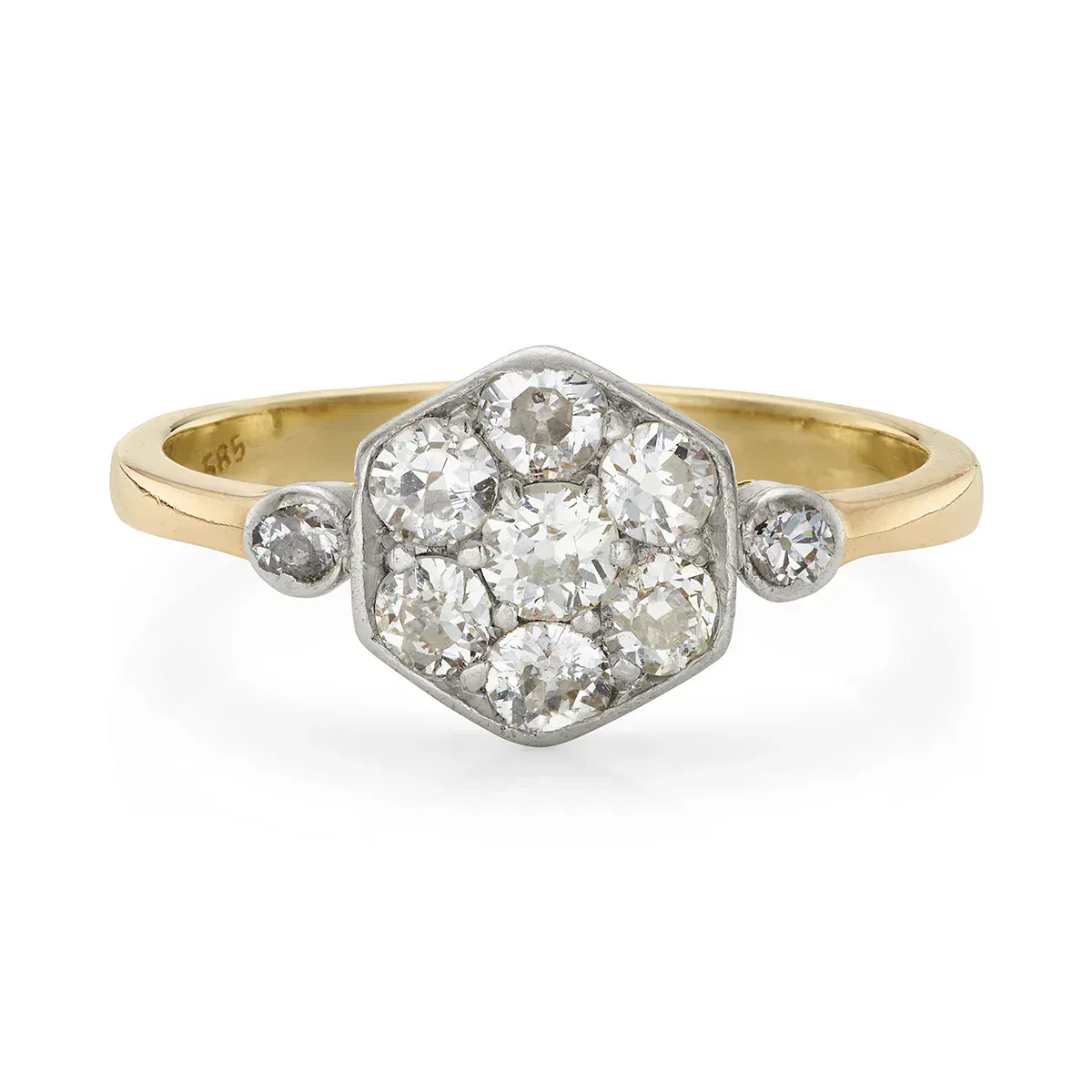
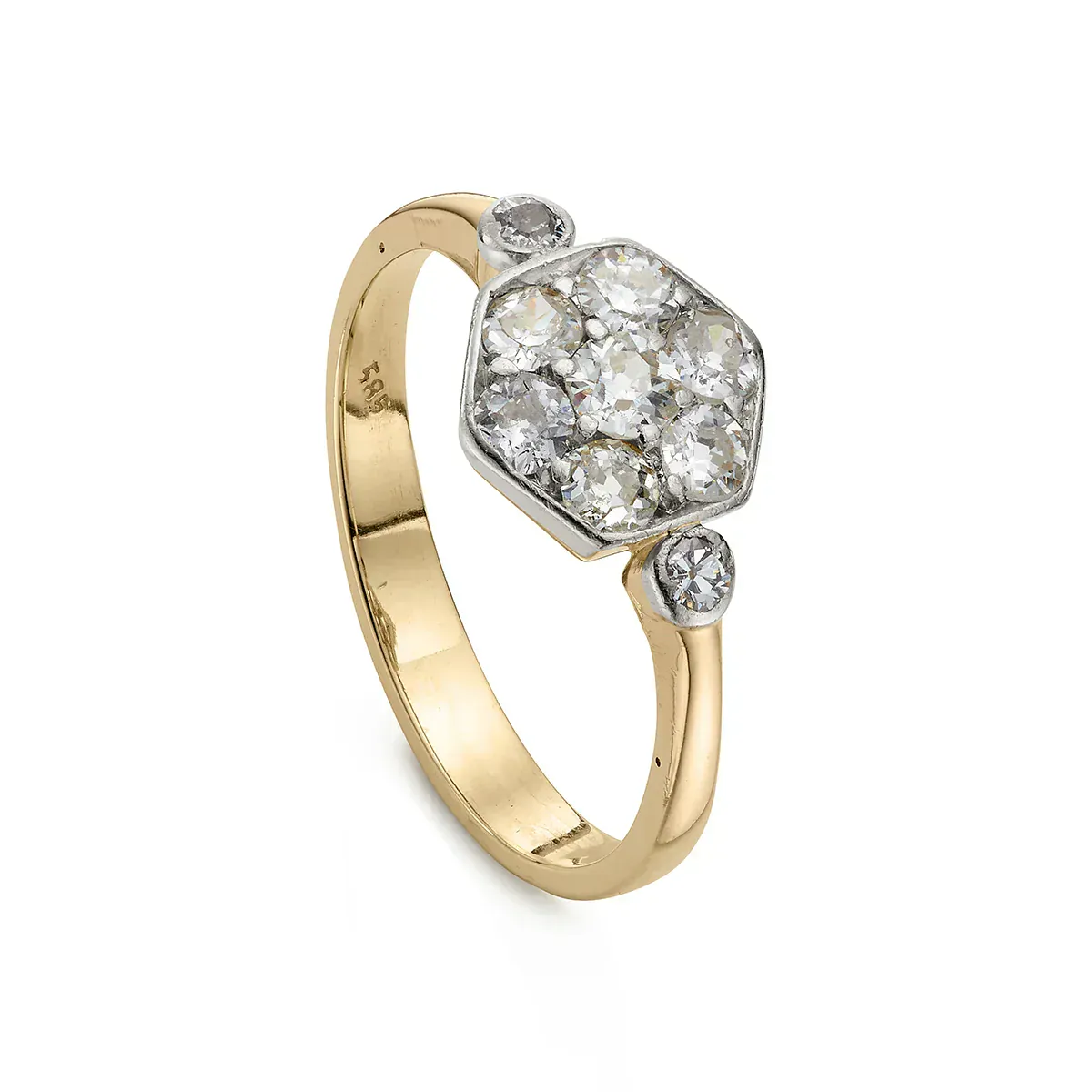
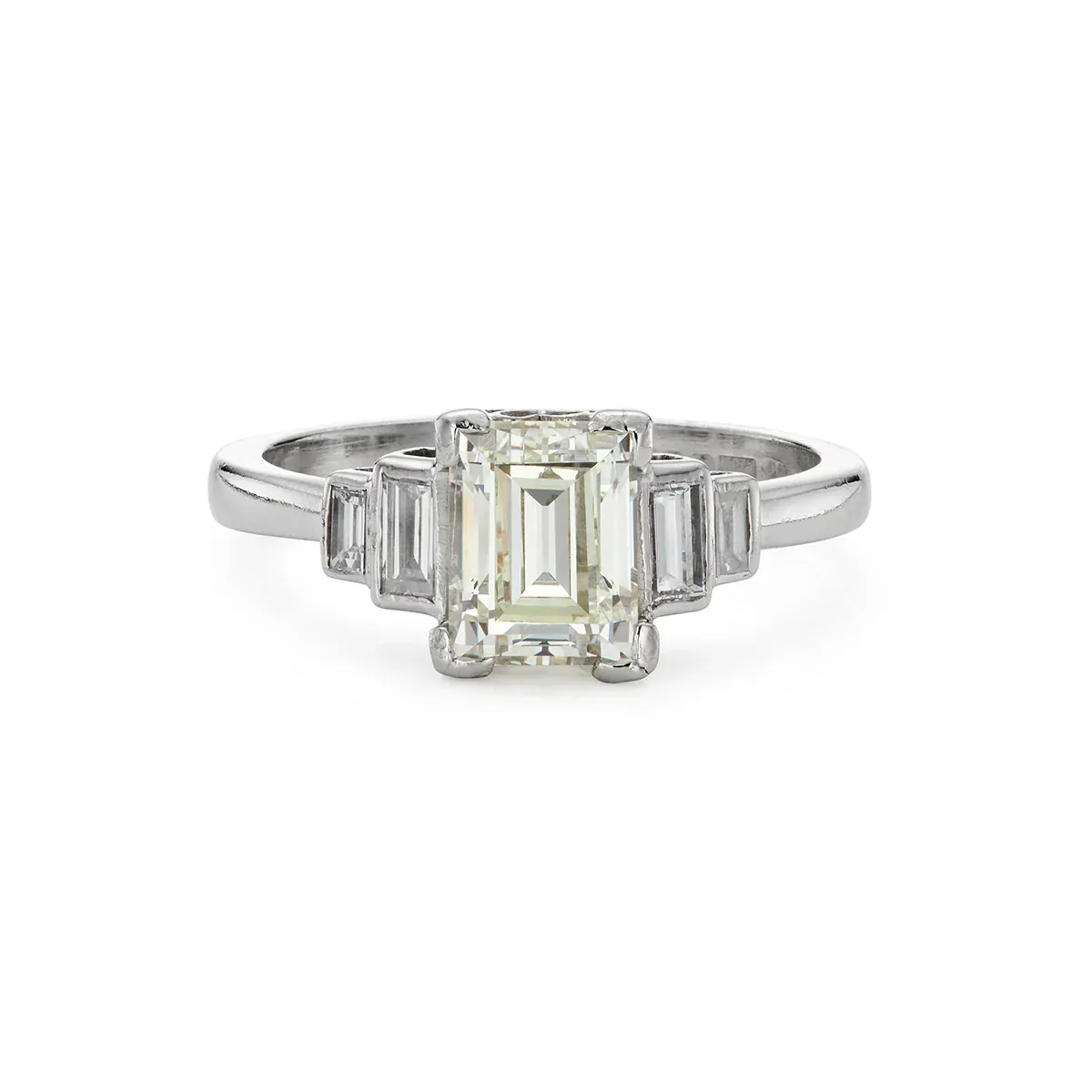
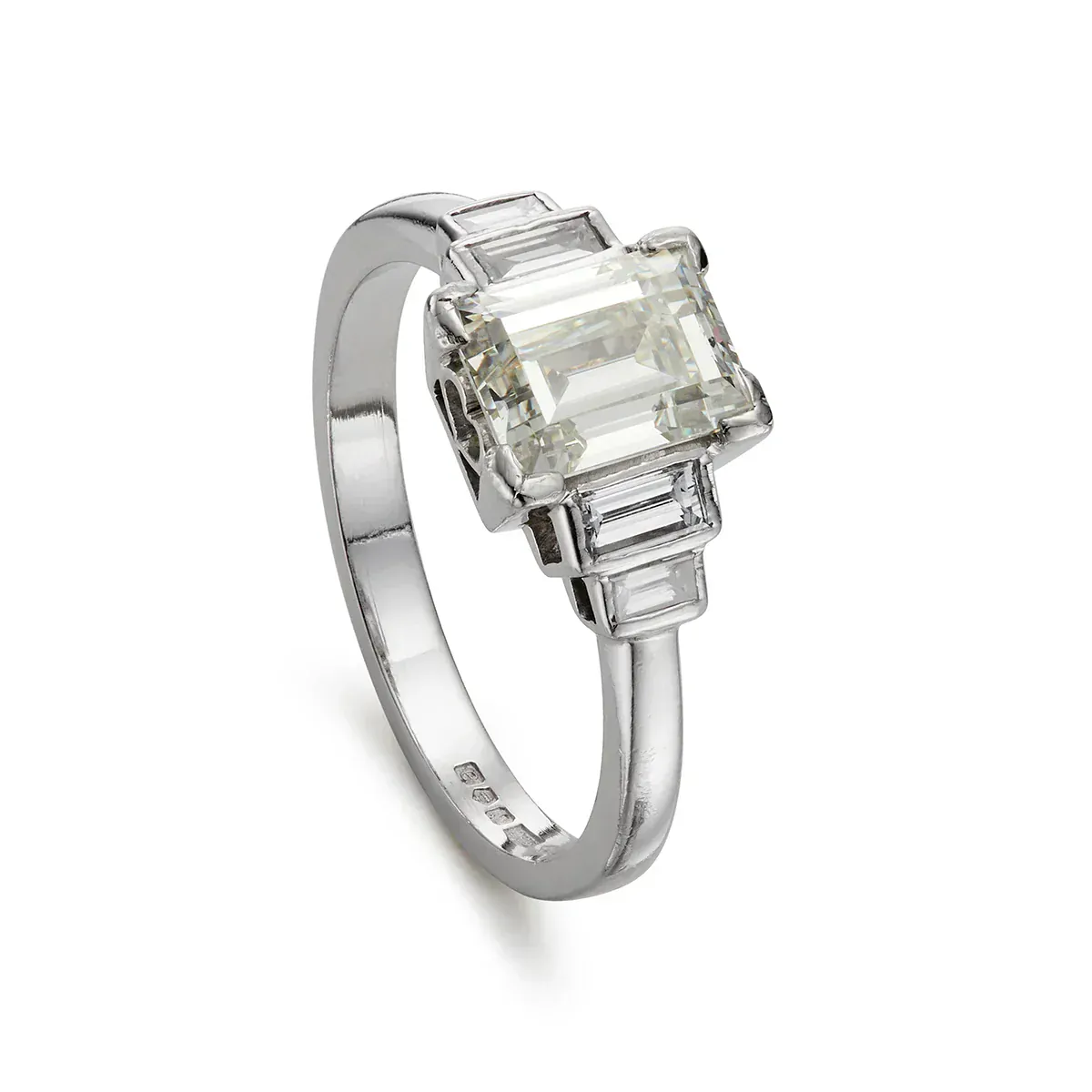
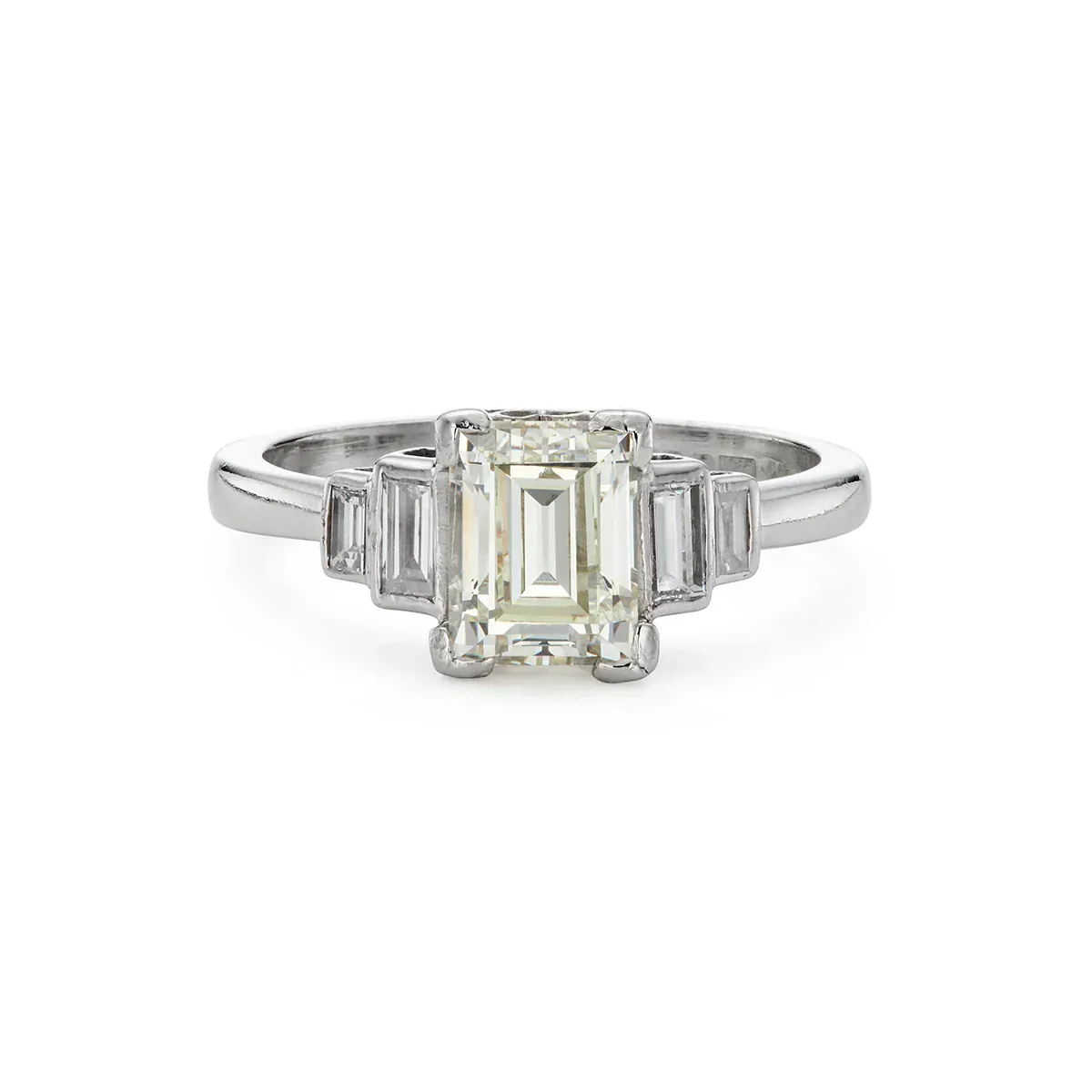
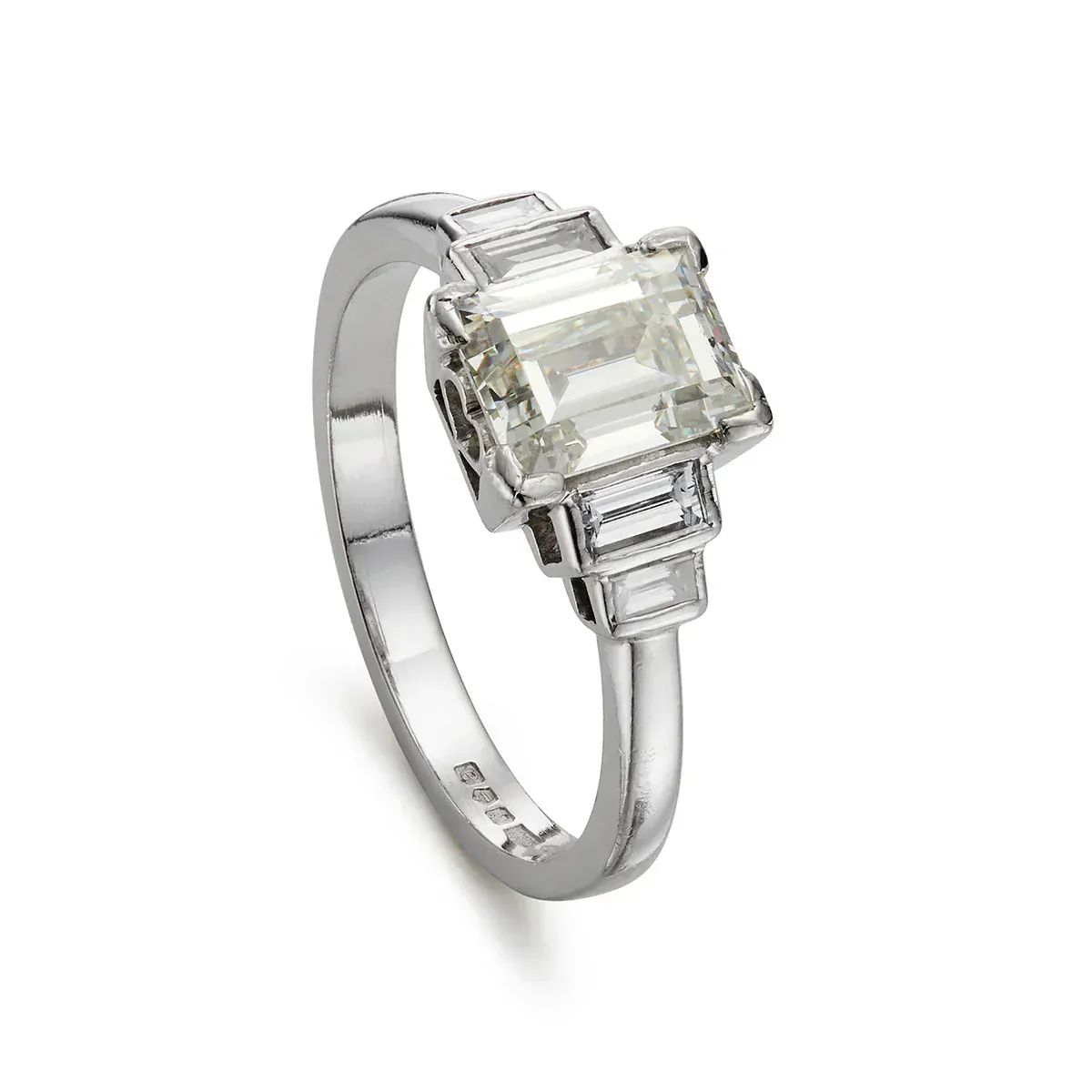
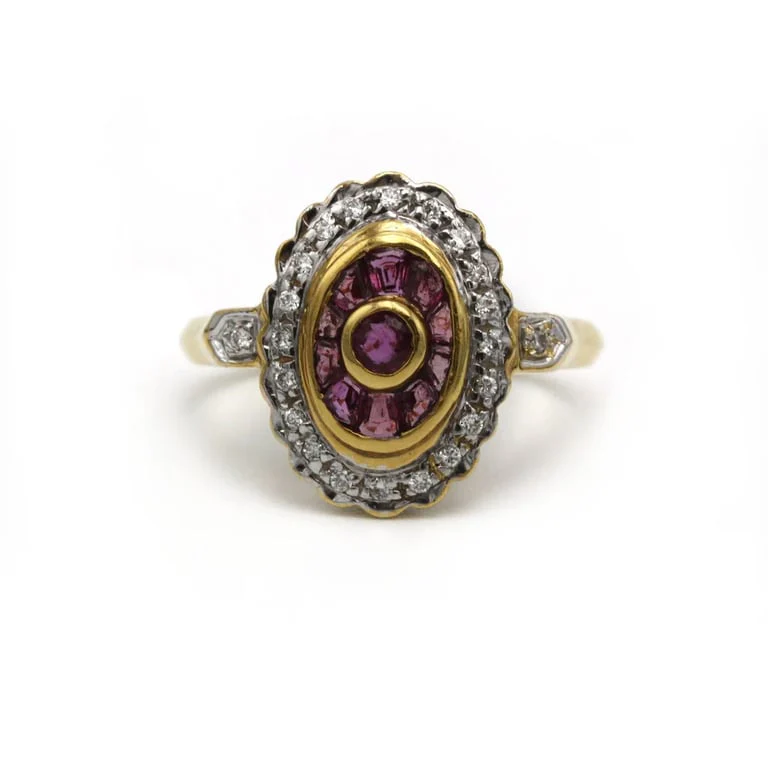
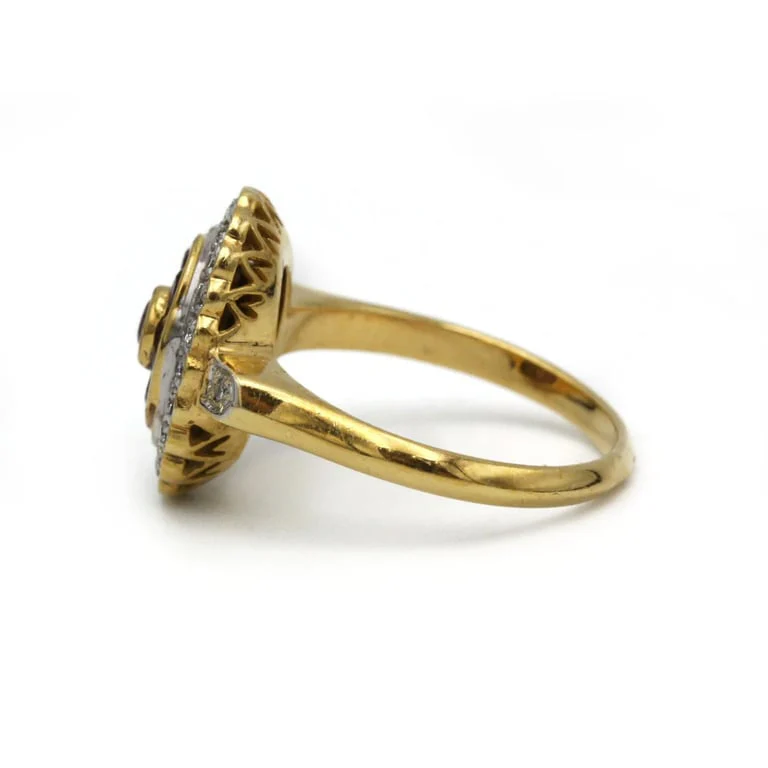
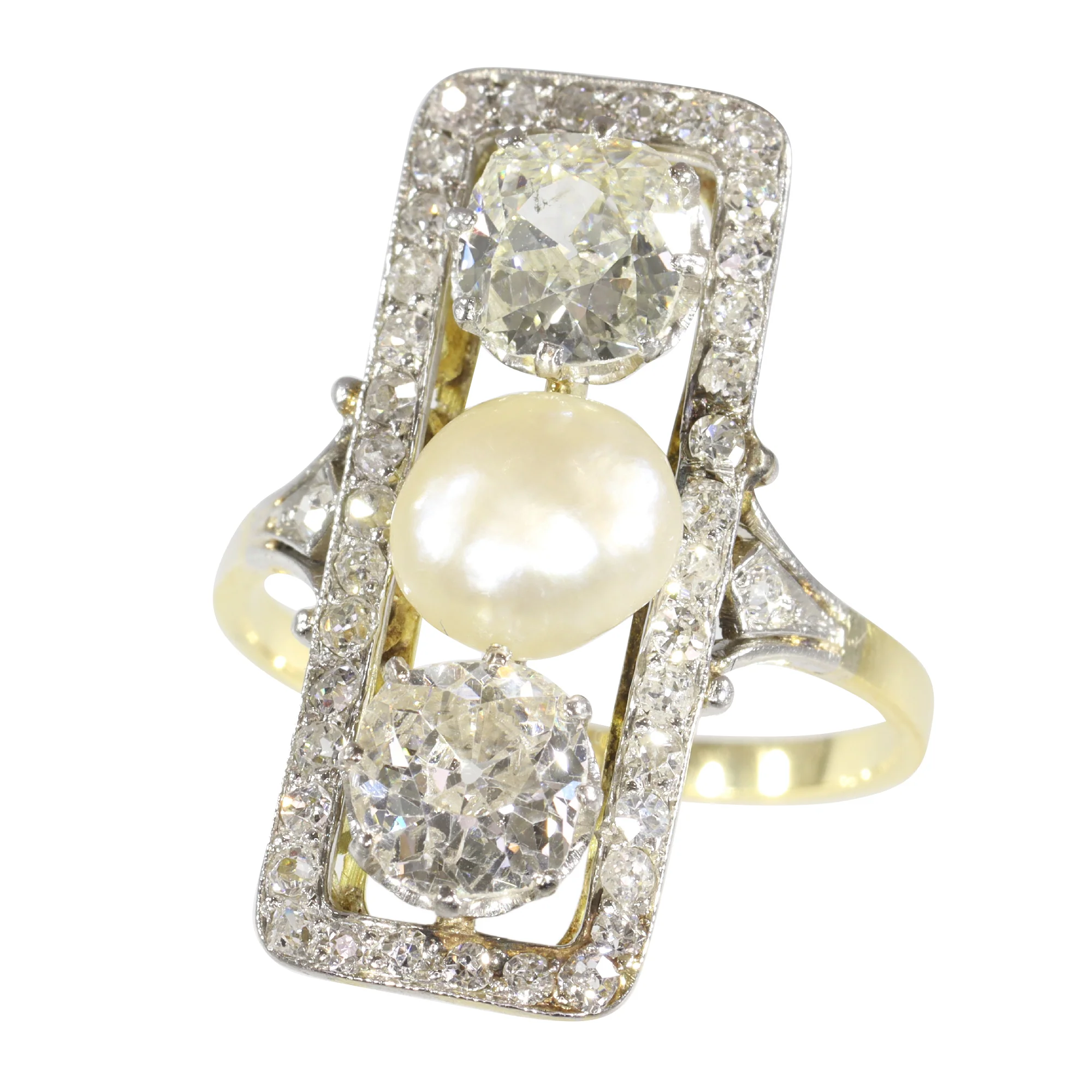
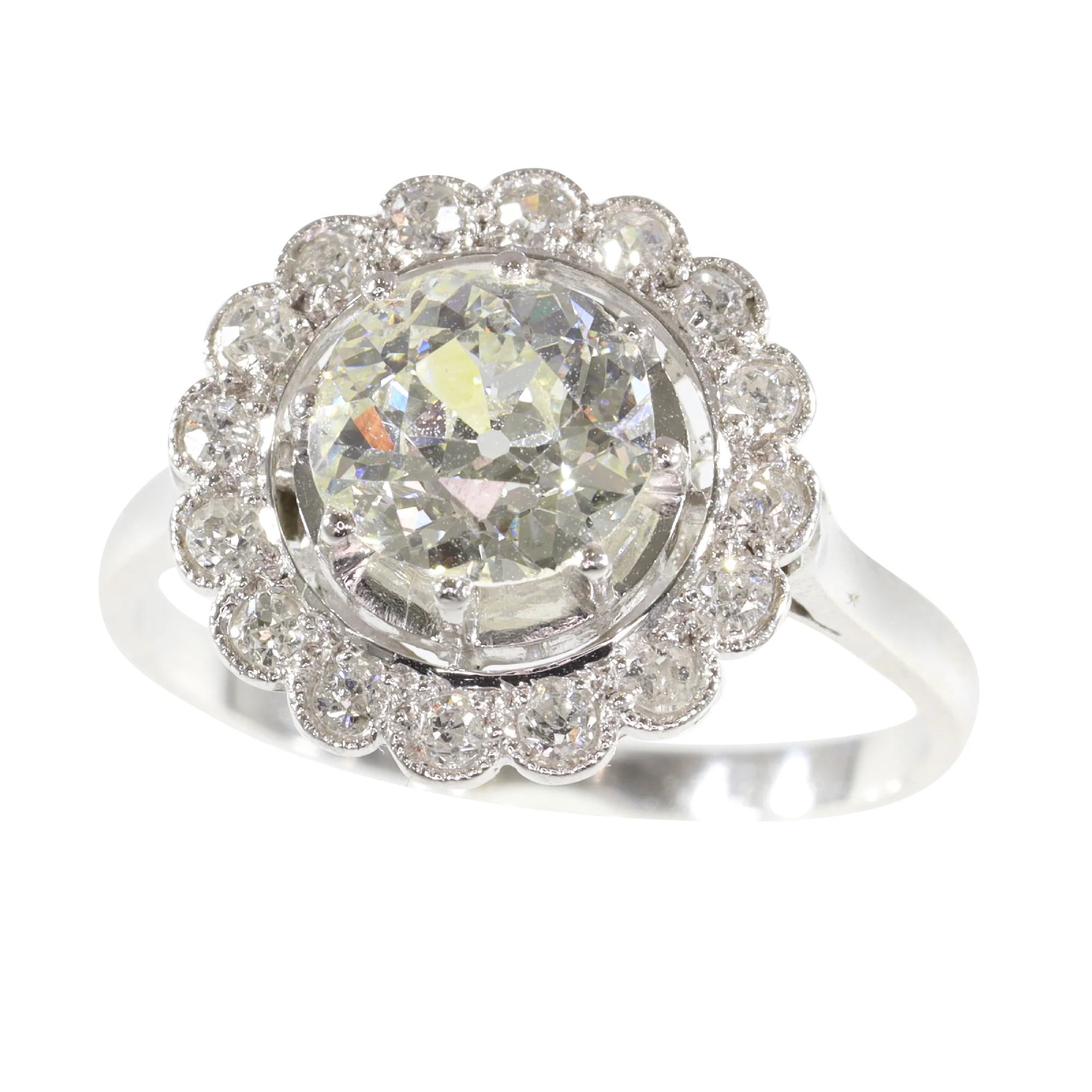
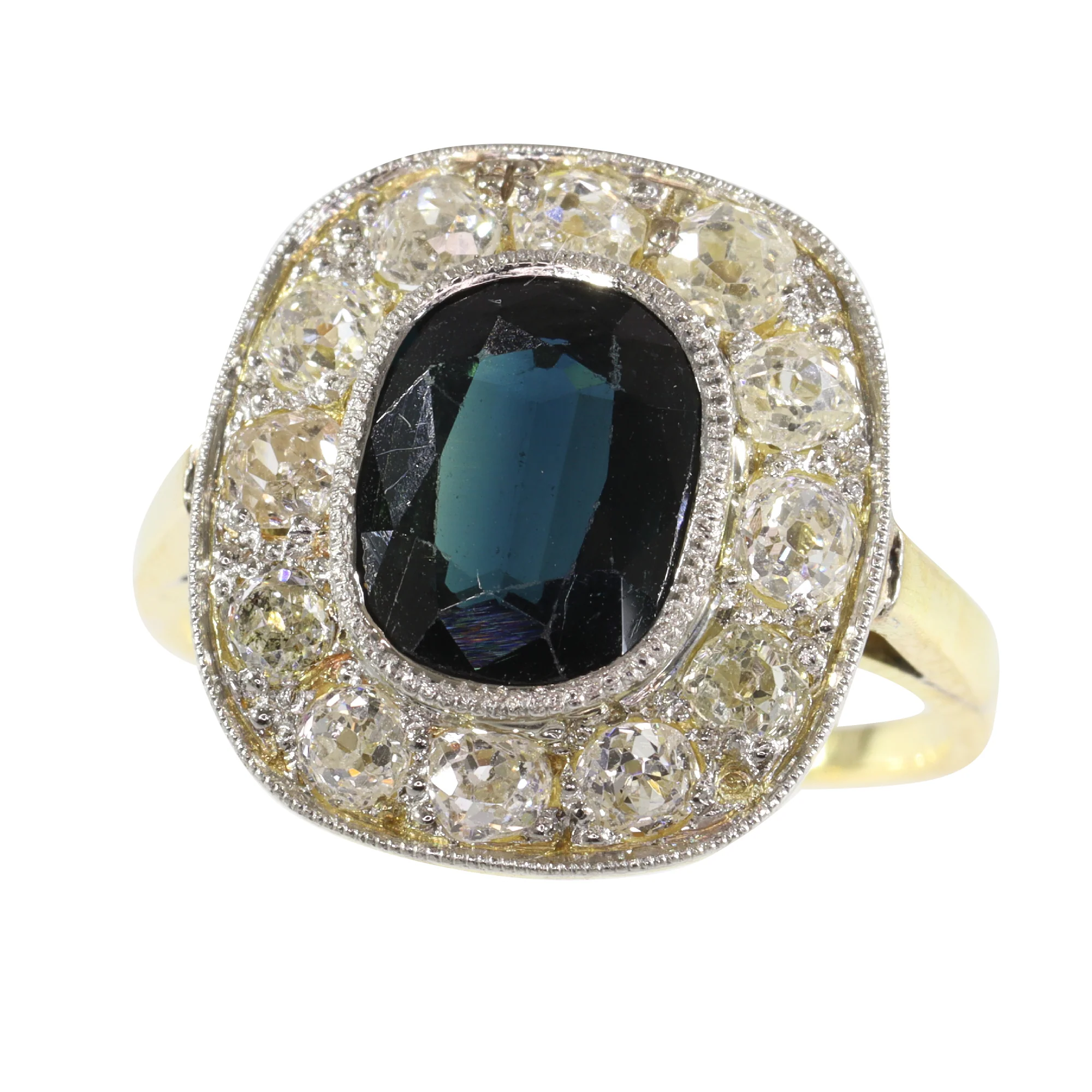
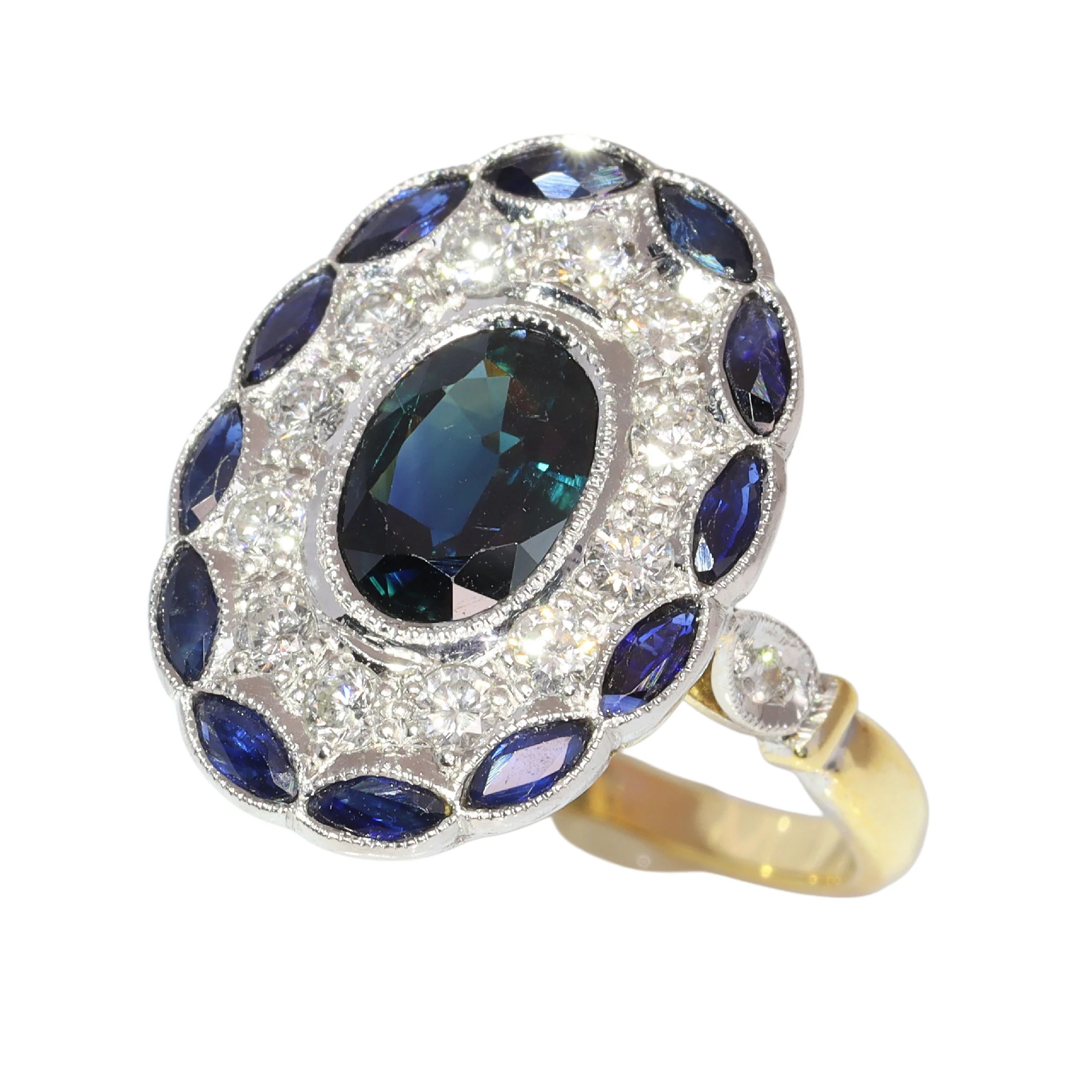
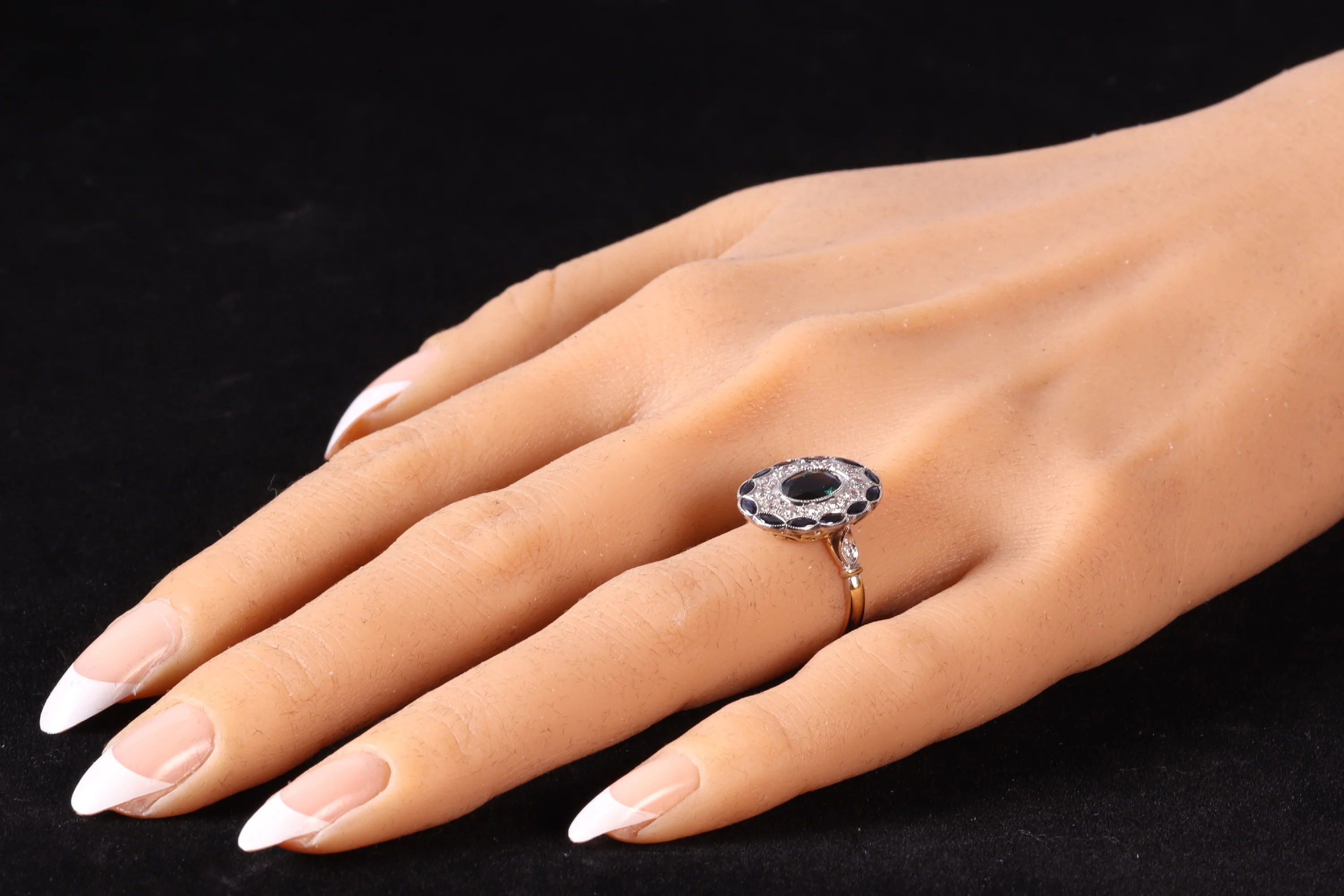
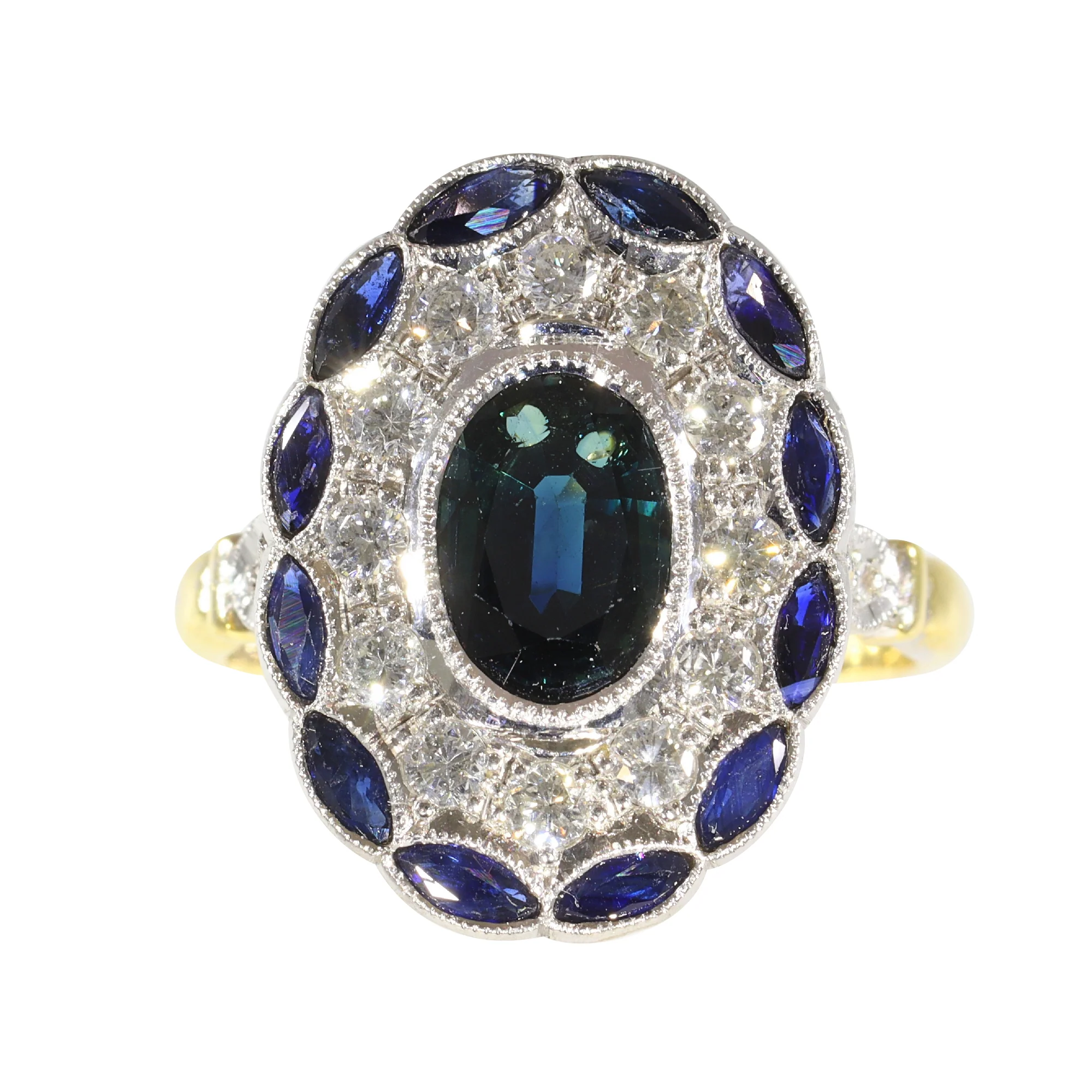
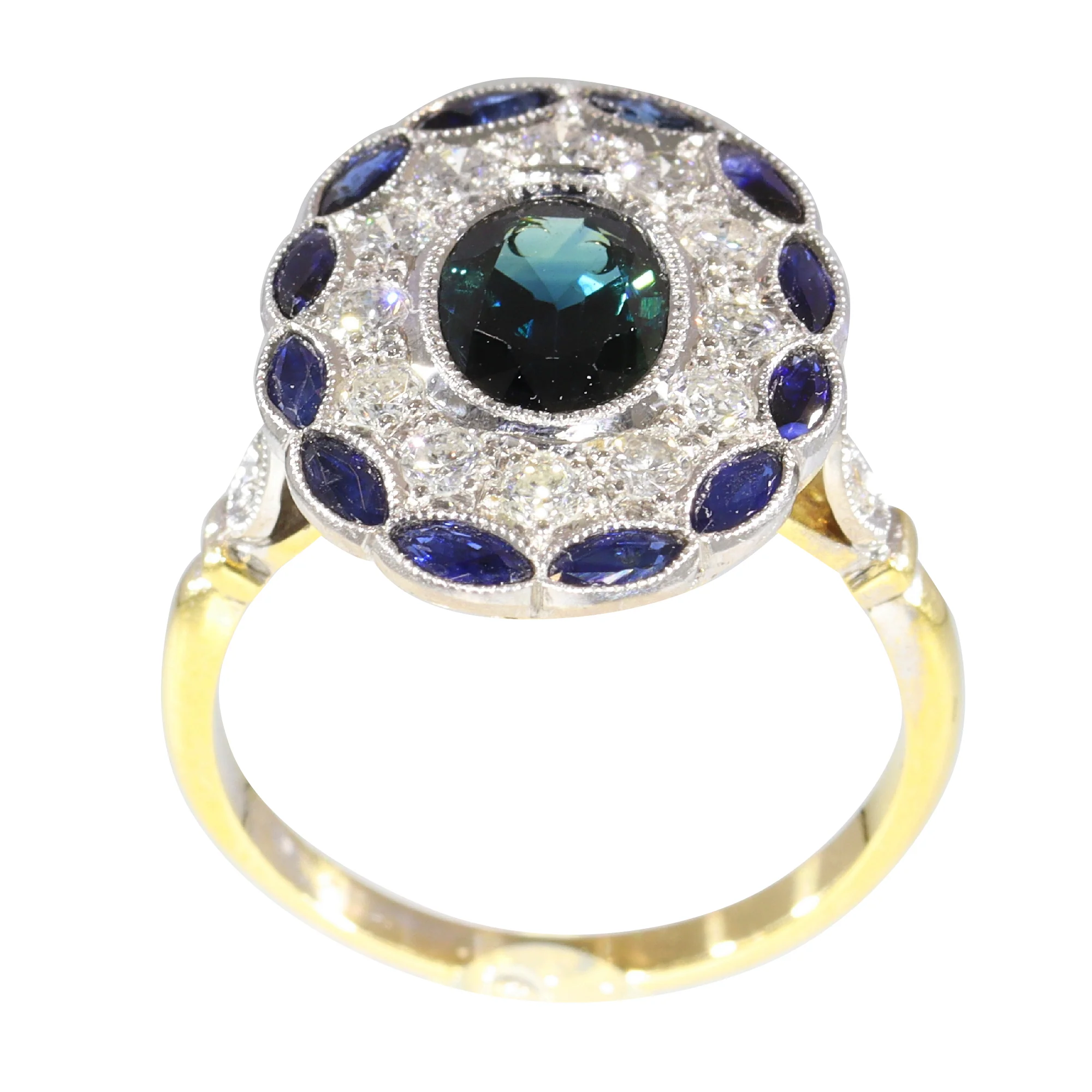
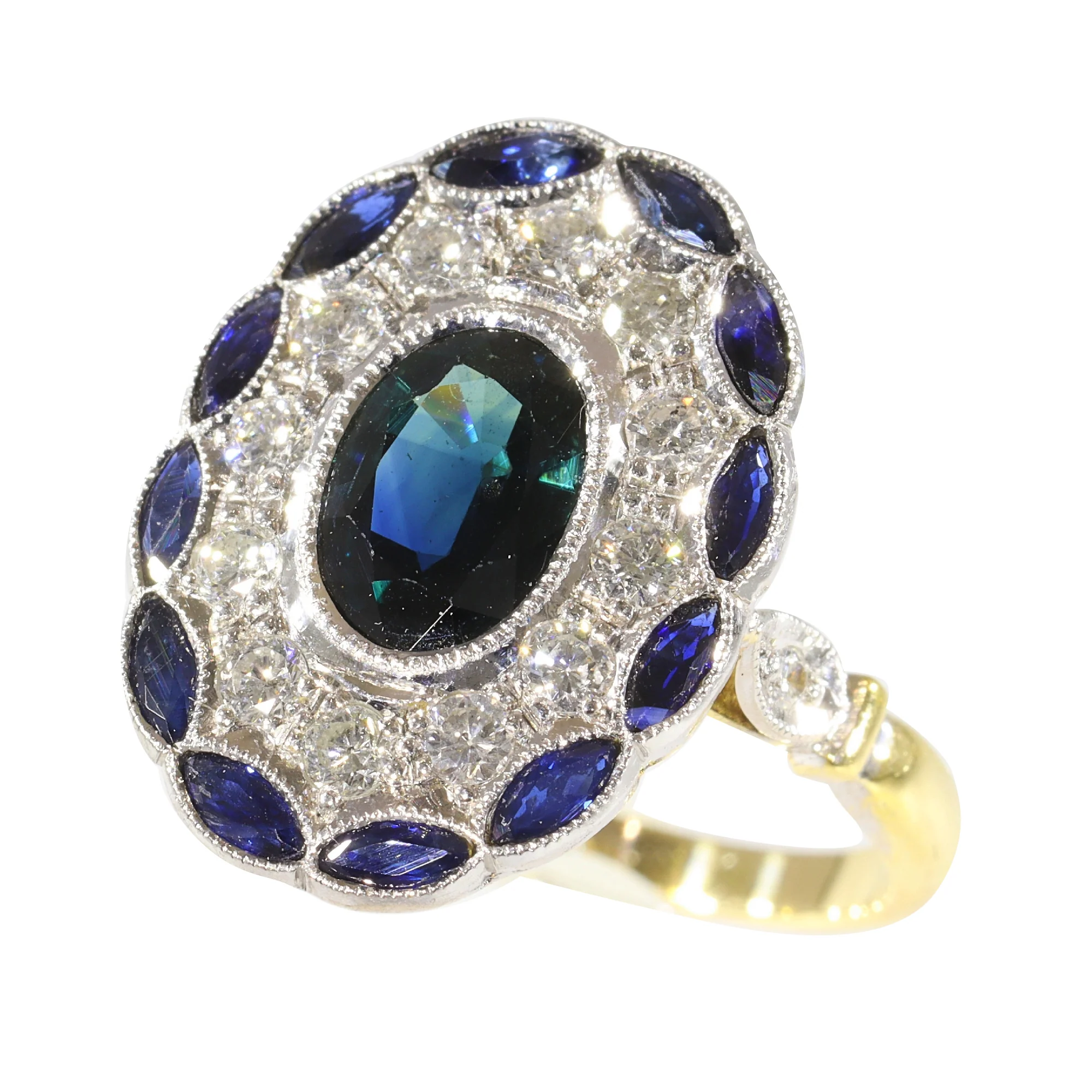
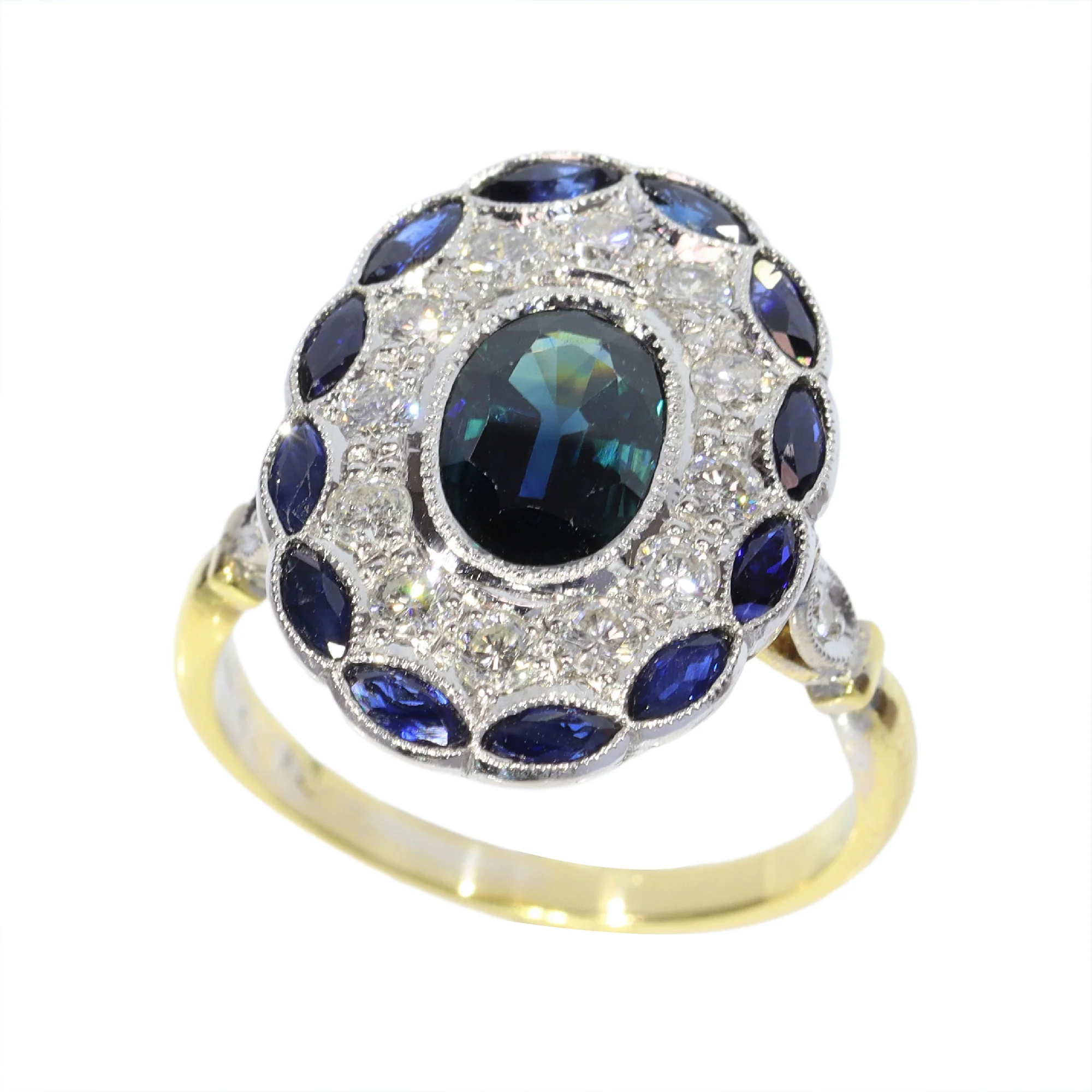
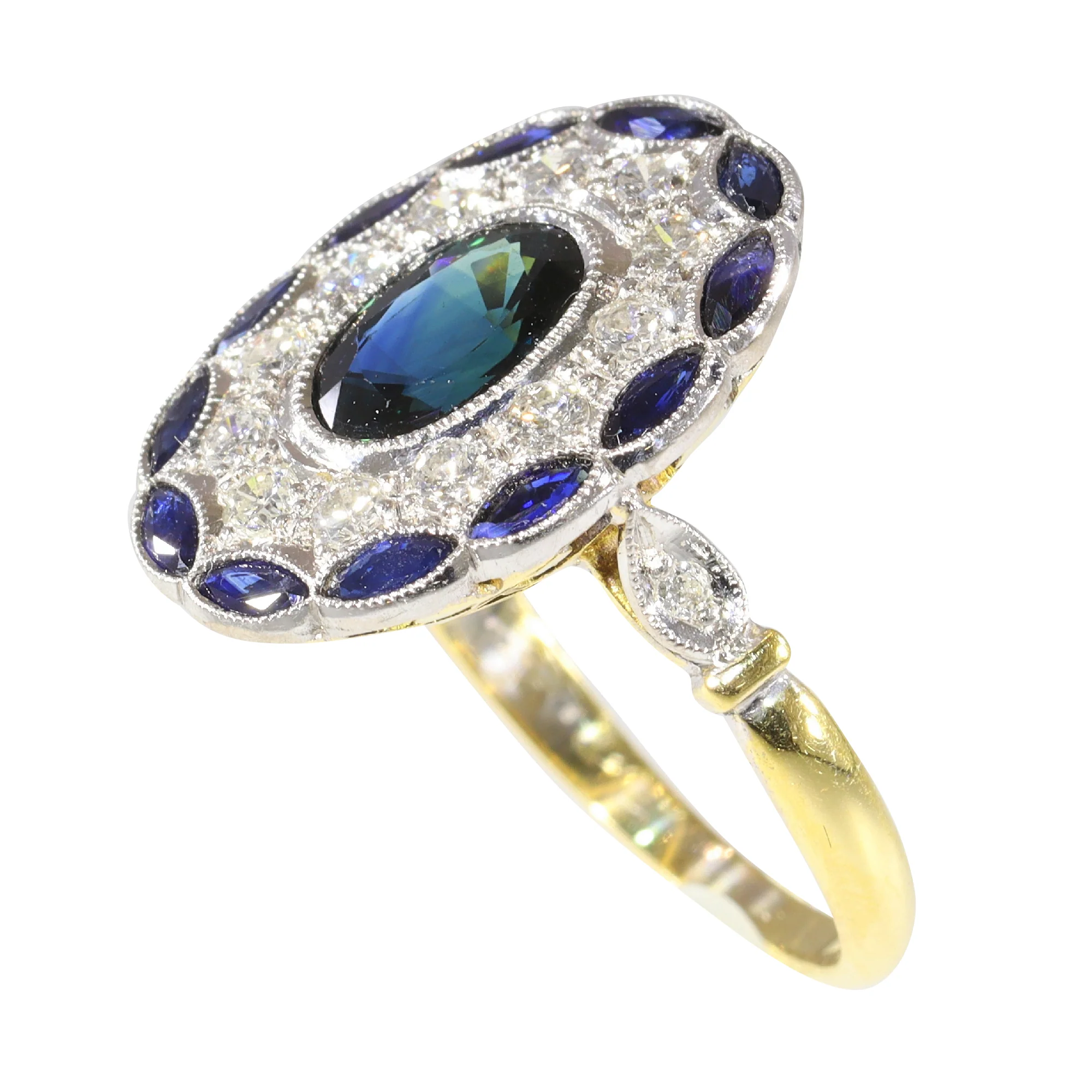
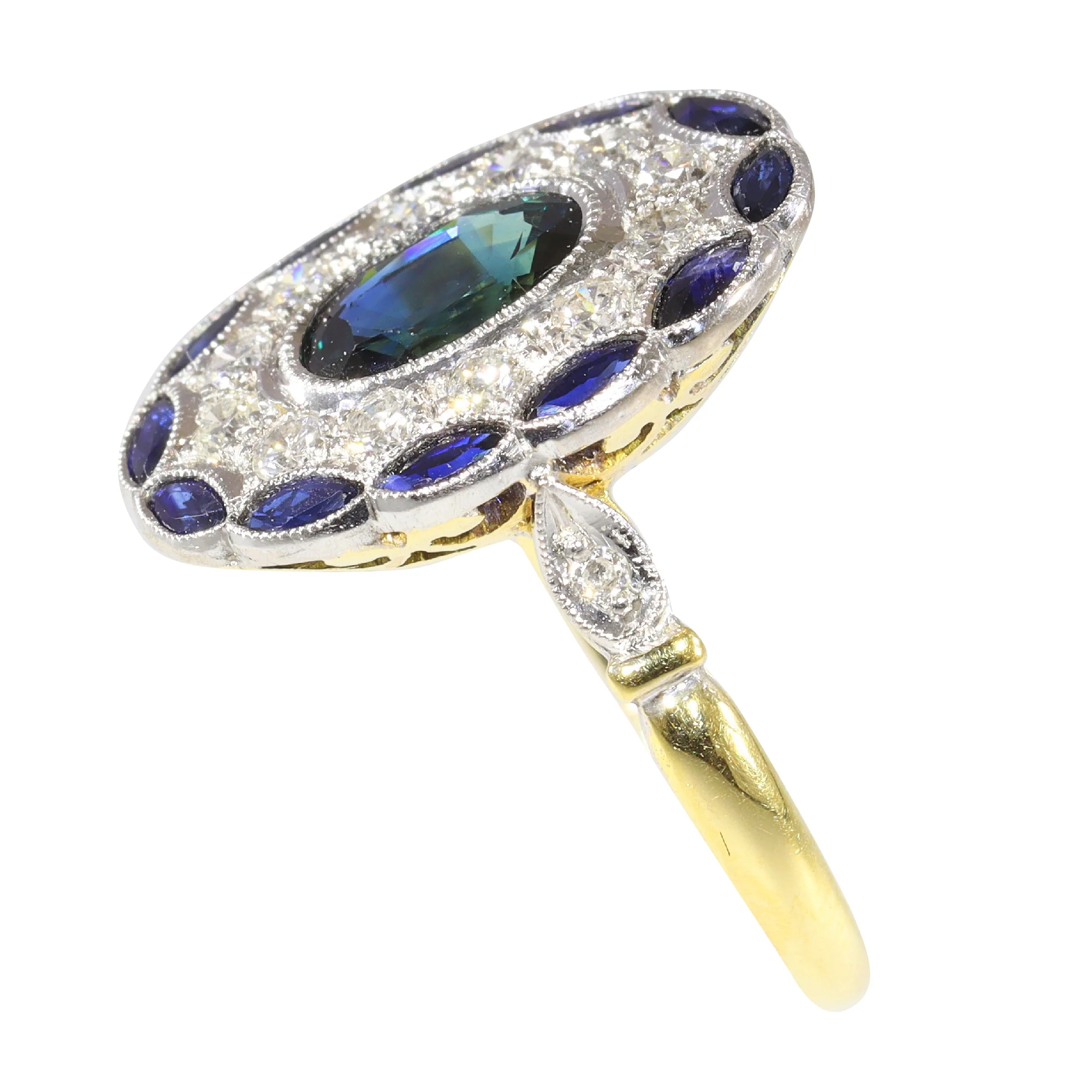
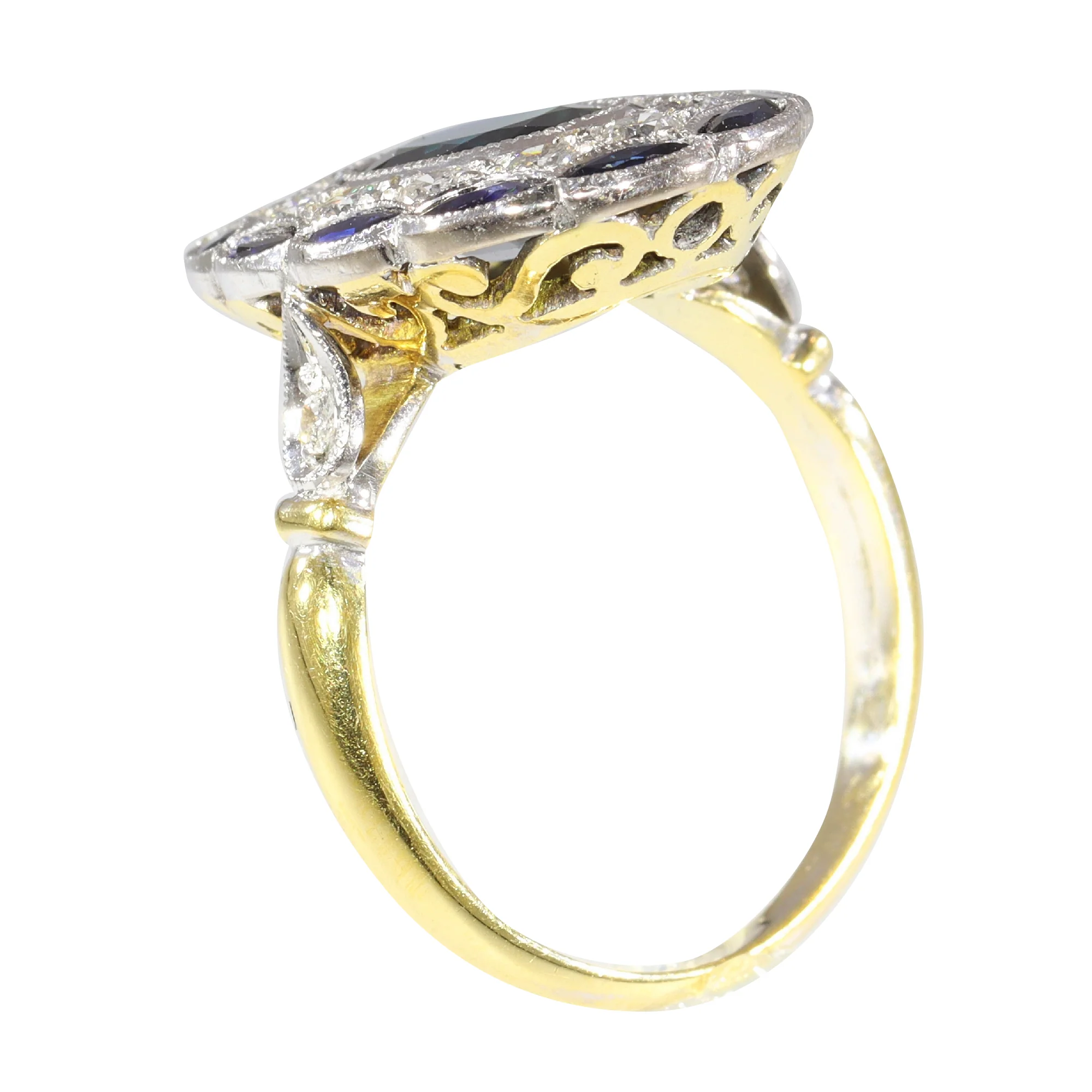
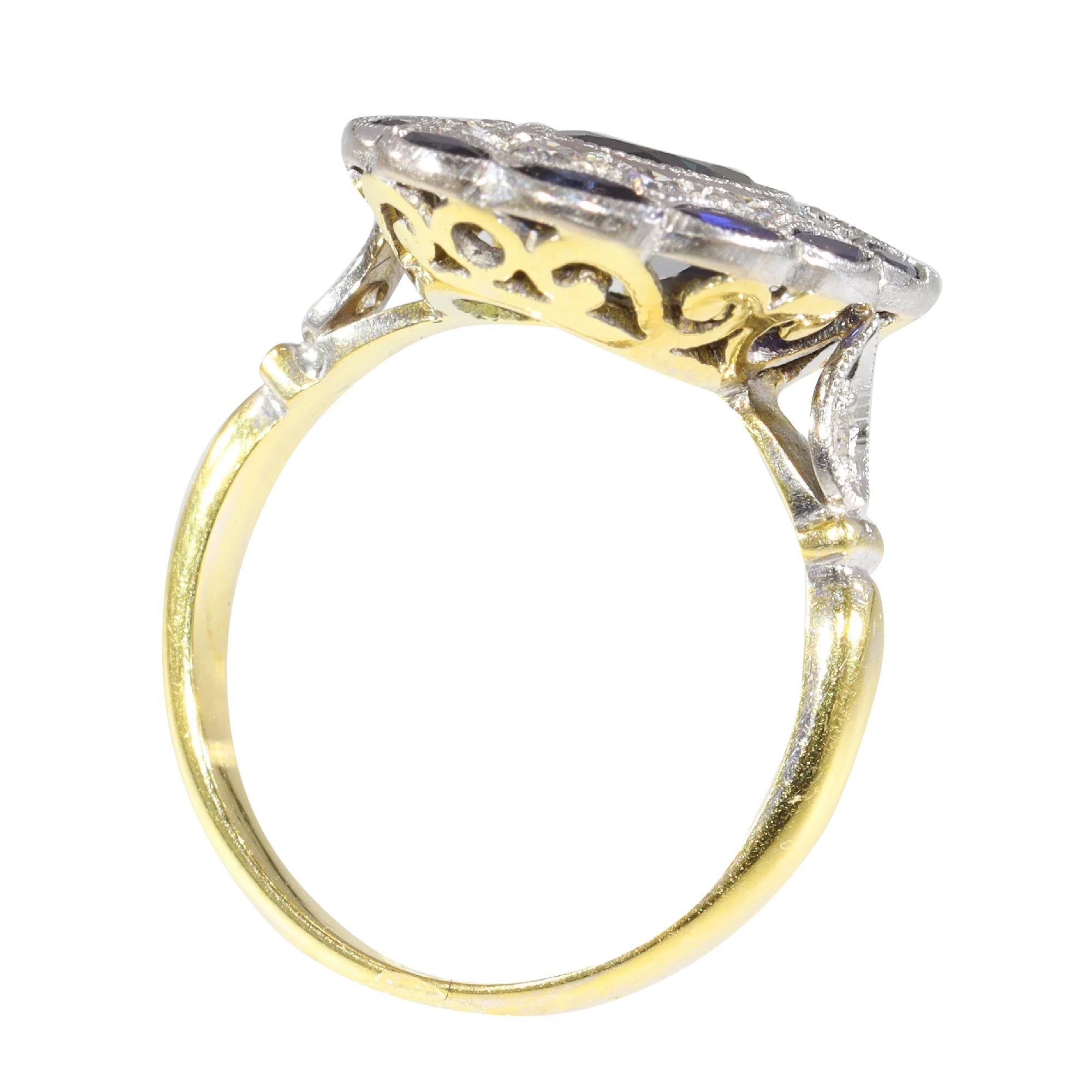
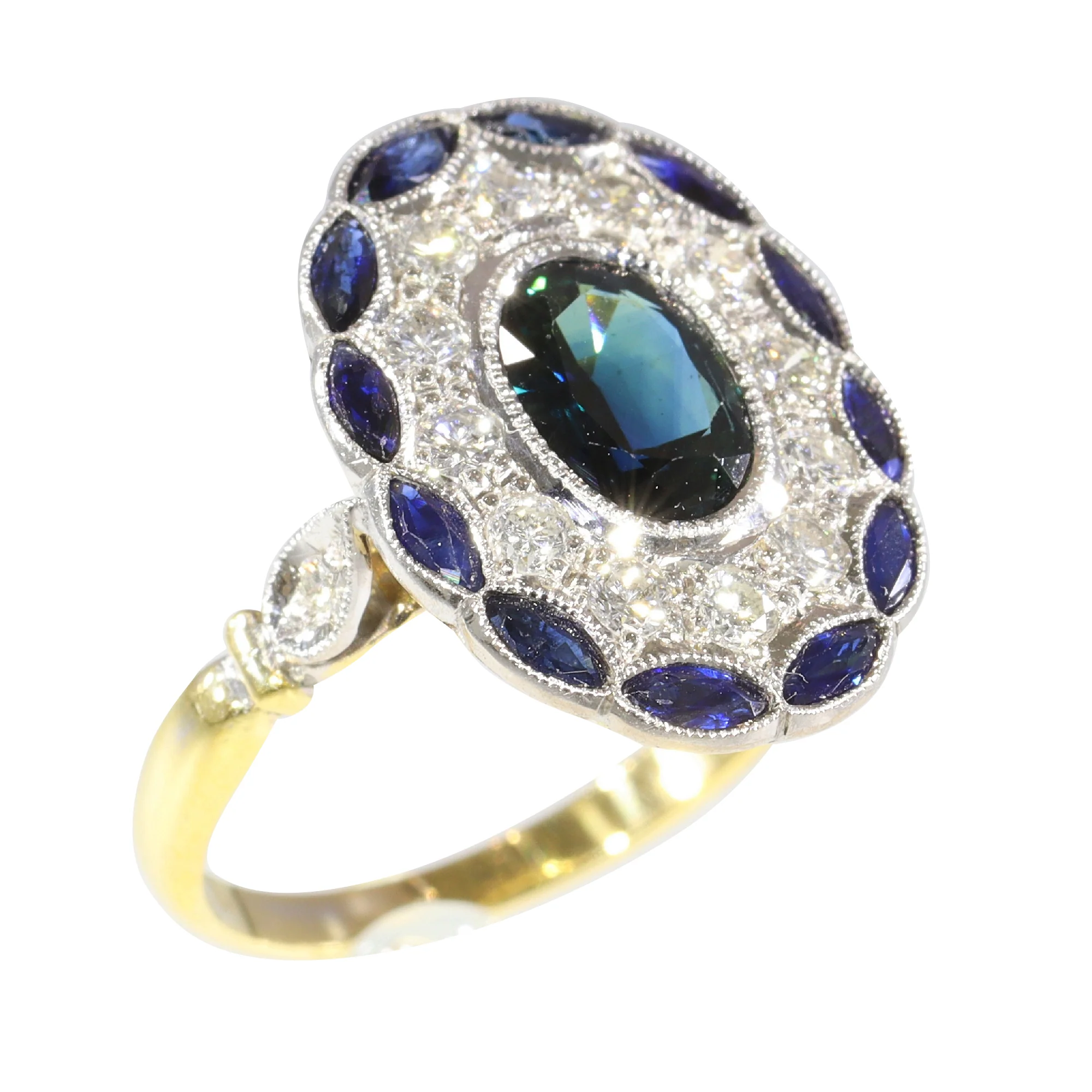
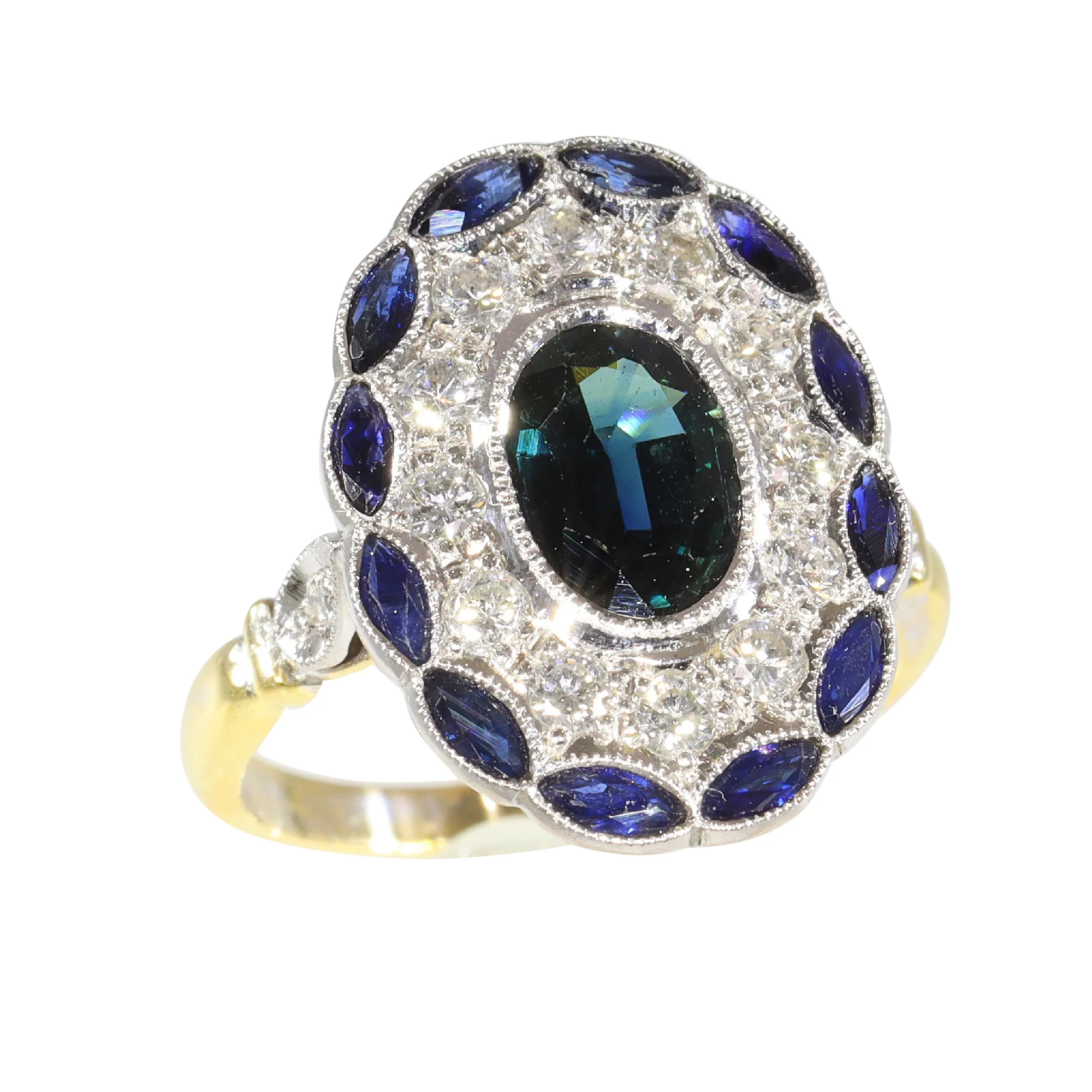
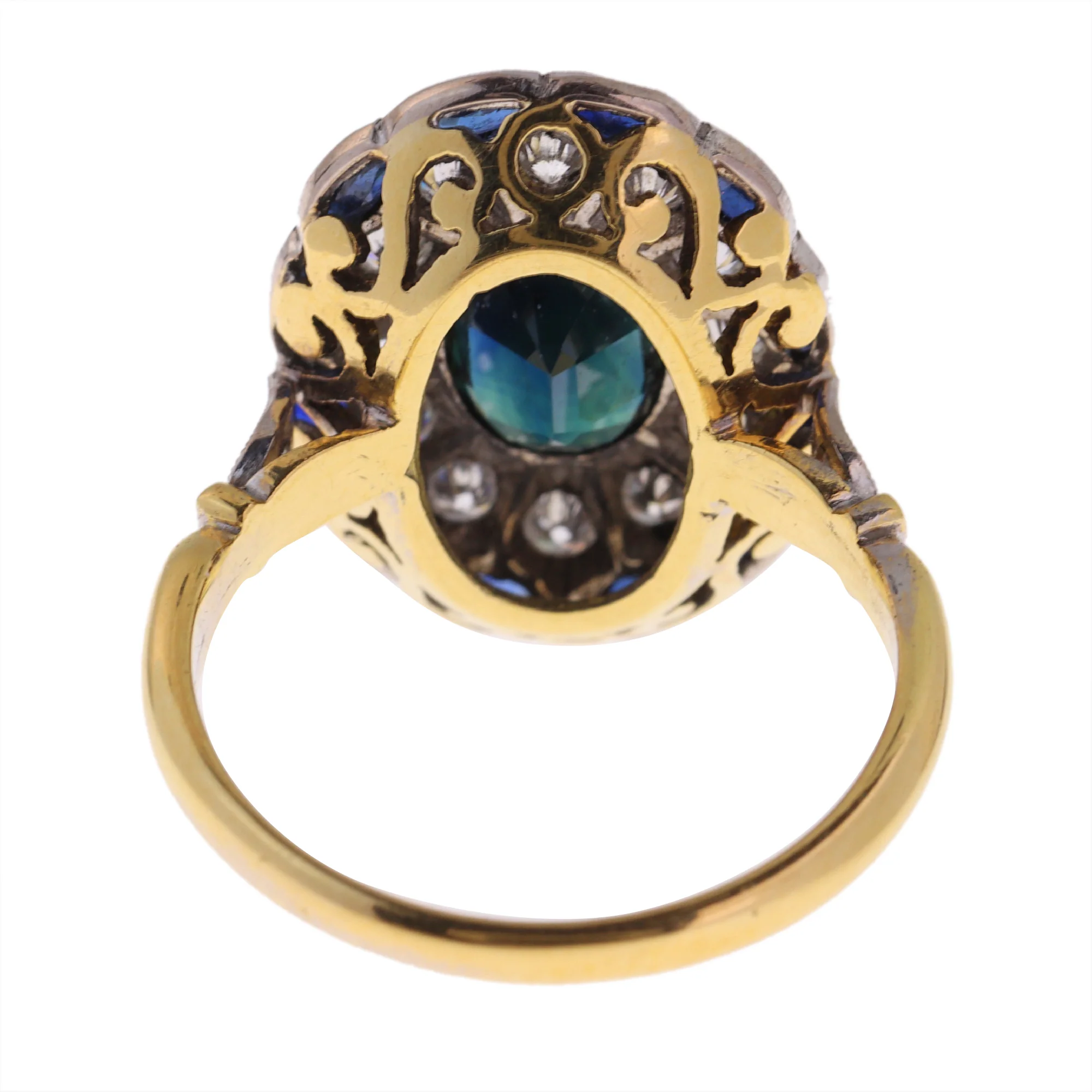
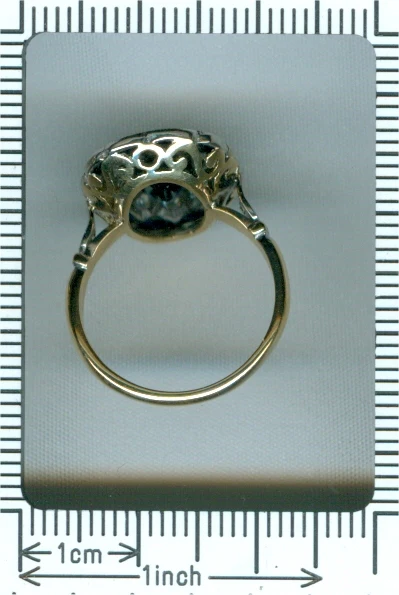
This engagement ring inspired by Art Deco, crafted in the 1950s, is more than a symbol of commitment; it is a symbol of romance, joy, and the promise of a precious legacy. Its Belgian origins and 18-carat two-tone gold setting illustrate the story of two intertwined lives, with diamonds and sapphires symbolizing enduring love. The joy it brings extends beyond the proposal, encompassing all the happy memories and important milestones it will witness. A true heirloom, it promises to pass on these stories, emotions, and legacy of love through generations, gaining value and sentiment over time.
Antique jewelry object group:
engagement ring (or anniversary ring)
Condition:
excellent condition
- (more info on our condition scale)
Country of origin:
Although it bears no readable hallmark, we believe it is of Belgian origin.
Style:
While most people call this style Art Deco, it is more considered a product of the 1950s. Strongly influenced by Art Deco, but also by the retro style, it is difficult to classify it as Art Deco, since the retro and 1950s styles are the successors of Art Deco. To learn more about the styles
Stylistic specifics:
Abstract motifs and geometric shapes are typical of the Art Deco period. Art Deco moves away from the soft pastels and organic shapes of its predecessor, Art Nouveau, and draws inspiration from many early 20th-century styles and movements, including Neoclassicism, Constructivism, Cubism, Modernism, and Futurism. Its popularity peaked in Europe during the Roaring Twenties and continued in the United States until the 1930s. While many design movements have political or philosophical roots or intentions, Art Deco is purely decorative.
Period:
circa 1950
- (events and facts of this era, poetry of this era, fashion of this era)
Material:
18-carat two-tone gold (yellow and white)
- (more info on precious metals)
Additional information:
Engagement rings were used in Roman times, but their return to the West only occurred in the 13th century. The first documented use of a diamond ring to symbolize engagement was by Archduke Maximilian of Austria at the imperial court in Vienna in 1477, upon his engagement to Mary of Burgundy.
Before the 20th century, other types of engagement gifts were common. Before the end of the 19th century, the future bride often received a thimble rather than an engagement ring. This practice was particularly widespread among religious groups who rejected jewelry. Engagement rings only became the norm in the West at the end of the 19th century, and diamond rings only became widespread in the 1930s. Today, 80% of women are given a diamond ring for their engagement. (Source: Wikipedia)
Diamond(s):
14 brilliant-cut diamonds with an estimated weight of ± 0.50 ct. (color and clarity: H/J, vs/si).
- All diamond weights, color shades, and clarity are approximate as the stones are not removed from their settings to preserve the integrity of the mounting.
Gemstones:
A natural sapphire with an estimated weight of ± 1.10ct.
Treatment: probably heat-treated. The enhancement of color by heat treatment of ruby and sapphire is an accepted technique, provided it is disclosed by the seller.
12 marquise-cut sapphires. We have not verified whether the sapphires are synthetic, as this information has no impact on the value of this jewel. At that time, both natural and synthetic sapphires were used, more for their effect than for their intrinsic value.
- All colored stone weights are approximate as the stones are not removed from their settings to preserve the integrity of the mounting.
Birthstones:
Diamond is the birthstone (or monthly stone) for April and sapphire for September.
- (more info on birthstones)
Hallmarks:
No trace.
- (more info on hallmarks)
Dimensions:
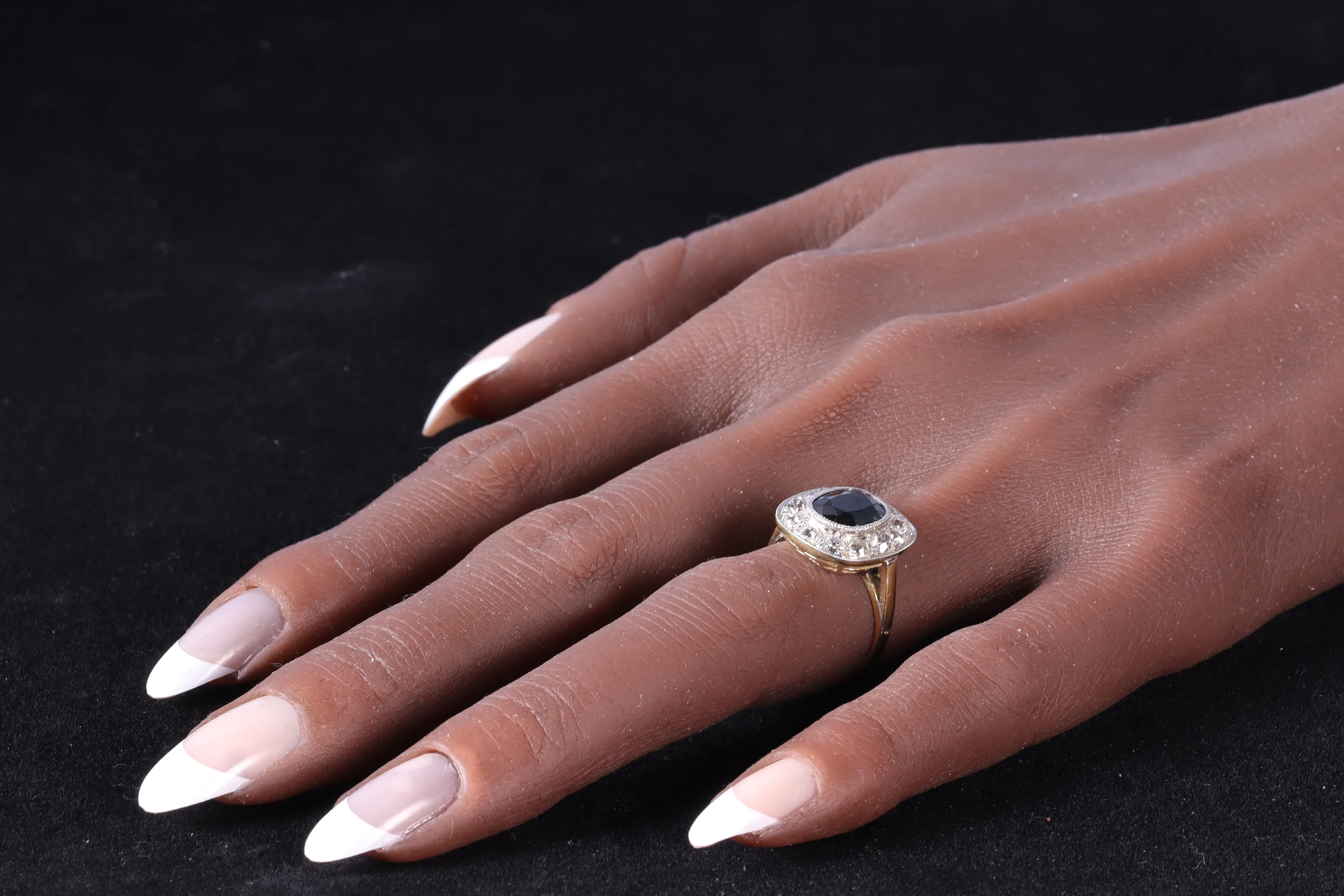
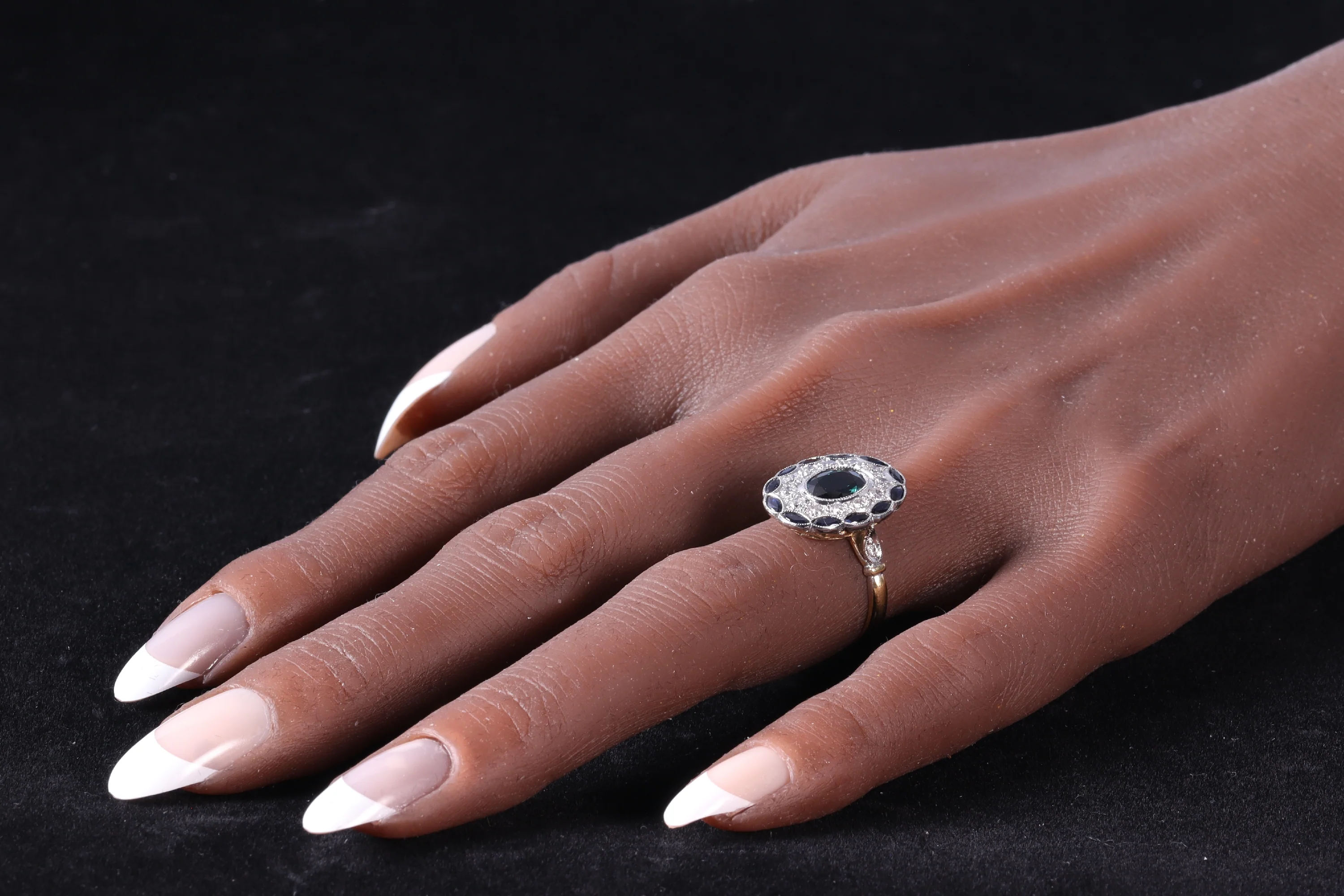
ring height 1.87 cm (0.74 inch) x 1.40 cm (0.55 inch)
Weight:
4.60 grams (2.96 dwt)
Continental ring size:
53 and 17,
US size
6¼,
UK size:
M
Resizing:
free resizing (only for extreme resizing do we have to charge).
- (more information on ring sizes)
More Images
Vintage wishes: a sapphire ring between romance and history
This engagement ring inspired by Art Deco, crafted in the 1950s, is more than a symbol of commitment; it is a symbol of romance, joy, and the promise of a precious legacy. Its Belgian origins and 18-carat two-tone gold setting illustrate the story of two intertwined lives, with diamonds and sapphires symbolizing enduring love. The joy it brings extends beyond the proposal, encompassing all the happy memories and important milestones it will witness. A true heirloom, it promises to pass on these stories, emotions, and legacy of love through generations, gaining value and sentiment over time.
Antique jewelry object group:
engagement ring (or anniversary ring)
Condition:
excellent condition
- (more info on our condition scale)
Country of origin:
Although it bears no readable hallmark, we believe it is of Belgian origin.
Style:
While most people call this style Art Deco, it is more considered a product of the 1950s. Strongly influenced by Art Deco, but also by the retro style, it is difficult to classify it as Art Deco, since the retro and 1950s styles are the successors of Art Deco. To learn more about the styles
Stylistic specifics:
Abstract motifs and geometric shapes are typical of the Art Deco period. Art Deco moves away from the soft pastels and organic shapes of its predecessor, Art Nouveau, and draws inspiration from many early 20th-century styles and movements, including Neoclassicism, Constructivism, Cubism, Modernism, and Futurism. Its popularity peaked in Europe during the Roaring Twenties and continued in the United States until the 1930s. While many design movements have political or philosophical roots or intentions, Art Deco is purely decorative.
Period:
circa 1950
- (events and facts of this era, poetry of this era, fashion of this era)
Material:
18-carat two-tone gold (yellow and white)
- (more info on precious metals)
Additional information:
Engagement rings were used in Roman times, but their return to the West only occurred in the 13th century. The first documented use of a diamond ring to symbolize engagement was by Archduke Maximilian of Austria at the imperial court in Vienna in 1477, upon his engagement to Mary of Burgundy.
Before the 20th century, other types of engagement gifts were common. Before the end of the 19th century, the future bride often received a thimble rather than an engagement ring. This practice was particularly widespread among religious groups who rejected jewelry. Engagement rings only became the norm in the West at the end of the 19th century, and diamond rings only became widespread in the 1930s. Today, 80% of women are given a diamond ring for their engagement. (Source: Wikipedia)
Diamond(s):
14 brilliant-cut diamonds with an estimated weight of ± 0.50 ct. (color and clarity: H/J, vs/si).
- All diamond weights, color shades, and clarity are approximate as the stones are not removed from their settings to preserve the integrity of the mounting.
Gemstones:
A natural sapphire with an estimated weight of ± 1.10ct.
Treatment: probably heat-treated. The enhancement of color by heat treatment of ruby and sapphire is an accepted technique, provided it is disclosed by the seller.
12 marquise-cut sapphires. We have not verified whether the sapphires are synthetic, as this information has no impact on the value of this jewel. At that time, both natural and synthetic sapphires were used, more for their effect than for their intrinsic value.
- All colored stone weights are approximate as the stones are not removed from their settings to preserve the integrity of the mounting.
Birthstones:
Diamond is the birthstone (or monthly stone) for April and sapphire for September.
- (more info on birthstones)
Hallmarks:
No trace.
- (more info on hallmarks)
Dimensions:
ring height 1.87 cm (0.74 inch) x 1.40 cm (0.55 inch)
Weight:
4.60 grams (2.96 dwt)
Continental ring size:
53 and 17,
US size
6¼,
UK size:
M
Resizing:
free resizing (only for extreme resizing do we have to charge).
- (more information on ring sizes)
Product Information
Product Information
Shipping & Returns
Shipping & Returns
Description
This engagement ring inspired by Art Deco, crafted in the 1950s, is more than a symbol of commitment; it is a symbol of romance, joy, and the promise of a precious legacy. Its Belgian origins and 18-carat two-tone gold setting illustrate the story of two intertwined lives, with diamonds and sapphires symbolizing enduring love. The joy it brings extends beyond the proposal, encompassing all the happy memories and important milestones it will witness. A true heirloom, it promises to pass on these stories, emotions, and legacy of love through generations, gaining value and sentiment over time.
Antique jewelry object group:
engagement ring (or anniversary ring)
Condition:
excellent condition
- (more info on our condition scale)
Country of origin:
Although it bears no readable hallmark, we believe it is of Belgian origin.
Style:
While most people call this style Art Deco, it is more considered a product of the 1950s. Strongly influenced by Art Deco, but also by the retro style, it is difficult to classify it as Art Deco, since the retro and 1950s styles are the successors of Art Deco. To learn more about the styles
Stylistic specifics:
Abstract motifs and geometric shapes are typical of the Art Deco period. Art Deco moves away from the soft pastels and organic shapes of its predecessor, Art Nouveau, and draws inspiration from many early 20th-century styles and movements, including Neoclassicism, Constructivism, Cubism, Modernism, and Futurism. Its popularity peaked in Europe during the Roaring Twenties and continued in the United States until the 1930s. While many design movements have political or philosophical roots or intentions, Art Deco is purely decorative.
Period:
circa 1950
- (events and facts of this era, poetry of this era, fashion of this era)
Material:
18-carat two-tone gold (yellow and white)
- (more info on precious metals)
Additional information:
Engagement rings were used in Roman times, but their return to the West only occurred in the 13th century. The first documented use of a diamond ring to symbolize engagement was by Archduke Maximilian of Austria at the imperial court in Vienna in 1477, upon his engagement to Mary of Burgundy.
Before the 20th century, other types of engagement gifts were common. Before the end of the 19th century, the future bride often received a thimble rather than an engagement ring. This practice was particularly widespread among religious groups who rejected jewelry. Engagement rings only became the norm in the West at the end of the 19th century, and diamond rings only became widespread in the 1930s. Today, 80% of women are given a diamond ring for their engagement. (Source: Wikipedia)
Diamond(s):
14 brilliant-cut diamonds with an estimated weight of ± 0.50 ct. (color and clarity: H/J, vs/si).
- All diamond weights, color shades, and clarity are approximate as the stones are not removed from their settings to preserve the integrity of the mounting.
Gemstones:
A natural sapphire with an estimated weight of ± 1.10ct.
Treatment: probably heat-treated. The enhancement of color by heat treatment of ruby and sapphire is an accepted technique, provided it is disclosed by the seller.
12 marquise-cut sapphires. We have not verified whether the sapphires are synthetic, as this information has no impact on the value of this jewel. At that time, both natural and synthetic sapphires were used, more for their effect than for their intrinsic value.
- All colored stone weights are approximate as the stones are not removed from their settings to preserve the integrity of the mounting.
Birthstones:
Diamond is the birthstone (or monthly stone) for April and sapphire for September.
- (more info on birthstones)
Hallmarks:
No trace.
- (more info on hallmarks)
Dimensions:
ring height 1.87 cm (0.74 inch) x 1.40 cm (0.55 inch)
Weight:
4.60 grams (2.96 dwt)
Continental ring size:
53 and 17,
US size
6¼,
UK size:
M
Resizing:
free resizing (only for extreme resizing do we have to charge).
- (more information on ring sizes)