cameo Victorian: an overview of 19th-century French jewelry
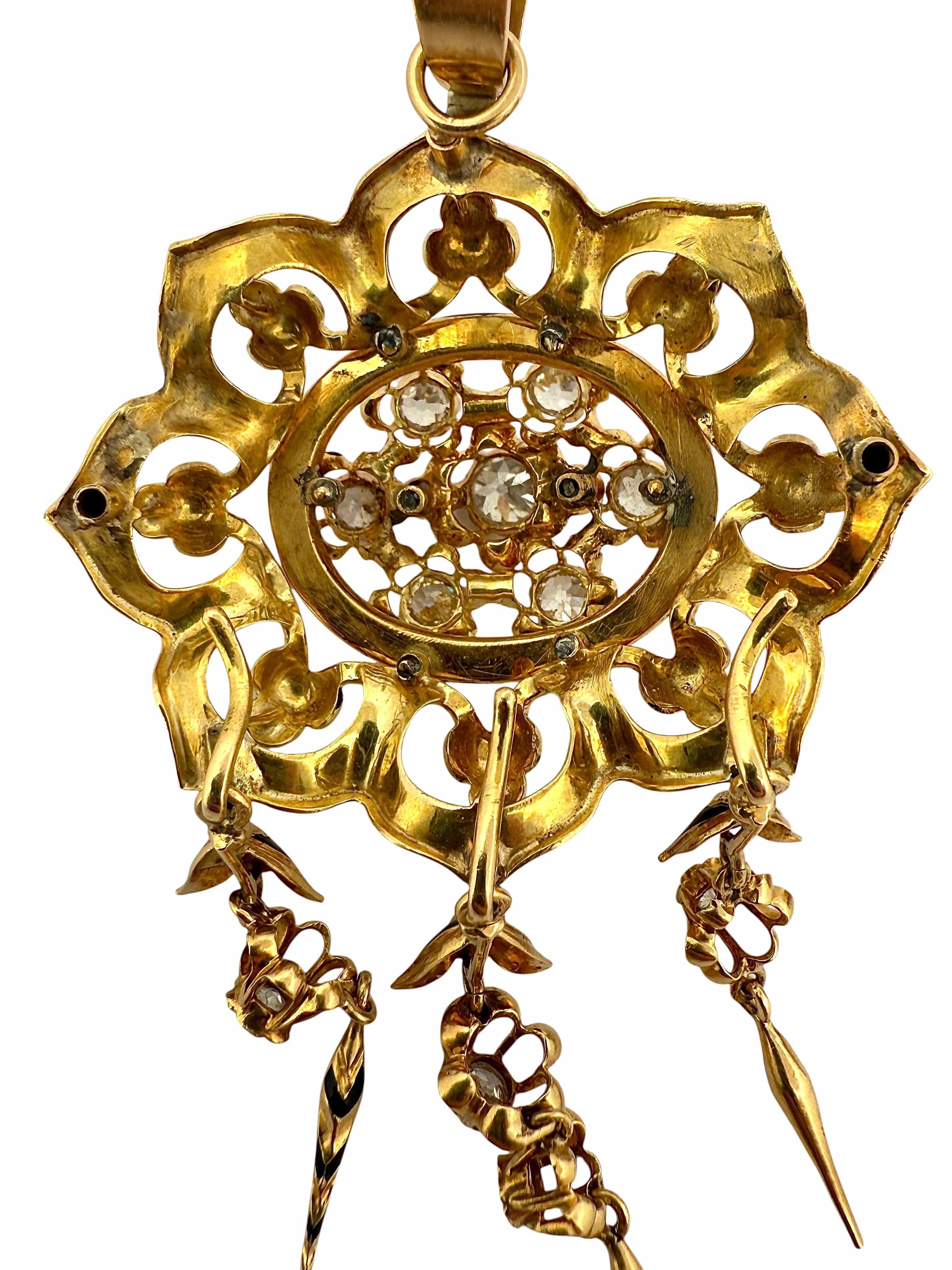
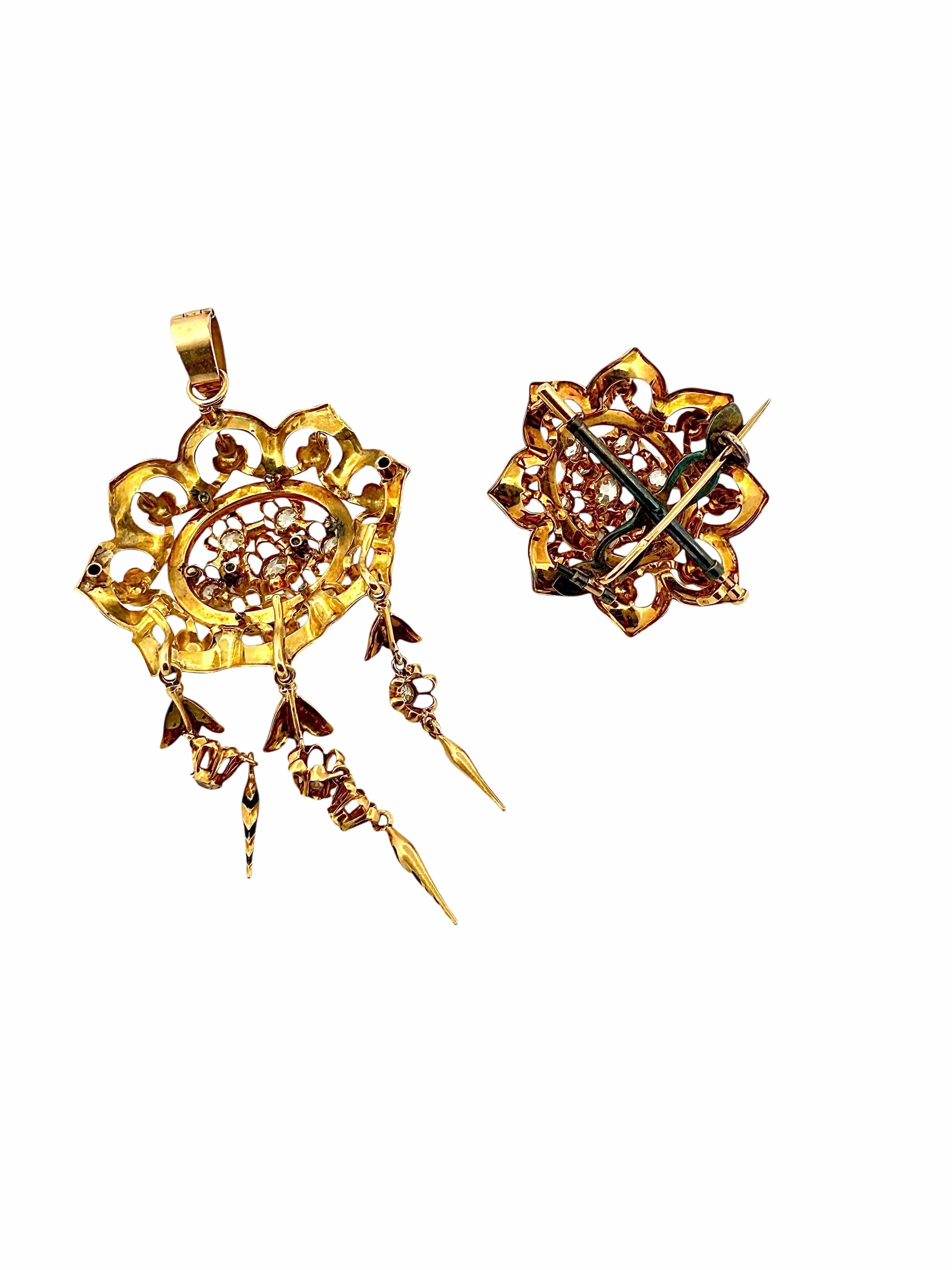
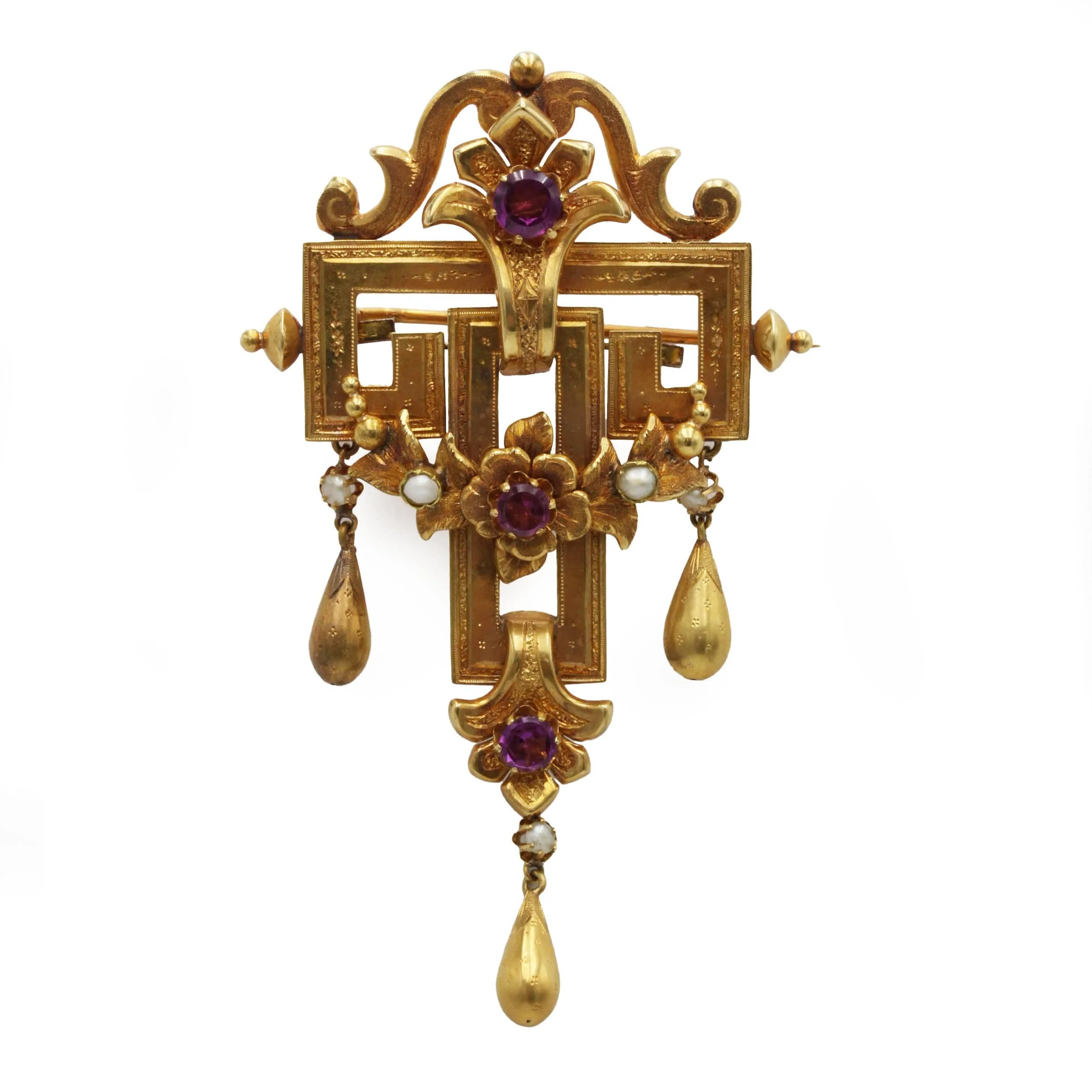
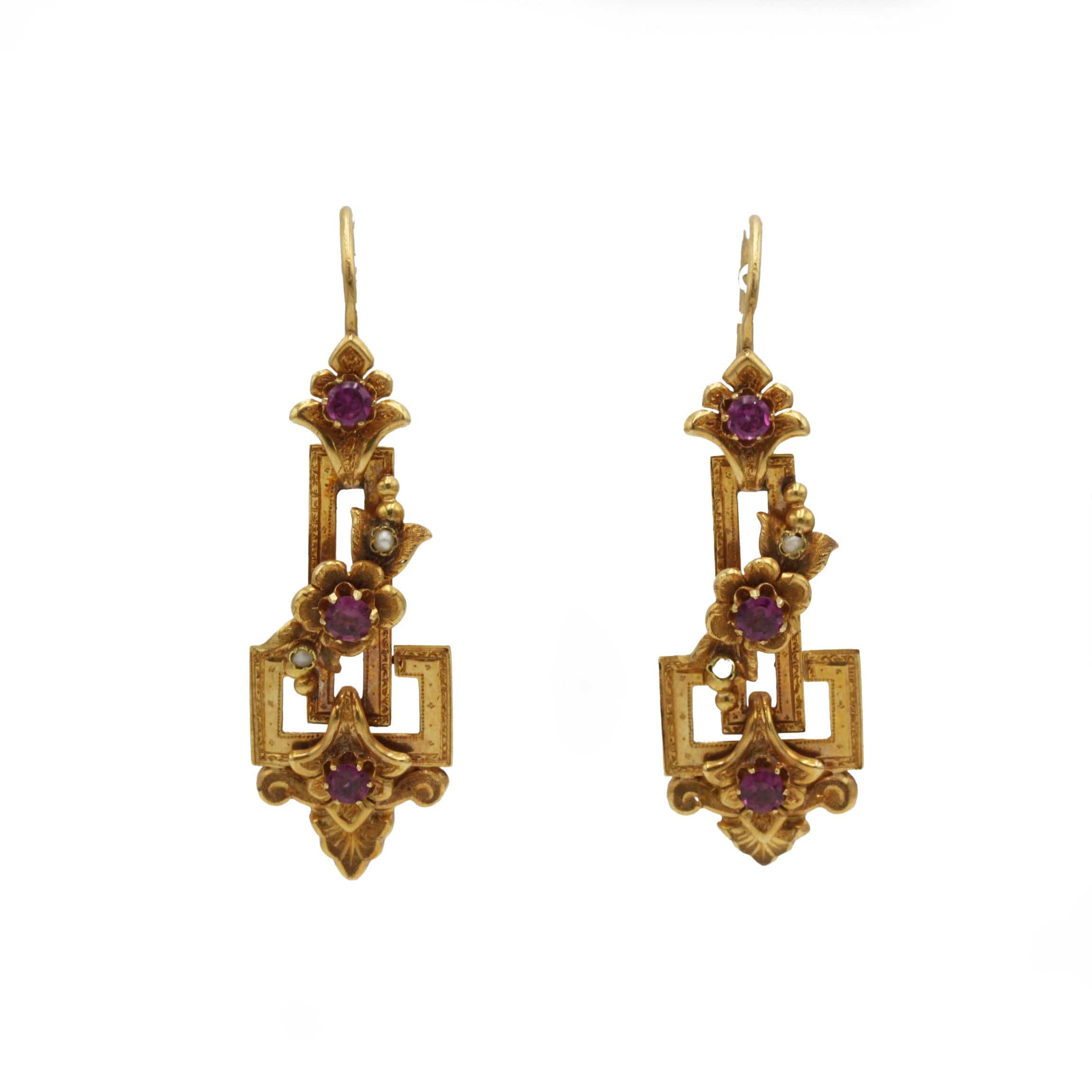
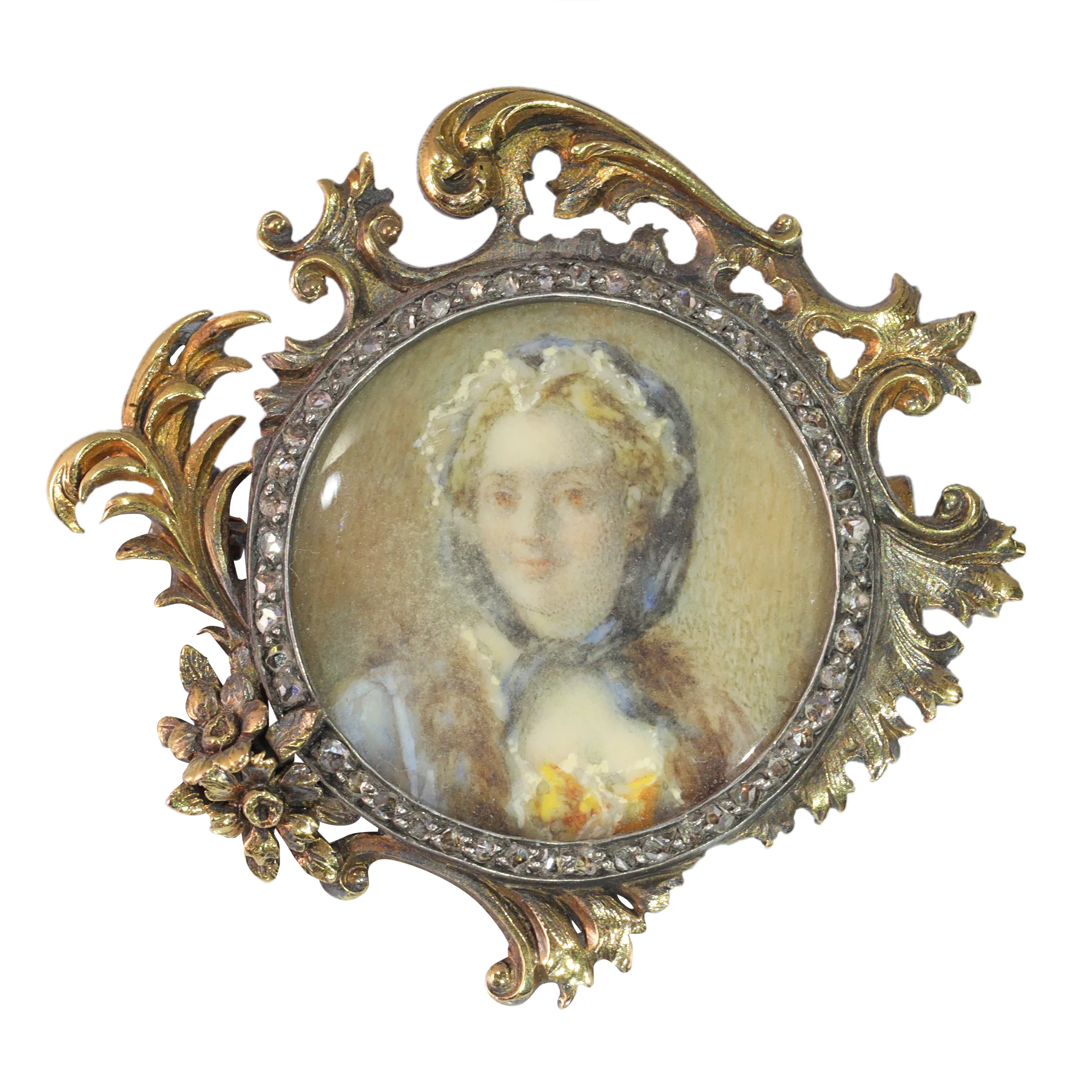
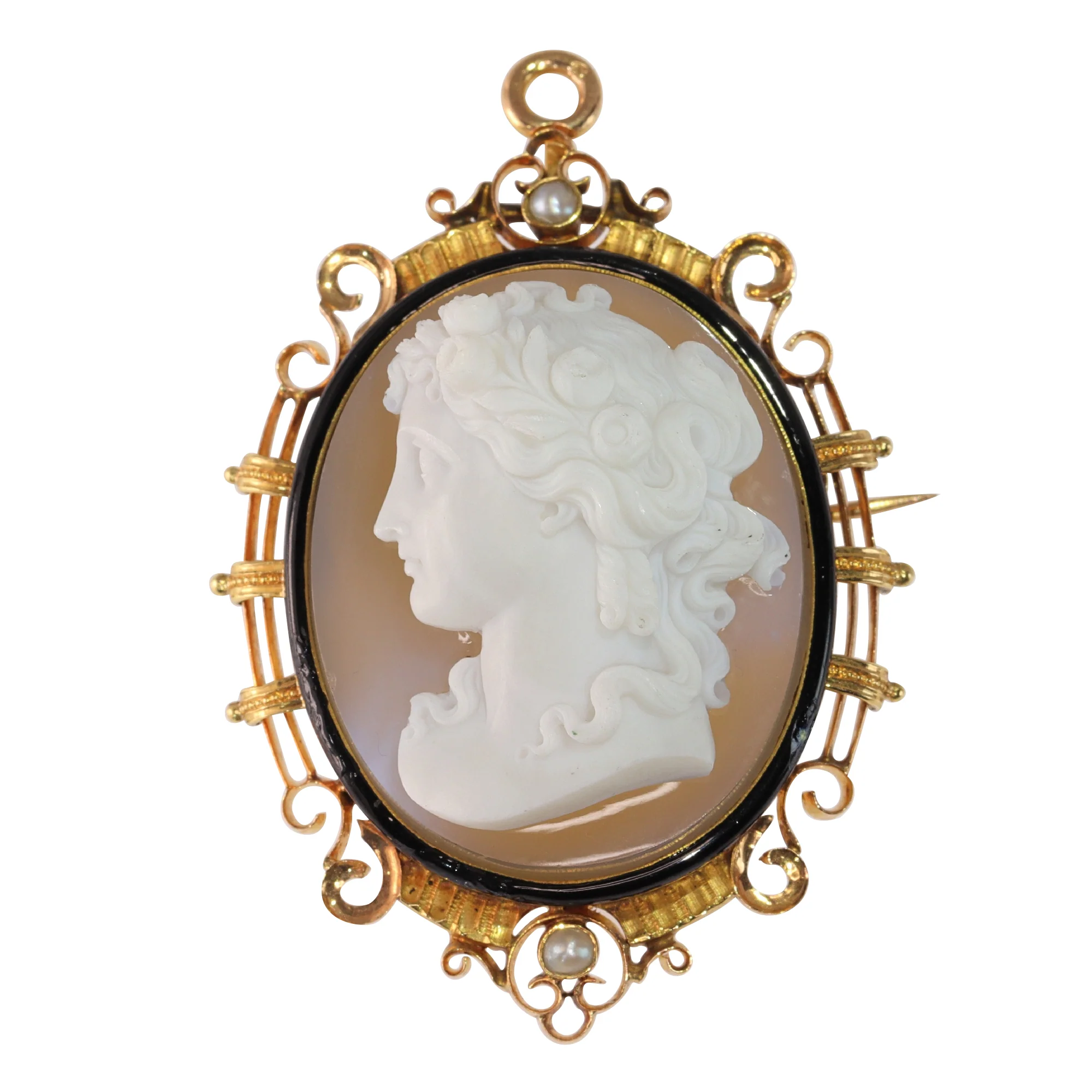
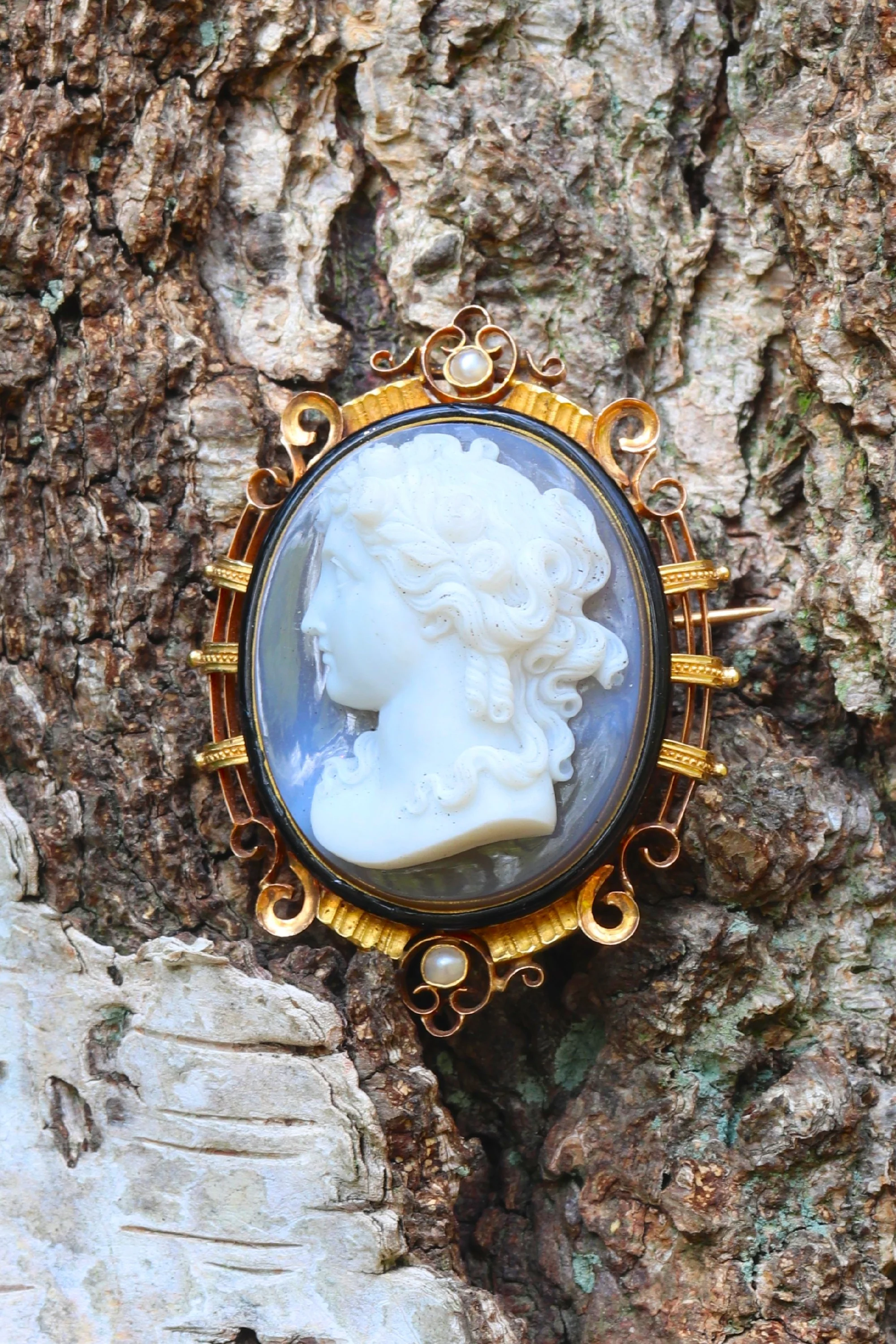
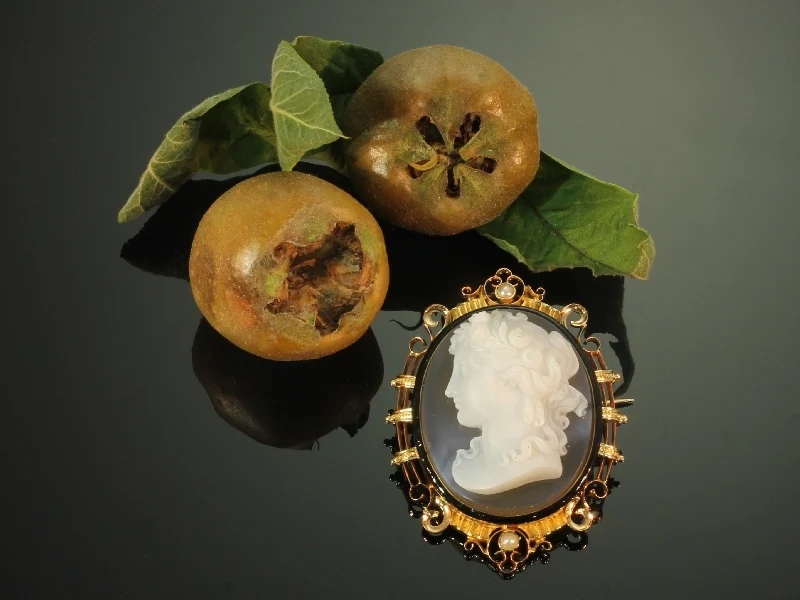
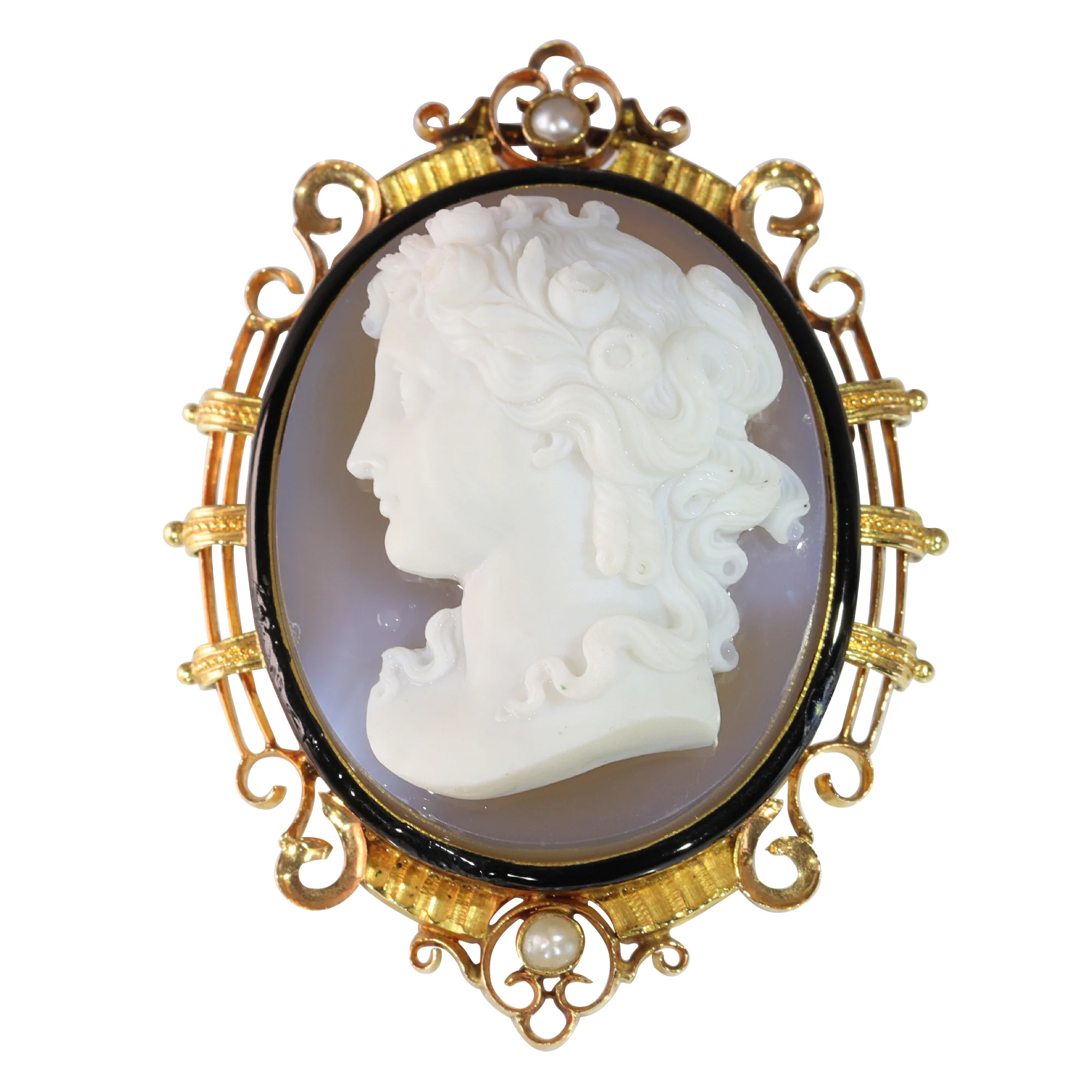
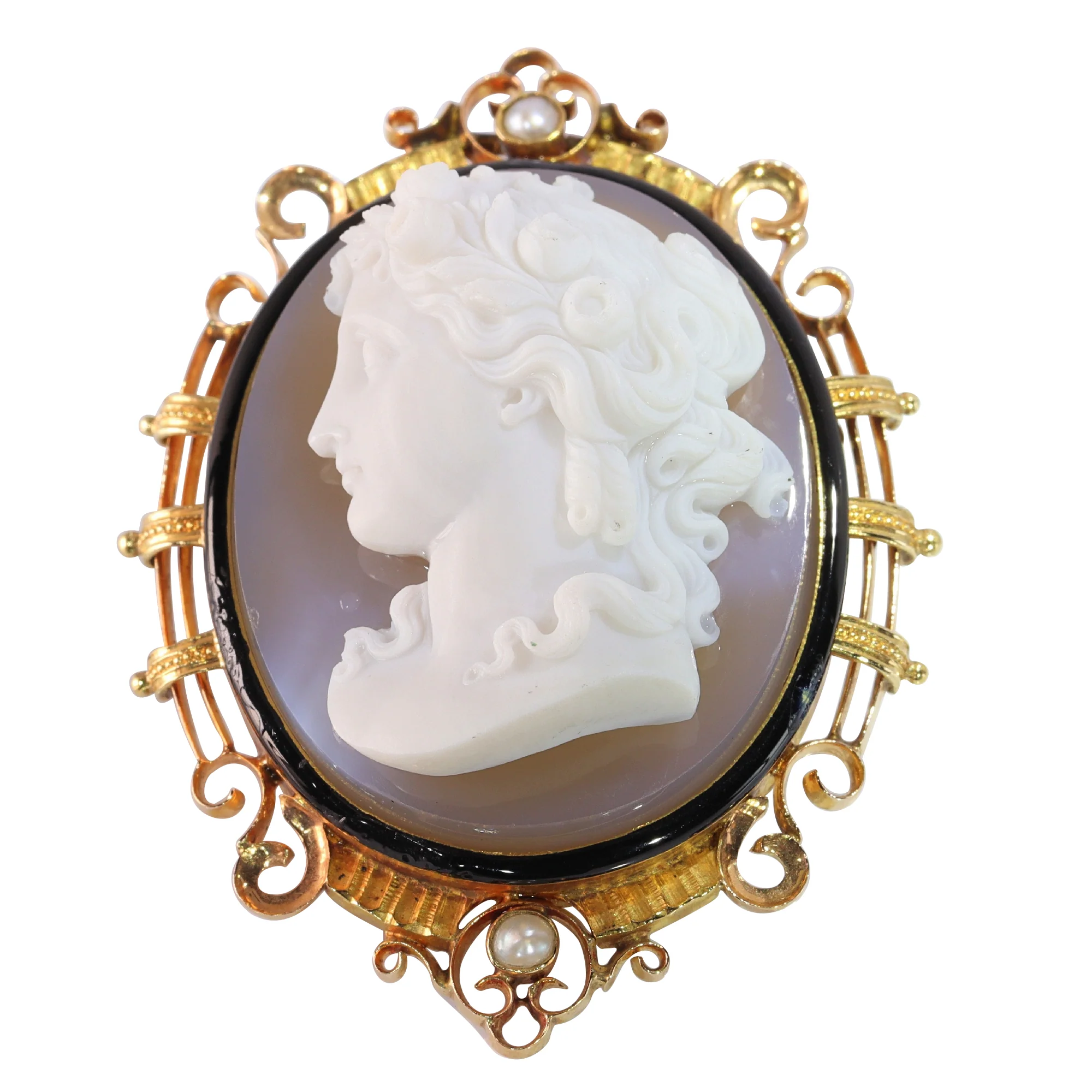
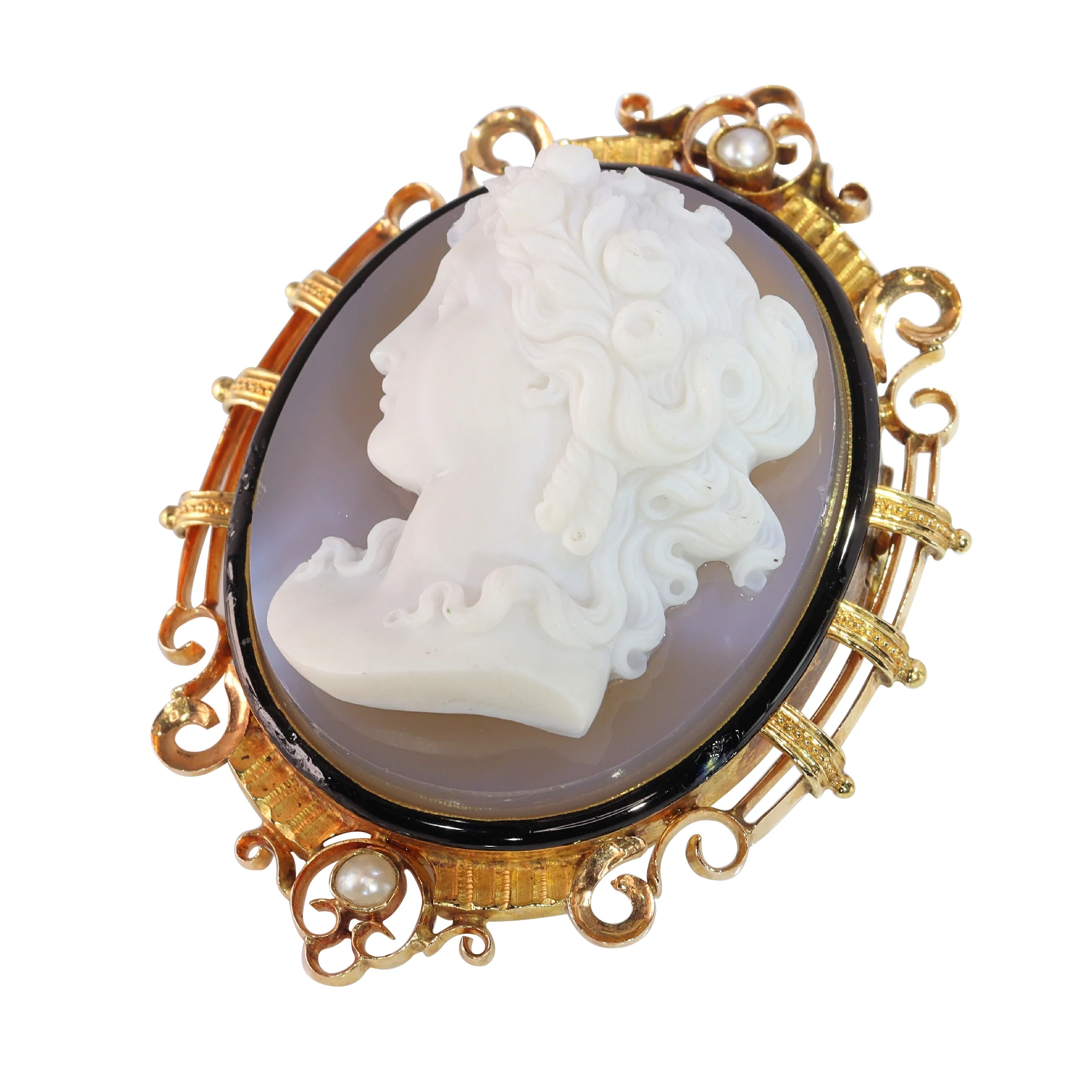
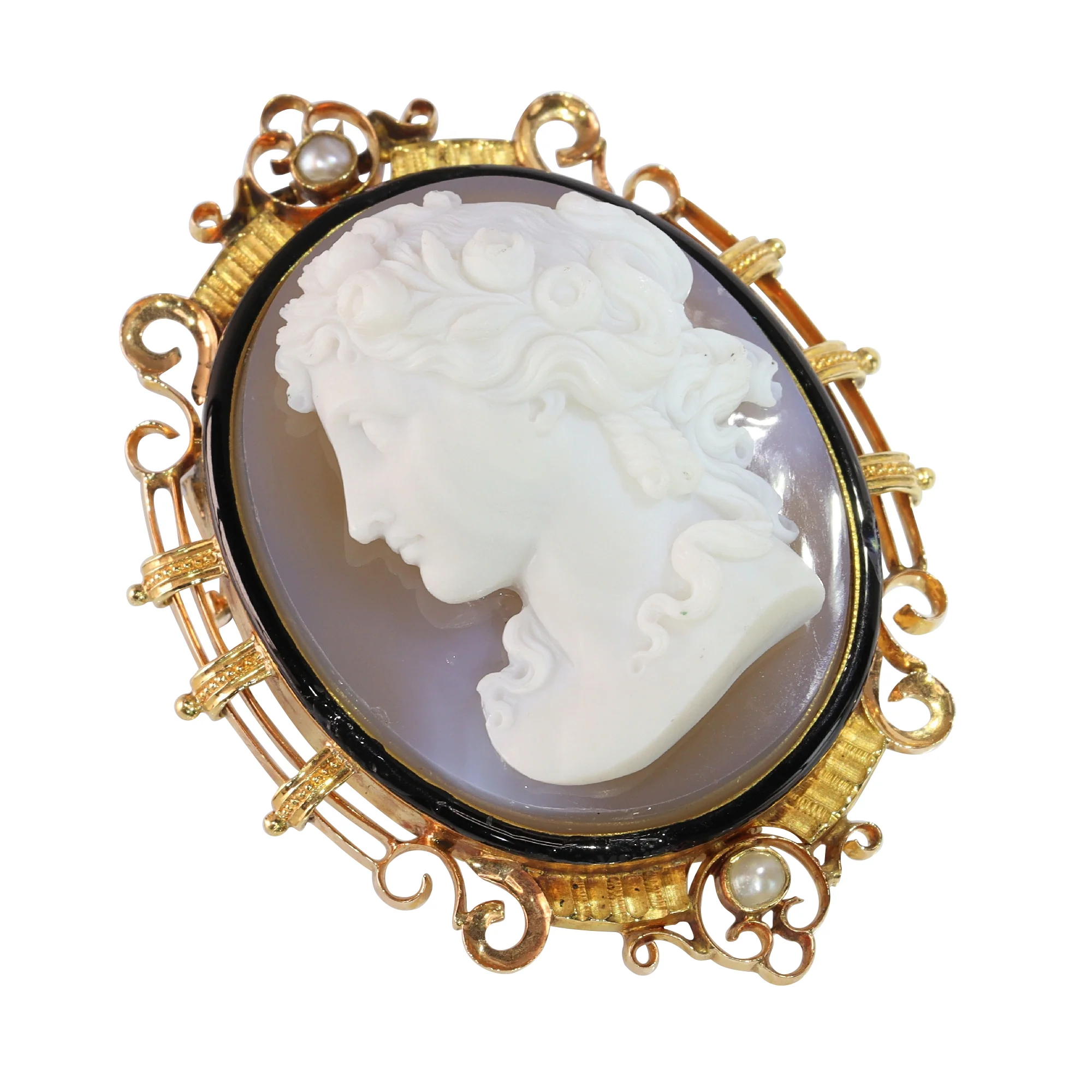
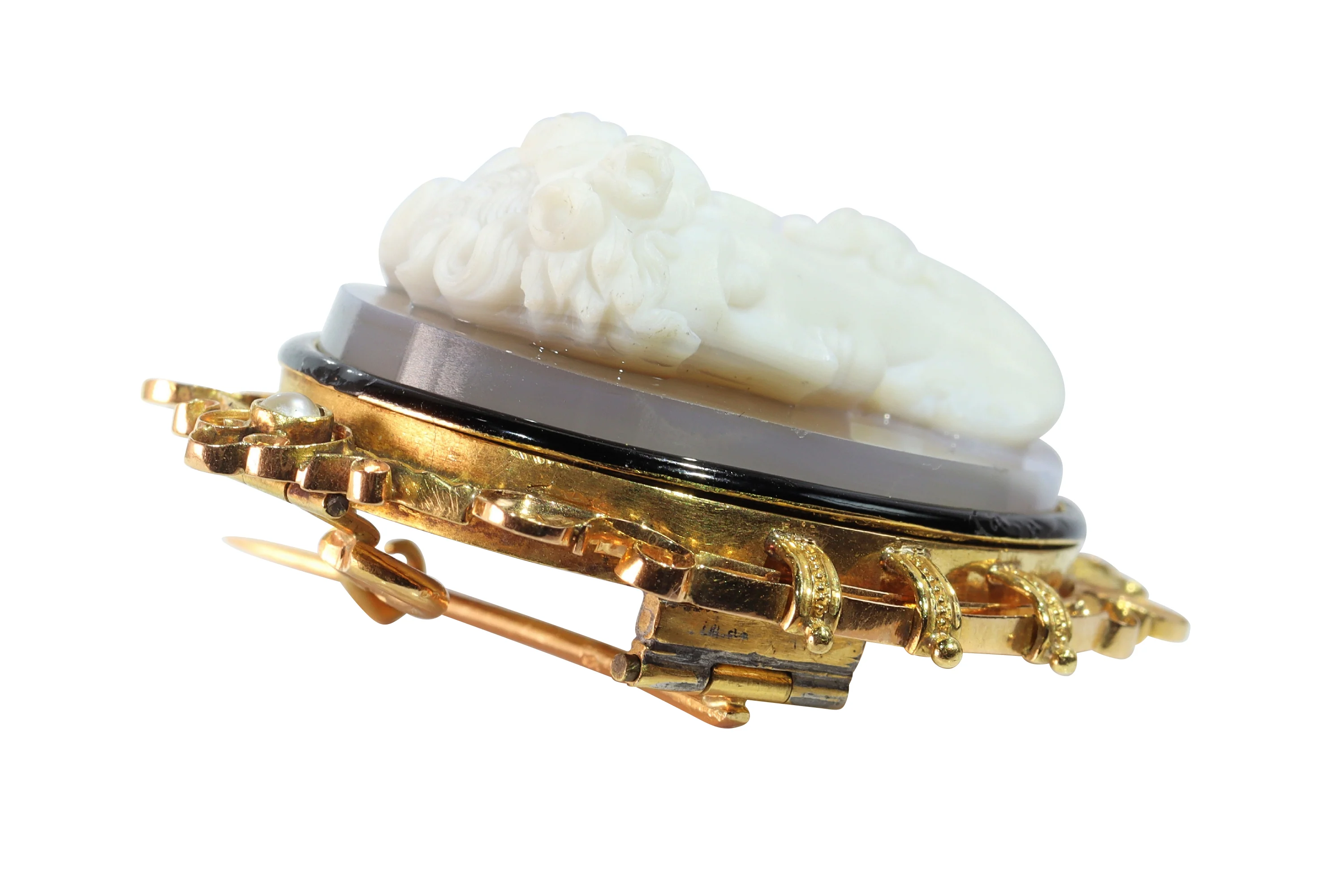
This French Victorian pendant and brooch, dating from around 1870, bear witness to the grandeur of that era. Crafted in 18-carat red gold, they feature a carefully carved hardstone cameo, framed by a black enameled border of classic elegance. Adorned with two half seed pearls and depicting the profile of a woman with rose-adorned hair, these jewels capture the very essence of the Great Victorian Era. Their dual function, with a hinge for use as a pendant, enhances their versatility. This piece, stamped with the French control mark, attests to the era's fascination with opulent and intricate motifs, making it a coveted object for collectors and lovers of historical art.
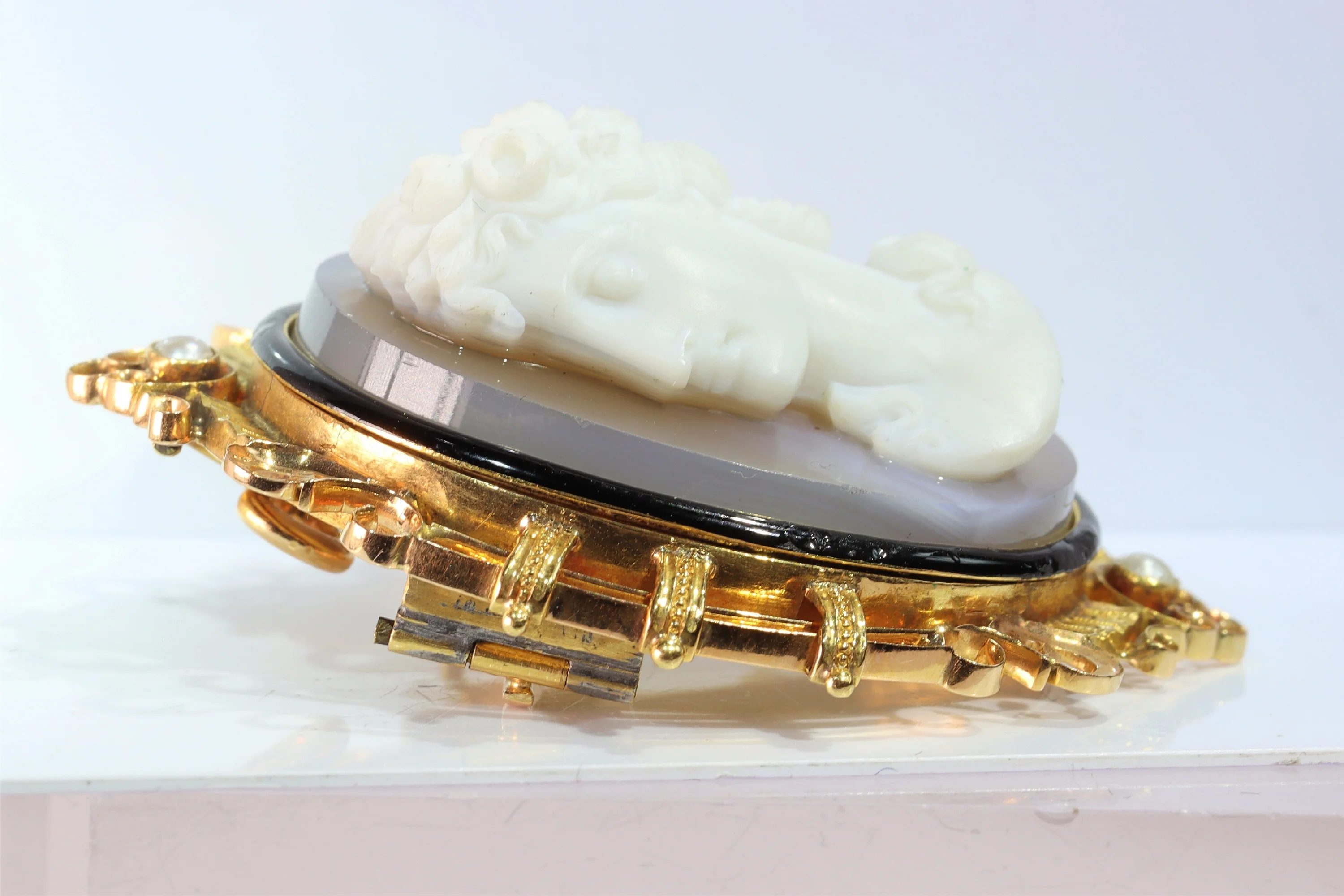
In an openwork frame of 18-carat red gold, a meticulously carved hardstone cameo with a black enameled border is set in this French Victorian pendant as well as in an 1870 brooch. As the lady's profile has roses in her hair and the frame contains two half seed pearls, no detail has been spared to enrich this classic jewel.
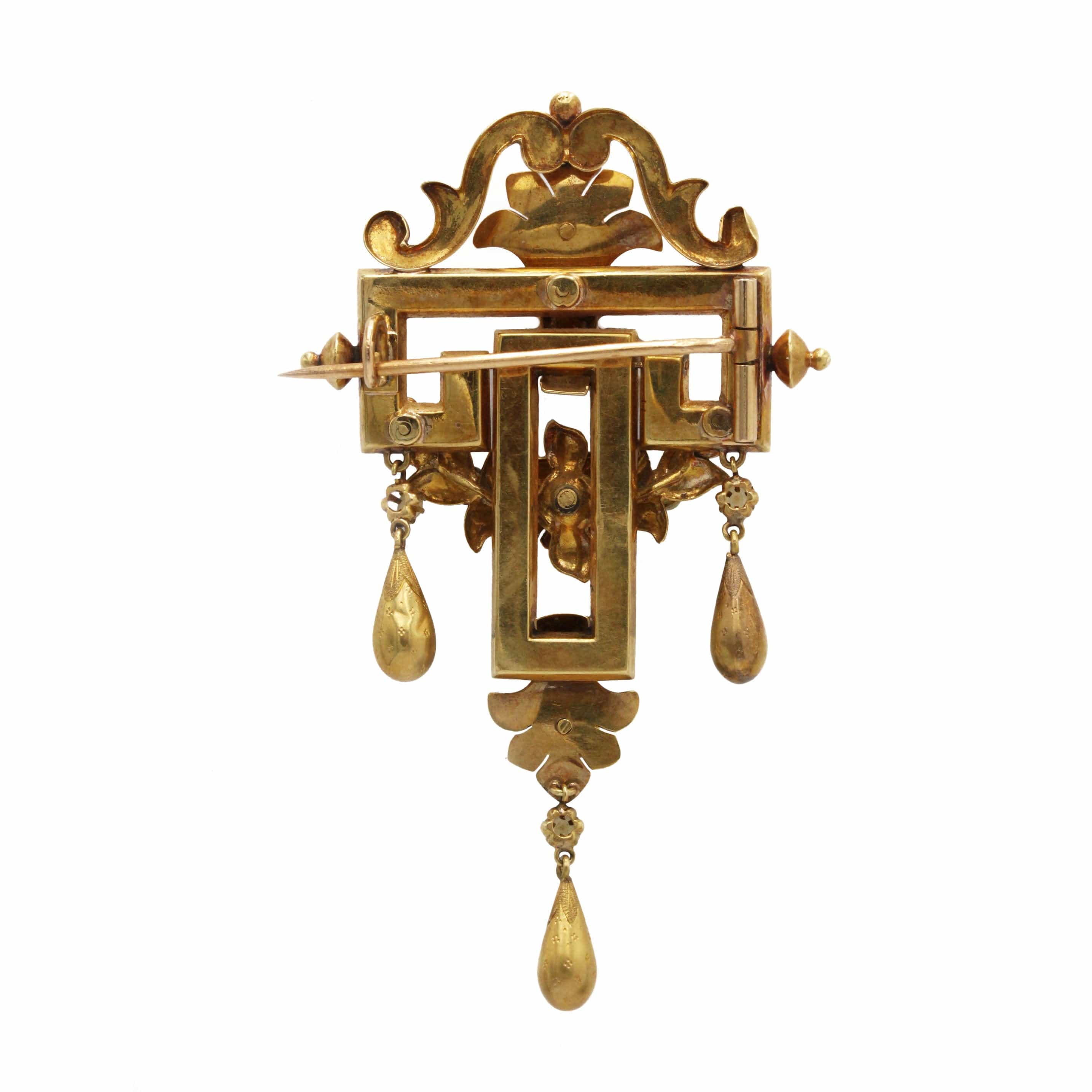
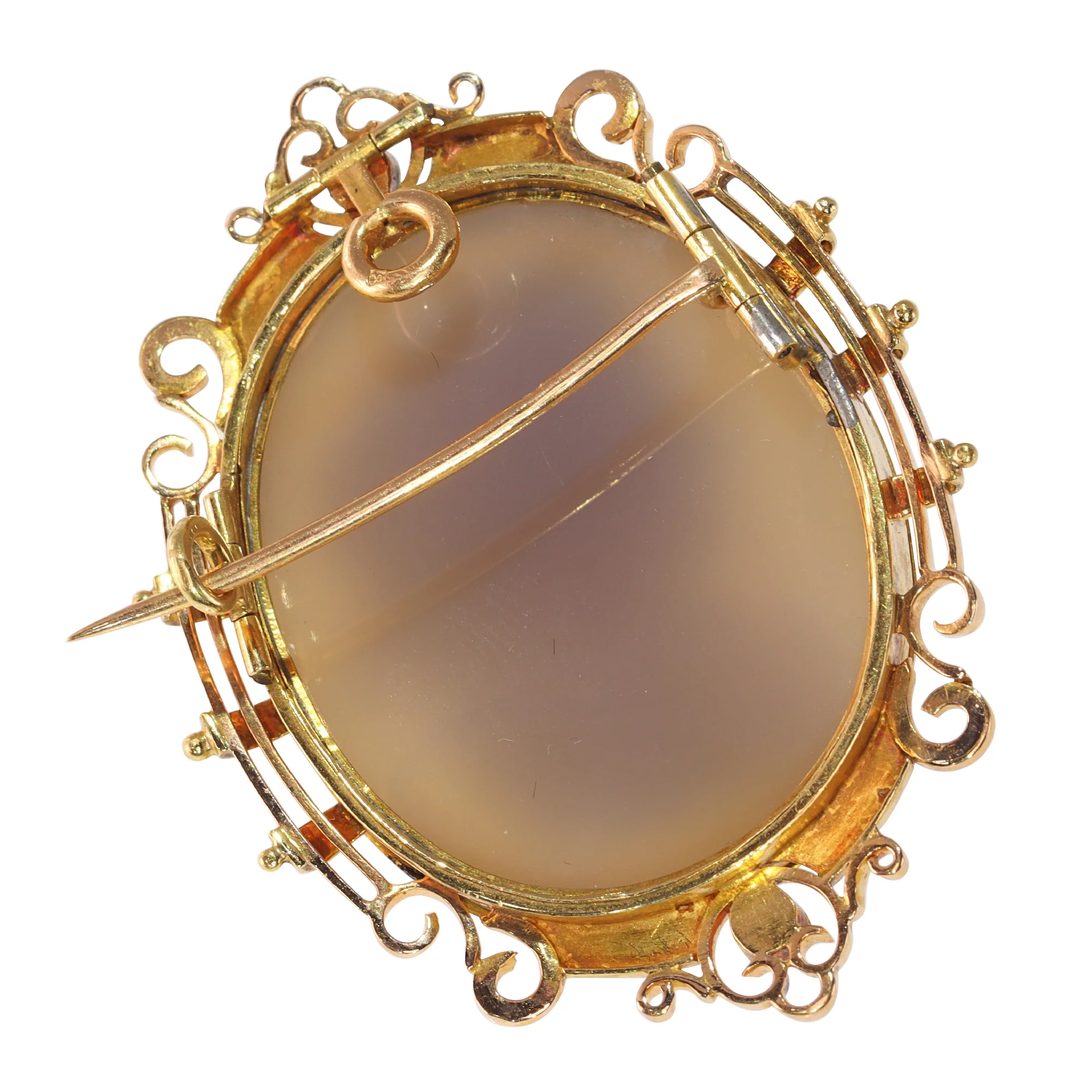
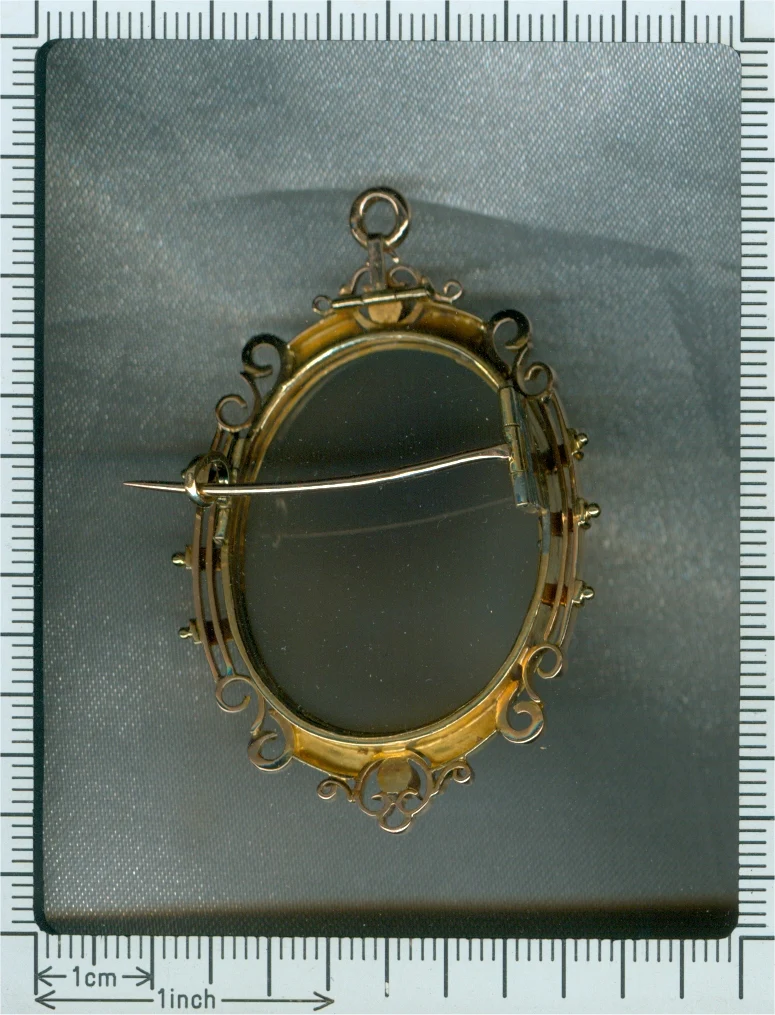
Object group of antique jewelry: brooch and pendant, at the back of the jewel a hinge with a ring is attached so you can use it as a pendant whenever you wish
Condition: excellent condition
- (more info on our condition scale)
Country of origin: France
Style: Victorian - Victorian decorative arts refer to the style of decorative arts from the Victorian era. This period is known for its eclectic revival and interpretation of historical styles, as well as for the introduction of intercultural influences from the Middle East and Asia into furniture, accessories, and interior decoration. Victorian design is widely seen as having displayed a regrettable excess of ornamentation. The Arts and Crafts movement, the Aesthetic movement, the Anglo-Japanese style, and Art Nouveau all have their origins in the late Victorian era.
- See also: Victorian or more information on styles
Style specifics: The High Victorian period - Experts divide the reign of Queen Victoria, also known as the Victorian Era (1837 - 1901), into three periods of about twenty years each; the Romantic Victorian period (1837 - 1860), the High Victorian period (1860 - 1880), and the Late or Aesthetic Victorian period (1880 - 1901).
We consider this to be the High Victorian period.
This second Victorian period is famous for its sumptuous pieces set with pearls and diamonds (from South Africa). From about 1850, wealthy Englishmen brought back knowledge of jewelry from India and Japan, which greatly inspired jewelers of the time. This period also corresponds to the death of Prince Albert, husband of Queen Victoria, which made mourning jewelry (set with heavy dark stones) the specific type of jewelry for this era.
Period: circa 1870
- (events and facts of this period, poetry of this period, fashion of this period)
Theme: woman's head with crown and flowers in her hair
Material: 18-carat red gold
- (more info on precious metals)
Technique (01): The cameo is a method of sculpture, or a piece of jewelry or a container made in this way. It presents an image in relief (positive). There are three main materials for cameo carving: shells or agate (called hardstone cameo) and glass. Cameos can be made by placing a carved relief, such as a portrait, on a contrasting colored background. This is known as an assembled cameo. It is also possible to carve a cameo directly into a material with integrated layers or bands, such as (banded) agate or layered glass, where the different layers have different colors. Dyes are sometimes used to enhance these colors. Cameos are often worn as jewelry. Very fine stone cameos were made in Greece as early as the 6th century BC. They were very popular in ancient Rome, and one of the most famous stone cameos of this period is the Gemma Claudia, made for Emperor Claudius. This technique has since experienced periodic revivals, notably at the beginning of the Renaissance, and then in the 17th, 18th, and 19th centuries.
Technique (02): Enameling is an ancient and widespread technique. The Egyptians of Antiquity applied enamels to pottery and stone objects. The Greeks, Celts, Russians, and Chinese of Antiquity also used enameling processes on metal objects. Enamel is the colored result of fusing powdered glass onto a substrate by firing, generally between 750 and 850 °C. The powder melts, flows, and hardens to form a smooth and durable glassy coating on metal, glass, or ceramic. According to some sources, the word enamel comes from the High German smelzan (to melt) via Old French esmail. Used as a noun, “an enamel” refers to a generally small decorative object covered with a layer of enamel, such as a champlevé or cloisonné (different techniques).
Precious stones: cameo Two half-seed pearls
- (more info on precious stones)
Birthstones: The pearl is the birthstone (or birth month stone) for the month of June.
- (more info on birthstones)
Hallmarks: The French control hallmark for 18-carat gold depicting an eagle’s head, which was used in France from about 1838.
- (more info on hallmarks)
Dimensions: height as brooch 5.05 cm (1.99 inches), height as pendant 5.57 cm (2.19 inches)
Weight: 27.80 grams (17.88 dwt)
More Images
cameo Victorian: an overview of 19th-century French jewelry
This French Victorian pendant and brooch, dating from around 1870, bear witness to the grandeur of that era. Crafted in 18-carat red gold, they feature a carefully carved hardstone cameo, framed by a black enameled border of classic elegance. Adorned with two half seed pearls and depicting the profile of a woman with rose-adorned hair, these jewels capture the very essence of the Great Victorian Era. Their dual function, with a hinge for use as a pendant, enhances their versatility. This piece, stamped with the French control mark, attests to the era's fascination with opulent and intricate motifs, making it a coveted object for collectors and lovers of historical art.
In an openwork frame of 18-carat red gold, a meticulously carved hardstone cameo with a black enameled border is set in this French Victorian pendant as well as in an 1870 brooch. As the lady's profile has roses in her hair and the frame contains two half seed pearls, no detail has been spared to enrich this classic jewel.
Object group of antique jewelry: brooch and pendant, at the back of the jewel a hinge with a ring is attached so you can use it as a pendant whenever you wish
Condition: excellent condition
- (more info on our condition scale)
Country of origin: France
Style: Victorian - Victorian decorative arts refer to the style of decorative arts from the Victorian era. This period is known for its eclectic revival and interpretation of historical styles, as well as for the introduction of intercultural influences from the Middle East and Asia into furniture, accessories, and interior decoration. Victorian design is widely seen as having displayed a regrettable excess of ornamentation. The Arts and Crafts movement, the Aesthetic movement, the Anglo-Japanese style, and Art Nouveau all have their origins in the late Victorian era.
- See also: Victorian or more information on styles
Style specifics: The High Victorian period - Experts divide the reign of Queen Victoria, also known as the Victorian Era (1837 - 1901), into three periods of about twenty years each; the Romantic Victorian period (1837 - 1860), the High Victorian period (1860 - 1880), and the Late or Aesthetic Victorian period (1880 - 1901).
We consider this to be the High Victorian period.
This second Victorian period is famous for its sumptuous pieces set with pearls and diamonds (from South Africa). From about 1850, wealthy Englishmen brought back knowledge of jewelry from India and Japan, which greatly inspired jewelers of the time. This period also corresponds to the death of Prince Albert, husband of Queen Victoria, which made mourning jewelry (set with heavy dark stones) the specific type of jewelry for this era.
Period: circa 1870
- (events and facts of this period, poetry of this period, fashion of this period)
Theme: woman's head with crown and flowers in her hair
Material: 18-carat red gold
- (more info on precious metals)
Technique (01): The cameo is a method of sculpture, or a piece of jewelry or a container made in this way. It presents an image in relief (positive). There are three main materials for cameo carving: shells or agate (called hardstone cameo) and glass. Cameos can be made by placing a carved relief, such as a portrait, on a contrasting colored background. This is known as an assembled cameo. It is also possible to carve a cameo directly into a material with integrated layers or bands, such as (banded) agate or layered glass, where the different layers have different colors. Dyes are sometimes used to enhance these colors. Cameos are often worn as jewelry. Very fine stone cameos were made in Greece as early as the 6th century BC. They were very popular in ancient Rome, and one of the most famous stone cameos of this period is the Gemma Claudia, made for Emperor Claudius. This technique has since experienced periodic revivals, notably at the beginning of the Renaissance, and then in the 17th, 18th, and 19th centuries.
Technique (02): Enameling is an ancient and widespread technique. The Egyptians of Antiquity applied enamels to pottery and stone objects. The Greeks, Celts, Russians, and Chinese of Antiquity also used enameling processes on metal objects. Enamel is the colored result of fusing powdered glass onto a substrate by firing, generally between 750 and 850 °C. The powder melts, flows, and hardens to form a smooth and durable glassy coating on metal, glass, or ceramic. According to some sources, the word enamel comes from the High German smelzan (to melt) via Old French esmail. Used as a noun, “an enamel” refers to a generally small decorative object covered with a layer of enamel, such as a champlevé or cloisonné (different techniques).
Precious stones: cameo Two half-seed pearls
- (more info on precious stones)
Birthstones: The pearl is the birthstone (or birth month stone) for the month of June.
- (more info on birthstones)
Hallmarks: The French control hallmark for 18-carat gold depicting an eagle’s head, which was used in France from about 1838.
- (more info on hallmarks)
Dimensions: height as brooch 5.05 cm (1.99 inches), height as pendant 5.57 cm (2.19 inches)
Weight: 27.80 grams (17.88 dwt)
Product Information
Product Information
Shipping & Returns
Shipping & Returns
Description
This French Victorian pendant and brooch, dating from around 1870, bear witness to the grandeur of that era. Crafted in 18-carat red gold, they feature a carefully carved hardstone cameo, framed by a black enameled border of classic elegance. Adorned with two half seed pearls and depicting the profile of a woman with rose-adorned hair, these jewels capture the very essence of the Great Victorian Era. Their dual function, with a hinge for use as a pendant, enhances their versatility. This piece, stamped with the French control mark, attests to the era's fascination with opulent and intricate motifs, making it a coveted object for collectors and lovers of historical art.
In an openwork frame of 18-carat red gold, a meticulously carved hardstone cameo with a black enameled border is set in this French Victorian pendant as well as in an 1870 brooch. As the lady's profile has roses in her hair and the frame contains two half seed pearls, no detail has been spared to enrich this classic jewel.
Object group of antique jewelry: brooch and pendant, at the back of the jewel a hinge with a ring is attached so you can use it as a pendant whenever you wish
Condition: excellent condition
- (more info on our condition scale)
Country of origin: France
Style: Victorian - Victorian decorative arts refer to the style of decorative arts from the Victorian era. This period is known for its eclectic revival and interpretation of historical styles, as well as for the introduction of intercultural influences from the Middle East and Asia into furniture, accessories, and interior decoration. Victorian design is widely seen as having displayed a regrettable excess of ornamentation. The Arts and Crafts movement, the Aesthetic movement, the Anglo-Japanese style, and Art Nouveau all have their origins in the late Victorian era.
- See also: Victorian or more information on styles
Style specifics: The High Victorian period - Experts divide the reign of Queen Victoria, also known as the Victorian Era (1837 - 1901), into three periods of about twenty years each; the Romantic Victorian period (1837 - 1860), the High Victorian period (1860 - 1880), and the Late or Aesthetic Victorian period (1880 - 1901).
We consider this to be the High Victorian period.
This second Victorian period is famous for its sumptuous pieces set with pearls and diamonds (from South Africa). From about 1850, wealthy Englishmen brought back knowledge of jewelry from India and Japan, which greatly inspired jewelers of the time. This period also corresponds to the death of Prince Albert, husband of Queen Victoria, which made mourning jewelry (set with heavy dark stones) the specific type of jewelry for this era.
Period: circa 1870
- (events and facts of this period, poetry of this period, fashion of this period)
Theme: woman's head with crown and flowers in her hair
Material: 18-carat red gold
- (more info on precious metals)
Technique (01): The cameo is a method of sculpture, or a piece of jewelry or a container made in this way. It presents an image in relief (positive). There are three main materials for cameo carving: shells or agate (called hardstone cameo) and glass. Cameos can be made by placing a carved relief, such as a portrait, on a contrasting colored background. This is known as an assembled cameo. It is also possible to carve a cameo directly into a material with integrated layers or bands, such as (banded) agate or layered glass, where the different layers have different colors. Dyes are sometimes used to enhance these colors. Cameos are often worn as jewelry. Very fine stone cameos were made in Greece as early as the 6th century BC. They were very popular in ancient Rome, and one of the most famous stone cameos of this period is the Gemma Claudia, made for Emperor Claudius. This technique has since experienced periodic revivals, notably at the beginning of the Renaissance, and then in the 17th, 18th, and 19th centuries.
Technique (02): Enameling is an ancient and widespread technique. The Egyptians of Antiquity applied enamels to pottery and stone objects. The Greeks, Celts, Russians, and Chinese of Antiquity also used enameling processes on metal objects. Enamel is the colored result of fusing powdered glass onto a substrate by firing, generally between 750 and 850 °C. The powder melts, flows, and hardens to form a smooth and durable glassy coating on metal, glass, or ceramic. According to some sources, the word enamel comes from the High German smelzan (to melt) via Old French esmail. Used as a noun, “an enamel” refers to a generally small decorative object covered with a layer of enamel, such as a champlevé or cloisonné (different techniques).
Precious stones: cameo Two half-seed pearls
- (more info on precious stones)
Birthstones: The pearl is the birthstone (or birth month stone) for the month of June.
- (more info on birthstones)
Hallmarks: The French control hallmark for 18-carat gold depicting an eagle’s head, which was used in France from about 1838.
- (more info on hallmarks)
Dimensions: height as brooch 5.05 cm (1.99 inches), height as pendant 5.57 cm (2.19 inches)
Weight: 27.80 grams (17.88 dwt)