Jewel of the past: a diamond-set engagement ring from the 1930s
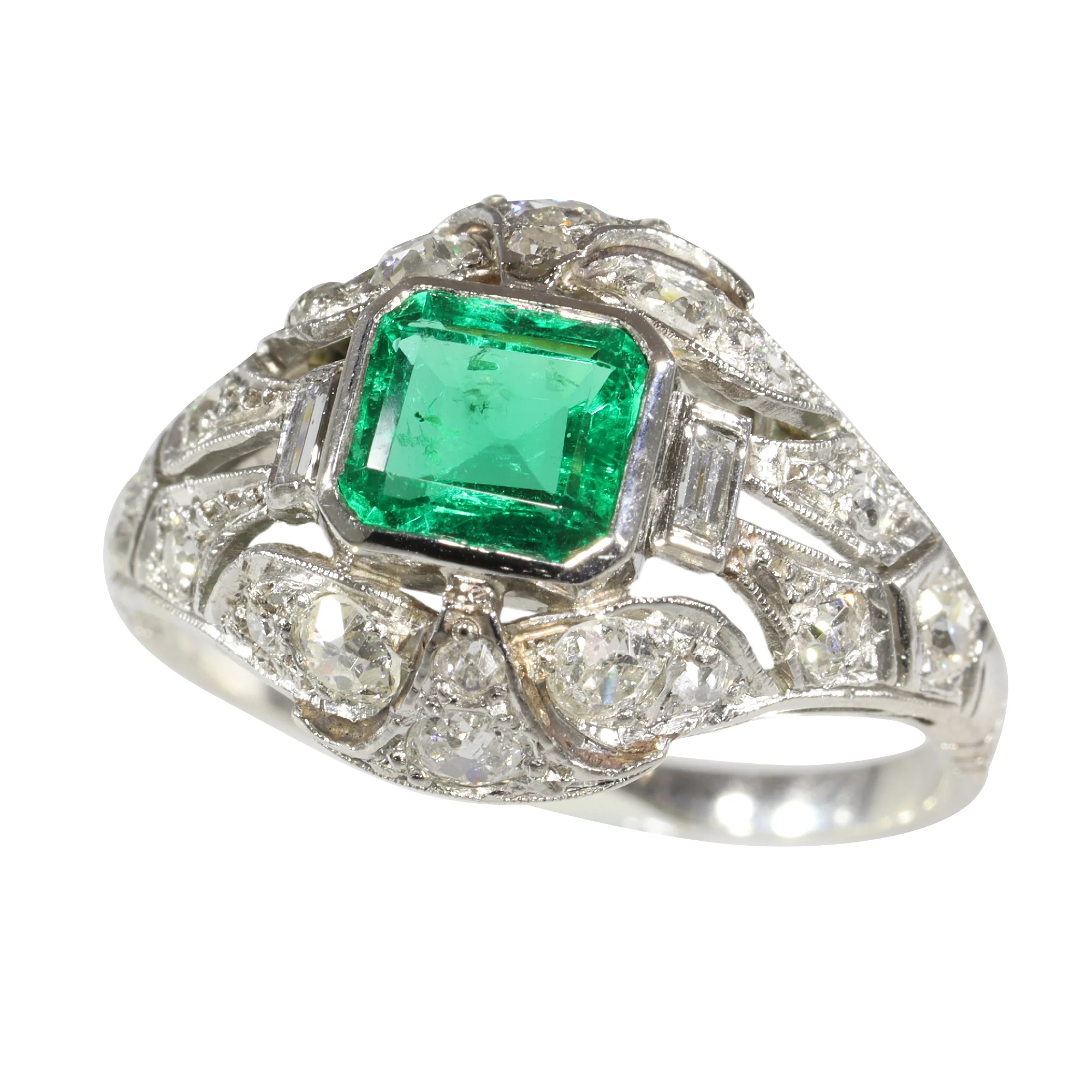
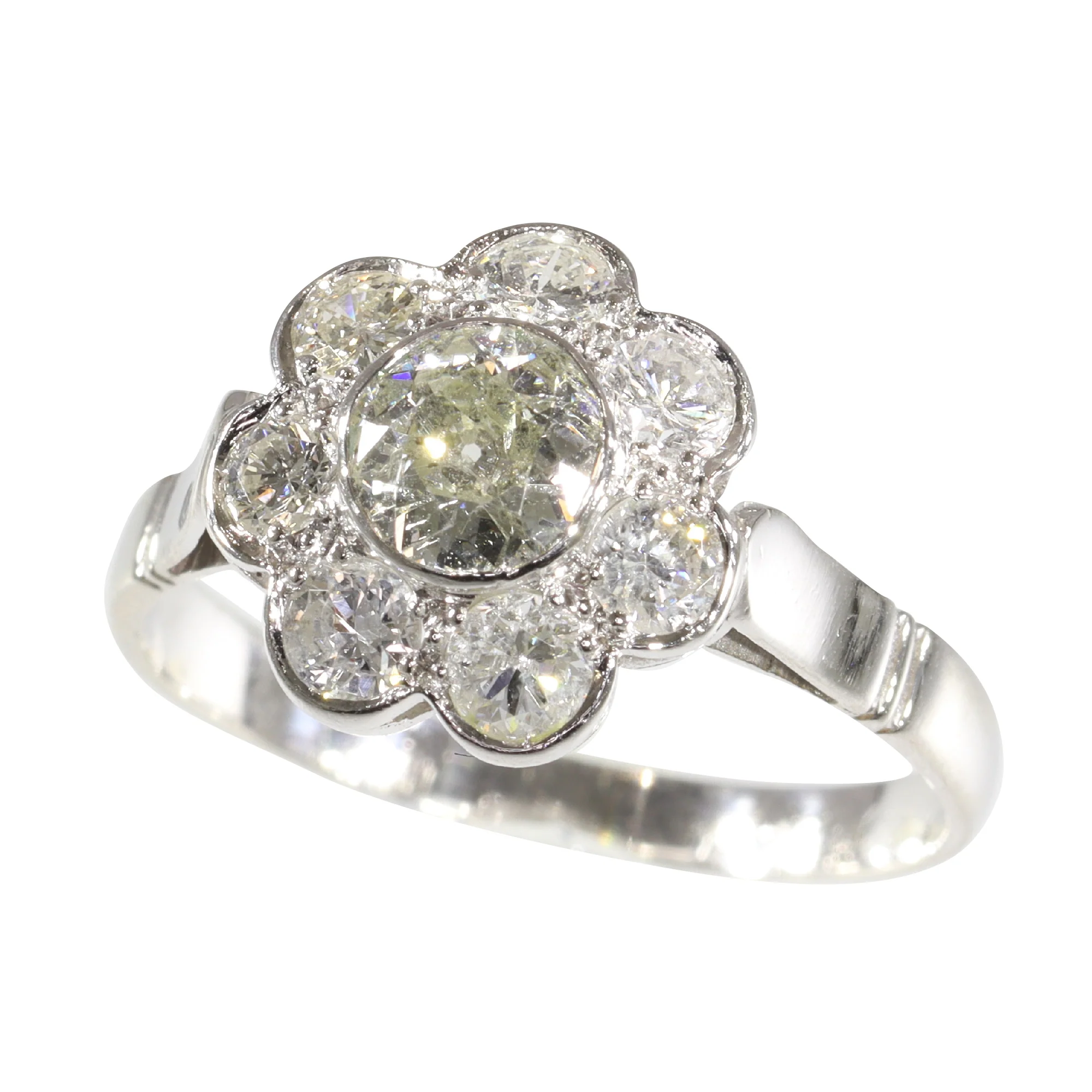
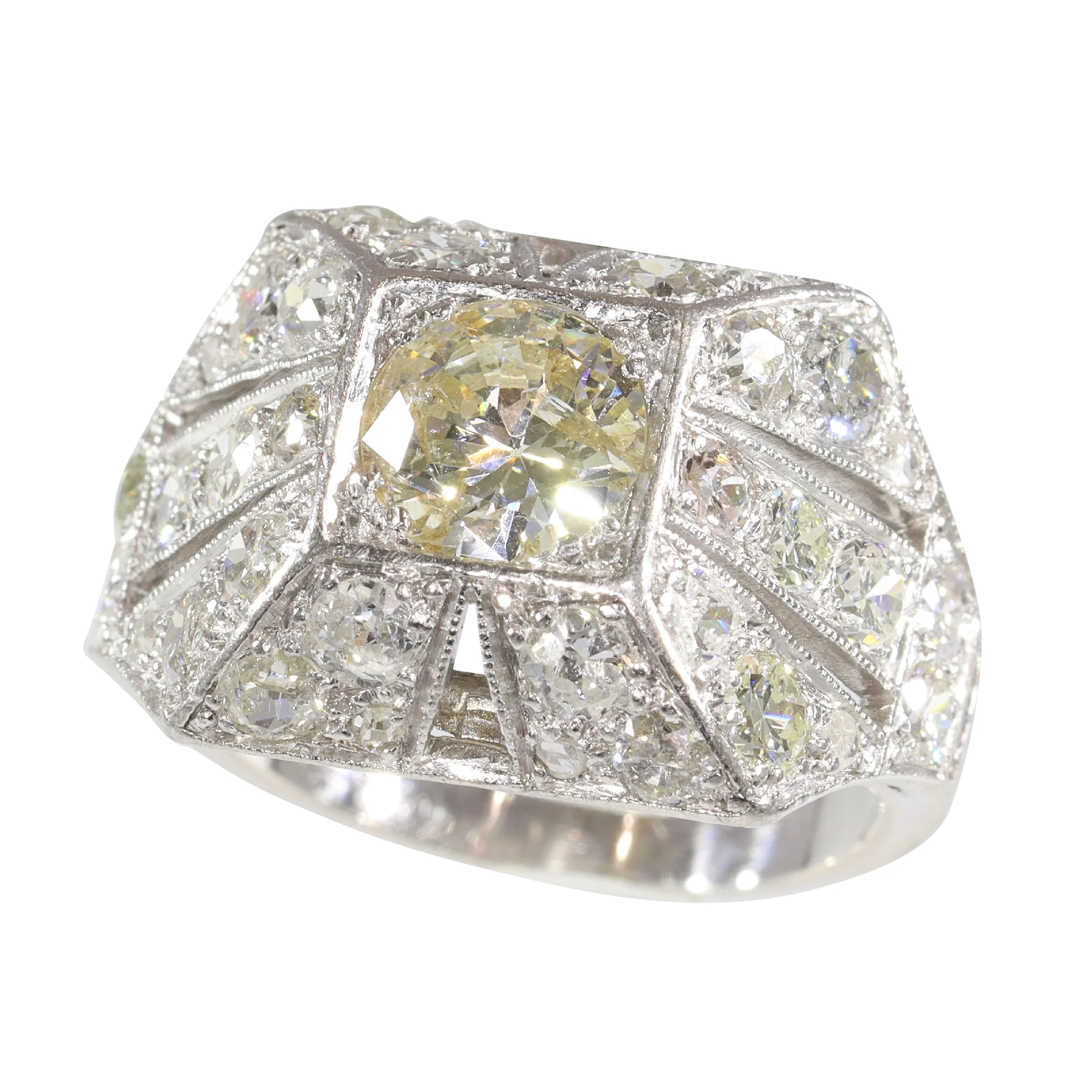
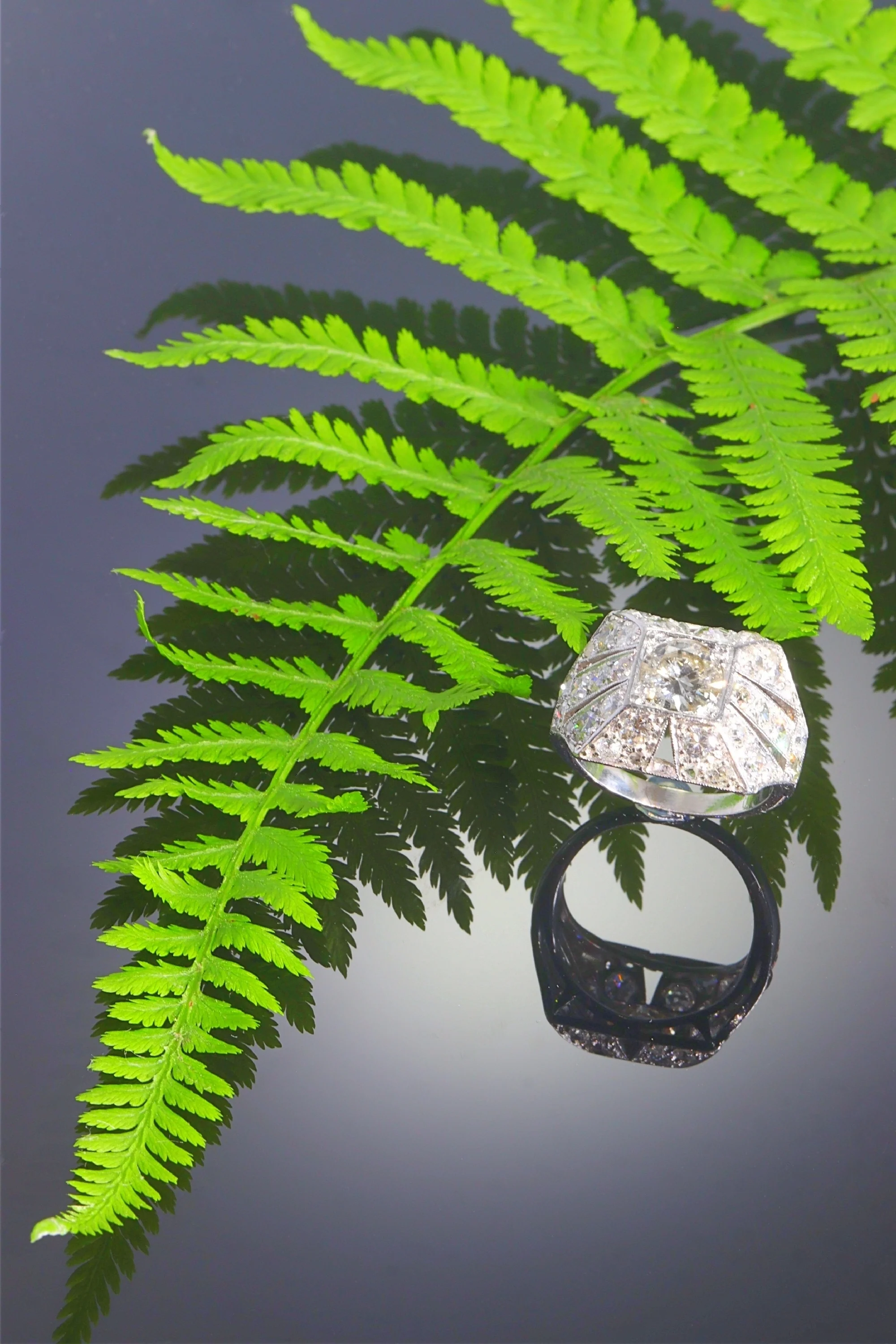
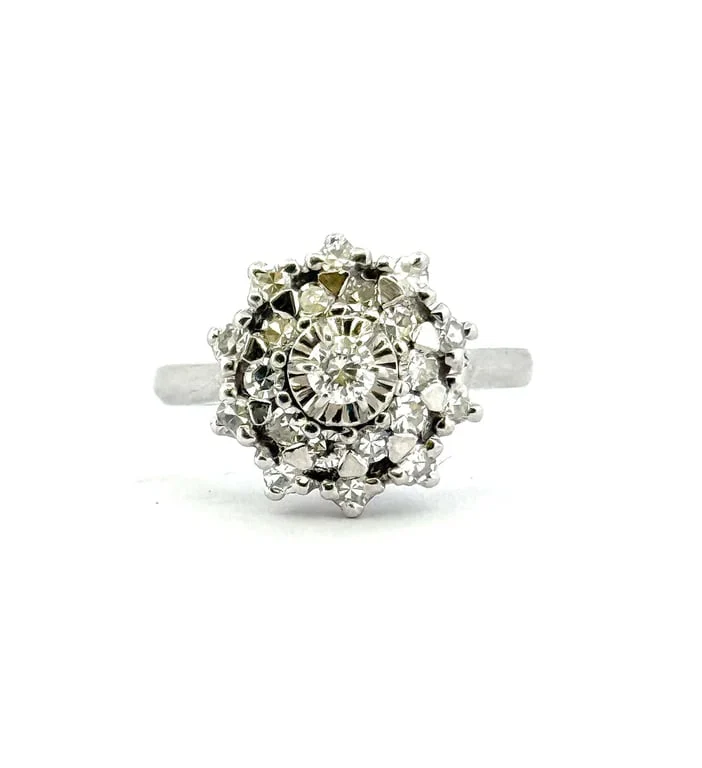
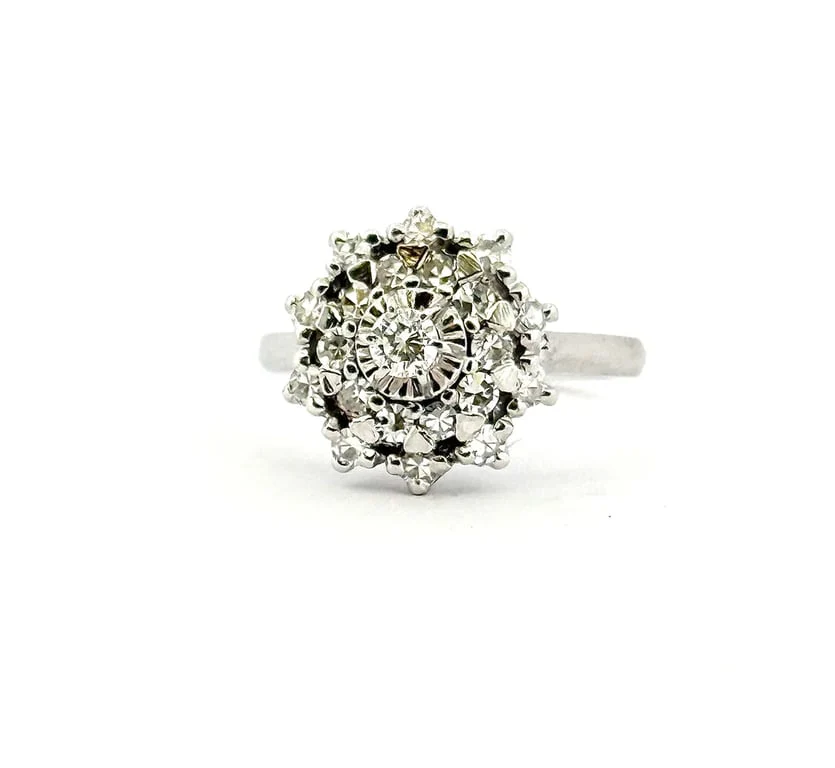
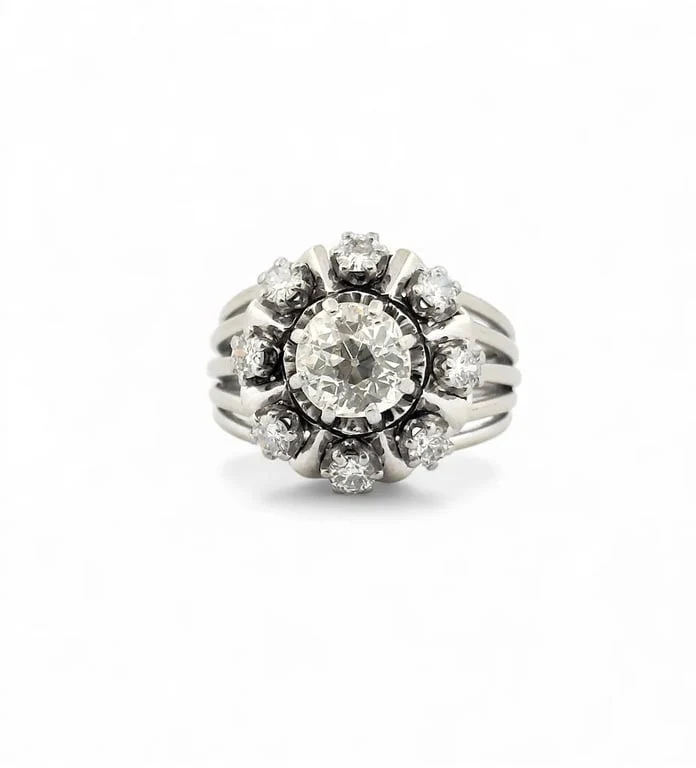
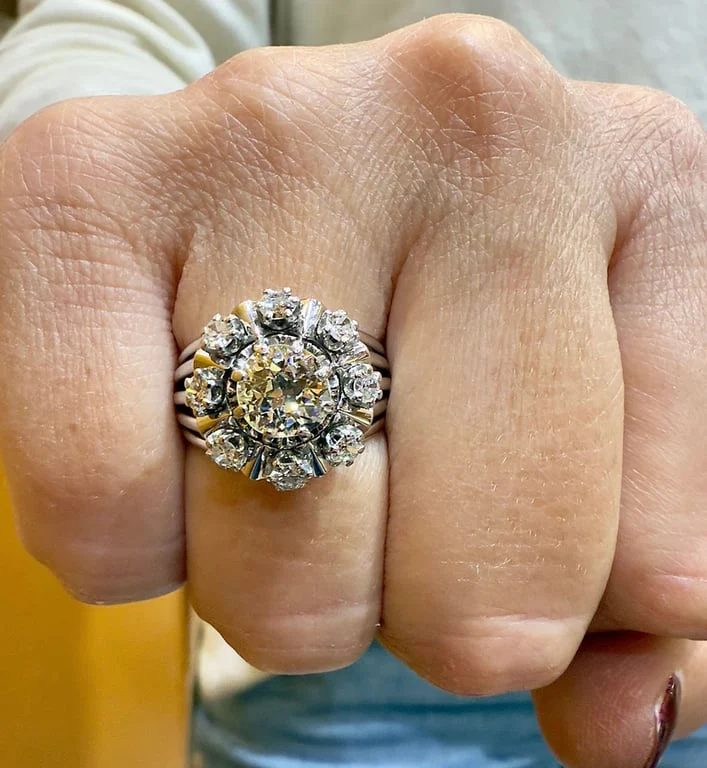
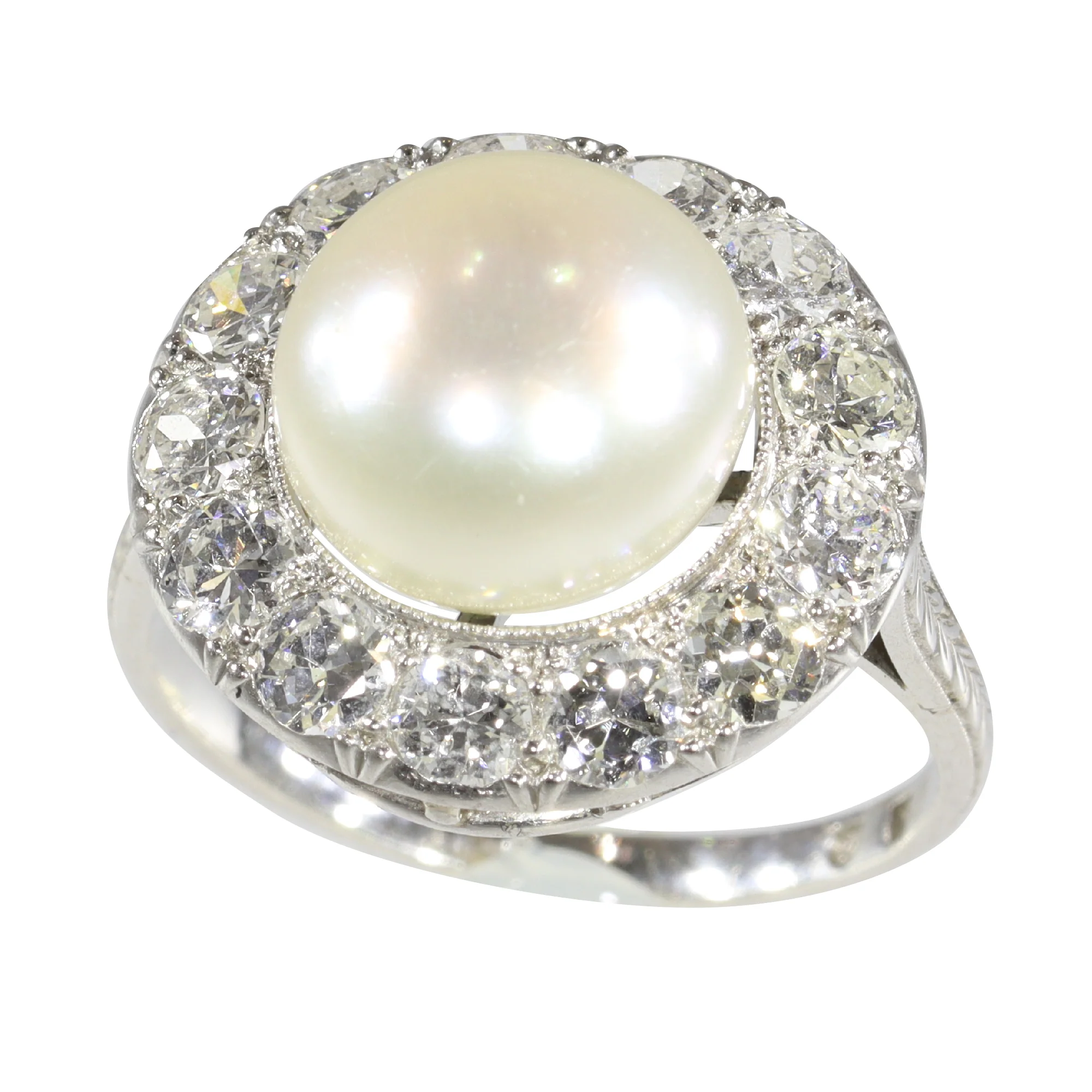
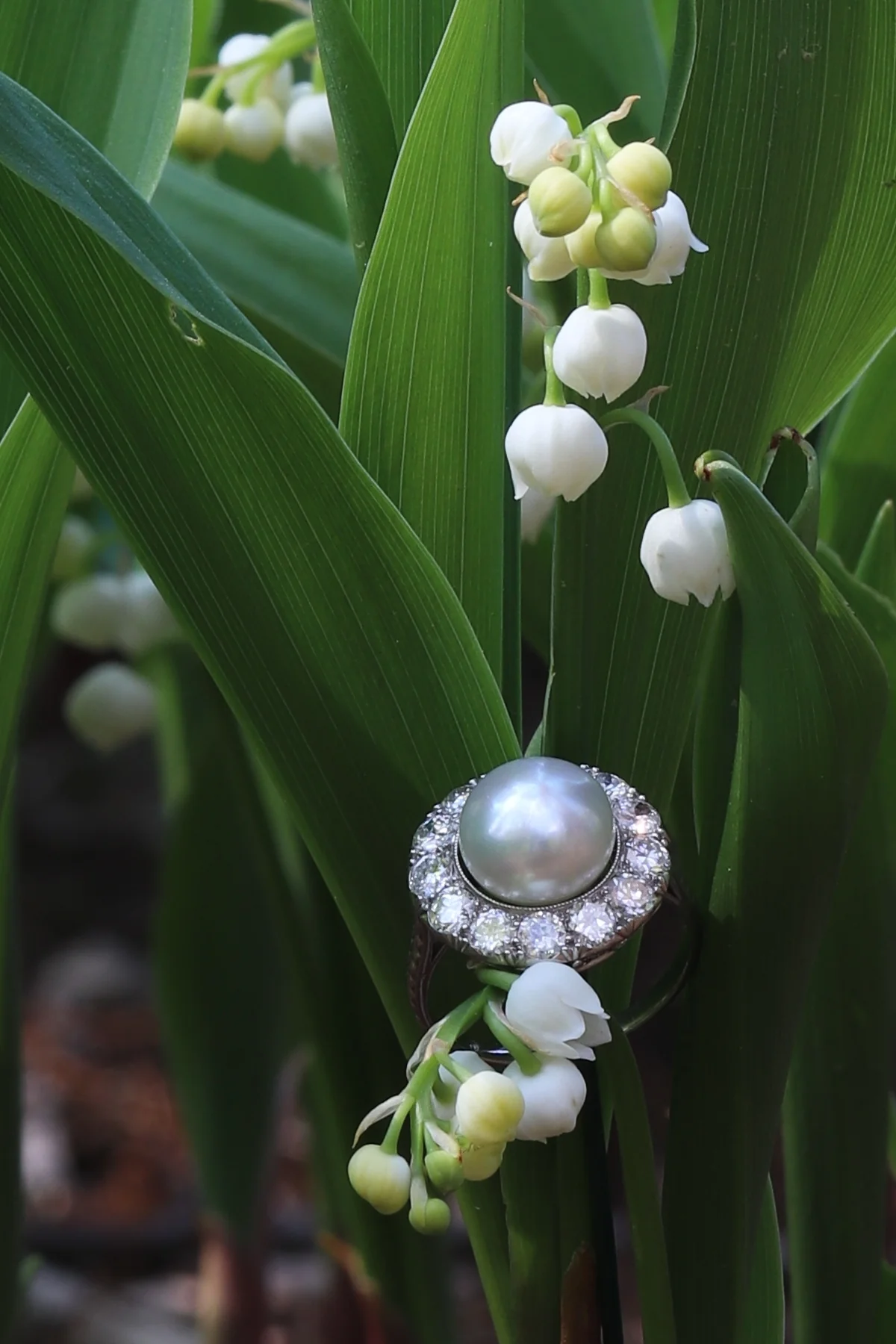
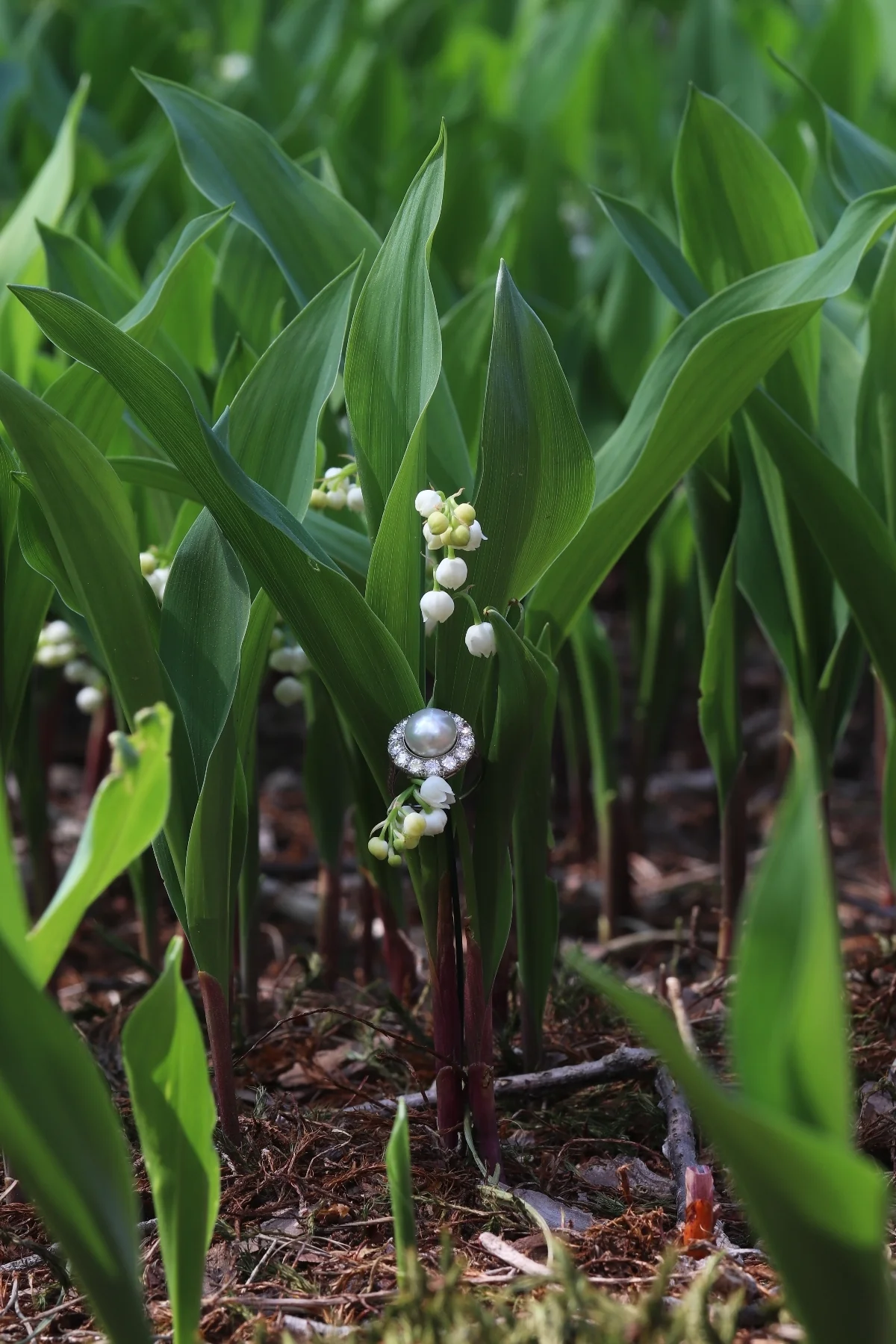
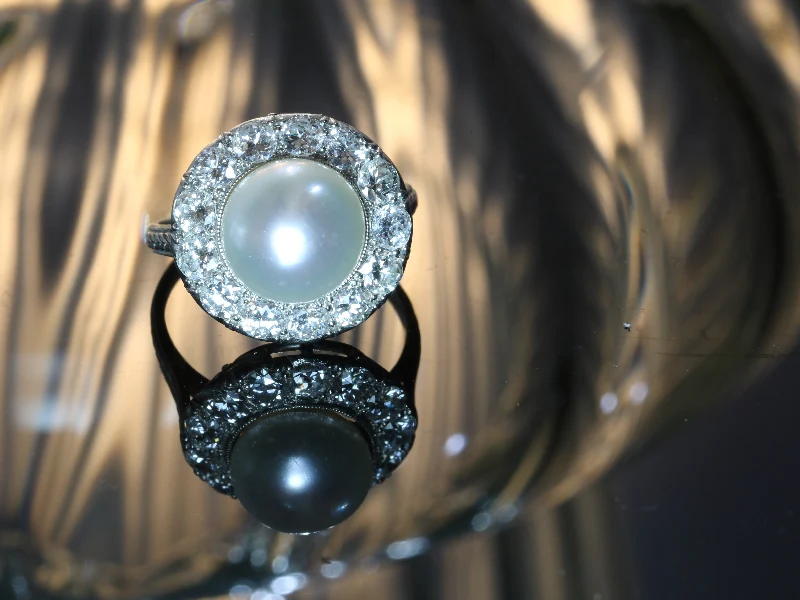
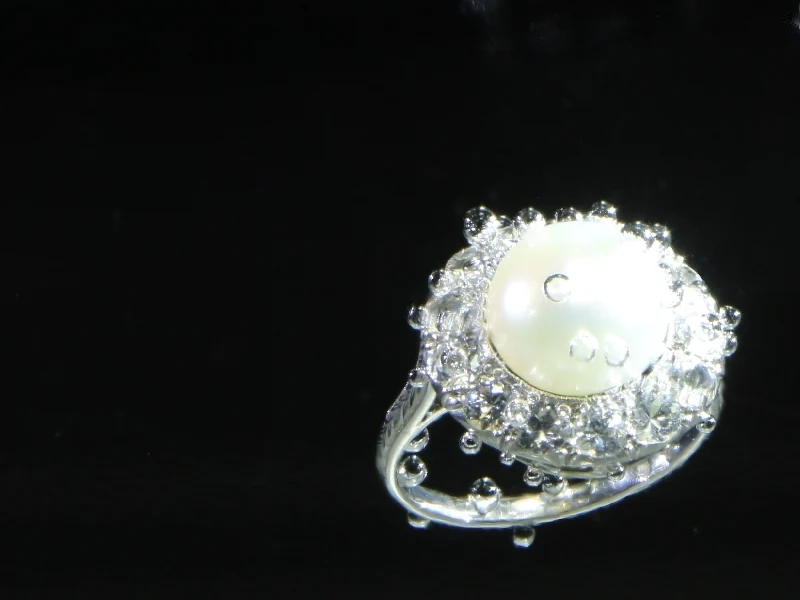
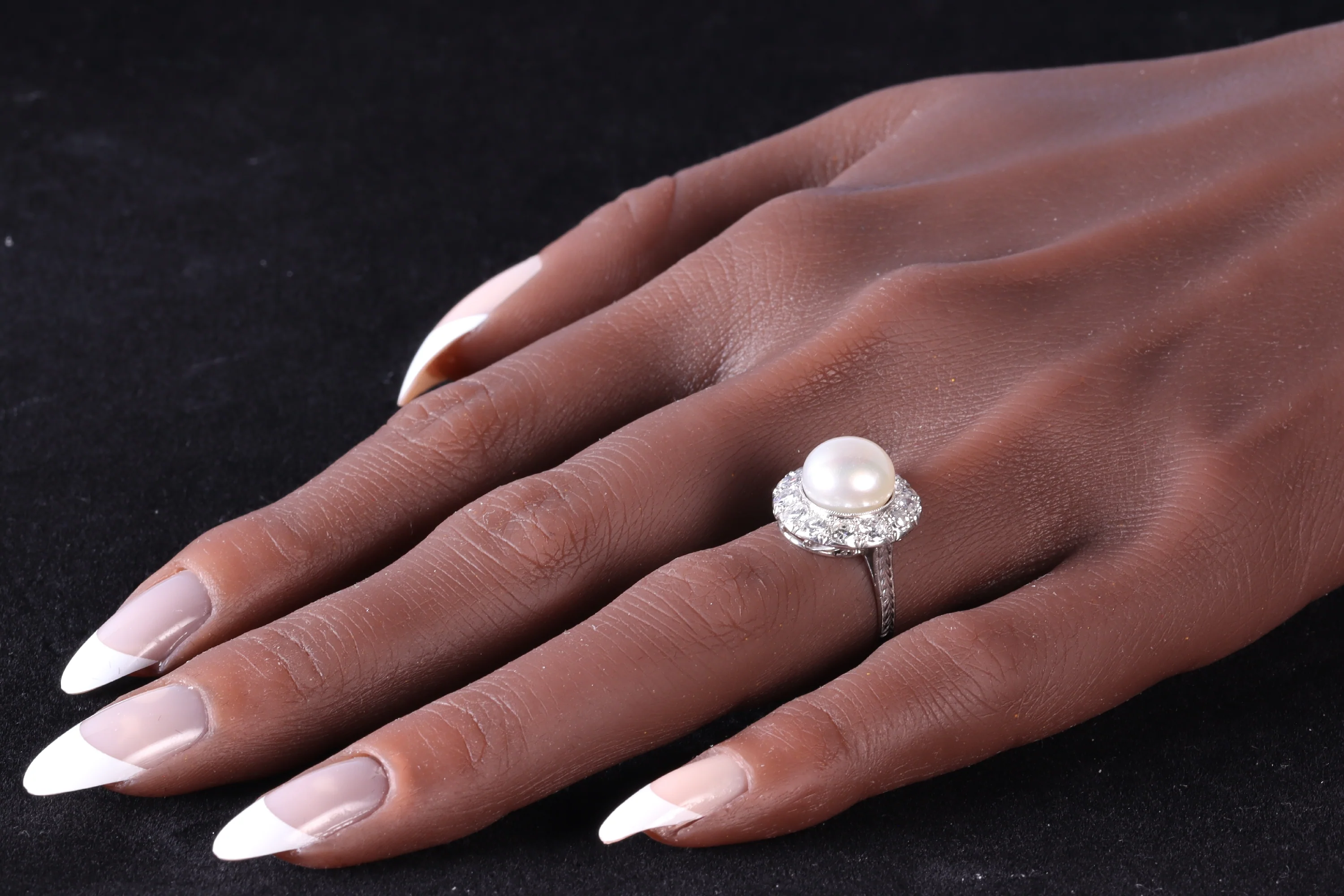
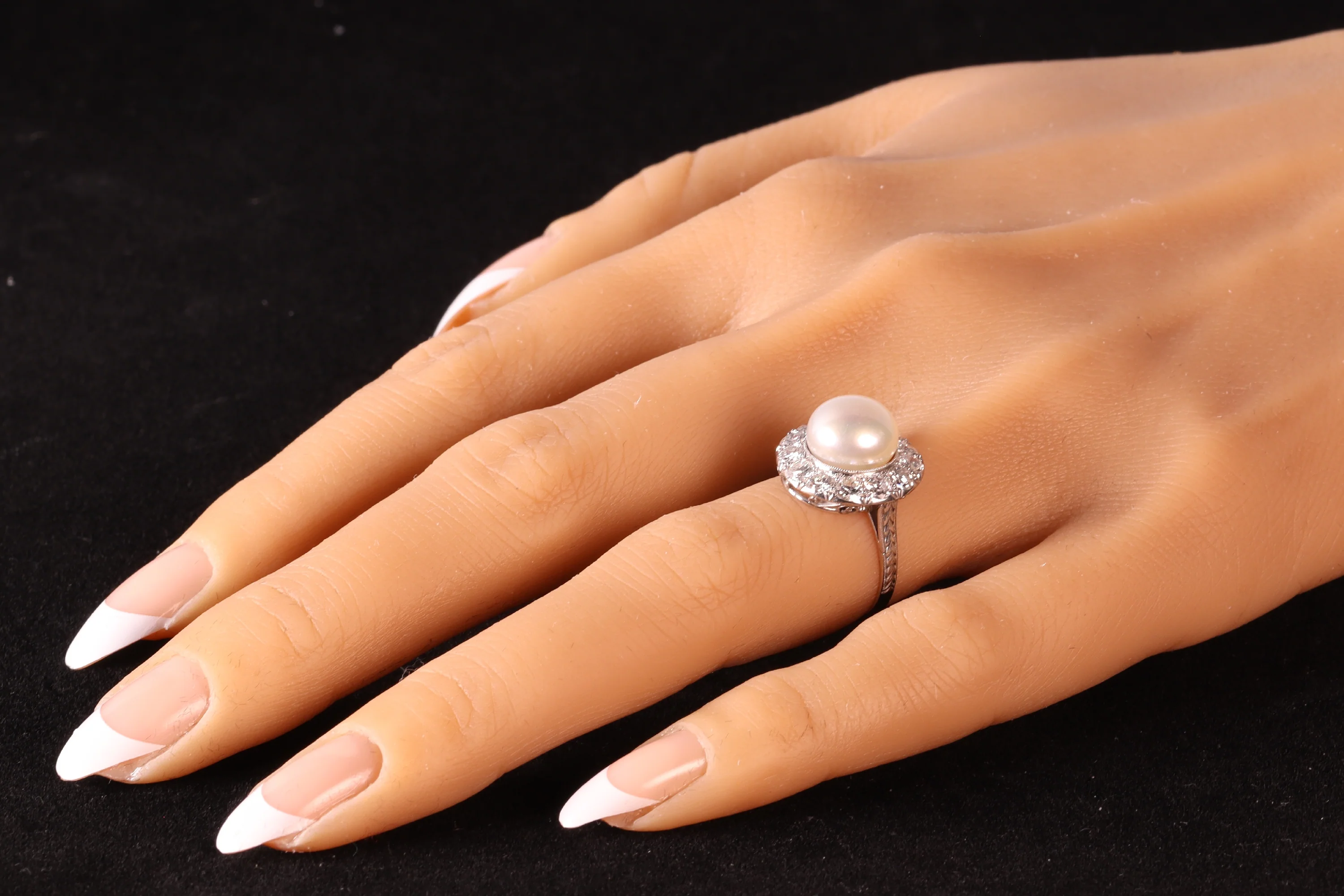
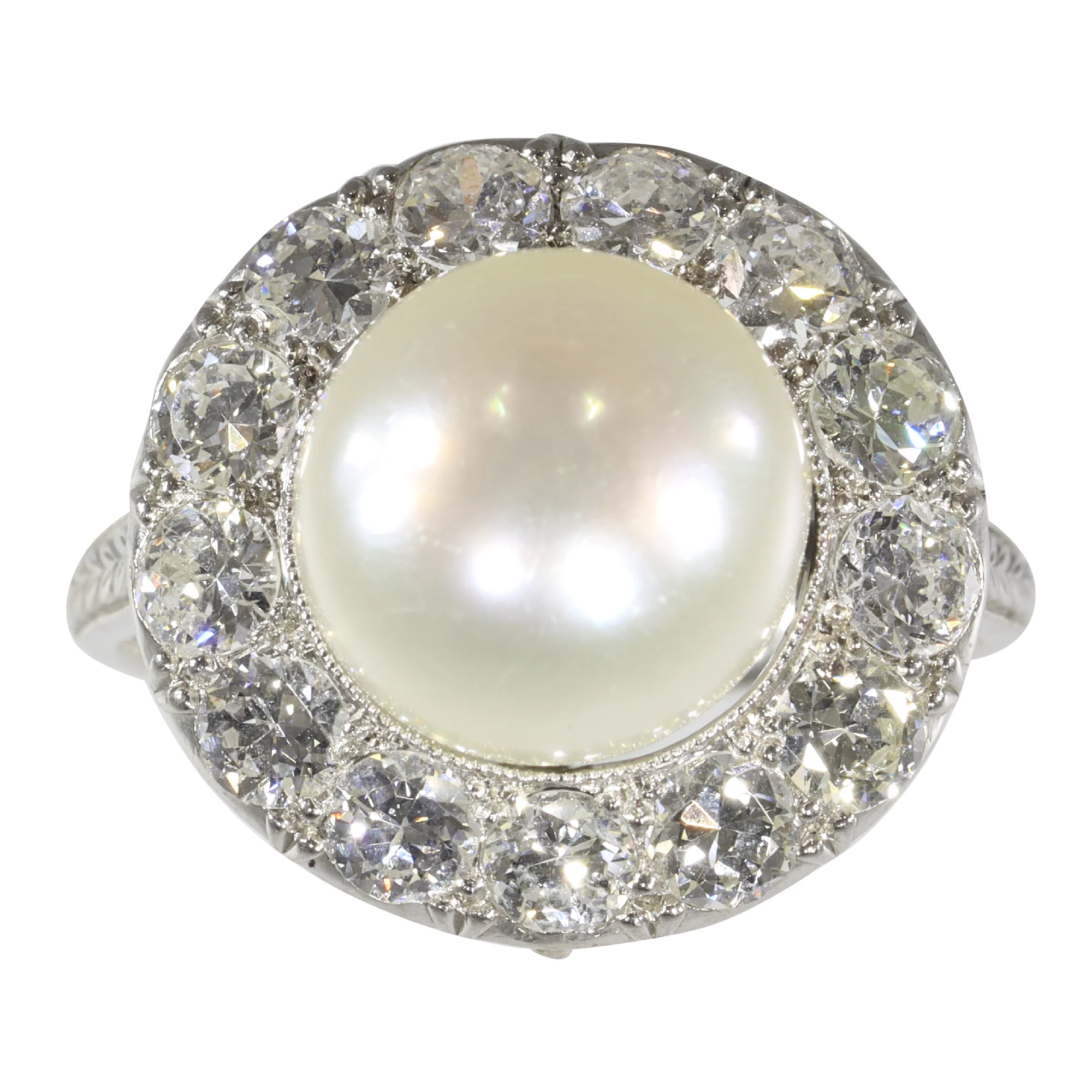
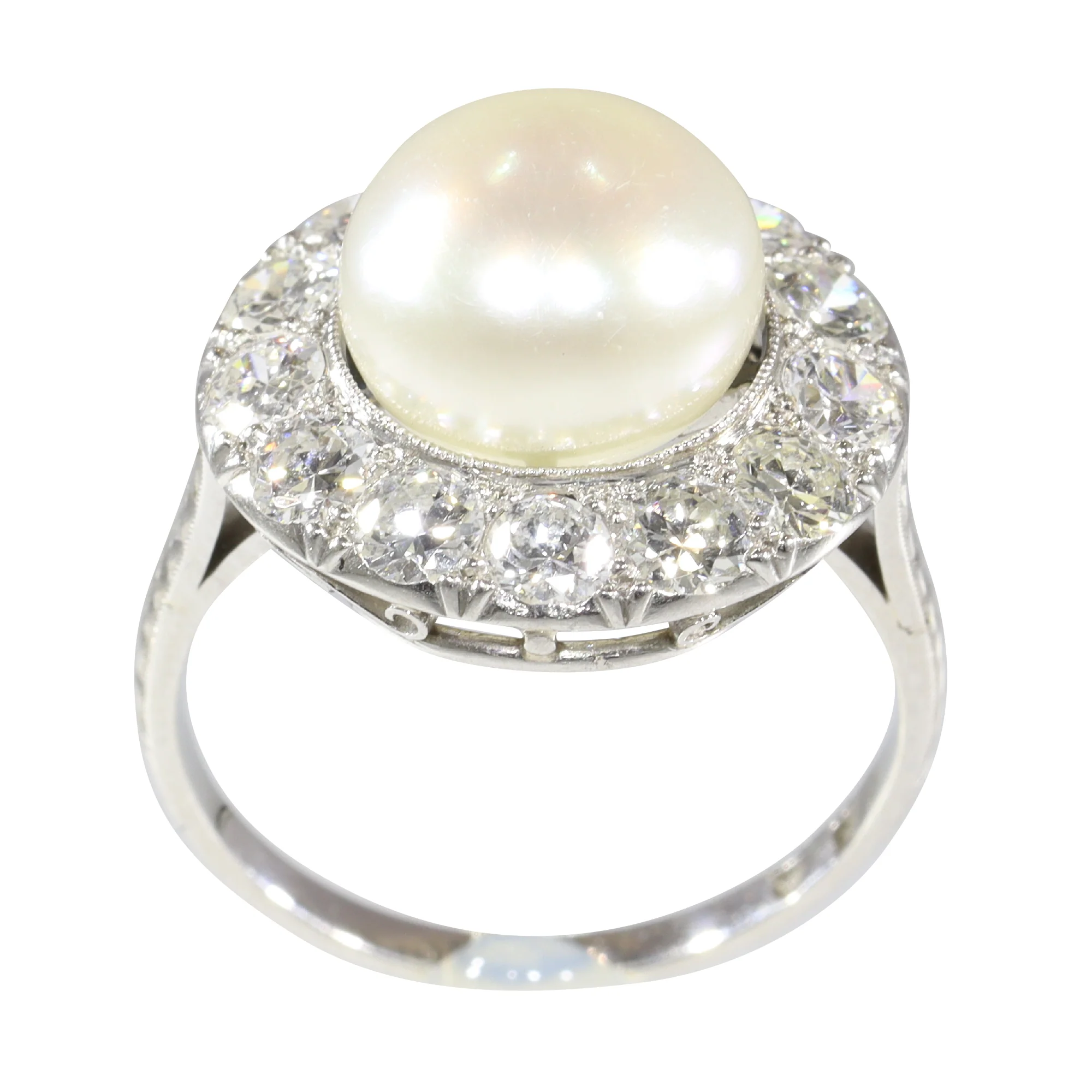
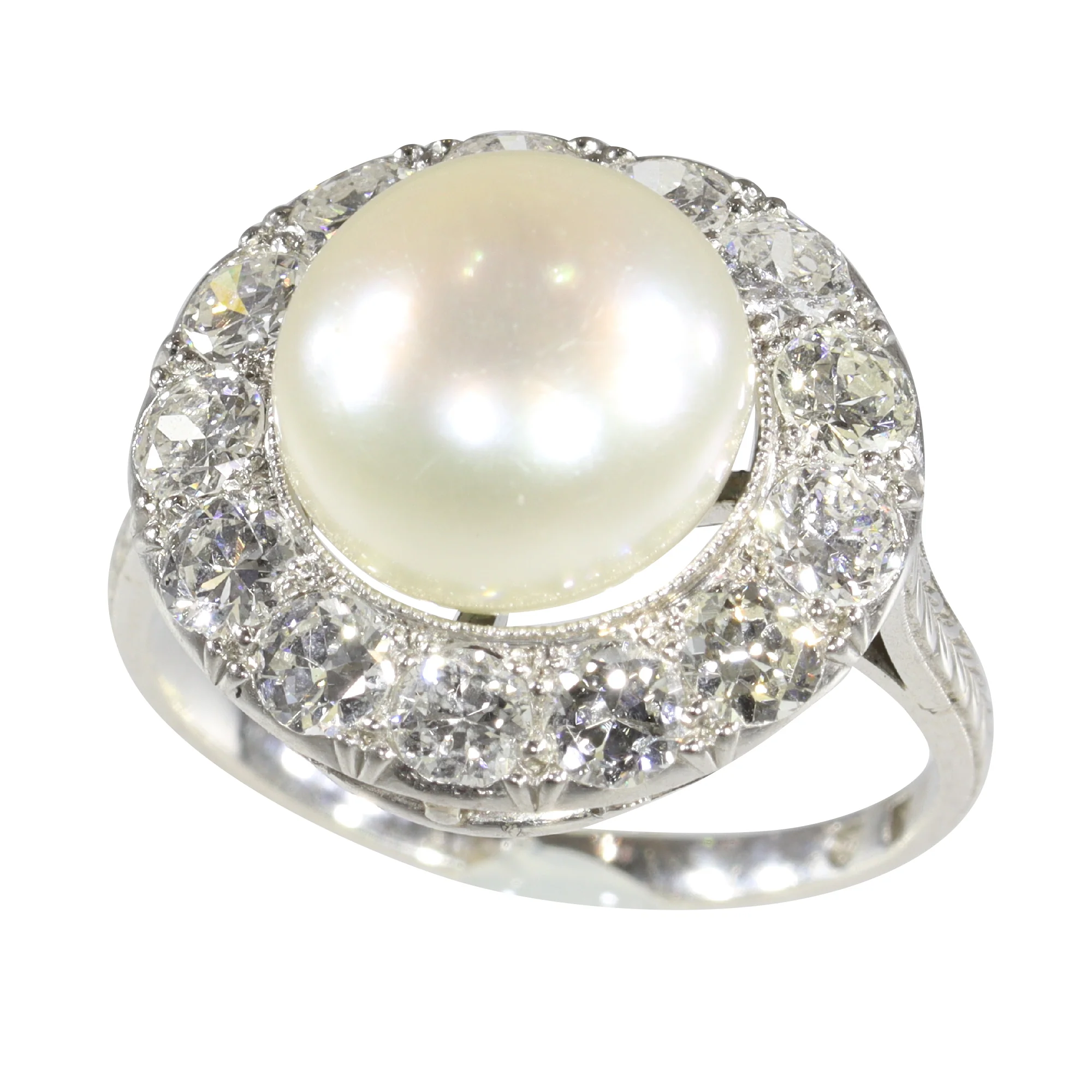
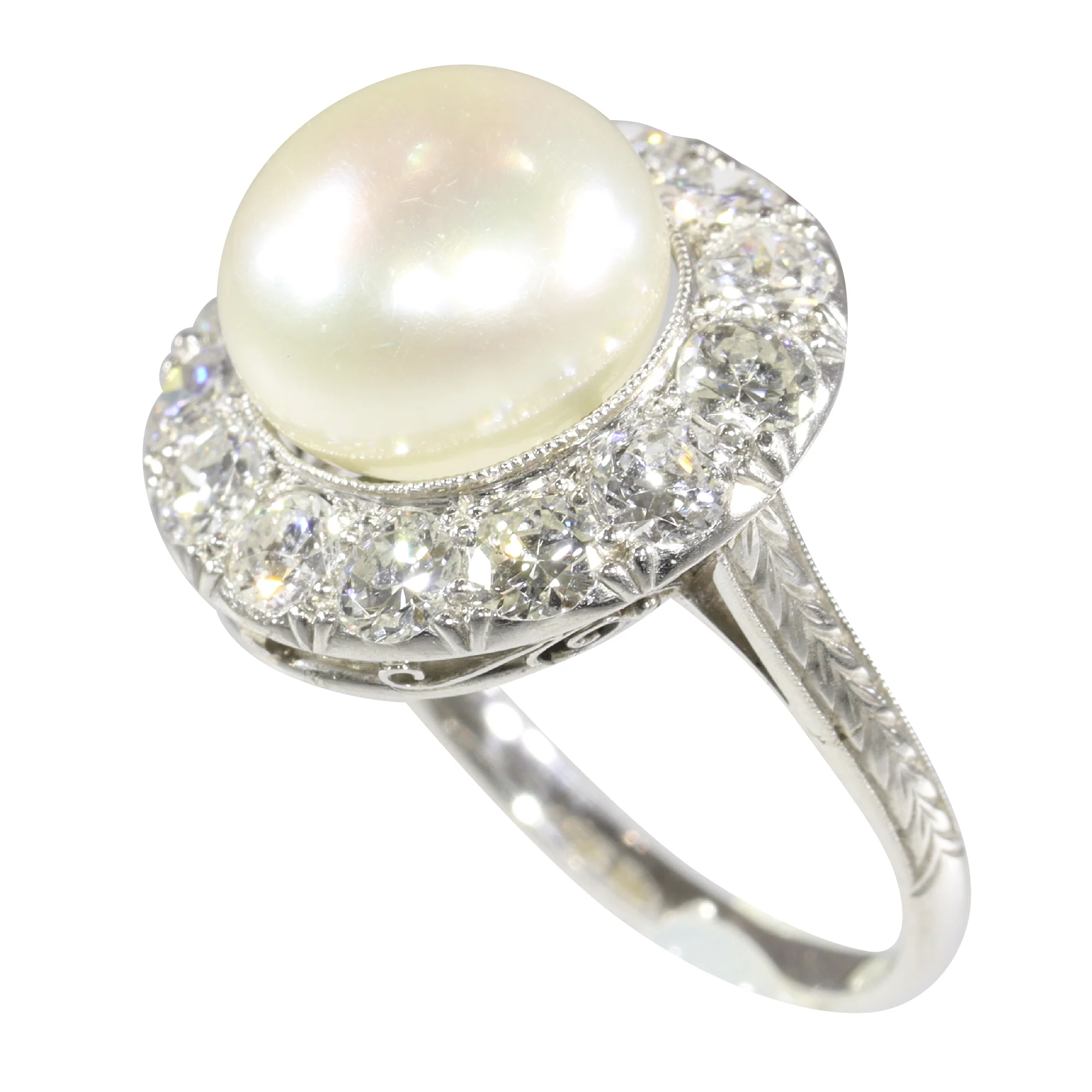
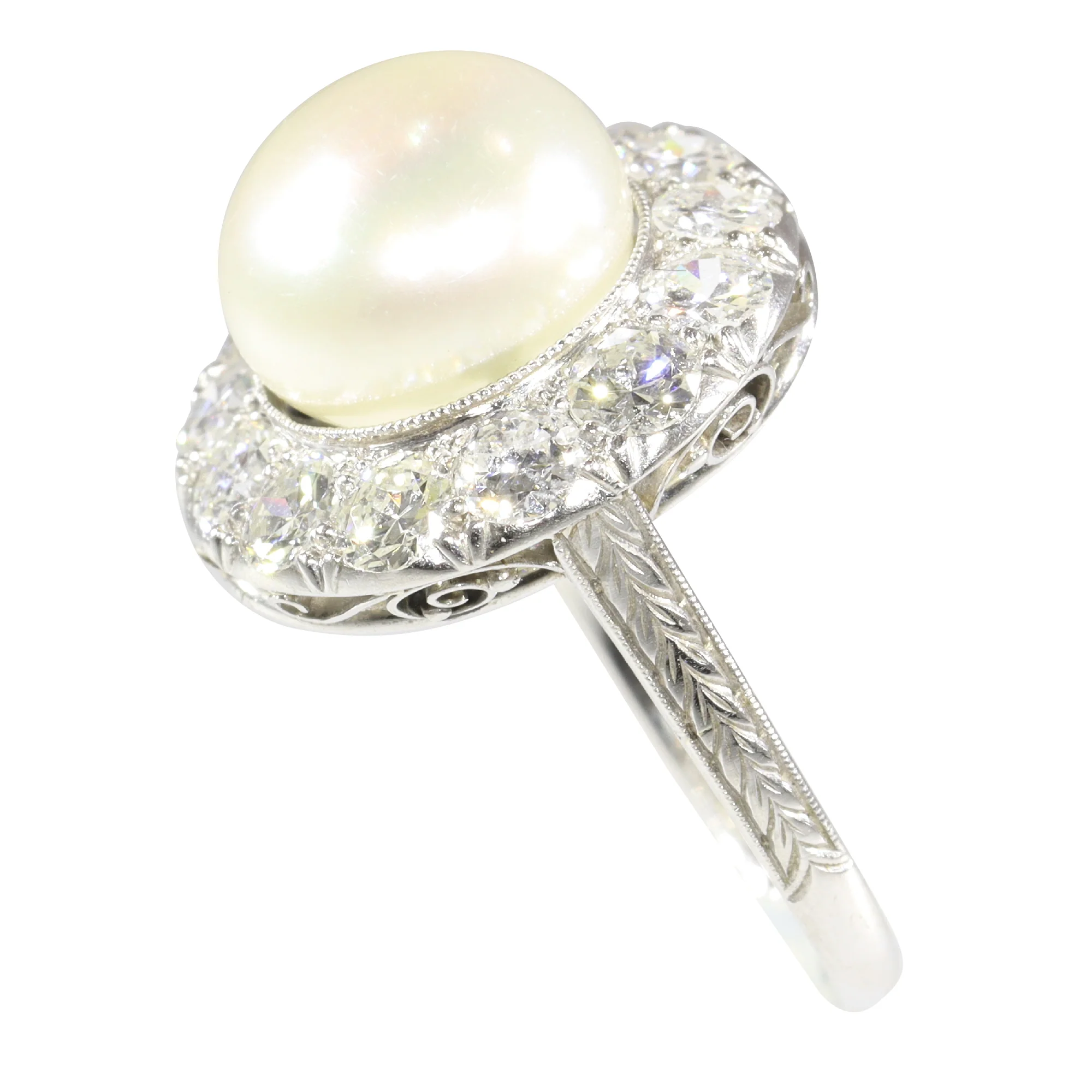
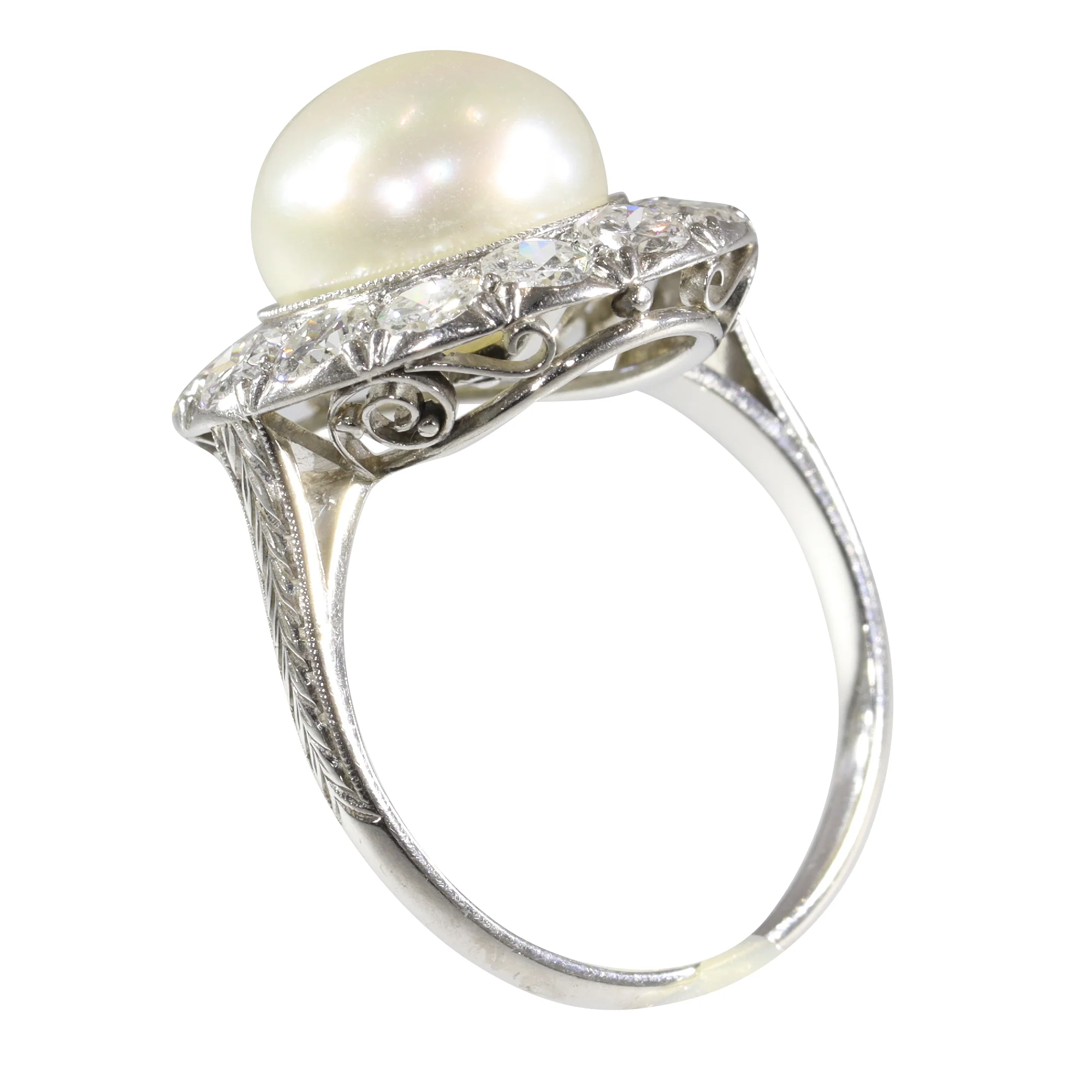
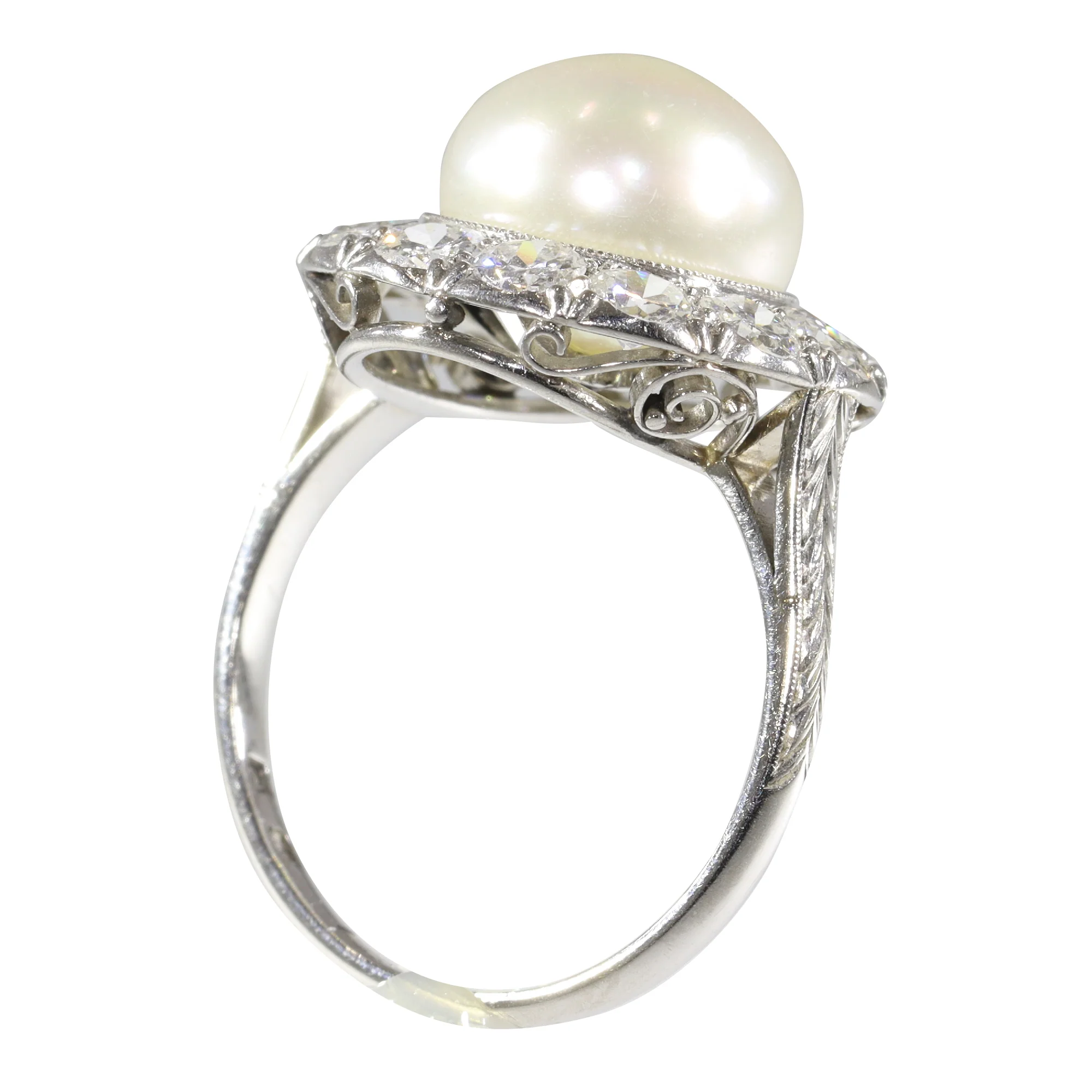
A magnificent example of Art Deco craftsmanship, this platinum engagement ring from the 1930s harmoniously combines tradition and modernity. Thirteen old-cut diamonds form a radiant halo around an imposing pearl, each stone contributing to the ring's luminosity. Its intricate design, composed of scrolls, evokes joy and elegance, while the pearl's rainbow sheen lends a touch of mystery. Perfectly capturing the transition between Art Deco and the Interwar period, this ring bears witness to the era's fascination with geometric shapes and the timeless charm of fine jewelry.
Antique jewelry object group: ring
Condition: excellent condition
- (more info on our condition scale)
Country of origin: unknown
Style: Between Art Deco and the Interwar period - Art Deco is an eclectic artistic and design style born in Paris in the early decades of the 20th century. Emerging in the 1920s, it lasted until after the Second World War. The term "Art Deco" was widely used for the first time after an exhibition in 1966, referring to the 1925 International Exhibition of Modern Decorative and Industrial Arts, which marked the height of high-end modern style in Paris. Championed by the best decorative arts designers, such as in fashion and interior decoration, Art Deco influenced all fields of design throughout the 1920s and 1930s, including architecture and industrial design, as well as visual arts like painting, graphic arts, and cinema. At the time, this style was perceived as elegant, glamorous, functional, and modern. The Interwar period (1918-1939) is considered, in recent Western culture, as the period between the end of the First World War and the beginning of the Second World War. It is also called the interwar period or the Interbellum.
- See also: Art Deco and Interbellum or more info on styles
Style specifics: It is something between Art Deco and the Interwar period.
Abstract motifs and geometric shapes are typical of the Art Deco period. Art Deco moves away from the soft pastels and organic forms of its predecessor, Art Nouveau, and draws inspiration from many styles and movements of the early 20th century, including Neoclassicism, Constructivism, Cubism, Modernism, and Futurism. Its popularity peaked in Europe during the Roaring Twenties and continued in the United States until the 1930s. Although many design movements have political or philosophical roots or intentions, Art Deco is purely decorative.
The Interbellum is the period between the two world wars and one can recognize a transition from the Art Deco style to the Retro style.
Period: circa 1930
- (events and facts of this era, poetry of this era, fashion of this era)
Material: platinum
- (more info on precious metals)
Additional information: engagement ring. In Western cultures in particular, an engagement ring indicates that the person wearing it is engaged. In the United Kingdom and North America, engagement rings are traditionally reserved for women, and may be adorned with precious stones. In other cultures, men and women generally wear matching rings, sometimes simple. In some cultures, engagement rings are also used as Wedding bands.
Traditionally, the engagement ring is given by a man to his future wife when proposing marriage or immediately after she accepts. It constitutes a formal agreement to marry. The rings can be purchased by the man, by the couple together, or by each partner for the other.
In North America and the United Kingdom, it is worn on the left ring finger, while in Poland and Ukraine, it is customary to wear it on the right hand. In Germany, it is worn on the left hand during the engagement, but on the right hand during the wedding. Similar traditions date back to antiquity, stemming from an ancient practice that designated the left ring finger as containing the vena amoris, or "vein of love."
Engagement rings were used in Roman times, but their return to the West did not occur until the 13th century. The first documented use of a diamond ring to symbolize an engagement was that of Archduke Maximilian of Austria at the imperial court of Vienna in 1477, upon his engagement to Mary of Burgundy.
In the 20th century, if he could afford it, the Western groom would privately choose and purchase an engagement ring, which he would then give to his future wife when proposing. More recently, couples often choose their engagement ring together. (according to Wikipedia)
Diamonds: 13 old European cut diamonds with a total estimated weight of about 1.82 ct. (approximate color and clarity H/I vs/si)
Note: All diamond weights, color shades, and clarity are approximate as the stones have not been removed from their settings to preserve the integrity of the mounting.
Total diamond weight: about 1.82 ct.
Gemstones: One pearl
- (more information about gemstones)
Birthstones: Diamond is the birthstone (or birth month stone) for April and pearl for June.
- (more information about birthstones)
Hallmarks: One "M" hallmark and another "P" hallmark; we do not know what these hallmarks correspond to.
- (more information about hallmarks)
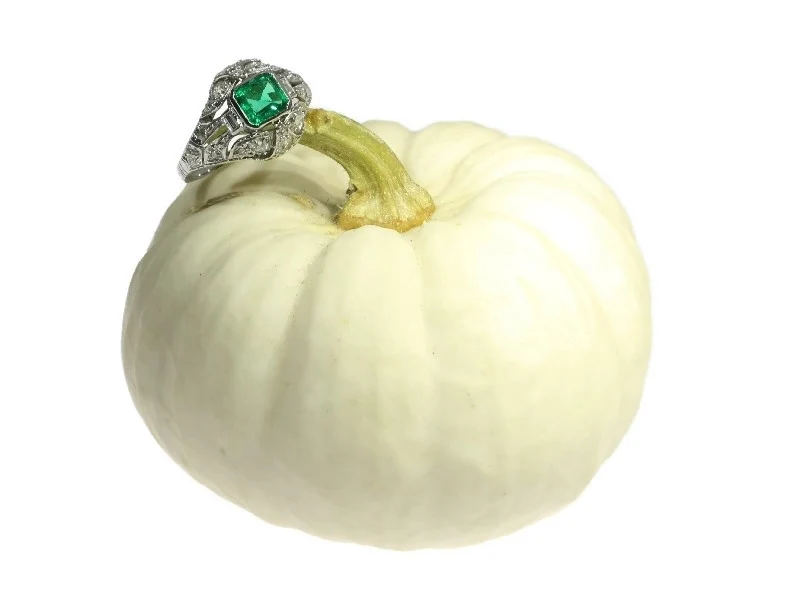
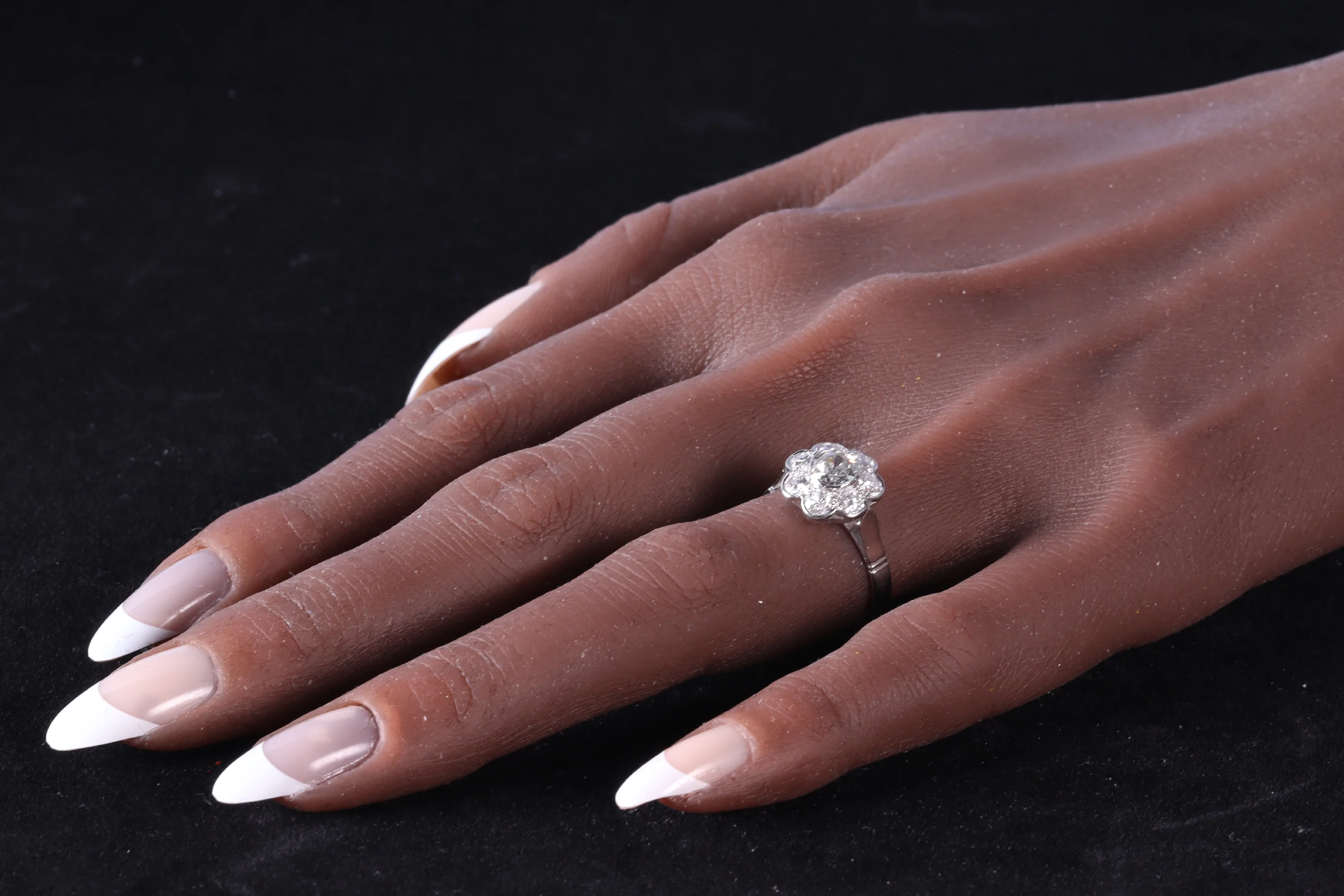
Dimensions: diameter of the top of the ring 1.63 cm (0.64 inch)
Weight: 5.10 grams (3.28 dwt)
Continental ring size: 51 and 16¼, US size 5½, UK size: K½
Resizing: Free resizing, but due to the way the ring is made, we cannot guarantee it for all sizes; please inquire in advance (only for extreme resizing do we have to charge).
- (more information about ring sizes)
More Images
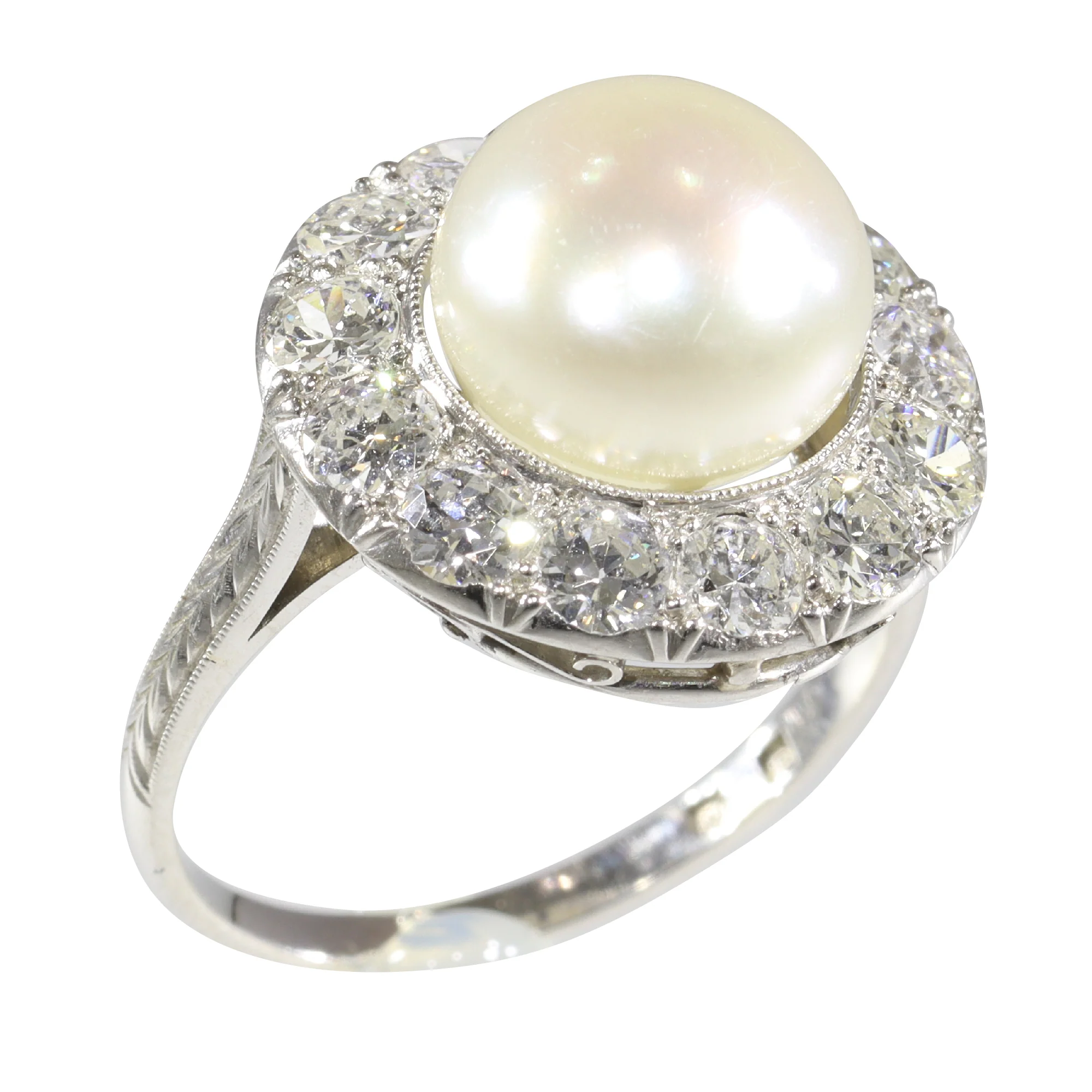
Jewel of the past: a diamond-set engagement ring from the 1930s
A magnificent example of Art Deco craftsmanship, this platinum engagement ring from the 1930s harmoniously combines tradition and modernity. Thirteen old-cut diamonds form a radiant halo around an imposing pearl, each stone contributing to the ring's luminosity. Its intricate design, composed of scrolls, evokes joy and elegance, while the pearl's rainbow sheen lends a touch of mystery. Perfectly capturing the transition between Art Deco and the Interwar period, this ring bears witness to the era's fascination with geometric shapes and the timeless charm of fine jewelry.
Antique jewelry object group: ring
Condition: excellent condition
- (more info on our condition scale)
Country of origin: unknown
Style: Between Art Deco and the Interwar period - Art Deco is an eclectic artistic and design style born in Paris in the early decades of the 20th century. Emerging in the 1920s, it lasted until after the Second World War. The term "Art Deco" was widely used for the first time after an exhibition in 1966, referring to the 1925 International Exhibition of Modern Decorative and Industrial Arts, which marked the height of high-end modern style in Paris. Championed by the best decorative arts designers, such as in fashion and interior decoration, Art Deco influenced all fields of design throughout the 1920s and 1930s, including architecture and industrial design, as well as visual arts like painting, graphic arts, and cinema. At the time, this style was perceived as elegant, glamorous, functional, and modern. The Interwar period (1918-1939) is considered, in recent Western culture, as the period between the end of the First World War and the beginning of the Second World War. It is also called the interwar period or the Interbellum.
- See also: Art Deco and Interbellum or more info on styles
Style specifics: It is something between Art Deco and the Interwar period.
Abstract motifs and geometric shapes are typical of the Art Deco period. Art Deco moves away from the soft pastels and organic forms of its predecessor, Art Nouveau, and draws inspiration from many styles and movements of the early 20th century, including Neoclassicism, Constructivism, Cubism, Modernism, and Futurism. Its popularity peaked in Europe during the Roaring Twenties and continued in the United States until the 1930s. Although many design movements have political or philosophical roots or intentions, Art Deco is purely decorative.
The Interbellum is the period between the two world wars and one can recognize a transition from the Art Deco style to the Retro style.
Period: circa 1930
- (events and facts of this era, poetry of this era, fashion of this era)
Material: platinum
- (more info on precious metals)
Additional information: engagement ring. In Western cultures in particular, an engagement ring indicates that the person wearing it is engaged. In the United Kingdom and North America, engagement rings are traditionally reserved for women, and may be adorned with precious stones. In other cultures, men and women generally wear matching rings, sometimes simple. In some cultures, engagement rings are also used as Wedding bands.
Traditionally, the engagement ring is given by a man to his future wife when proposing marriage or immediately after she accepts. It constitutes a formal agreement to marry. The rings can be purchased by the man, by the couple together, or by each partner for the other.
In North America and the United Kingdom, it is worn on the left ring finger, while in Poland and Ukraine, it is customary to wear it on the right hand. In Germany, it is worn on the left hand during the engagement, but on the right hand during the wedding. Similar traditions date back to antiquity, stemming from an ancient practice that designated the left ring finger as containing the vena amoris, or "vein of love."
Engagement rings were used in Roman times, but their return to the West did not occur until the 13th century. The first documented use of a diamond ring to symbolize an engagement was that of Archduke Maximilian of Austria at the imperial court of Vienna in 1477, upon his engagement to Mary of Burgundy.
In the 20th century, if he could afford it, the Western groom would privately choose and purchase an engagement ring, which he would then give to his future wife when proposing. More recently, couples often choose their engagement ring together. (according to Wikipedia)
Diamonds: 13 old European cut diamonds with a total estimated weight of about 1.82 ct. (approximate color and clarity H/I vs/si)
Note: All diamond weights, color shades, and clarity are approximate as the stones have not been removed from their settings to preserve the integrity of the mounting.
Total diamond weight: about 1.82 ct.
Gemstones: One pearl
- (more information about gemstones)
Birthstones: Diamond is the birthstone (or birth month stone) for April and pearl for June.
- (more information about birthstones)
Hallmarks: One "M" hallmark and another "P" hallmark; we do not know what these hallmarks correspond to.
- (more information about hallmarks)
Dimensions: diameter of the top of the ring 1.63 cm (0.64 inch)
Weight: 5.10 grams (3.28 dwt)
Continental ring size: 51 and 16¼, US size 5½, UK size: K½
Resizing: Free resizing, but due to the way the ring is made, we cannot guarantee it for all sizes; please inquire in advance (only for extreme resizing do we have to charge).
- (more information about ring sizes)
Product Information
Product Information
Shipping & Returns
Shipping & Returns
Description
A magnificent example of Art Deco craftsmanship, this platinum engagement ring from the 1930s harmoniously combines tradition and modernity. Thirteen old-cut diamonds form a radiant halo around an imposing pearl, each stone contributing to the ring's luminosity. Its intricate design, composed of scrolls, evokes joy and elegance, while the pearl's rainbow sheen lends a touch of mystery. Perfectly capturing the transition between Art Deco and the Interwar period, this ring bears witness to the era's fascination with geometric shapes and the timeless charm of fine jewelry.
Antique jewelry object group: ring
Condition: excellent condition
- (more info on our condition scale)
Country of origin: unknown
Style: Between Art Deco and the Interwar period - Art Deco is an eclectic artistic and design style born in Paris in the early decades of the 20th century. Emerging in the 1920s, it lasted until after the Second World War. The term "Art Deco" was widely used for the first time after an exhibition in 1966, referring to the 1925 International Exhibition of Modern Decorative and Industrial Arts, which marked the height of high-end modern style in Paris. Championed by the best decorative arts designers, such as in fashion and interior decoration, Art Deco influenced all fields of design throughout the 1920s and 1930s, including architecture and industrial design, as well as visual arts like painting, graphic arts, and cinema. At the time, this style was perceived as elegant, glamorous, functional, and modern. The Interwar period (1918-1939) is considered, in recent Western culture, as the period between the end of the First World War and the beginning of the Second World War. It is also called the interwar period or the Interbellum.
- See also: Art Deco and Interbellum or more info on styles
Style specifics: It is something between Art Deco and the Interwar period.
Abstract motifs and geometric shapes are typical of the Art Deco period. Art Deco moves away from the soft pastels and organic forms of its predecessor, Art Nouveau, and draws inspiration from many styles and movements of the early 20th century, including Neoclassicism, Constructivism, Cubism, Modernism, and Futurism. Its popularity peaked in Europe during the Roaring Twenties and continued in the United States until the 1930s. Although many design movements have political or philosophical roots or intentions, Art Deco is purely decorative.
The Interbellum is the period between the two world wars and one can recognize a transition from the Art Deco style to the Retro style.
Period: circa 1930
- (events and facts of this era, poetry of this era, fashion of this era)
Material: platinum
- (more info on precious metals)
Additional information: engagement ring. In Western cultures in particular, an engagement ring indicates that the person wearing it is engaged. In the United Kingdom and North America, engagement rings are traditionally reserved for women, and may be adorned with precious stones. In other cultures, men and women generally wear matching rings, sometimes simple. In some cultures, engagement rings are also used as Wedding bands.
Traditionally, the engagement ring is given by a man to his future wife when proposing marriage or immediately after she accepts. It constitutes a formal agreement to marry. The rings can be purchased by the man, by the couple together, or by each partner for the other.
In North America and the United Kingdom, it is worn on the left ring finger, while in Poland and Ukraine, it is customary to wear it on the right hand. In Germany, it is worn on the left hand during the engagement, but on the right hand during the wedding. Similar traditions date back to antiquity, stemming from an ancient practice that designated the left ring finger as containing the vena amoris, or "vein of love."
Engagement rings were used in Roman times, but their return to the West did not occur until the 13th century. The first documented use of a diamond ring to symbolize an engagement was that of Archduke Maximilian of Austria at the imperial court of Vienna in 1477, upon his engagement to Mary of Burgundy.
In the 20th century, if he could afford it, the Western groom would privately choose and purchase an engagement ring, which he would then give to his future wife when proposing. More recently, couples often choose their engagement ring together. (according to Wikipedia)
Diamonds: 13 old European cut diamonds with a total estimated weight of about 1.82 ct. (approximate color and clarity H/I vs/si)
Note: All diamond weights, color shades, and clarity are approximate as the stones have not been removed from their settings to preserve the integrity of the mounting.
Total diamond weight: about 1.82 ct.
Gemstones: One pearl
- (more information about gemstones)
Birthstones: Diamond is the birthstone (or birth month stone) for April and pearl for June.
- (more information about birthstones)
Hallmarks: One "M" hallmark and another "P" hallmark; we do not know what these hallmarks correspond to.
- (more information about hallmarks)
Dimensions: diameter of the top of the ring 1.63 cm (0.64 inch)
Weight: 5.10 grams (3.28 dwt)
Continental ring size: 51 and 16¼, US size 5½, UK size: K½
Resizing: Free resizing, but due to the way the ring is made, we cannot guarantee it for all sizes; please inquire in advance (only for extreme resizing do we have to charge).
- (more information about ring sizes)