Meeting the precious stone: a Belgian diamond ring from 1930
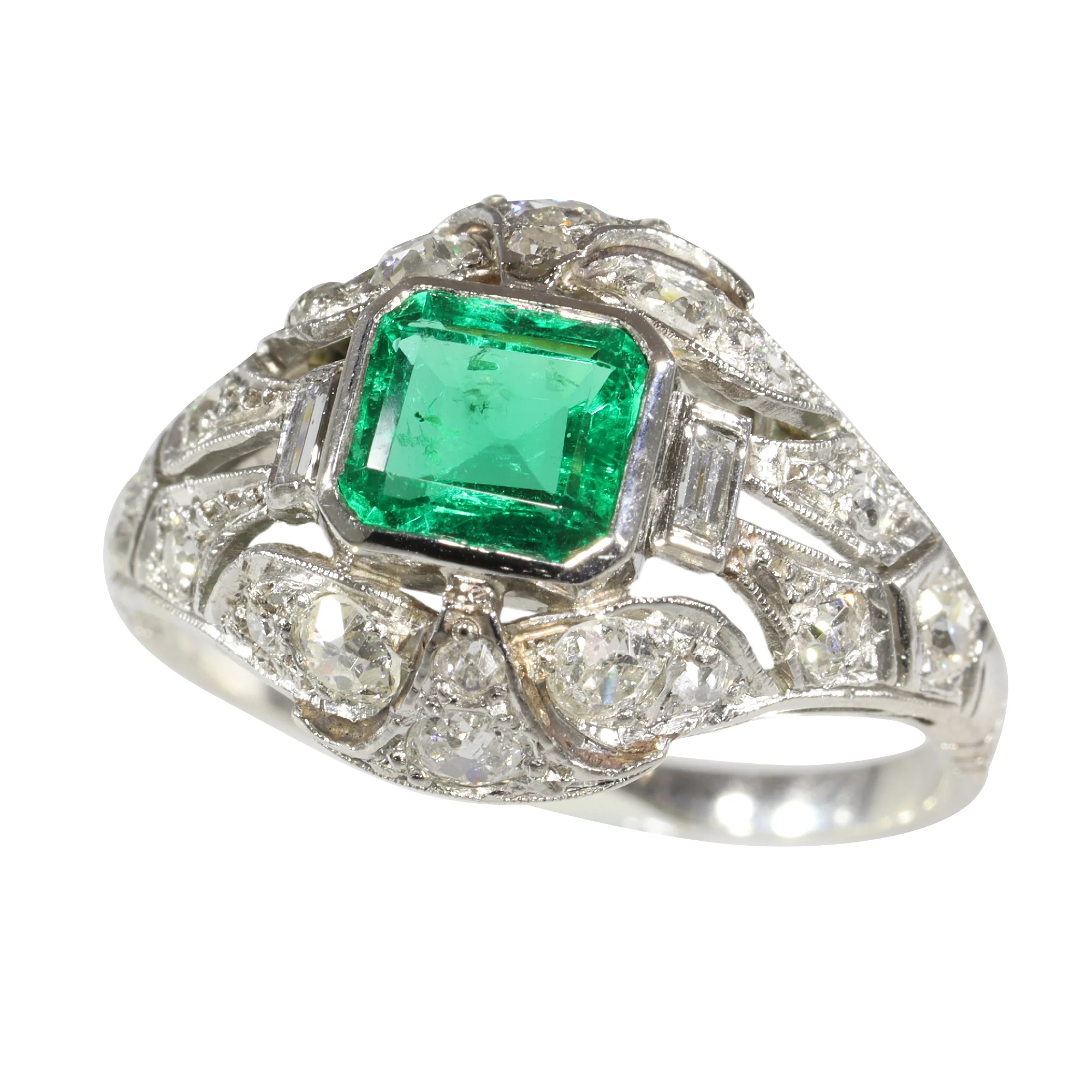
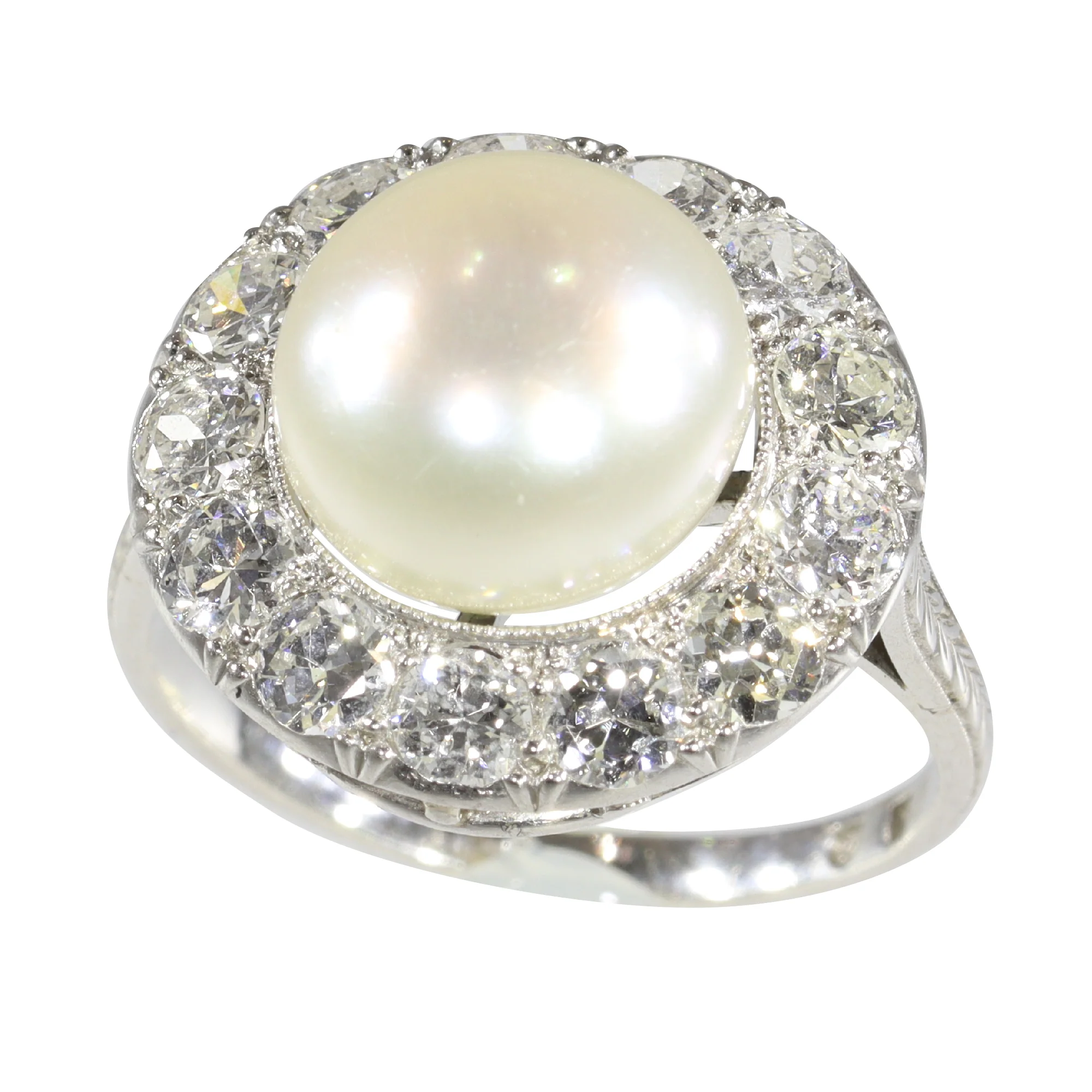
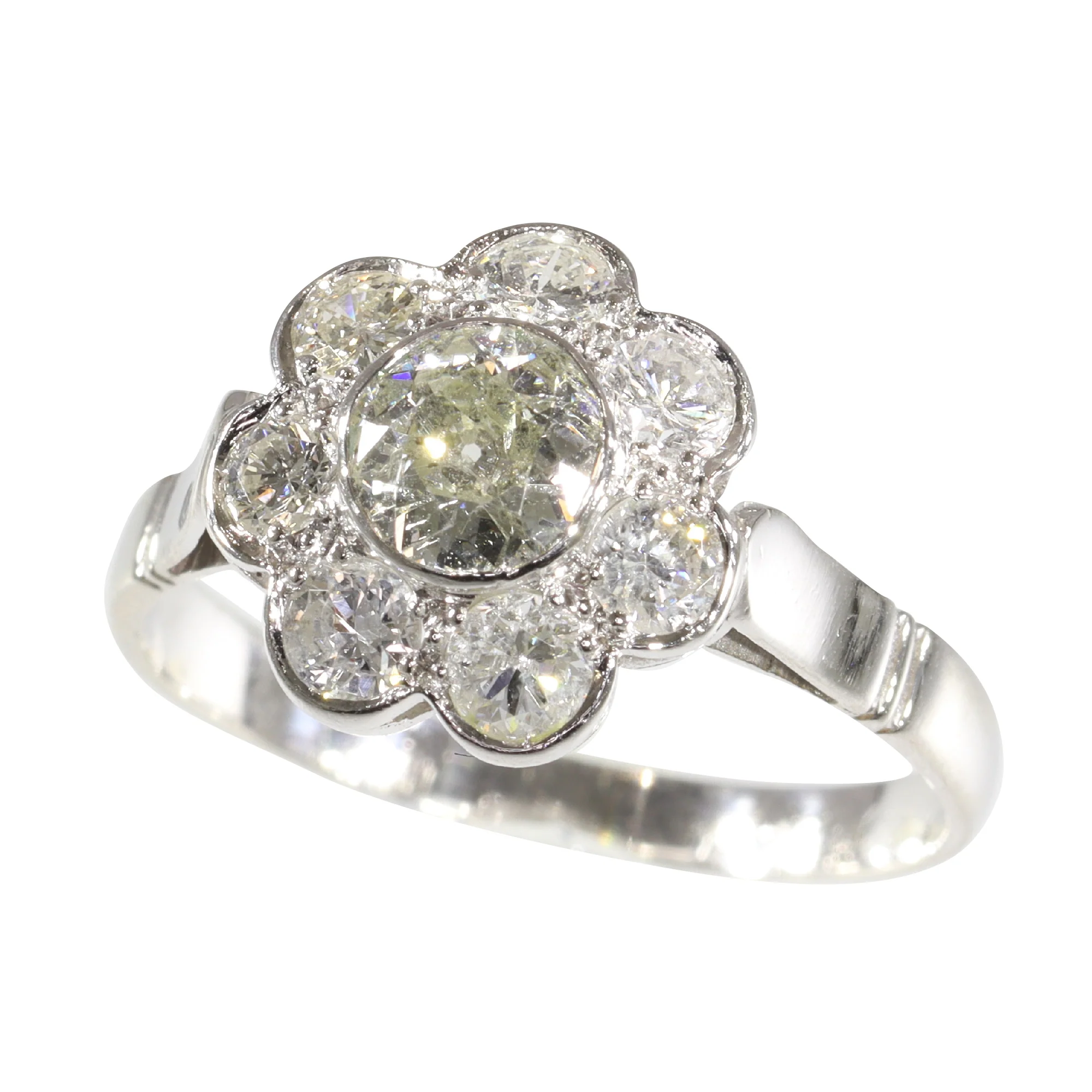
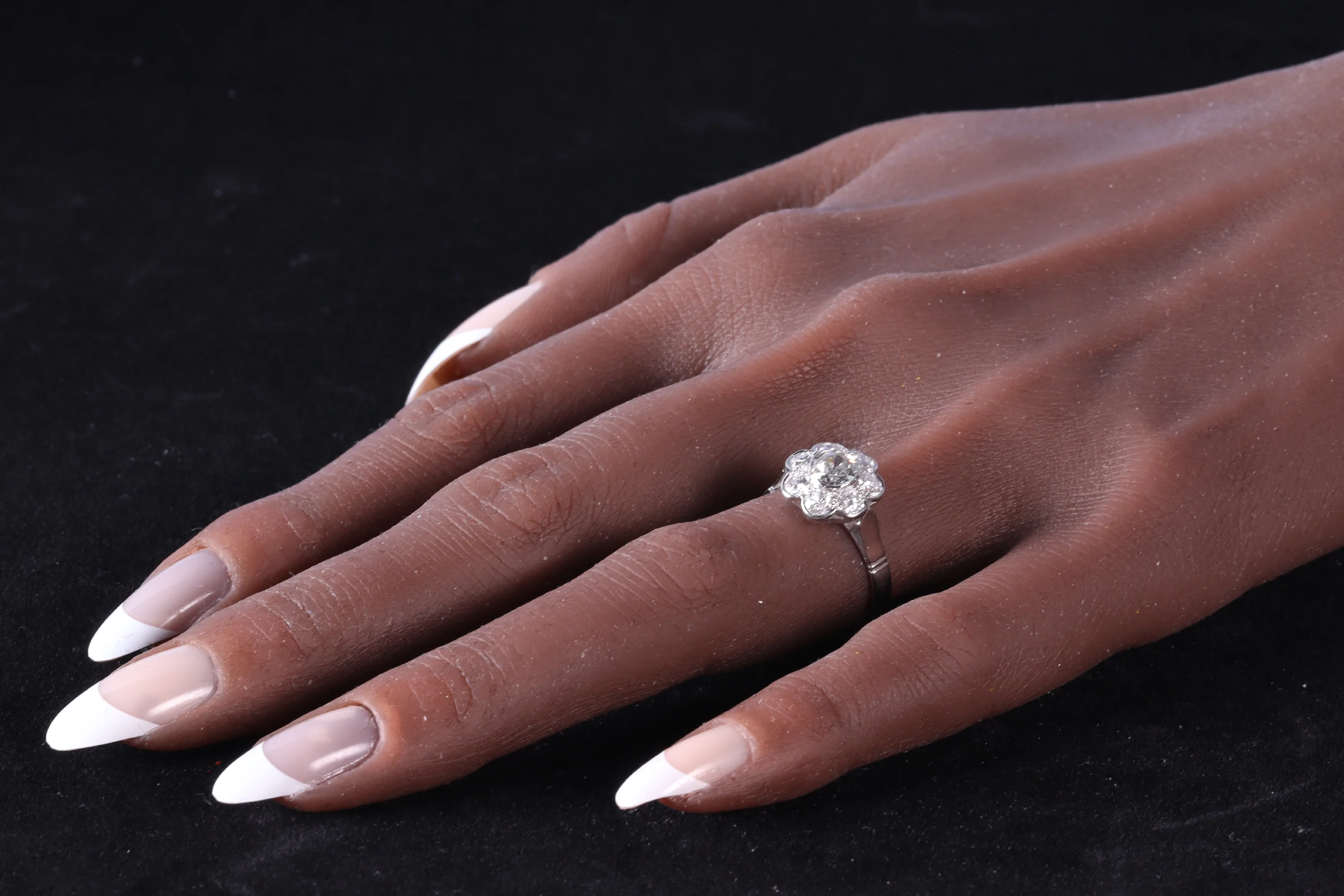
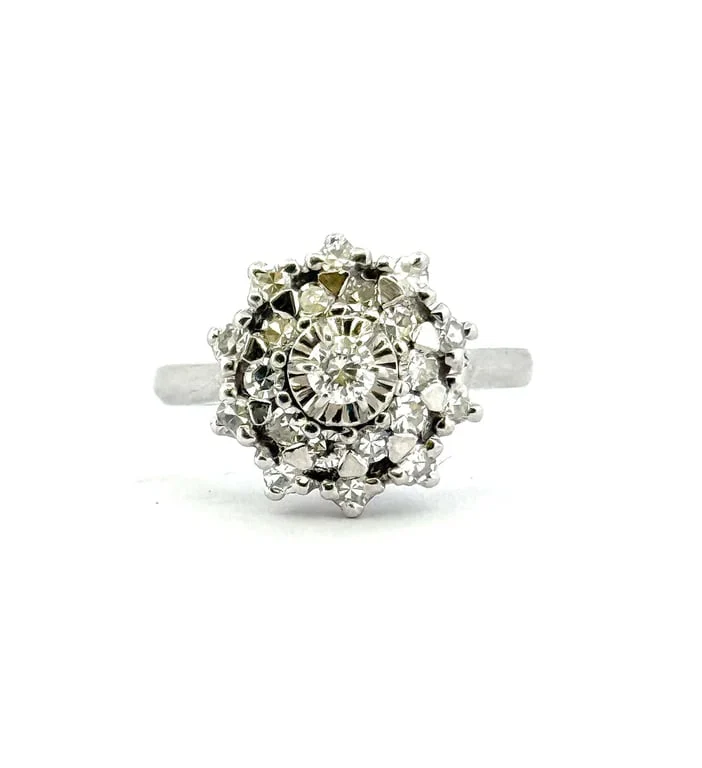
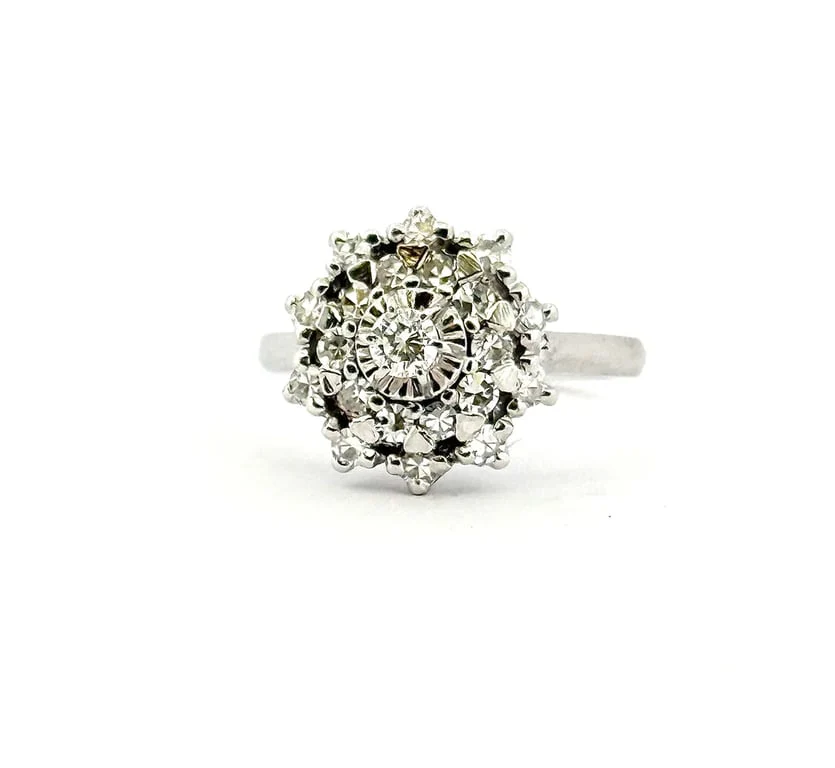
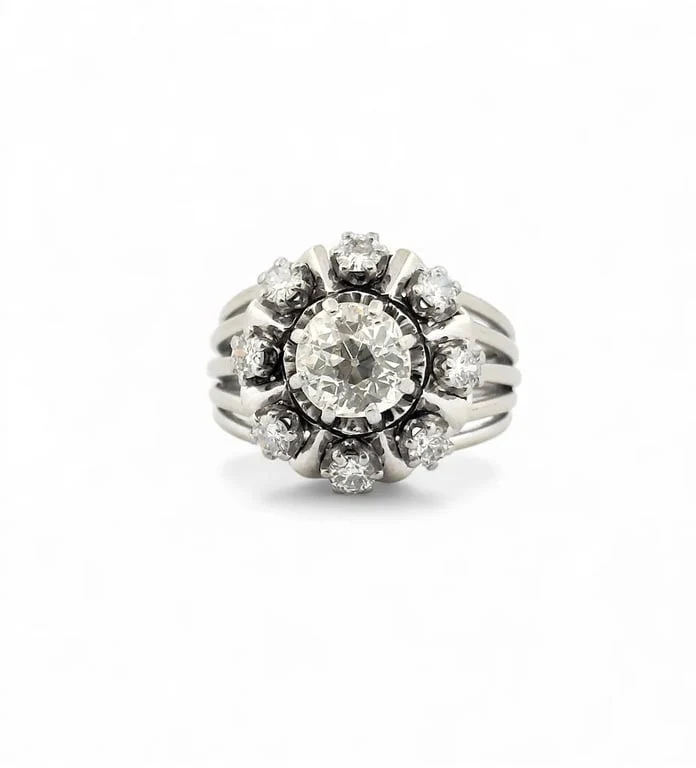
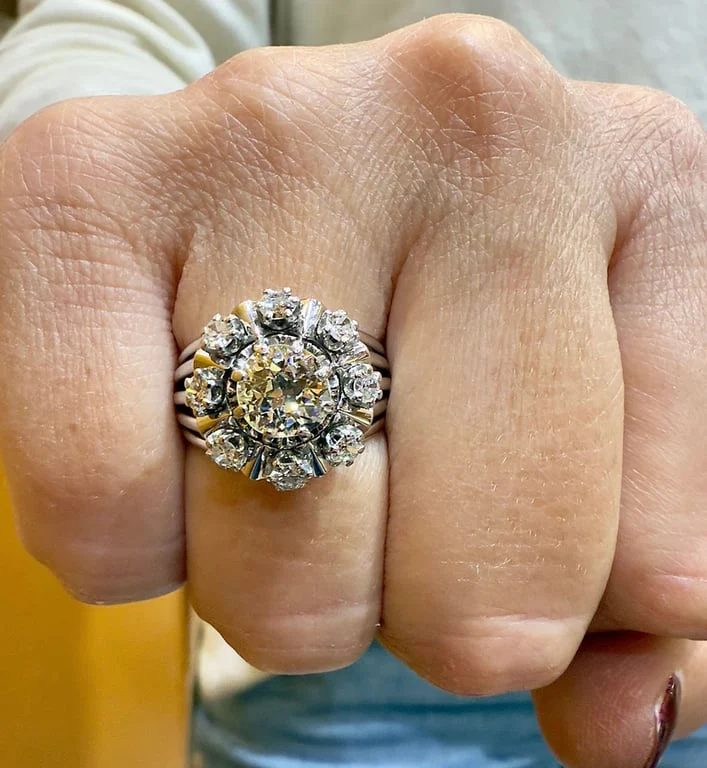
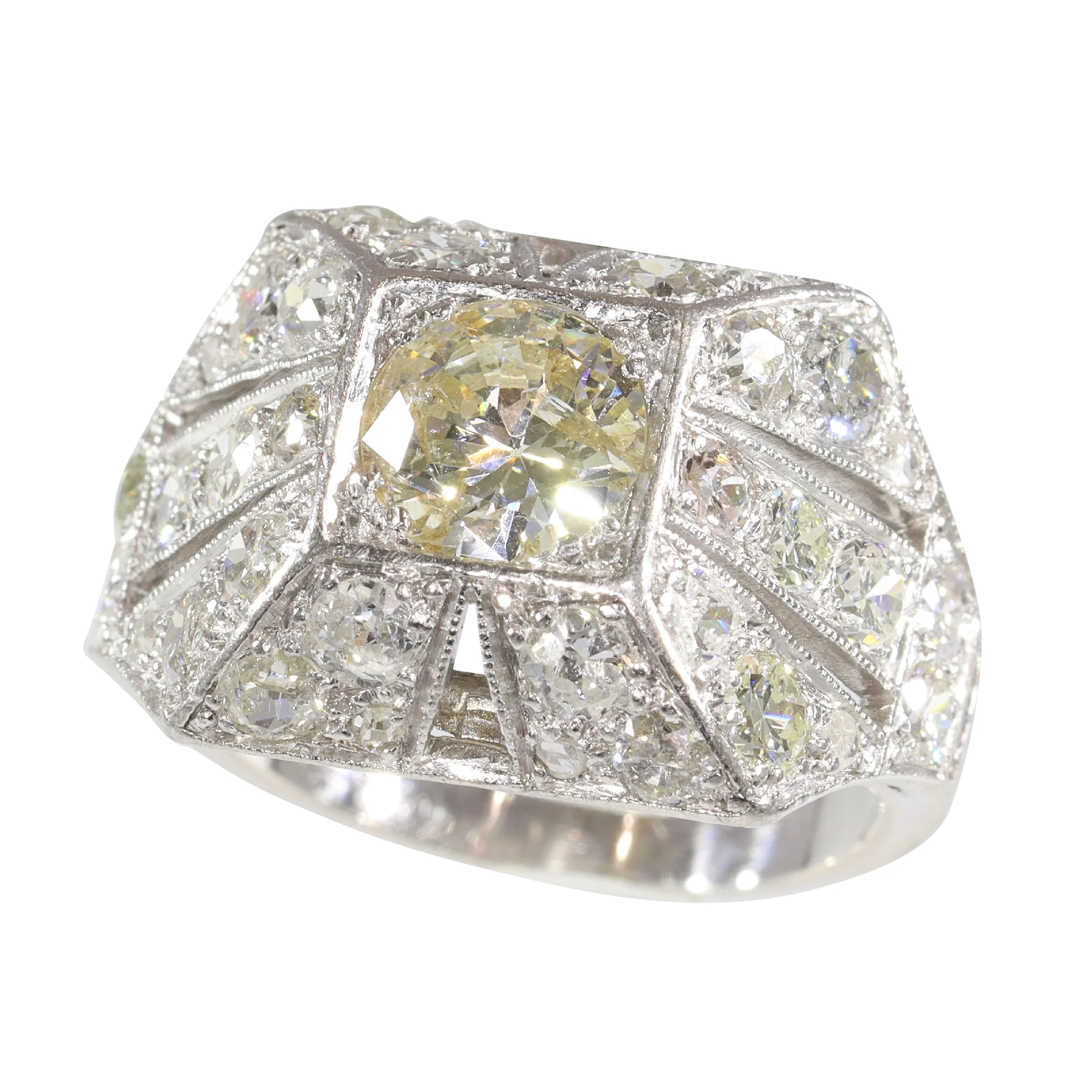
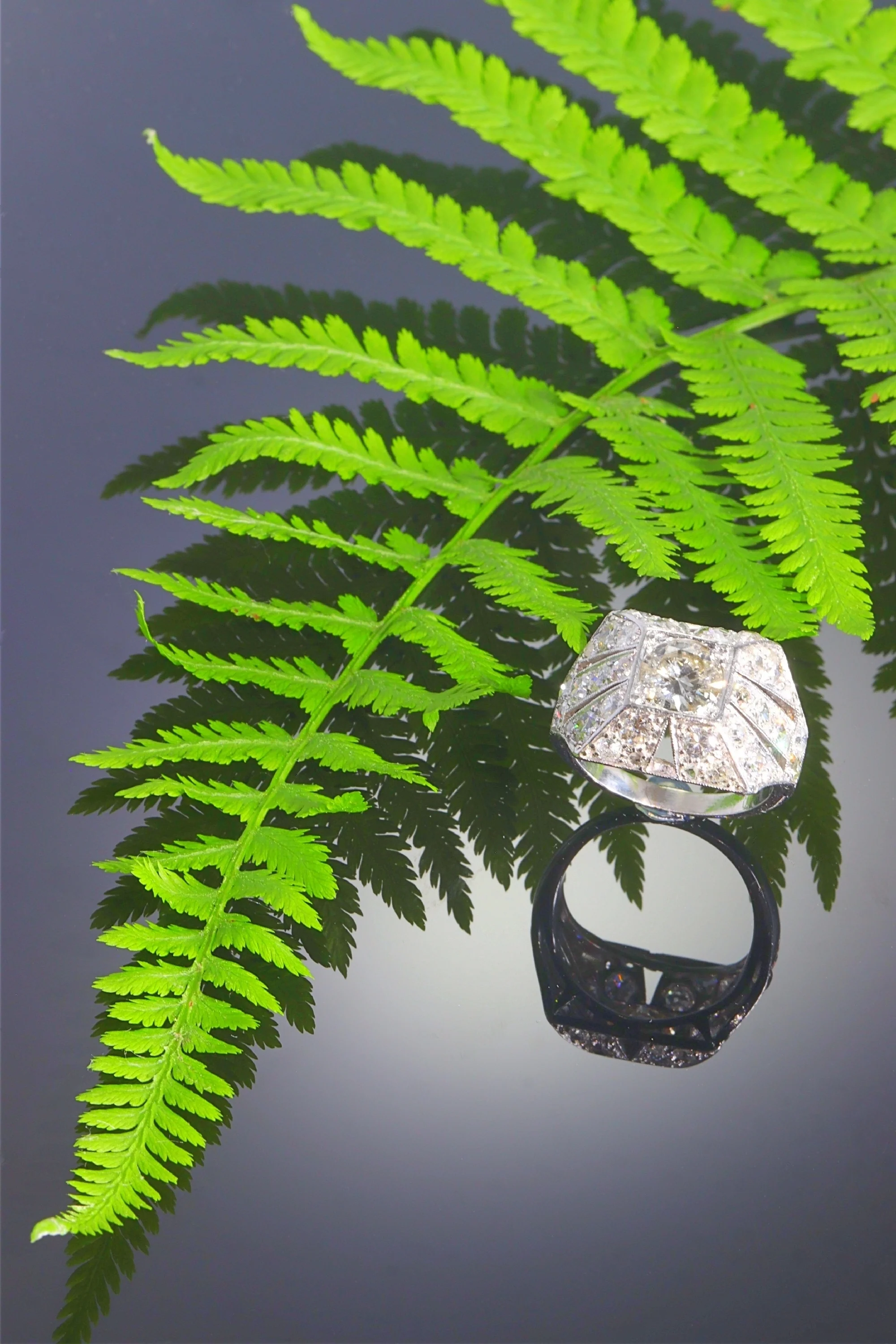
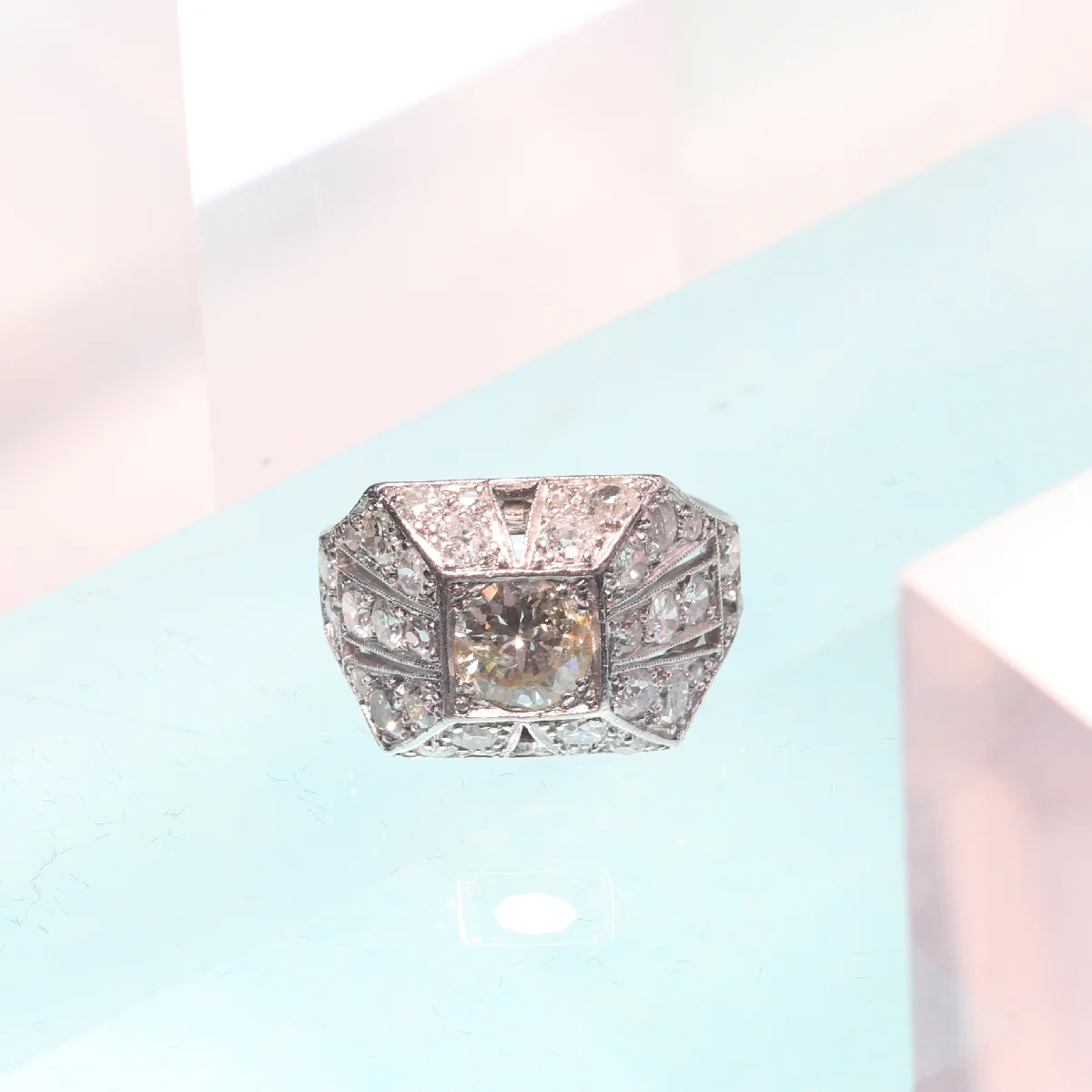
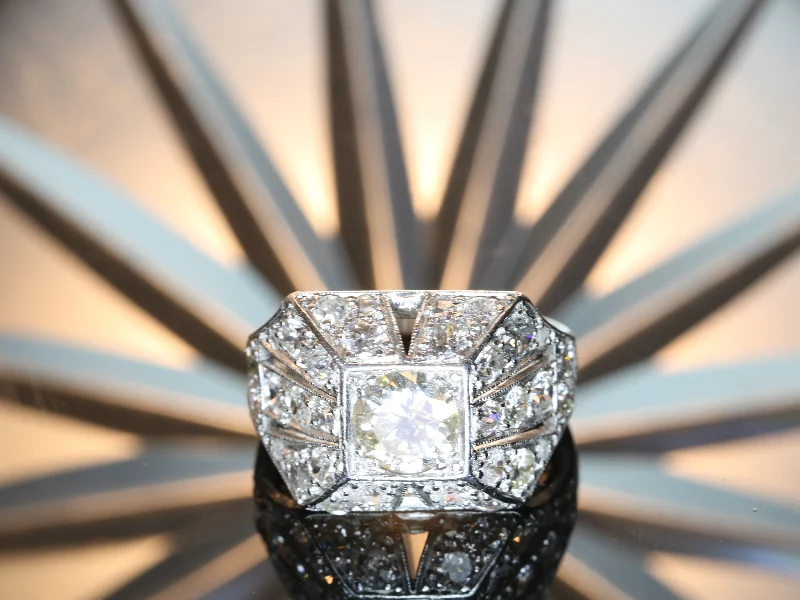
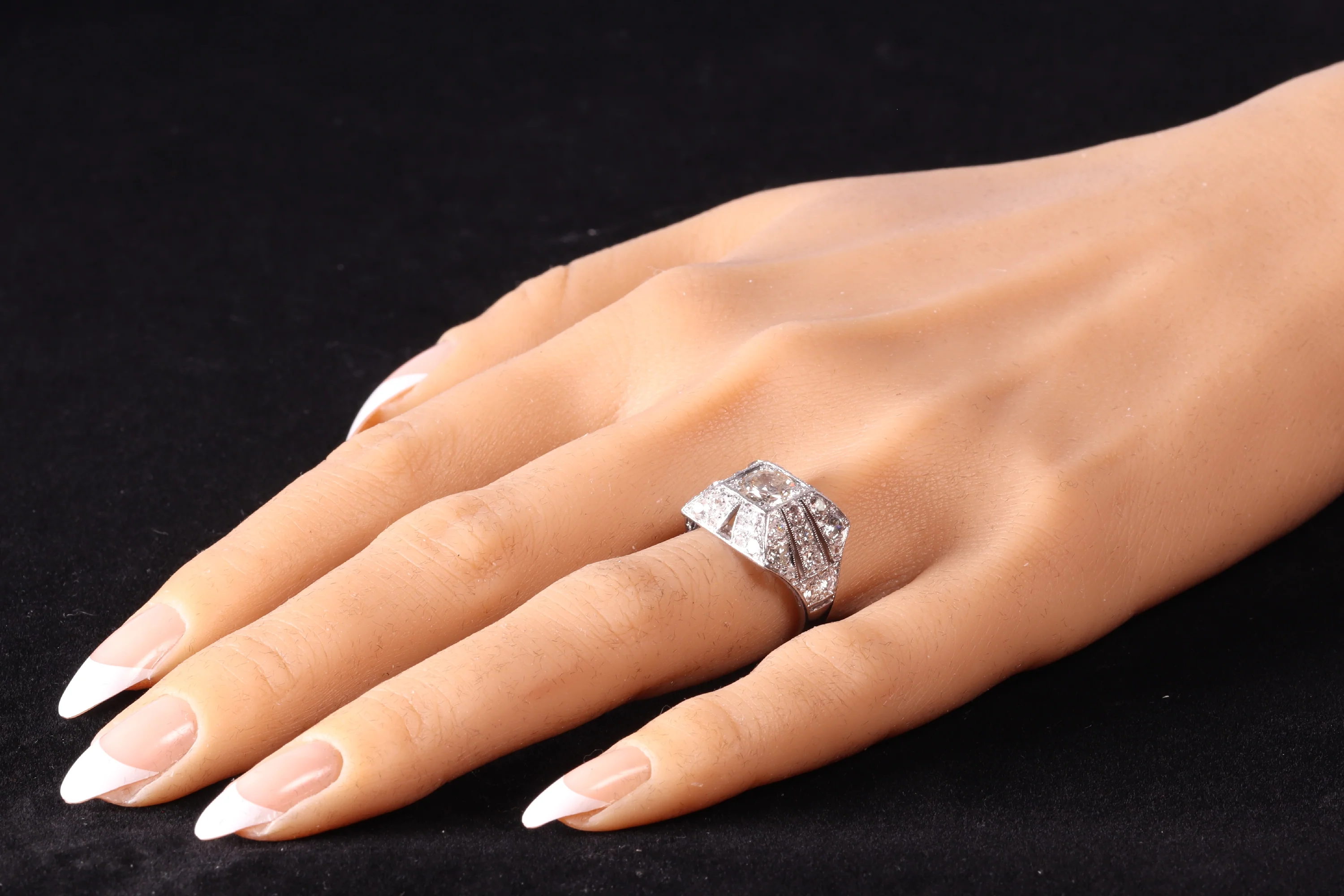
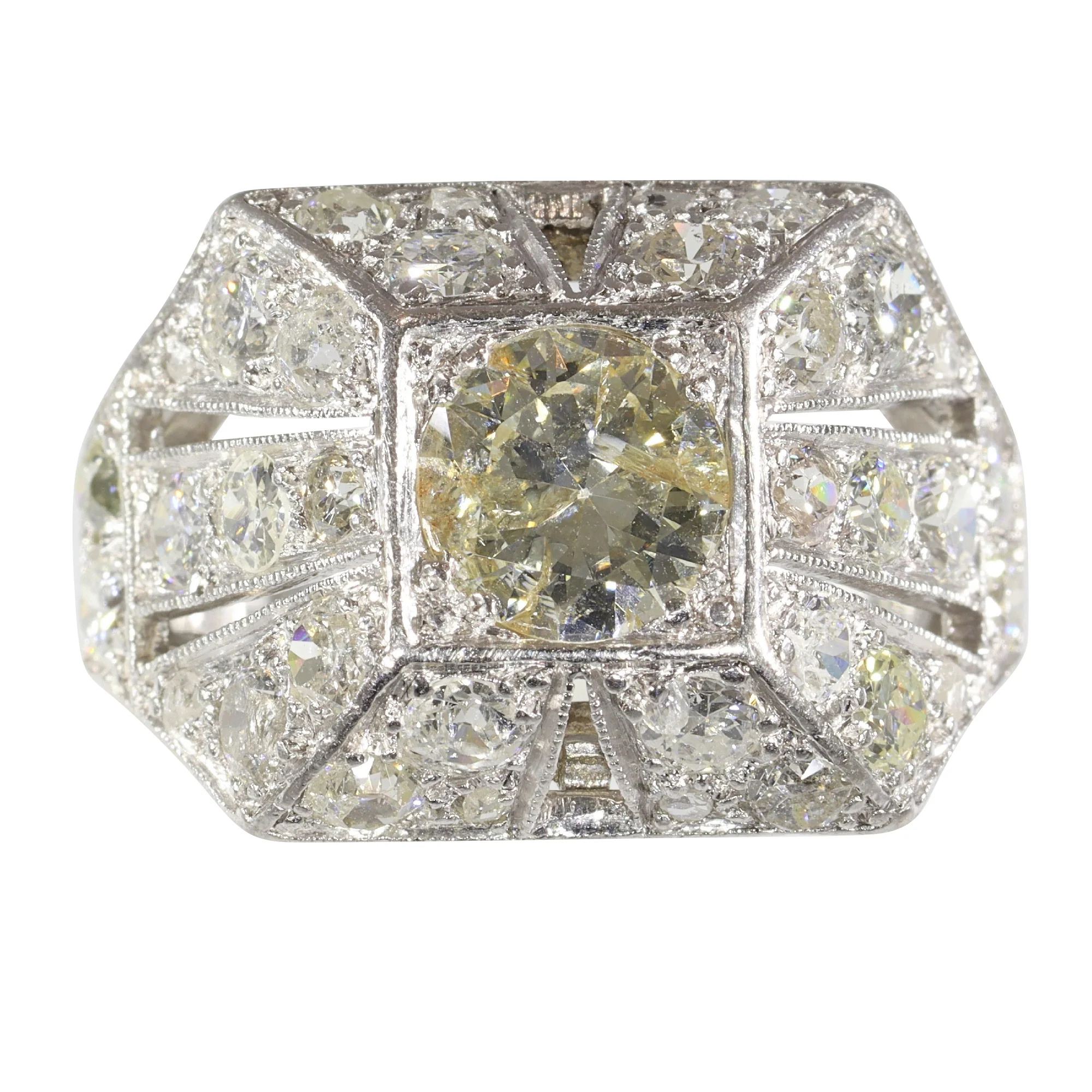
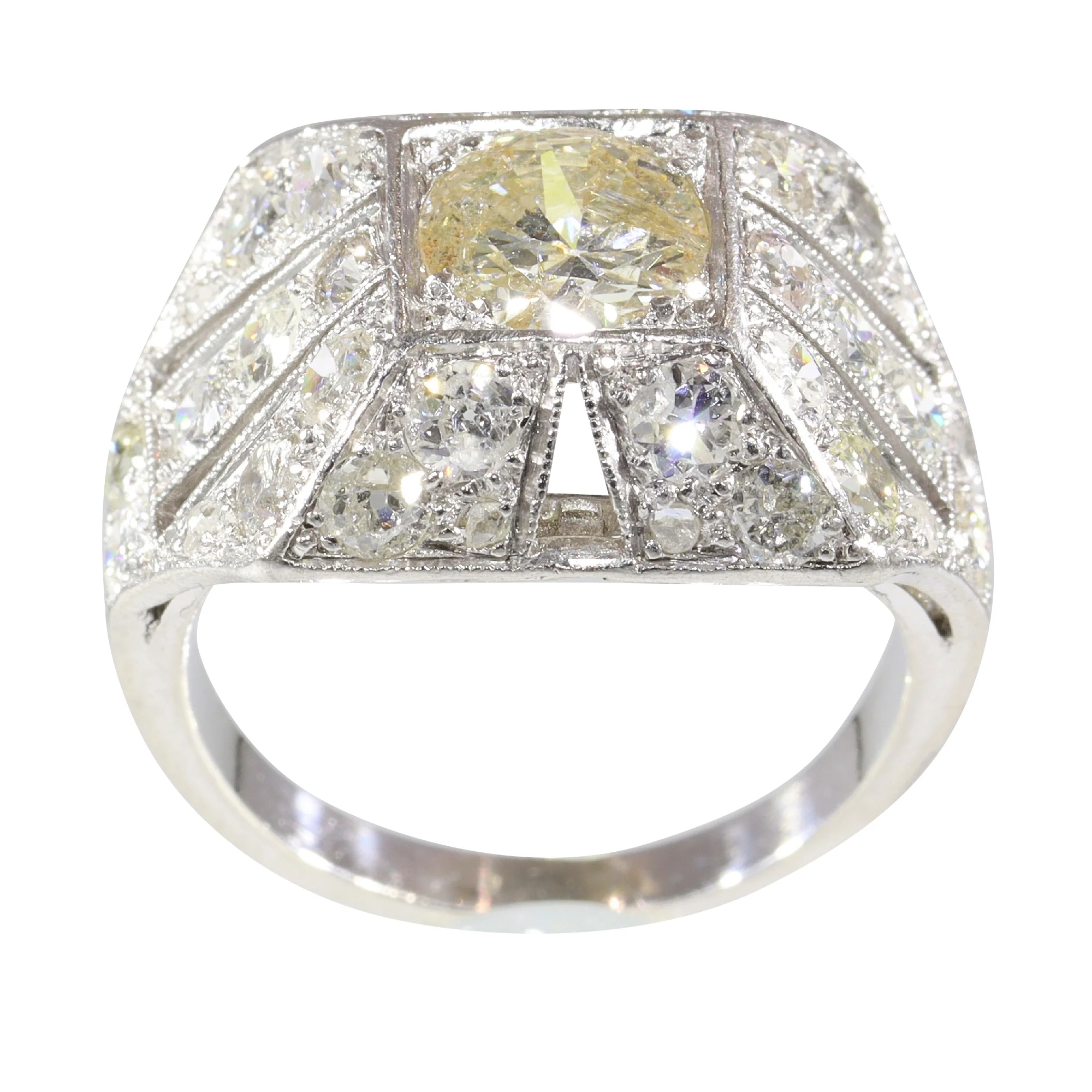
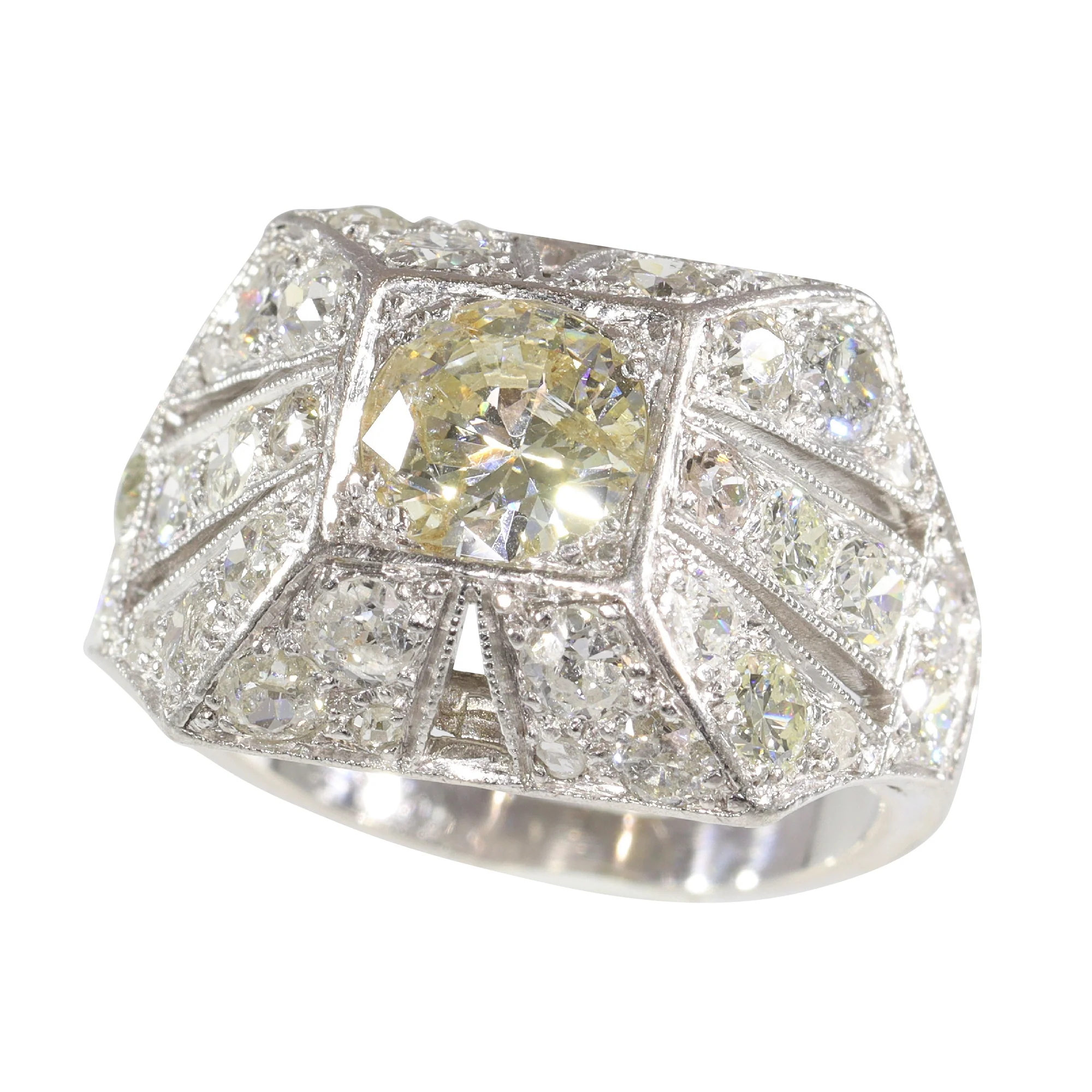
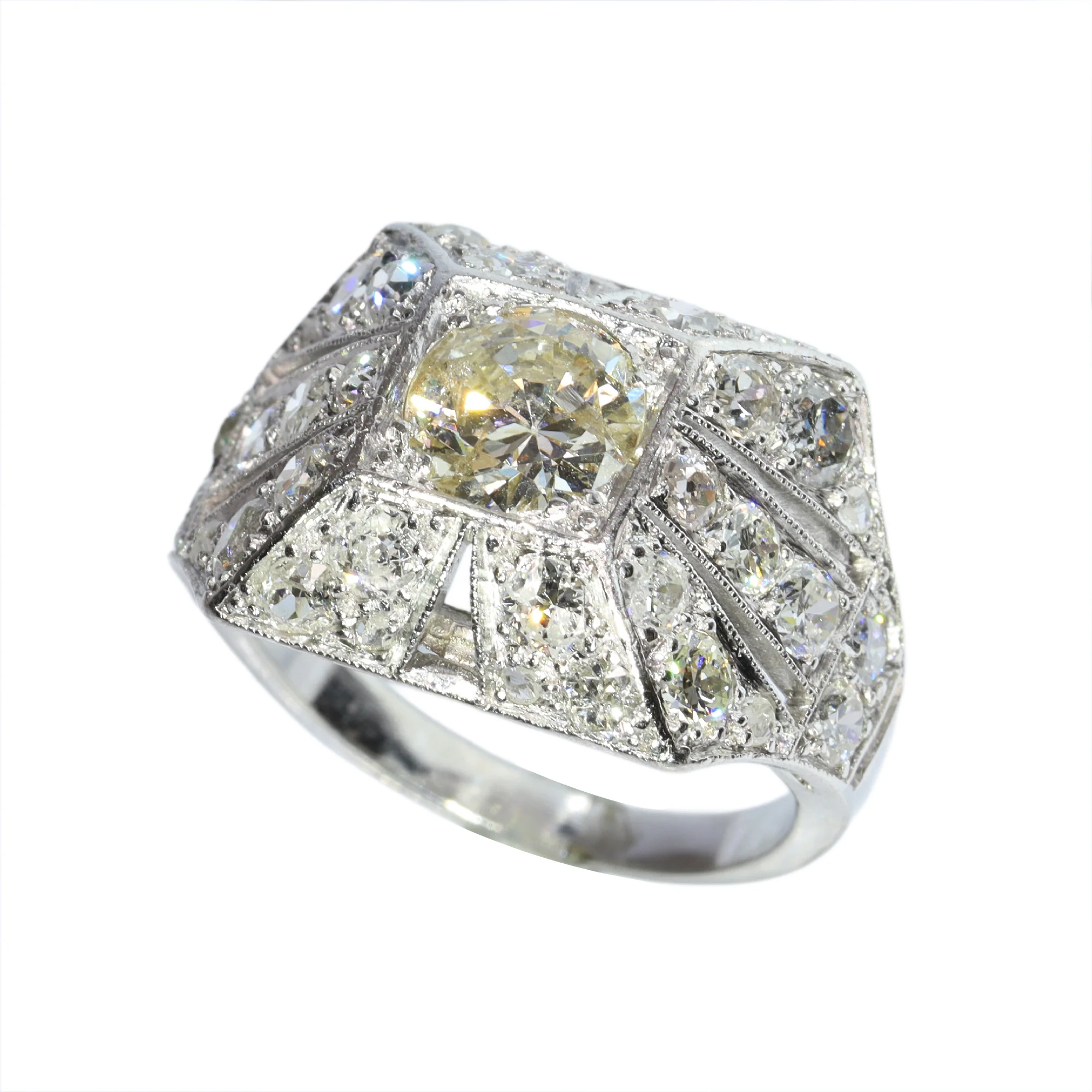
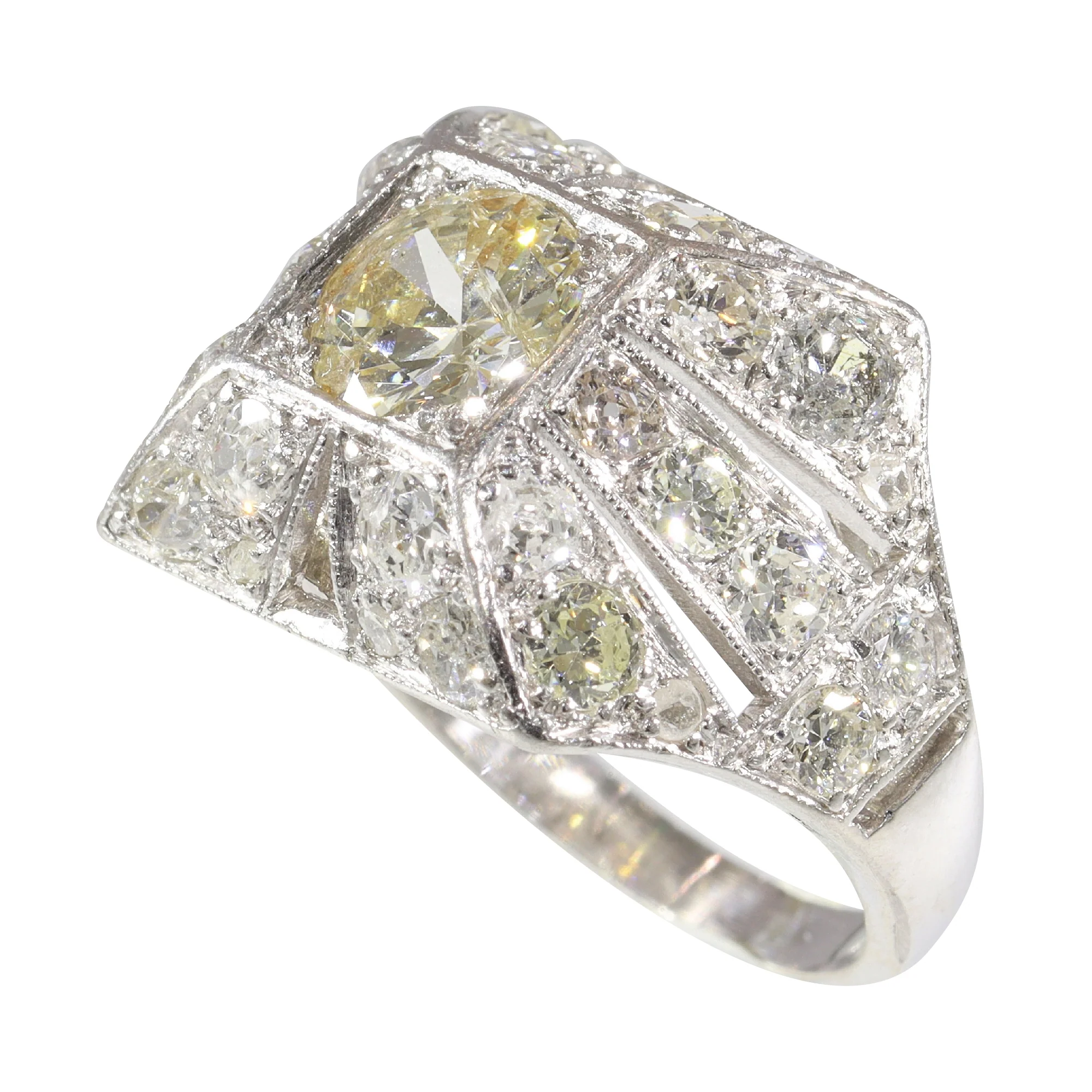
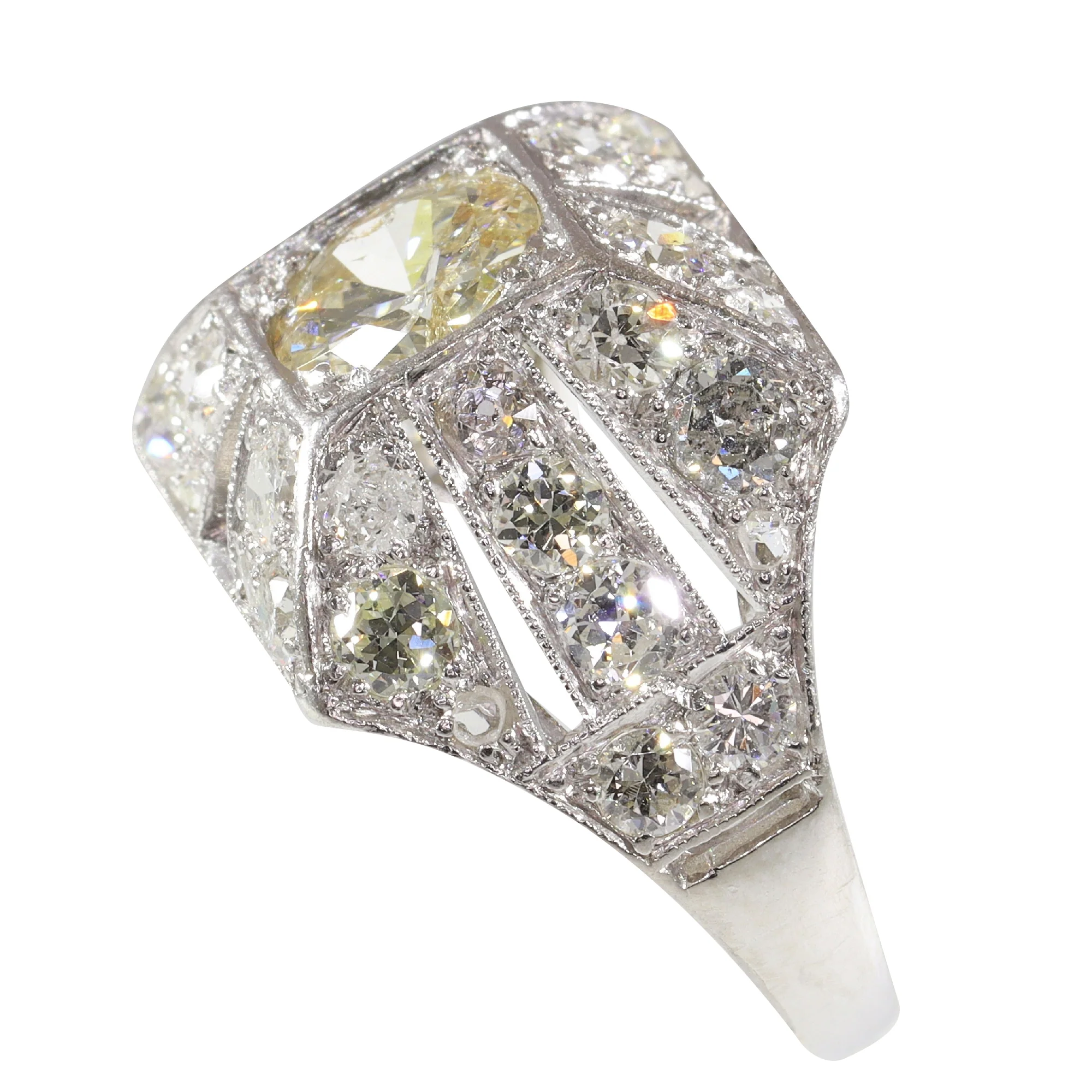
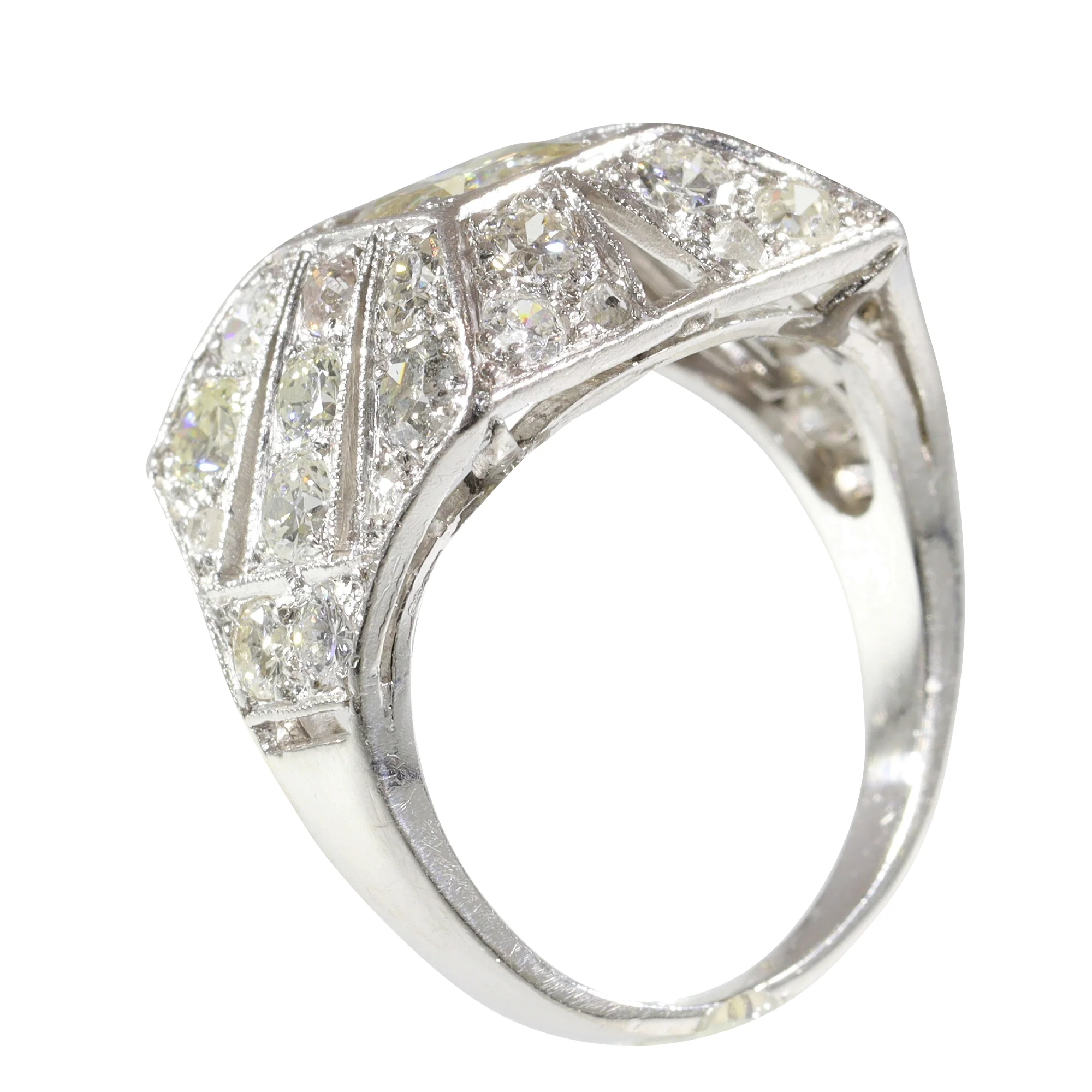
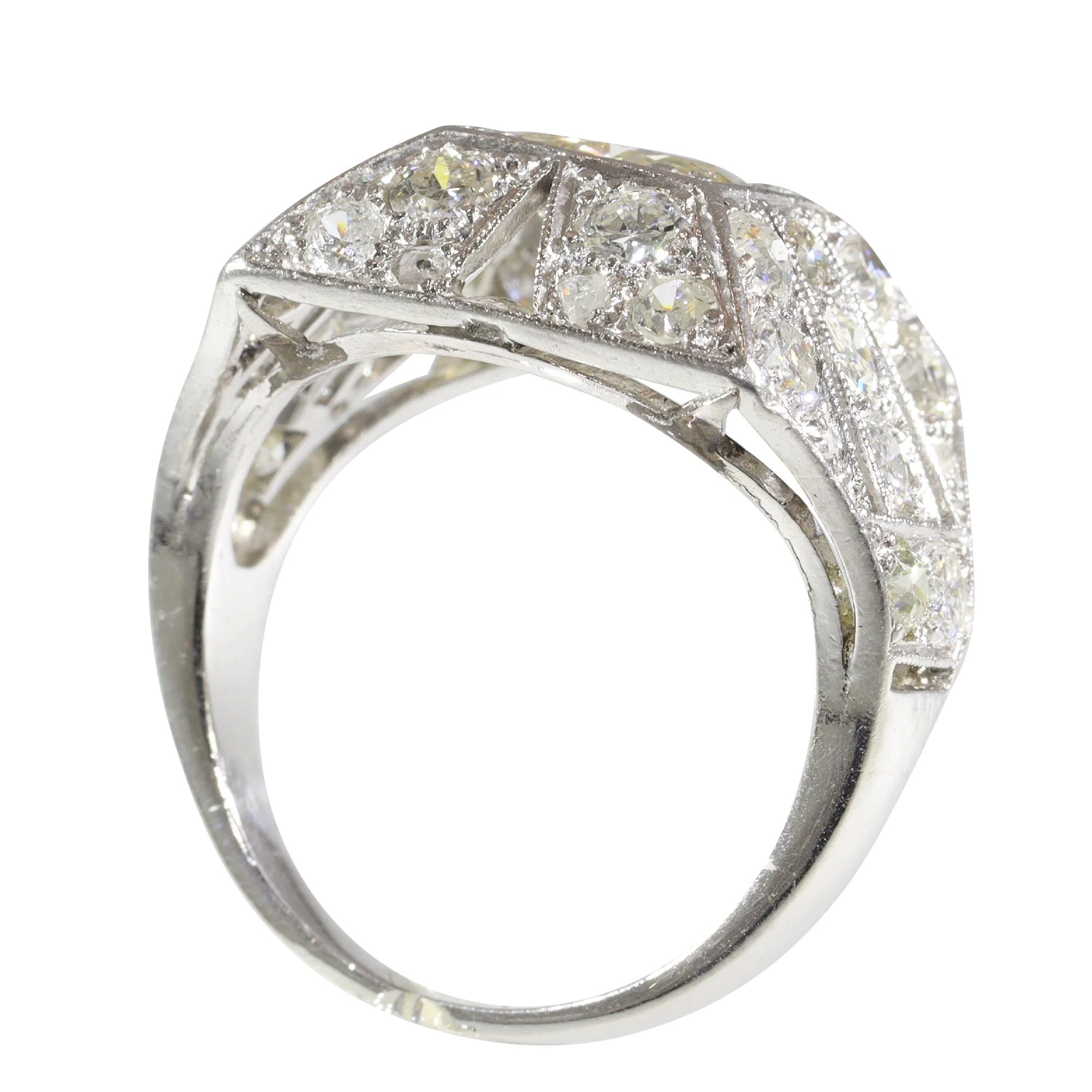
At the crossroads of the Art Deco and Interwar periods, this sublime engagement ring, dating from around 1930, embodies the evolution of style. Crafted from the highest quality platinum, it showcases a captivating old European cut diamond of approximately 1.10 carats. The main stone is surrounded by 26 old-cut diamonds and enhanced with eight rose-cut diamonds, for an estimated total of 3.78 carats, excluding the rose cuts. Unmarked, but decidedly Belgian, this piece offers a harmonious blend of the transitional aesthetics of this era, perfect for celebrating a love or an important anniversary.
Group of antique jewelry objects:
engagement ring (or anniversary ring)
Condition:
very good condition
- (more info on our condition scale)
Country of origin:
Although it bears no readable hallmark, we believe it is of Belgian origin.
Style:
Between Art Deco and the Interwar period - The Art Deco is an eclectic artistic and design style born in Paris in the early decades of the 20th century. Emerging in the 1920s, it lasted until after the Second World War. The term "Art Deco" was widely used for the first time after an exhibition in 1966, in reference to the 1925 International Exhibition of Modern Decorative and Industrial Arts, which marked the height of the high-end modern style in Paris. Championed by the best decorative arts designers, such as those in fashion and interior decoration, Art Deco influenced all areas of design throughout the 1920s and 1930s, notably architecture and industrial design, as well as visual arts such as painting, graphic arts, and cinema. At the time, this style was seen as elegant, glamorous, functional, and modern. The Interwar period (1918-1939) is considered, in recent Western culture, as the period between the end of the First World War and the beginning of the Second World War. It is also called the interwar period or the interbellum.
- See also: Art Deco and Interbellum or more info on styles
Style specifics:
It is something between Art Deco and the Interwar period.
Abstract motifs and geometric shapes are typical of the Art Deco period. Art Deco moves away from the soft pastels and organic forms of its predecessor, Art Nouveau, and draws inspiration from many early 20th-century styles and movements, including Neoclassicism, Constructivism, Cubism, Modernism, and Futurism. Its popularity peaked in Europe during the Roaring Twenties and continued in the United States until the 1930s. Although many design movements have political or philosophical roots or intentions, Art Deco is purely decorative.
The Interbellum
is the period between the two world wars and can be recognized as a transition from the Art Deco style to the Retro style.
Period:
circa 1930
- (events and facts of this era, poetry of this era, fashion of this era)
Material:
platinum
- (more info on precious metals)
Diamond(s):
An old European cut diamond with an estimated weight of ± 1.10 ct. (color and clarity: L/M, i/).
26 old mine brilliant cut diamonds with an estimated weight of ± 2.67 ct. (color and clarity: G/J, si/i).
Eight rose cut diamonds. We do not have the weight of the diamonds, which is common in our trade for rose cuts.
- All diamond weights, color grades, and clarity are approximate as the stones have not been removed from their settings to preserve the integrity of the mounting.
Total diamond weight:
approximately 3.78 ct. (excluding rose cut diamonds)
Birthstones:
Diamond is the birthstone (or birth month stone) for April.
- (more info on birthstones)
Hallmarks:
No trace.
- (more info on hallmarks)
Dimensions:
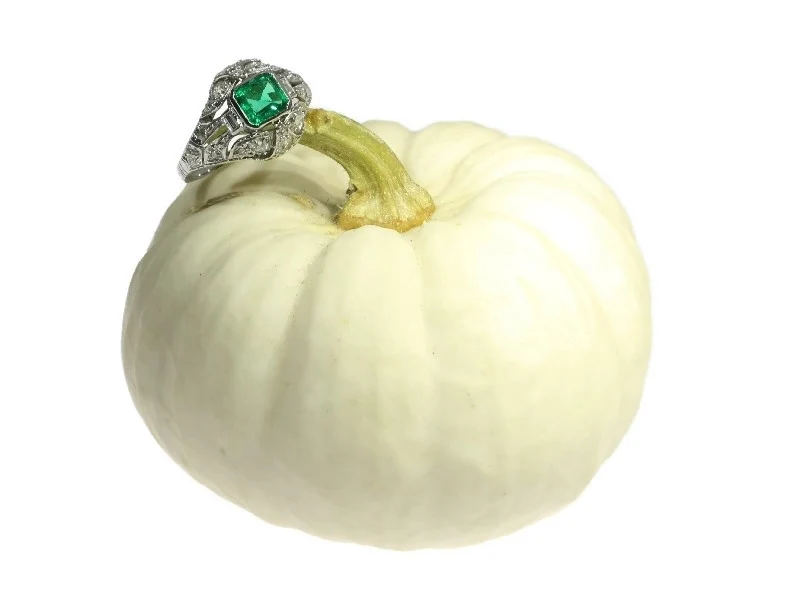
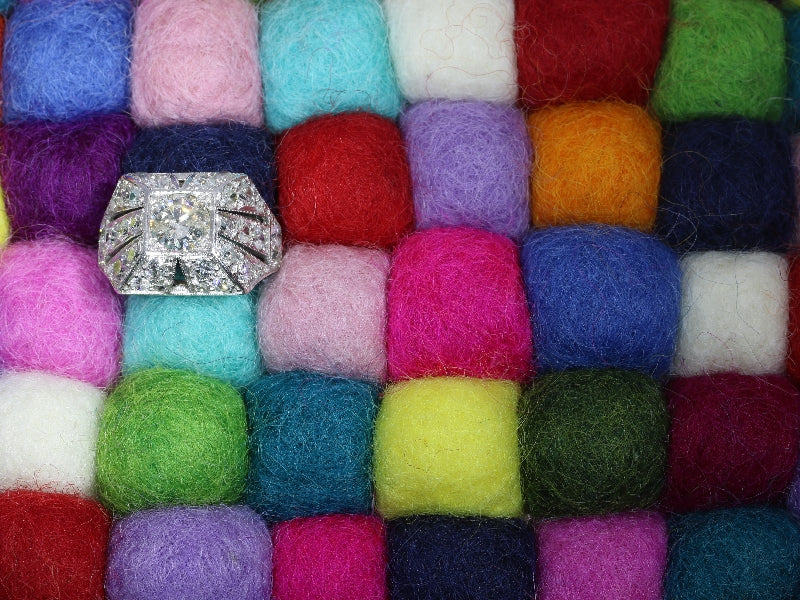
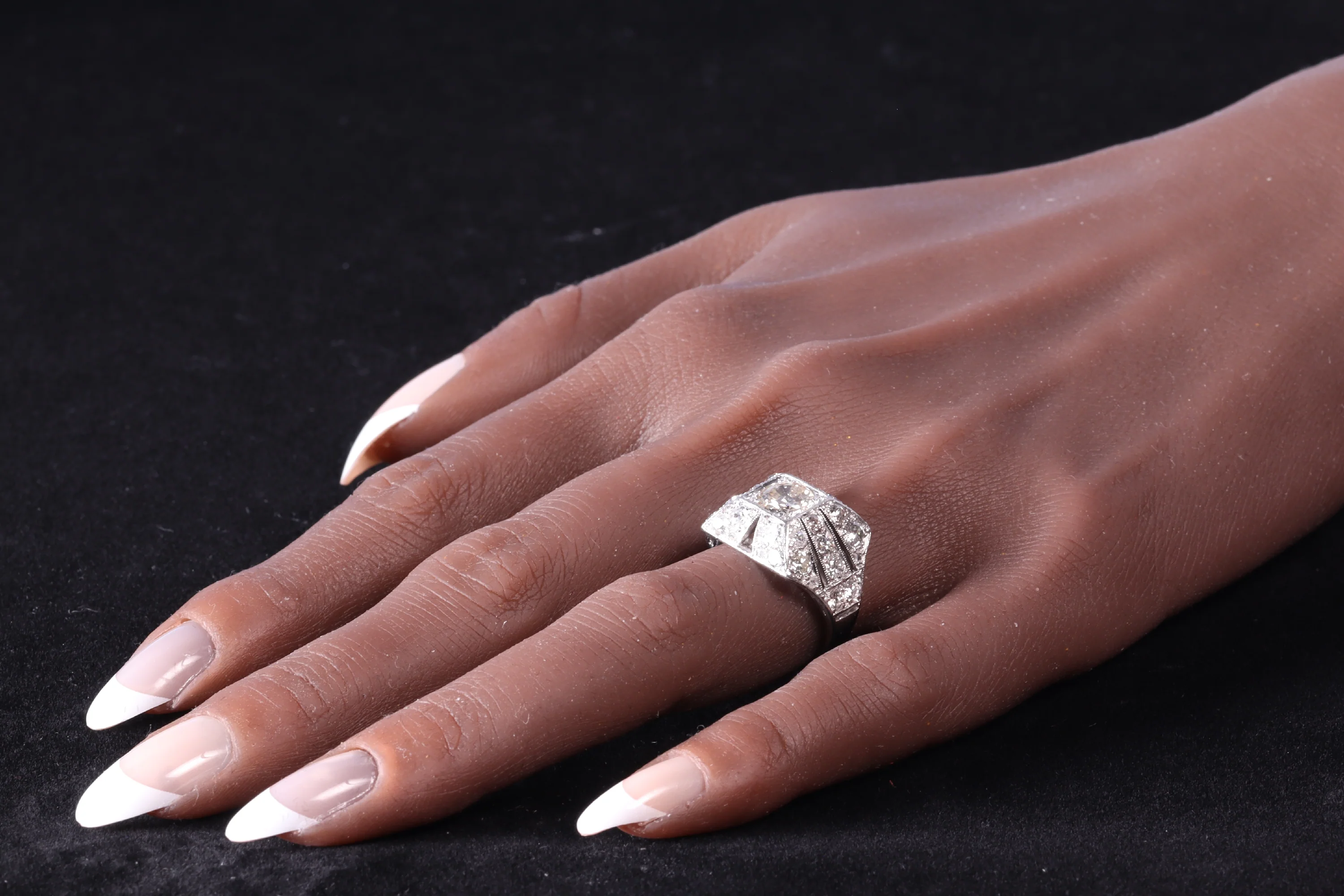
top width of the ring 1.50 cm (0.59 inch)
Weight:
8.40 grams (5.40 dwt)
Continental ring size:
54 and 17¼,
US size
6¾,
UK size:
N
Resizing:
Free resizing, but due to the way the ring is made, we cannot guarantee to make it in all sizes; therefore, please ask in advance (only for extreme resizing, we must charge).
- (more information on ring sizes)
More Images
Meeting the precious stone: a Belgian diamond ring from 1930
At the crossroads of the Art Deco and Interwar periods, this sublime engagement ring, dating from around 1930, embodies the evolution of style. Crafted from the highest quality platinum, it showcases a captivating old European cut diamond of approximately 1.10 carats. The main stone is surrounded by 26 old-cut diamonds and enhanced with eight rose-cut diamonds, for an estimated total of 3.78 carats, excluding the rose cuts. Unmarked, but decidedly Belgian, this piece offers a harmonious blend of the transitional aesthetics of this era, perfect for celebrating a love or an important anniversary.
Group of antique jewelry objects:
engagement ring (or anniversary ring)
Condition:
very good condition
- (more info on our condition scale)
Country of origin:
Although it bears no readable hallmark, we believe it is of Belgian origin.
Style:
Between Art Deco and the Interwar period - The Art Deco is an eclectic artistic and design style born in Paris in the early decades of the 20th century. Emerging in the 1920s, it lasted until after the Second World War. The term "Art Deco" was widely used for the first time after an exhibition in 1966, in reference to the 1925 International Exhibition of Modern Decorative and Industrial Arts, which marked the height of the high-end modern style in Paris. Championed by the best decorative arts designers, such as those in fashion and interior decoration, Art Deco influenced all areas of design throughout the 1920s and 1930s, notably architecture and industrial design, as well as visual arts such as painting, graphic arts, and cinema. At the time, this style was seen as elegant, glamorous, functional, and modern. The Interwar period (1918-1939) is considered, in recent Western culture, as the period between the end of the First World War and the beginning of the Second World War. It is also called the interwar period or the interbellum.
- See also: Art Deco and Interbellum or more info on styles
Style specifics:
It is something between Art Deco and the Interwar period.
Abstract motifs and geometric shapes are typical of the Art Deco period. Art Deco moves away from the soft pastels and organic forms of its predecessor, Art Nouveau, and draws inspiration from many early 20th-century styles and movements, including Neoclassicism, Constructivism, Cubism, Modernism, and Futurism. Its popularity peaked in Europe during the Roaring Twenties and continued in the United States until the 1930s. Although many design movements have political or philosophical roots or intentions, Art Deco is purely decorative.
The Interbellum
is the period between the two world wars and can be recognized as a transition from the Art Deco style to the Retro style.
Period:
circa 1930
- (events and facts of this era, poetry of this era, fashion of this era)
Material:
platinum
- (more info on precious metals)
Diamond(s):
An old European cut diamond with an estimated weight of ± 1.10 ct. (color and clarity: L/M, i/).
26 old mine brilliant cut diamonds with an estimated weight of ± 2.67 ct. (color and clarity: G/J, si/i).
Eight rose cut diamonds. We do not have the weight of the diamonds, which is common in our trade for rose cuts.
- All diamond weights, color grades, and clarity are approximate as the stones have not been removed from their settings to preserve the integrity of the mounting.
Total diamond weight:
approximately 3.78 ct. (excluding rose cut diamonds)
Birthstones:
Diamond is the birthstone (or birth month stone) for April.
- (more info on birthstones)
Hallmarks:
No trace.
- (more info on hallmarks)
Dimensions:
top width of the ring 1.50 cm (0.59 inch)
Weight:
8.40 grams (5.40 dwt)
Continental ring size:
54 and 17¼,
US size
6¾,
UK size:
N
Resizing:
Free resizing, but due to the way the ring is made, we cannot guarantee to make it in all sizes; therefore, please ask in advance (only for extreme resizing, we must charge).
- (more information on ring sizes)
Product Information
Product Information
Shipping & Returns
Shipping & Returns
Description
At the crossroads of the Art Deco and Interwar periods, this sublime engagement ring, dating from around 1930, embodies the evolution of style. Crafted from the highest quality platinum, it showcases a captivating old European cut diamond of approximately 1.10 carats. The main stone is surrounded by 26 old-cut diamonds and enhanced with eight rose-cut diamonds, for an estimated total of 3.78 carats, excluding the rose cuts. Unmarked, but decidedly Belgian, this piece offers a harmonious blend of the transitional aesthetics of this era, perfect for celebrating a love or an important anniversary.
Group of antique jewelry objects:
engagement ring (or anniversary ring)
Condition:
very good condition
- (more info on our condition scale)
Country of origin:
Although it bears no readable hallmark, we believe it is of Belgian origin.
Style:
Between Art Deco and the Interwar period - The Art Deco is an eclectic artistic and design style born in Paris in the early decades of the 20th century. Emerging in the 1920s, it lasted until after the Second World War. The term "Art Deco" was widely used for the first time after an exhibition in 1966, in reference to the 1925 International Exhibition of Modern Decorative and Industrial Arts, which marked the height of the high-end modern style in Paris. Championed by the best decorative arts designers, such as those in fashion and interior decoration, Art Deco influenced all areas of design throughout the 1920s and 1930s, notably architecture and industrial design, as well as visual arts such as painting, graphic arts, and cinema. At the time, this style was seen as elegant, glamorous, functional, and modern. The Interwar period (1918-1939) is considered, in recent Western culture, as the period between the end of the First World War and the beginning of the Second World War. It is also called the interwar period or the interbellum.
- See also: Art Deco and Interbellum or more info on styles
Style specifics:
It is something between Art Deco and the Interwar period.
Abstract motifs and geometric shapes are typical of the Art Deco period. Art Deco moves away from the soft pastels and organic forms of its predecessor, Art Nouveau, and draws inspiration from many early 20th-century styles and movements, including Neoclassicism, Constructivism, Cubism, Modernism, and Futurism. Its popularity peaked in Europe during the Roaring Twenties and continued in the United States until the 1930s. Although many design movements have political or philosophical roots or intentions, Art Deco is purely decorative.
The Interbellum
is the period between the two world wars and can be recognized as a transition from the Art Deco style to the Retro style.
Period:
circa 1930
- (events and facts of this era, poetry of this era, fashion of this era)
Material:
platinum
- (more info on precious metals)
Diamond(s):
An old European cut diamond with an estimated weight of ± 1.10 ct. (color and clarity: L/M, i/).
26 old mine brilliant cut diamonds with an estimated weight of ± 2.67 ct. (color and clarity: G/J, si/i).
Eight rose cut diamonds. We do not have the weight of the diamonds, which is common in our trade for rose cuts.
- All diamond weights, color grades, and clarity are approximate as the stones have not been removed from their settings to preserve the integrity of the mounting.
Total diamond weight:
approximately 3.78 ct. (excluding rose cut diamonds)
Birthstones:
Diamond is the birthstone (or birth month stone) for April.
- (more info on birthstones)
Hallmarks:
No trace.
- (more info on hallmarks)
Dimensions:
top width of the ring 1.50 cm (0.59 inch)
Weight:
8.40 grams (5.40 dwt)
Continental ring size:
54 and 17¼,
US size
6¾,
UK size:
N
Resizing:
Free resizing, but due to the way the ring is made, we cannot guarantee to make it in all sizes; therefore, please ask in advance (only for extreme resizing, we must charge).
- (more information on ring sizes)